
 Posted in
Art & Photography, uzbekistan
Inside Tashkent’s new Centre for Contemporary Arts
Text Larena Amin
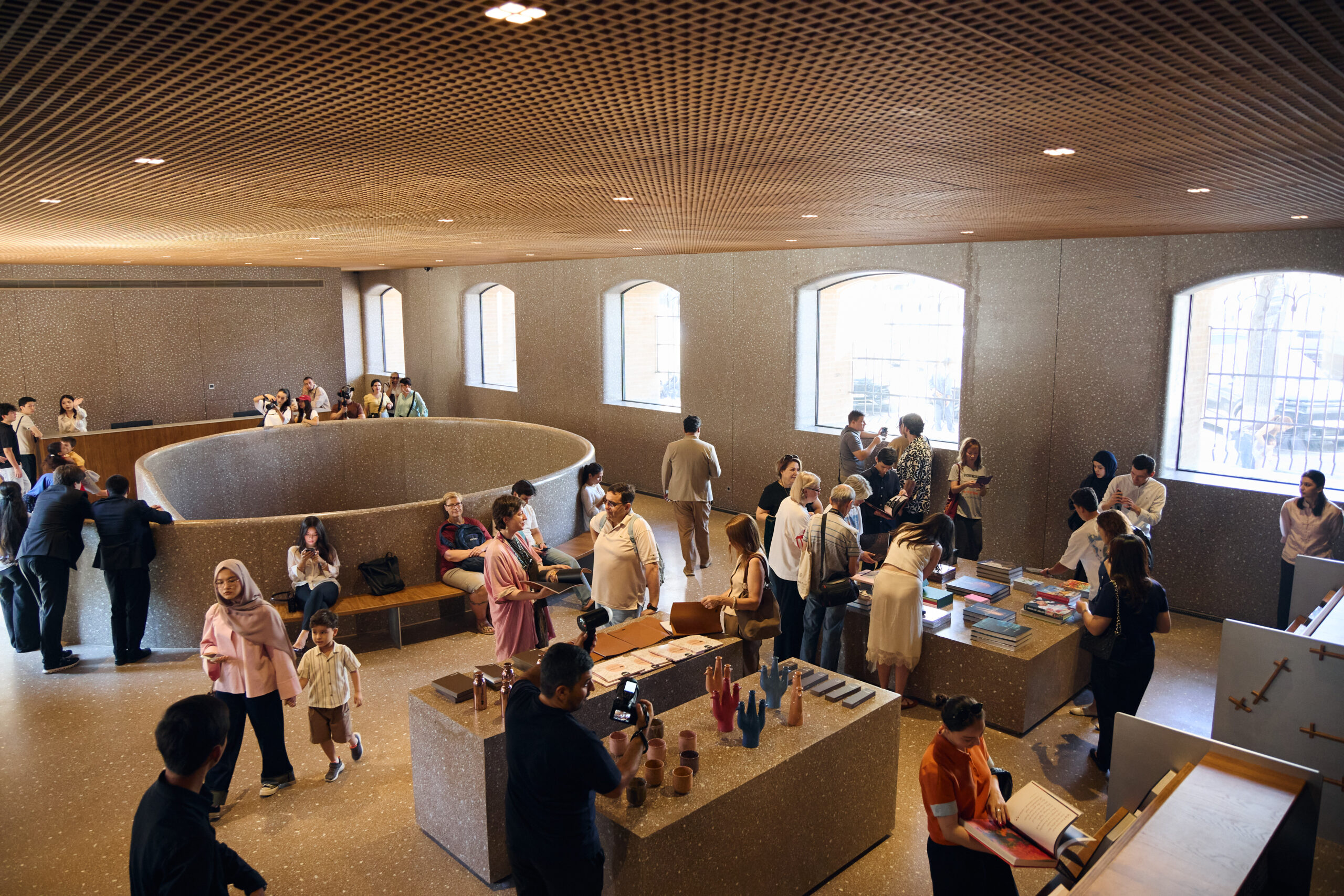
Central Asia is experiencing a tourism influx you may be witnessing on Instagram Reels. Staying ahead of expectations, the Uzbekistan Art and Culture Development Foundation (ACDF) are set on encouraging visitors to view the country on levels deeper than a one-and-done destination. Cultural sites are spread across Uzbekistan’s expansive topographies from Tashkent, through Samarqand, to Bukhara. Each city providing a fresh perspective on the region’s storytelling, reconstructing how they showcase themselves. The most recent ACDF-backed project opened its doors to the public earlier this month. A pioneering hub in the capital, brought to fruition after six years of curatorial and organisational efforts through setbacks. The Centre for Contemporary Arts (CCA) Tashkent is a new ribbon to the city’s bow.
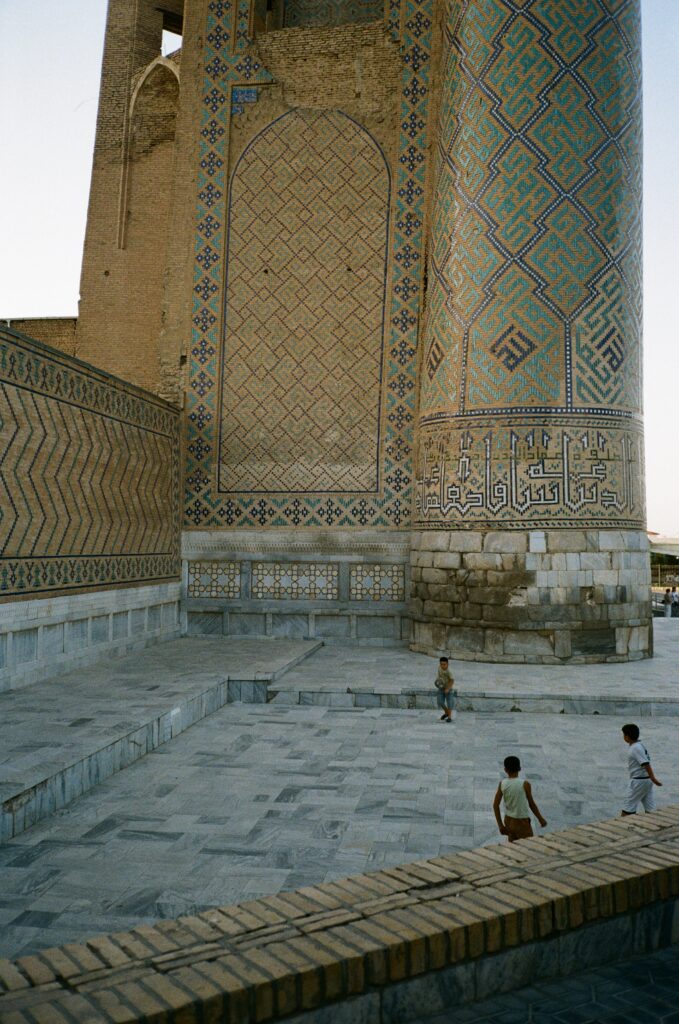
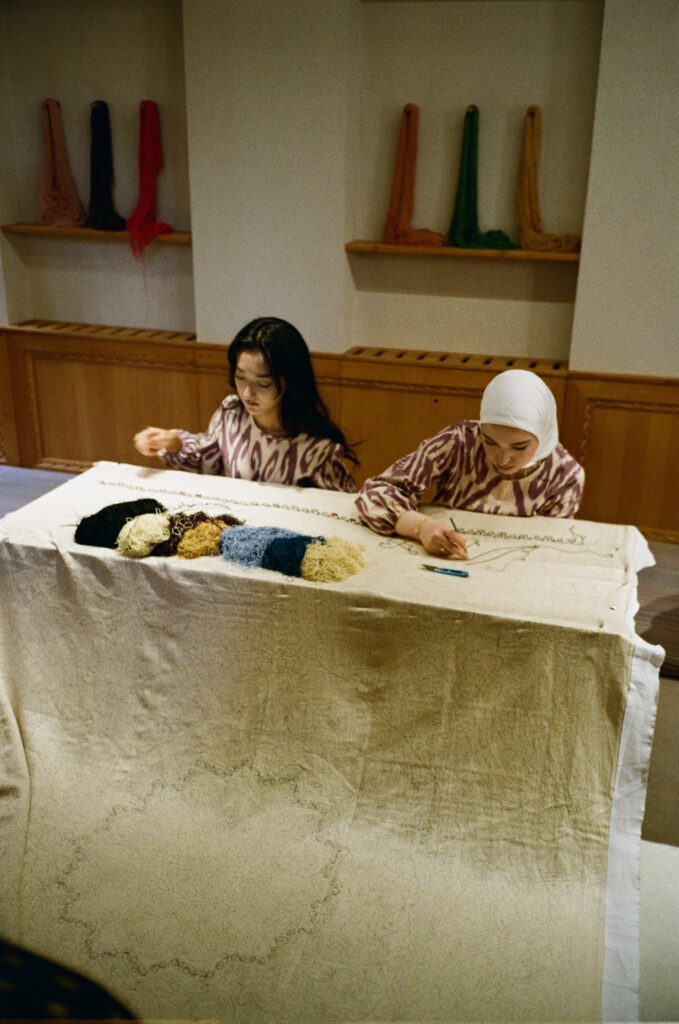
The country as we know it is still young, having only declared independence from Gorbachev’s Soviet Union in 1991. Through millennia, the land has been home to a vast array of cultures and languages, and has mastered traditional crafts that have withstood empires. As utility and gender-based practices shift from necessity to design, Uzbek crafts are seeing a revival in international acclaim. Take Suzani (Persian: needle, Suzân), an ancient embroidery technique, historically embroidered by young women as part of their own dowry. These pieces would act almost as a manifestation of fertility, prosperity, and longevity unto their married lives through agricultural and ethereal motifs. Multiple schools of design take prominence over cultural cantons spanning Uzbekistan and Tajikistan. Tashkent schools protect the wearer, covering them in myths, using Zoroastrian motifs on chapan (coats) and palak – hanging silk pieces adorned with circular arrangements, twirling inwards, depicting the cosmos. In this context, the ACDF and the CCA Tashkent are attempting to narrow the typical institutional distinction between Craft and Fine Art.
Designed by French architect duo Studio KO, the centre’s facade is repurposed brick by brick. Housed in what was previously a tram depot and derelict diesel station, construction teams once shaved down slabs in an attempt to deodorise the intensity of petroleum permeation. ‘The clay is Uzbek, it fires from grey to yellow,’ architect Olivier Marty tells us. ‘Many buildings have been restored in an approximate way, so I was determined to save this one.’ From conception to completion, the visual direction required reverence for Uzbek craft while allowing flexibility in style and utility. Architectural features underwent trials in laboratory-style experiments at the CCA lab, the once-shaved bricks were restored and replicated. Now, visitors will see the central building’s coy exterior, sandy against the summer’s blue heavens, interjected by towering walls pressed with dark, sparkling sediment.
The building’s surroundings are equally familiar with dialectics and contradiction; Uzbekistan is a country meeting modernity with a protruding historic pride. We’re met with street murals depicting traditional dress on an urban population, and high-speed trains along the historic Silk Route. On a social level, we see a population negotiating both its ancient and post-Soviet legacies. In this breath, the arts and culture sector is symbiotic with tourism and public education policy. Streamlined programming is taking place across the country, bridging these intersections. 15th-century mosques in Samarqand are staffed by young, enthusiastic locals with extensive knowledge in their fields and charming hosting skills. Before touching the tarmac in Tashkent, I become acquainted with the young woman seated next to me. Over the engine hum and mumbled announcements, bright-eyed Nazima reminisces about her time in London studying film, which she credits to the support of ACDF chairperson Gayane Umerova. Later that weekend, I would meet Umerova in her role as founder of the Centre for Contemporary Arts Tashkent.
We sit at a round-table discussion, met with Uzbek hospitality no visitor could sanely deny. We’re served the national dish, Plov, among other delicacies. Notably graceful, well styled, with her voice in a calm register. She observes the distinct layers of the dish and informs us it’s been prepared Samarqand style, which happens to be her favourite despite her Tashkent upbringing. Since graduating with her master’s in the UK, Umerova has sponsored young artists and future art workers to study across the world. The cultural diplomat holds an astute overview of the arts and culture sector globally, and spearheads Uzbekistan’s footing in this landscape. When asked about her ideal themes for future exhibitions, Umerova admits, ‘I love the avant-garde and soviet modernism. International galleries tend to want the Silk Route, in the Middle East there’s an emphasis on a shared Islamic history; we’re (the CCA) keen on adding Sufi elements to this.’
Honing a generation of articulate contemporary art workers in a supportive environment requires innovation; major European cities are still unable to incentivise working-class artists between high rent and low wages. The CCA Tashkent, however, stands confidently as a springboard for cultural incubation. ‘You don’t need to be just a curator; you can work as a lawyer in art, for instance…’ The centre will host capacity-building programmes to equip locals with foundational knowledge of careers in arts and culture. There are already residencies taking place in Toshkent and Samarqand for artists of disciplines varying from fashion to industrial design.
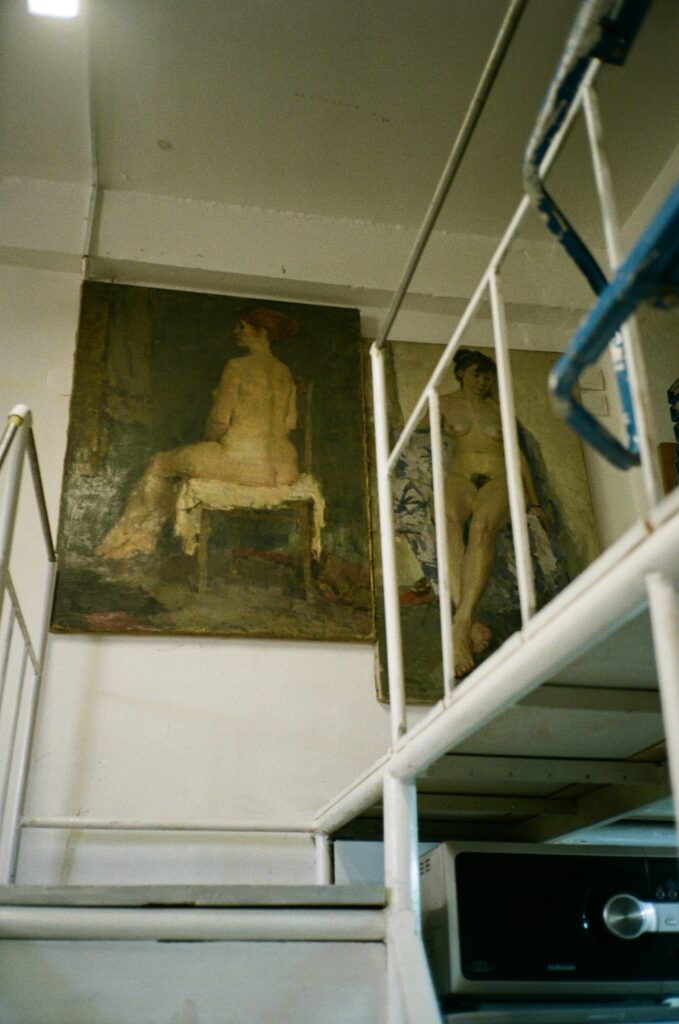
The Namuna residency has proven to be a hub for development and interconnection in its early stages. Facilitating short- and longer-term artist residencies, the housing and studio complex in the historical quarter of Toshkent is also designed by Studio KO. Uniform chapel-like units huddle closely, each with one window nestled above each entrance. A sleeping space neighbours a small atelier for each artist. Current residents Aziza Shaden and Bahbak Hashemi-Nezhad warmly invite us into the practices. The two are housed at Namuna for different durations, with different intentions.
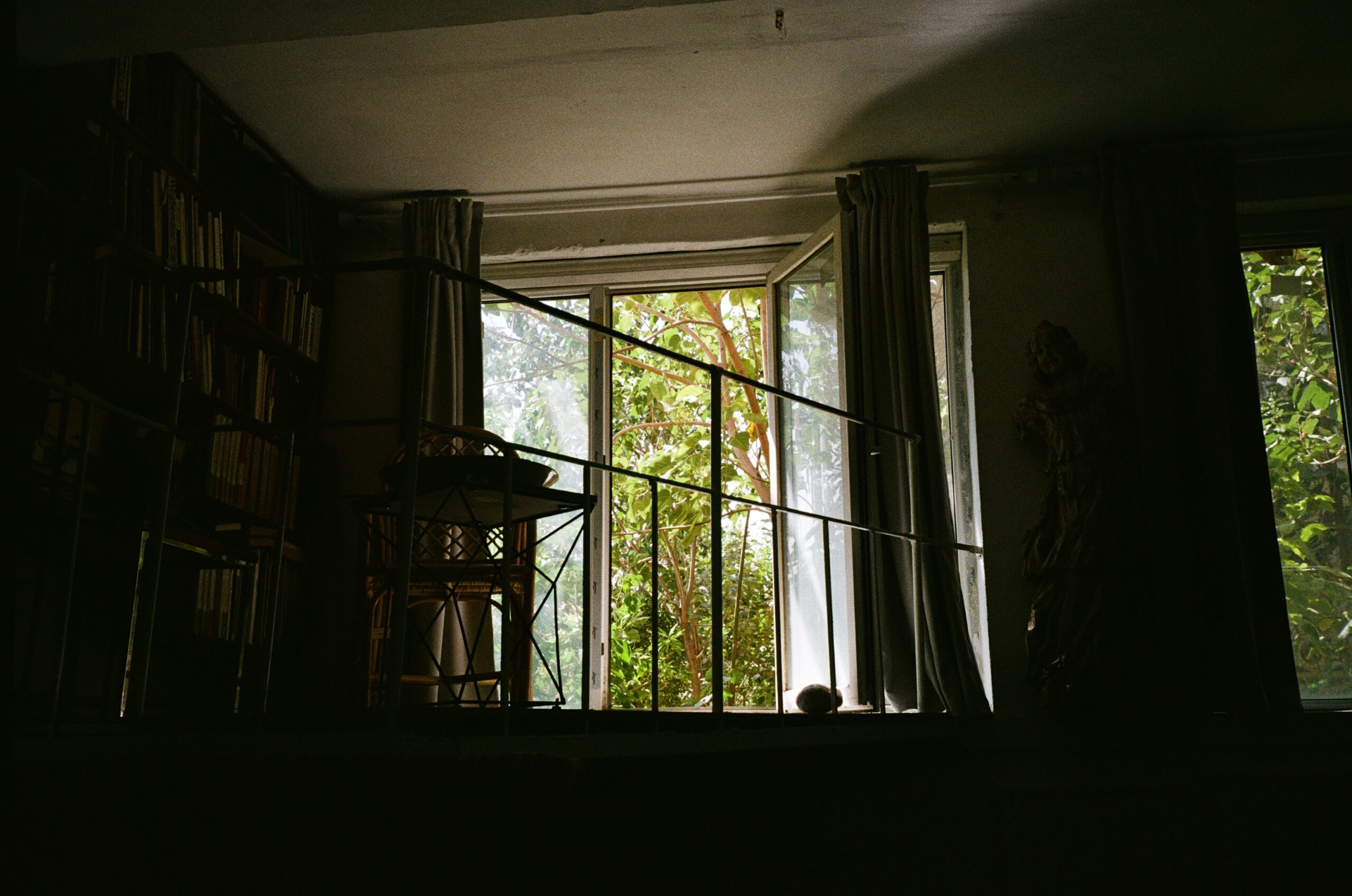
Hashemi-Nezhad explains that he’s only in town briefly before delivering workshops in Japan. The London-based designer has recently worked on incorporating west asian motifs into transport design, nodding to the contributions of migrant background families and artisans in their chosen communities. He tells us he’s keen to visit Bukhara, to flex his creativity in Tashkent, and move forward from the residency with new perspectives on urban planning. Shaden studied and lived in the UK for the last two decades, returning to her native Uzbekistan for the first time since. The artist of the ‘absurd’ presents her studio to us with flair and sharp wit. Shaden’s already house-broken space is trimmed with reference books, her own collage works, and an easel. She showcases the ‘straw method’ of weaving, one she is devoted to developing at the residency, while reconnecting with her ancestral home.
At the helm of programming and exhibitions is Chief Curator Dr Sara Raza, who has been working in the region since 2005. ‘The bulk of my adult curatorial research has been rooted in the art history of Central Asia and the Middle East. Even though I was living in the United States and before that in London, my focus was decisively eastwards.’ Dr Raza walks us through a preview of the inaugural exhibition, Hikmah, meaning wisdom. Showcasing artists based in O’zbekiston, North America, Western Europe, and West Asia, Hikmah gathers pieces that interact with the architectural space and wider setting. ‘It’s not just about wisdom; it’s also about Akal and consciousness. Combining those levels of thinking in mind and heart, thinking about embodied ideas. That’s what I’m doing through this exhibition. I think of it as a conduit for everything I’m trying to do because it’s very subtle, but through that, there are ways that it can engage with people…’
The chief curator guides us out of the main hall onto gravel, inviting us each to step under a storey-tall structure, buckled by palm-sized black slabs, and focus on the sound of our breath away from others. Riyadh-born, of Chechen and Karachay migration background, artist Muhannad Shono exhibits Tower for a Single Breath. This commissioned piece was ideated and birthed during Shono’s time at Namuna, Dr Raza introduces us to it as a pillar for reflection. Throughout our tour, she emphasises themes of introspection and breath, explaining that the works act in ‘confluence with thinking and being.’ Each artwork expresses a layered approach and an othered status. ‘It was also about the idea of thinking practices. Sowing that seed so that people start using it more and more.’ In the piece, we trace references to the teachings of Naqshbandi Sufism, a sect of Islam widely followed across West and Central Asian communities, involving breath and mindfulness. Shono provides us with a tower to gaze upward at a dedicated corner of the sky. Our breath suddenly sounds thin as we are denied distraction; a call resounds to breathe deeper and be still.
Reflecting on her early conversations with local young people, Dr Raza emphasises a necessity for The Centre for Contemporary Arts Tashkent to act as a hub for the city. ‘They were hungry for somewhere where they could meet new people, where ideas could be generated. Sometimes I’ll sit in a cafe working on my laptop, and I’m wearing a baseball cap, and they’re like, What do you do? They’re intrigued. It’s more for them than anybody else.’ Many corners of life feel tended to at the centre. A learning centre inhabits an encased curved walkway shooting off the side of the courtyard, the child-sized tables and chairs anticipating school and family days. The library is expansive, and its atmosphere brooding. A prayer room sits in a quiet corner; the box room is lit gently by a narrow slit in the ceiling, gracing the plush deep purple which carpets the floor, and a standing Uzbek rehal to recite from.
I reflect on Aziza and Bahbak’s endearing friendship in their short time shared at the CCA residency. Enjoying the space and each other’s company in a city that feels remarkably calm for a capital. Tashkent’s charm, in part, lies in its extreme capacity for and contagious nature of hospitality. You arrive curious, and leave humbled. The arts and culture sector benefits greatly from its increasingly detail-oriented approach to public outreach. Accommodating pluralities not only reflects a local history, but also creates paths for new modes. The Centre for Contemporary Arts (CCA) Tashkent is now open to all, for free. Hikmah is on show until January 2027, though the centre’s future exhibits will certainly also be ones to catch.