
 Image courtesy of Mariem Akmal.
Posted in
Art & Photography, Egypt
Image courtesy of Mariem Akmal.
Posted in
Art & Photography, Egypt
Mariem Akmal’s work wanders between tone and texture
Text Raïs Saleh
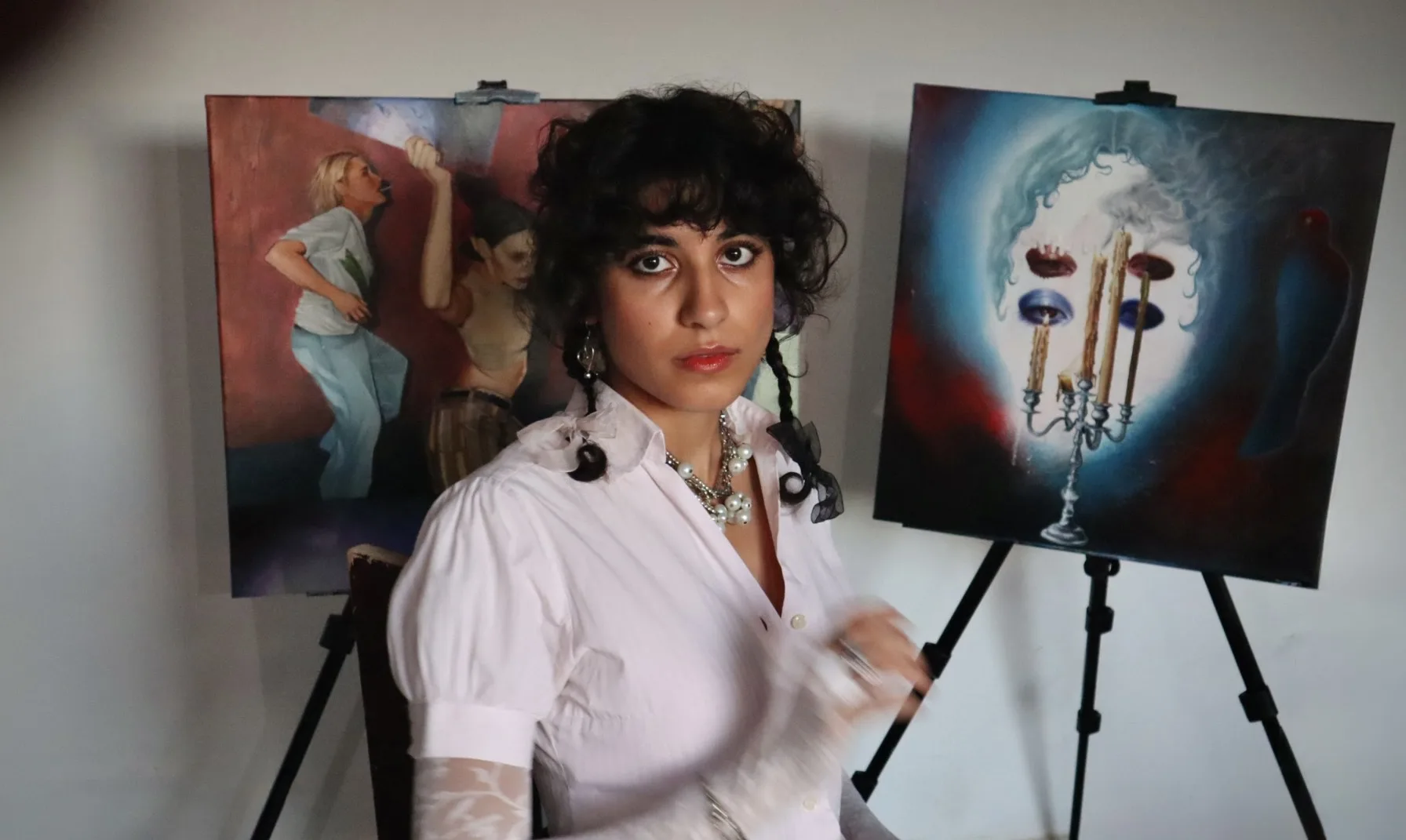
From a modest studio in Cairo, Mariem Akmal continues to develop a quiet but distinct visual language, one shaped as much by sound as by pigment. Now 24, the Egyptian artist recently completed her studies at the Faculty of Fine Arts, Helwan University, where she majored in mural painting and explored mosaic and stained glass. Her exhibitions in Cairo, including at Ubuntu Art Gallery and Shababco, mark a steady, thoughtful presence on the contemporary scene.
Akmal’s practice is centered on mood and memory, often led by intuition rather than concept. “My journey into the arts was intuitive, like a calling I couldn’t ignore,” she explains. “It was born with me and accompanied me from adolescence till now, at 24 years of age, making it inseparable from my identity and personal growth.”
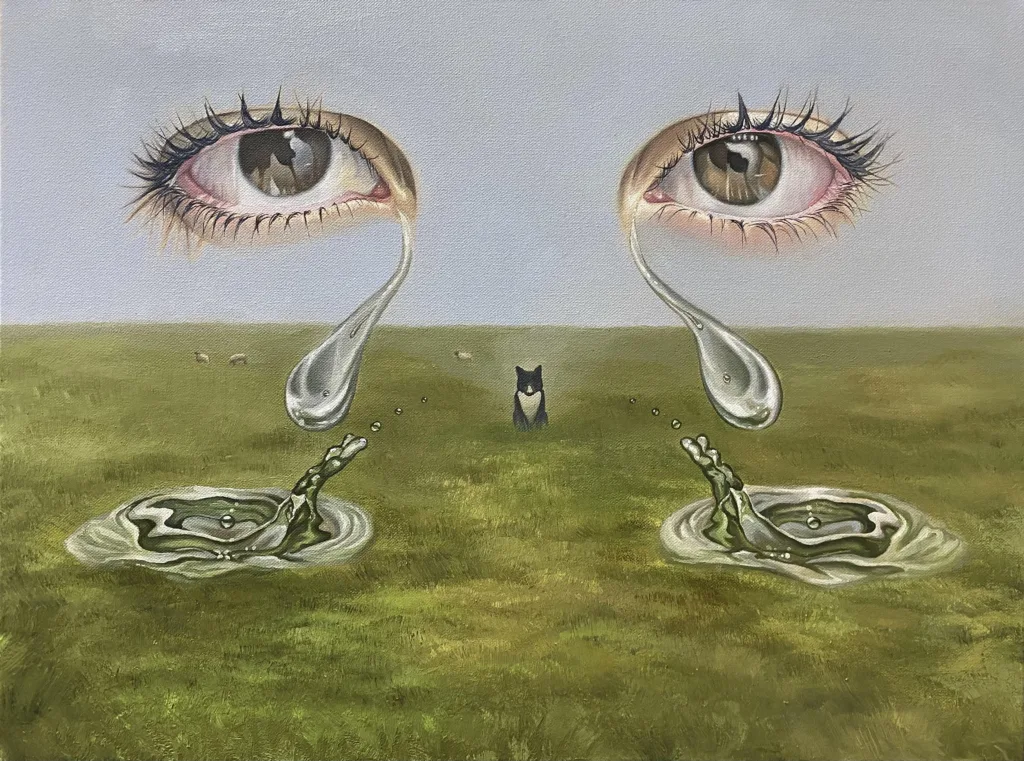
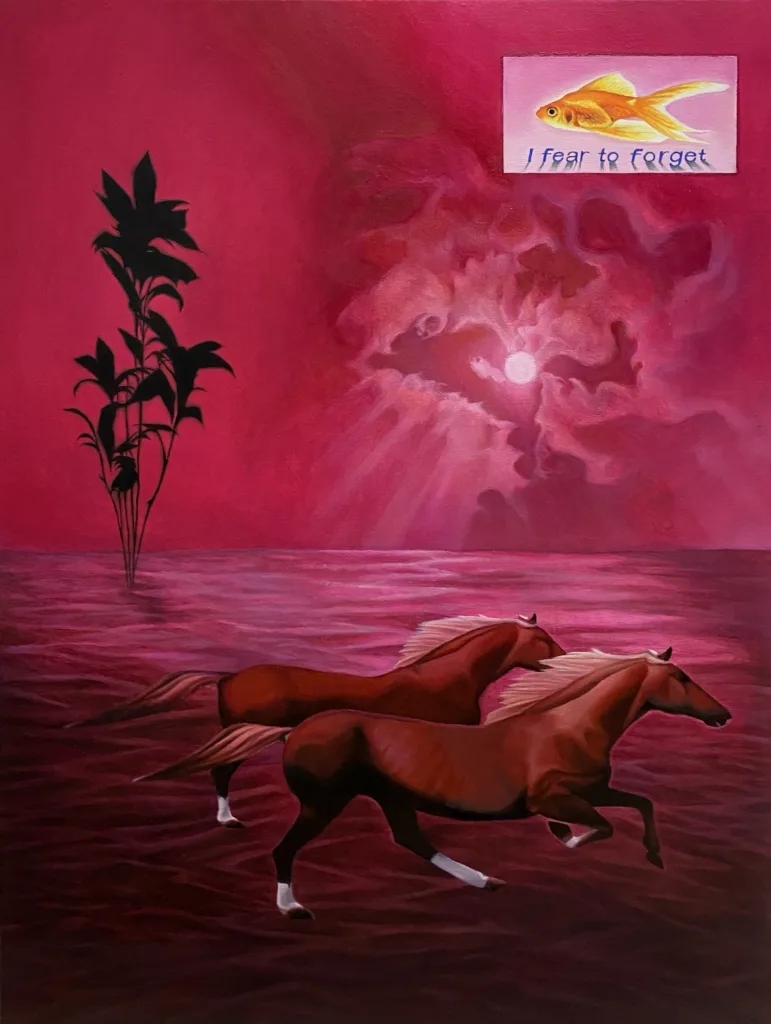
From early childhood, drawing served as both focus and escape. She recalls sketching on school desks and in the margins of notebooks, an activity that once earned reprimand but later shaped the foundation of her discipline. Her approach has evolved considerably over the years, from figurative work and watercolours to a more layered visual language rooted in acrylics, oil, and, more recently, large-format surfaces.
Over the past six years, a noticeable shift in her palette has become apparent, with saturated tones, textured surfaces, and a more spontaneous sense of composition. “It started as an experiment with neon colours and textures,” she says. “It felt like an epiphany… authentic to my neurodivergent nature, expressive of the nuances of having ADHD.”
Akmal’s work resists singular interpretation. While not overtly political, her paintings address internal landscapes and the complexity of non-verbal experience. She describes her work as “giving form to feelings and experiences hard to verbally explain.” For her, emotional resonance takes precedence over narrative.
“I like to keep an unbiased direction when working on a painting,” she notes. “Once a piece is finished, I let it stand on its own, free from personal bias, leaving it entirely up to the viewer’s interpretation.”
Music plays a consistent role in her process, often shaping the mood and title of her works. Her influences span across genres—La Femme, Tyler the Creator, Massive Attack, and more recently Vanishing Twin. In this way, her work often feels rhythmic, paced, and emotionally driven, though never dependent on the source material.
Visual inspiration comes from both established and emerging artists—photographers like Sasha Elage and Aidan Zamiri, and digital artists such as Audrey Bialke and Rae Klein. “Lately, animals have become a source of inspiration too,” she says. “Feeding strays for years allowed me to observe their behaviours closely. They became central figures in Parallels [one of her latest exhibitions], where animals reflected emotional and instinctive life.”


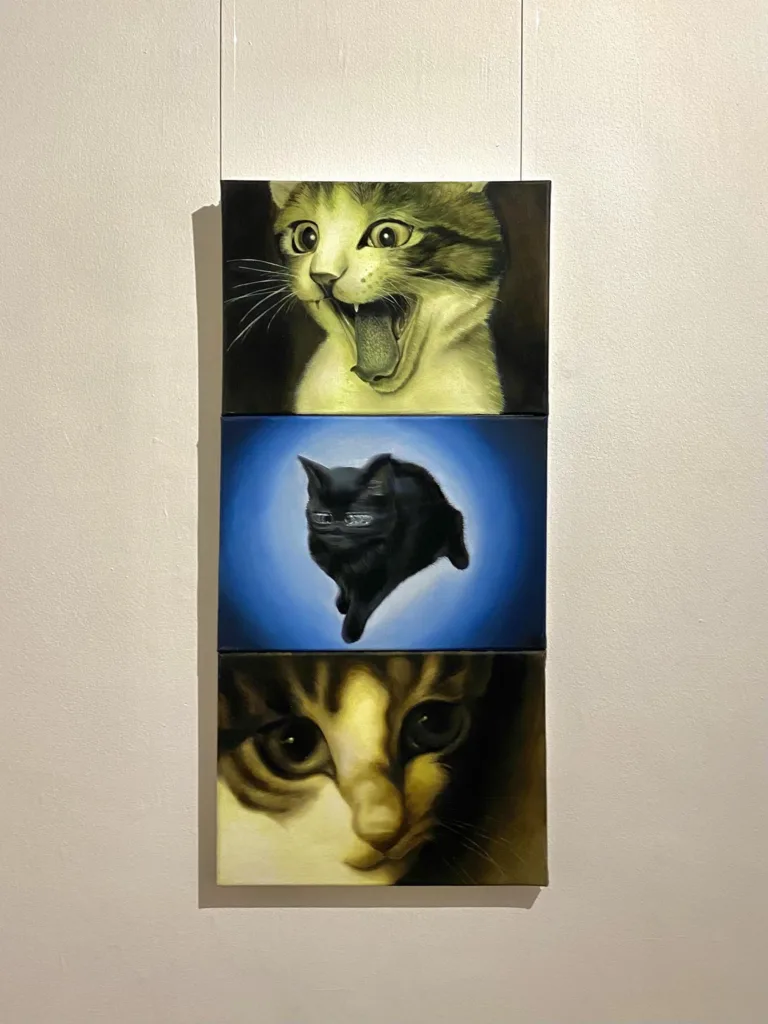

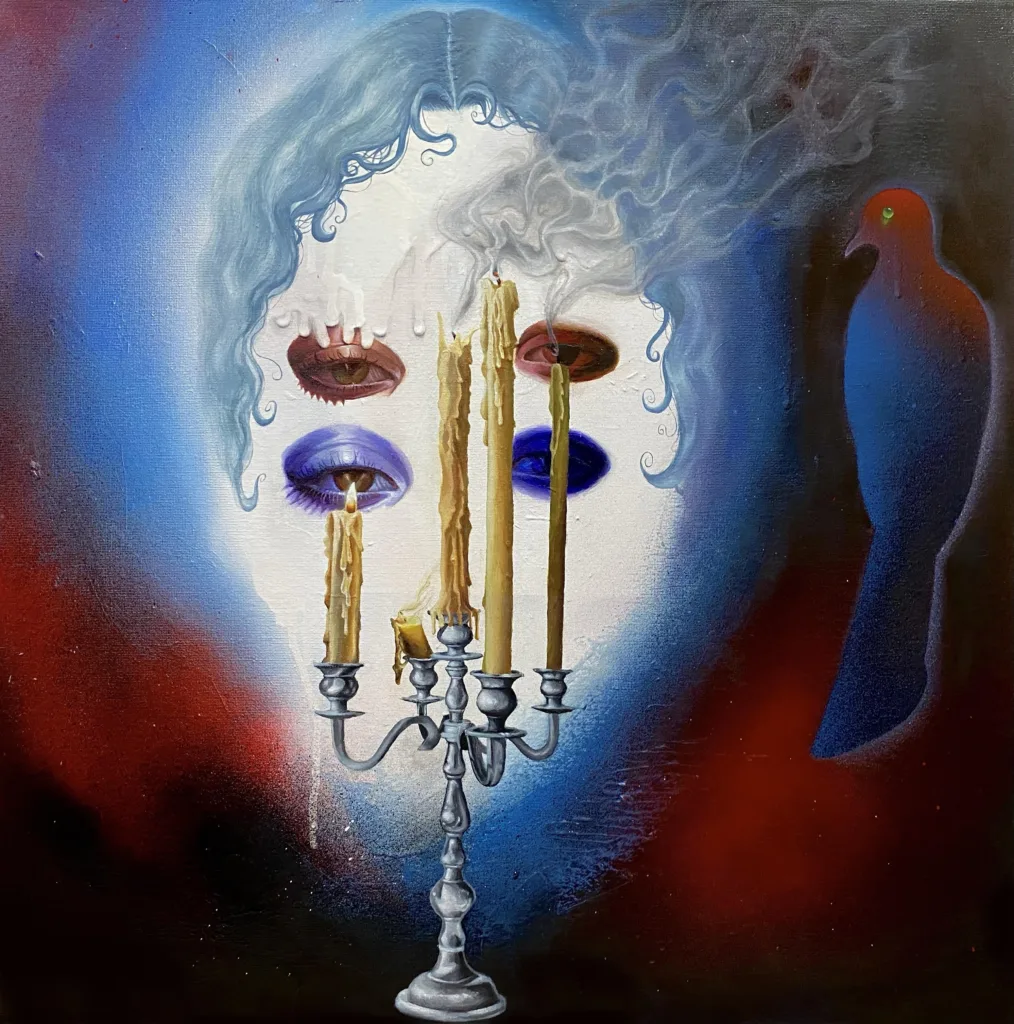
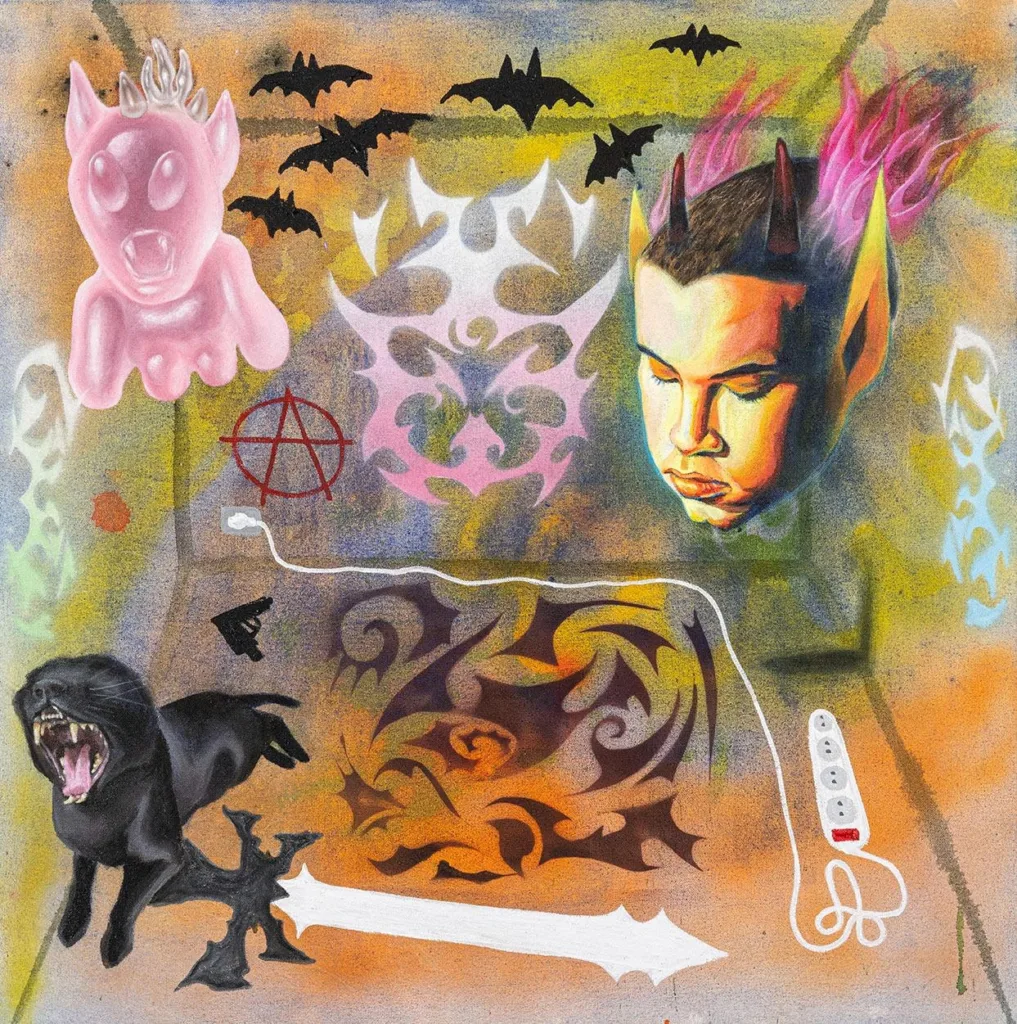
When asked about her place within Egypt’s broader art scene, Akmal offers a thoughtful critique. “The Egyptian art scene can feel repetitive at times—rooted in a celebration of heritage that, while important, can also limit creative expression.” She points to a younger generation of artists beginning to explore alternative media and contemporary themes—among them, digital collage, airbrush, and installation.
“It’s refreshing to witness this shift,” she says, naming peers such as Omar Gabr, Islam Allam, and Omnia El Refaey as part of an emerging current. “There’s a subtle change happening, and it’s one I’m interested in being a part of.”
As for her own position, Akmal remains grounded. “Painting wasn’t a choice, but something engraved in me,” she says. “It’s how I process existence, cope with its weight, and make sense of emotions that language can’t hold.”
Her work may not always aim to explain, but it invites a kind of attentiveness—both to the image and the world it gestures toward. In an art scene often preoccupied with commentary, Akmal’s strength lies in observation. Not spectacle, but texture. Not statement, but tone.