
 Posted in
Dazed MENA 100, Air Afrique
Posted in
Dazed MENA 100, Air Afrique
Air Afrique: A revival of Pan-Africanism
Text Maya Abuali
Founded in 1961 by 11 freshly independent West and Central African nations, Air Afrique was a declaration of unity and a vehicle for cultural diplomacy. Today, Air Afrique has taken off once more – not in flight, but in print, art and fashion, thanks to a Paris-based collective that has kept the name travelling into the 21st century.
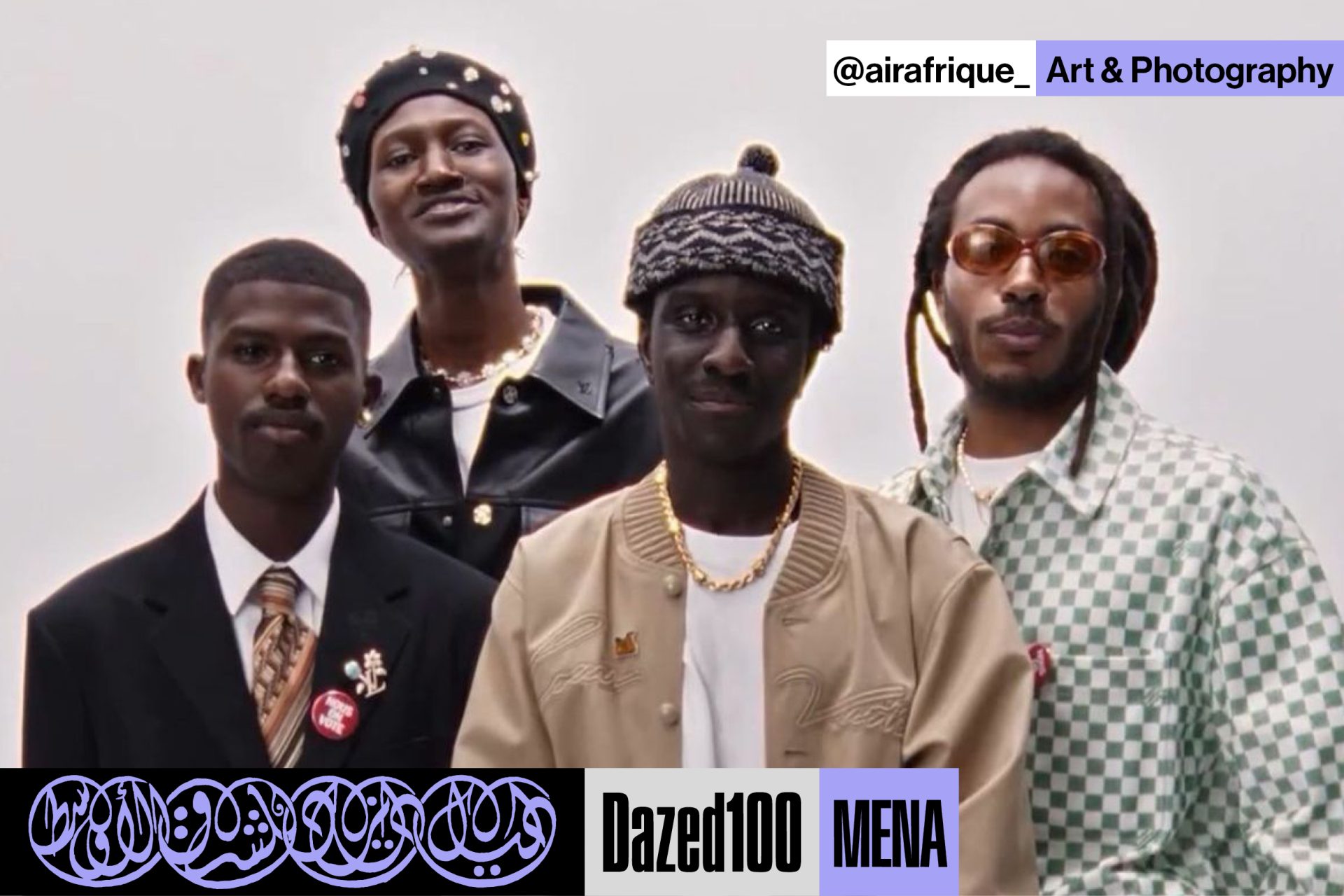
The Air Afrique revival is led by creatives like Lamine Diaoune, founder and creative director; Amandine Nana, editor-in-chief; Djiby Kebe and Jeremy Konko, co-founders. Together, they’ve transformed the airline’s storied past into a living cultural platform dedicated to Afro-diasporic arts, ideas and knowledge. Their work spans zines, exhibitions, apparel and cinema clubs, all shaped by the ideals that Air Afrique exemplified: a celebration of Africa’s past, present and future. With a bit of jet fuel from collaborators like Bottega Veneta, this revival is as bold and forward-thinking as the airline itself.
The independence movement across Africa during the 1960s, catalysed an era of institution-building to foster economic independence and cultural pride. Air Afrique emerged from this wave of ambition, co-owned by 11 nations, including Senegal, Côte d’Ivoire and Chad. The airline connected cities – and subsequently, ideas – consolidating a Pan-African identity during a period of transformative change. The airline became a cultural powerhouse, sponsoring iconic events like the Dakar Biennale and FESPACO, the world’s largest Pan-African film festival. Dior was enlisted to craft the crew’s uniforms, bringing a touch of haute couture to functional design. Its in-flight magazine, Balafon, published in French and English, was a cache of African history, literature and art. Between 1962 and 2002, the airline published between 100 and 150 issues – copies are prized artifacts today, preserved by the collective.
Enter the modern Air Afrique collective. Inspired by the avant-garde spirit and rich legacy of the airline, the group is determined to preserve and expand its vision. Their group’s centrepiece is Air Afrique Magazine, a meticulous bilingual publication that excavates archives from Balafon alongside contemporary Afro-diasporic conversations. The first issue featured profiles on Senegalese philosopher Souleymane Bachir Diagne, Ivorian photographer Kodjo and vivid explorations of Martinique’s dancehall music scene. Kodjo’s photography, emblematic of 1970s Abidjan, inspired the collective’s approach to storytelling; they paired his photo-roman visuals with newly commissioned narratives.
The launch of a magazine drew esteemed collaborators. The collective brought the airline’s story to life through exhibitions, such as a 1960s-inspired travel agency installation at the Kaleidoscope Manifesto Festival. In 2023, Air Afrique partnered with Bottega Veneta; Franco-Sudanese designer Abdel El Tayeb crafted 10 one-of-a-kind blankets. Inspired by Sudanese toub dresses and Sun Ra’s Afrofuturism, the blankets combined fine wool, silver leather and shearling sourced from Bottega’s archives.
In November 2024, Air Afrique became an official partner of the Bamako Encounters Biennale, reviving a connection the airline first forged in the 1990s. They launched the Air Afrique Prize to commemorate this partnership, granting support to emerging African photographers and ensuring their work reaches international audiences. In 2025, Air Afrique will join the Museum of Modern Art (MoMA)’s Ideas of Africa: Portraiture and Political Imagination exhibition, which examines the role of photography in fostering Pan-African solidarity. Meanwhile, its collaboration with Louis Vuitton’s S/S25 menswear collection brought Air Afrique’s visual identity to life through leather goods and refreshed logos inspired by the airline’s golden era.
Among the collective’s recent cultural ventures has also been the revival of the Air Afrique Football Club. Its immersive events include locker room exhibitions and football tournaments.
Once a symbol of corporate unity, the club has returned as an artistic and athletic metaphor for teamwork and cross-continental creativity. Air Afrique was once the vehicle to bridge Africa’s countries as they burgeoned in their own right. Today, it is a platform for dialogue, a vessel for creativity and a place to celebrate Pan-Africanism through radical imagination and collaboration. A revival like no other, Air Afrique is a reinvention of how we honour history while charting new skies.