
 Posted in
Dazed MENA 100 2025, Dazed 100 2025
Posted in
Dazed MENA 100 2025, Dazed 100 2025
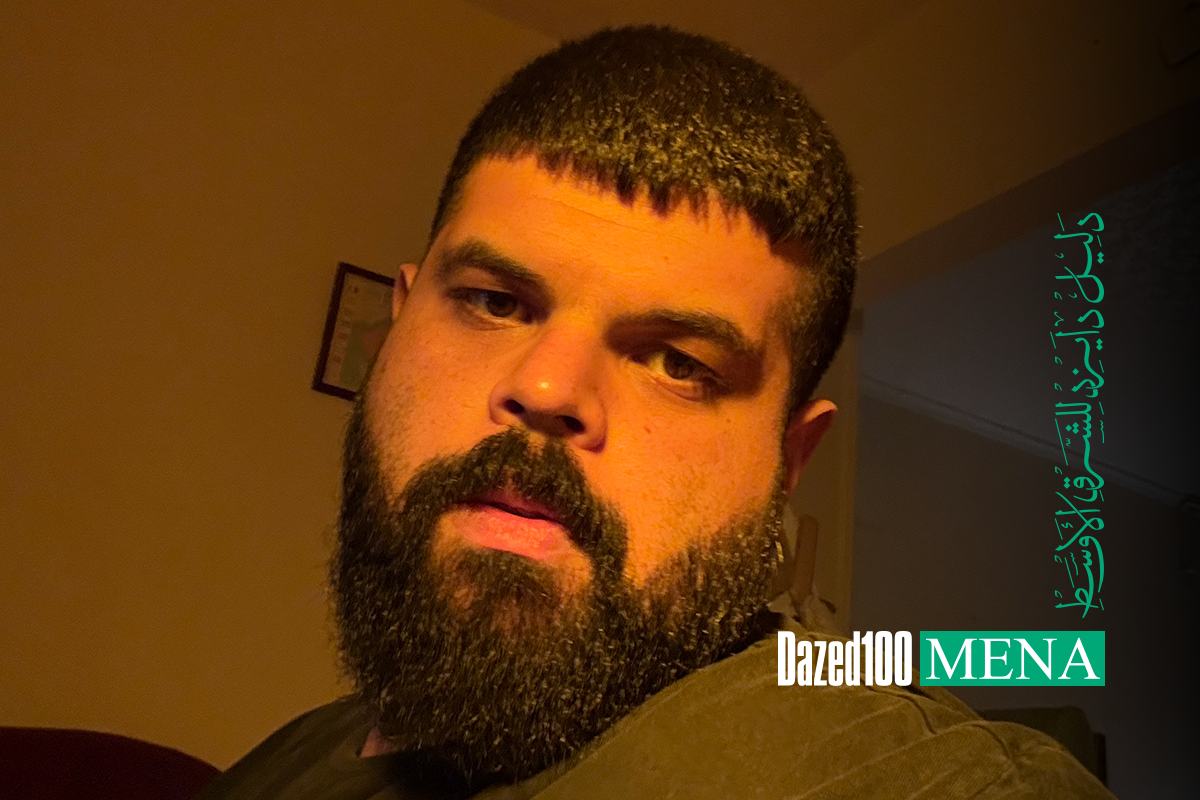
kafrawy: Finding Tenderness in the Chaos
Text Hamza Shehryar
Somewhere in the middle of the familiar hum of Cairo – car horns, cheap cigarettes, arguments, and music – Omar Kafrawy is watching. “I think it all started with an urge to look,” he tells Dazed MENA, recalling the moment that pulled him from anthropology into film and photography. “Lockdown came and ended, as with most of these stories, and I just picked up my camera and went to the first party I heard about.”
Those nights were raw and unscripted—rap shows still small enough to feel like secrets, artists performing to half-empty rooms before their faces took over billboards. “You could still catch any of the current biggest names at a random club night,” he continues. “The camera gave me a chance to finally dip into my ethnographic urges in a way that felt less decisive than writing.” It also gave him the freedom to turn observation into something instinctive, tender even.
That same intimacy runs through all of Kafrawy’s work, whether it’s portraits of Cairo’s rap scene, quiet moments of exhaustion, or the strange humour of urban life in North Africa’s most populated city—a place littered with idiosyncratic stories. “My biggest fight is authenticity,” he reflects. “I shoot for my friends. That’s my community. I love awkwardness and complication.”
In the 30-year-old photographer’s mind, Cairo’s creative scene is in transition, moving away from what he calls the “docu-moment” ushered in by “low-balling reverse migrating diaspora creatives”. He’s ready for something more than hackneyed flash photography. “If I see one more fruit stall,” he jokes. “We can afford more interesting work, more world-building, and less of this need to stem from locality and everyday life.”
Kafrawy downplays the idea of being an agent of change, though. “That’s a massive responsibility,” he shrugs. But what he offers feels more subversive: on being local without being romantic, on humour as honesty. “I think we take ourselves too seriously sometimes,” he muses. “I’d hate to think that taking pictures of rappers in front of things is changing more than just taking pictures of rappers in front of things, you know?”
There’s humour, but also a kind of exhaustion. When Kafrawy talks about what fuels him, his answers are brutally honest: “Anxiety. FOMO. Obsession? Addiction,” he admits. “I’m really attracted to weaknesses. I take those very seriously.” In his work lies real emotion and sensitivity—the urge to look closer, to find beauty in damage, and to take vulnerability seriously.
As for what’s next? “My biggest project right now is taking time off,” he says. “Rest is difficult for me. My next move is definitely horse related.” It’s unclear if he’s joking, but with Kafrawy, the line between sincerity and satire is half the fun. And maybe that’s the point. His images are messy, contradictory, and alive, reflections of a city perpetually in flux.