
 Posted in
Life & Culture, Abu Dhabi
Forever Young: The cult of the American teen
Text Anna Bernice delos Reyes | Photography Lucas Troadec



Growing up as a girl in the early 2000s, I wanted to be an American teen. I wanted the Motorola hot magenta flip phone and Forever 21 daisy dukes and claimed Justin Bieber as my husband. This is Manila in the Philippines, where living the perceived ‘American way of life’ suggests economic and cultural capital synonymous with sophisticated taste. With much of Philippine mass media culture a potent residue of American colonisation, my early teenhood also consisted of obsessing over my MySpace profile song, buying knock-off DVDs of Gossip Girl, and making vision board collages from my back issue collection of Seventeen magazine. My first trip to the United States for a pre-college summer school scholarship became the ultimate test of my Americana. I became so fluent in American teen that it turned into my social currency. I blended in so seamlessly with the coolest clique in the programme because my references to Pretty Little Liars made them think I grew up just like them.
America conceived and exported the ‘teenager’. The word caught on in the 1940s as high school enrolment boomed; for the first time, young people spent their days together at school away from adult supervision. Here they built a world of their own: their own slang, music, rituals and rules. In the decades that followed, Hollywood immortalised the angst, awkwardness and romance of teenhood into a well-documented mythology of a distinctive American identity.
At the same time, after World War II, cultural imperialism became a deliberate strategy for U.S. dominance, promoting American culture as the epitome of liberty and prosperity. Global consumption of American media has since secured it an omnipresent soft power. Screen culture scripted the American teenager as the world’s blueprint for coming-of-age, romanticising angst and rebellion as necessary steps towards autonomy. Influencing minds and behaviour alike, this hegemony maintained America’s status quo. Every adolescent, everywhere, unquestionably came of age like an American teen.
Nothing scripts American coming-of-age like prom: a formal evening of dining and dancing in suits and gowns. Prom marks the threshold to adulthood before many finish high school and ‘leave the nest’. As captured in cult coming-of-age films like Pretty in Pink, Footloose, and Mean Girls, the spectacle surrounding prom has spawned distinct preparation rituals: finding the perfect dress, planning or awaiting the prom-posal, getting dolled up with friends, the pre-prom photoshoot. Each of these rituals is a test of social acceptance and validation of beauty and desirability.
We had prom in my high school too. The stressful anticipation of being ‘asked’ to prom and being nominated for (and winning) prom royalty seeped into every conversation between classes. It felt monumental, all-consuming, and definitive of my success at becoming an American teen. Despite not growing up in America, all of this felt like clockwork to me, and prom became an event I awaited with bated breath (and lots of anxiety).
But I didn’t end up getting asked to prom, despite being the ‘best wingwoman’ behind my male friends’ extravagant prom-posals. I went alone anyway, empowered by Andie Walsh’s solo prom attendance in Pretty in Pink. But having no date to prom convinced me until my early adulthood that I was ugly: that I would never be pretty or cool enough to be desired (my adult self disagrees now of course – thank you therapy). I would rewatch Mean Girls to temper the shame: witnessing Cady Heron get crowned Spring Fling Queen felt like justice for ‘ugly’ girls like me.
Shortly after prom I moved from the Philippines to the UAE, a new-age capitalist empire that felt like the embodiment of the universalisation of American coming-of-age. Few countries have grown into the American neoliberal dream as fully as this country has: building at breakneck speed where Westernisation is synonymous with progress and an imagined liberalisation. With a population from over 200 countries comprising more than 80% of its population, the Emirates, in its rush to modernity, embraced Westernisation, and Americanisation in particular. As it slowly wiggled itself up as one of the centres of capitalist commerce, it has haphazardly imported not only America’s infrastructures and architectures but its ways of living, in part as a result of the influx of American expats. In a country where subcultures of foreign life are only a few generations old, the overarching social architectures of quotidian life here remain adapted from the United States.
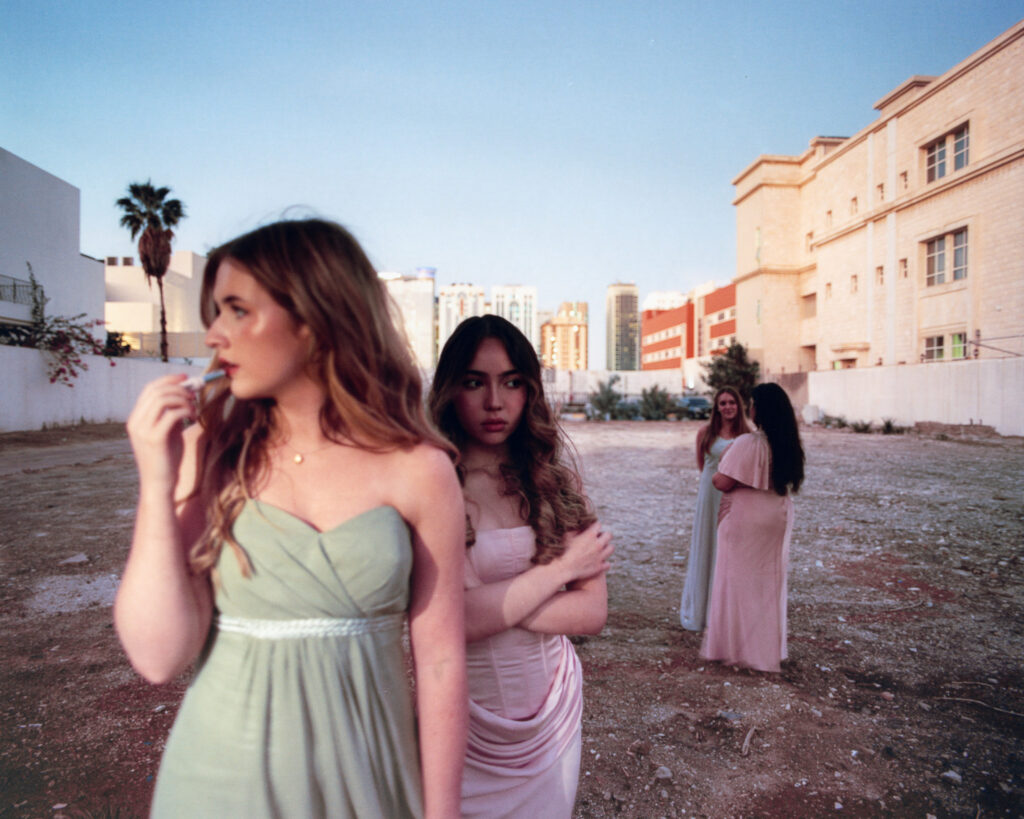
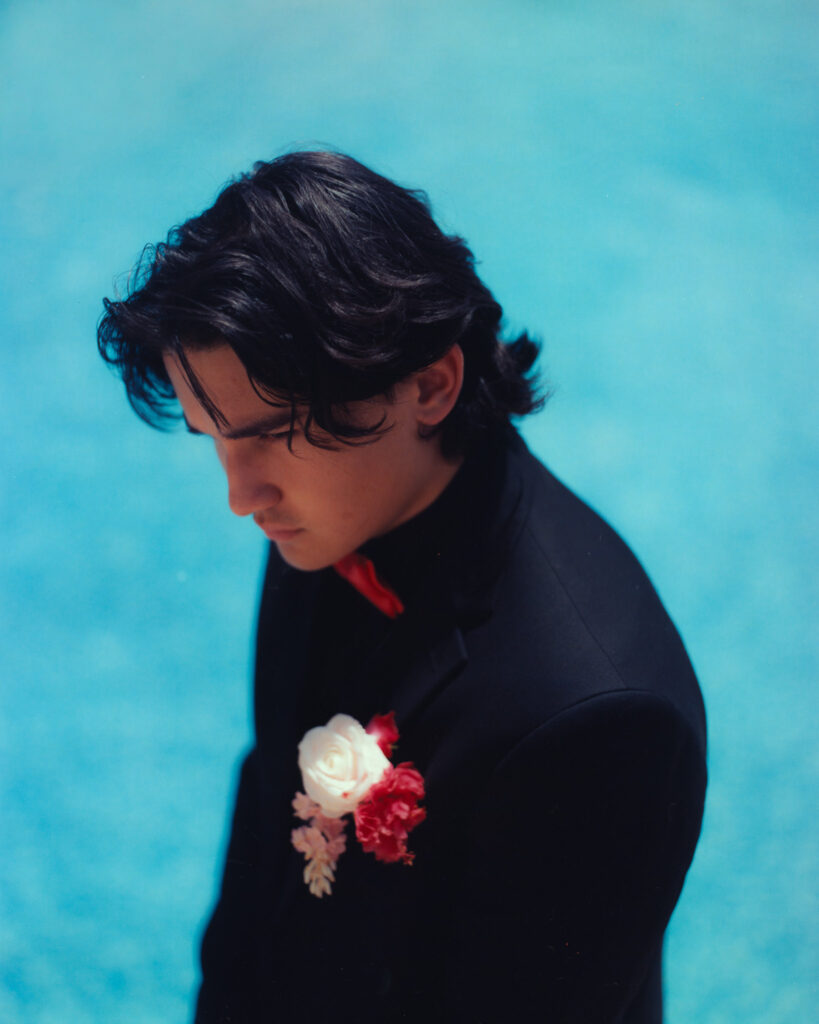
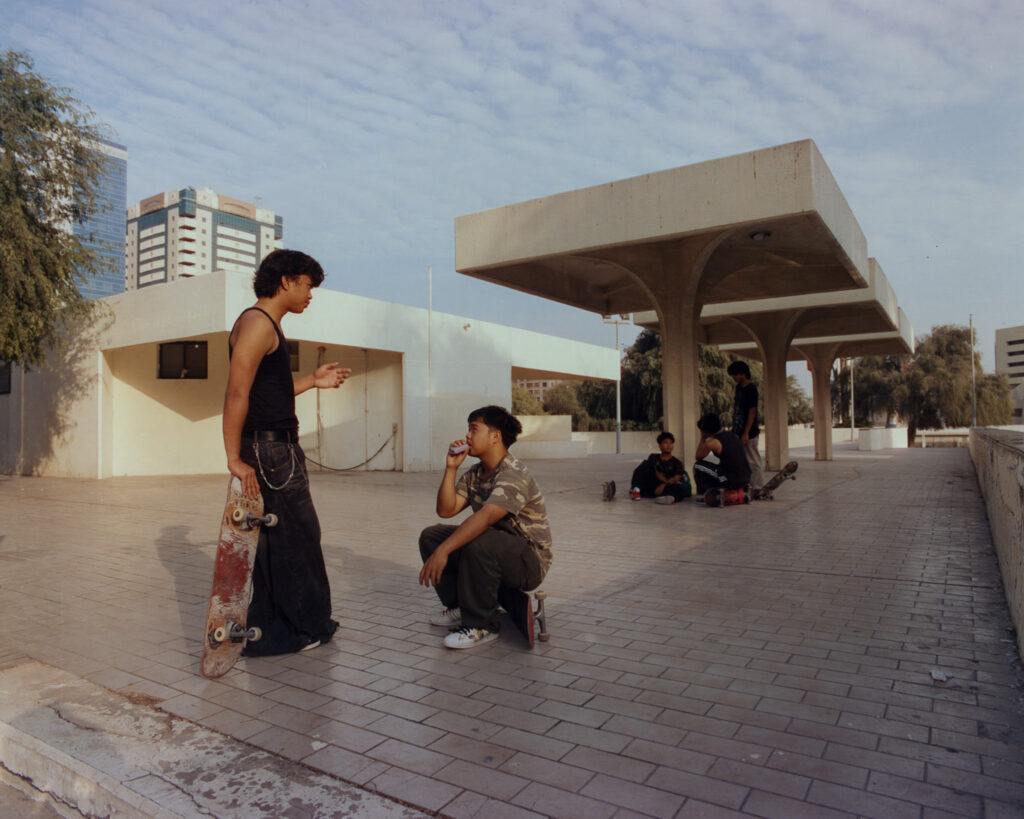
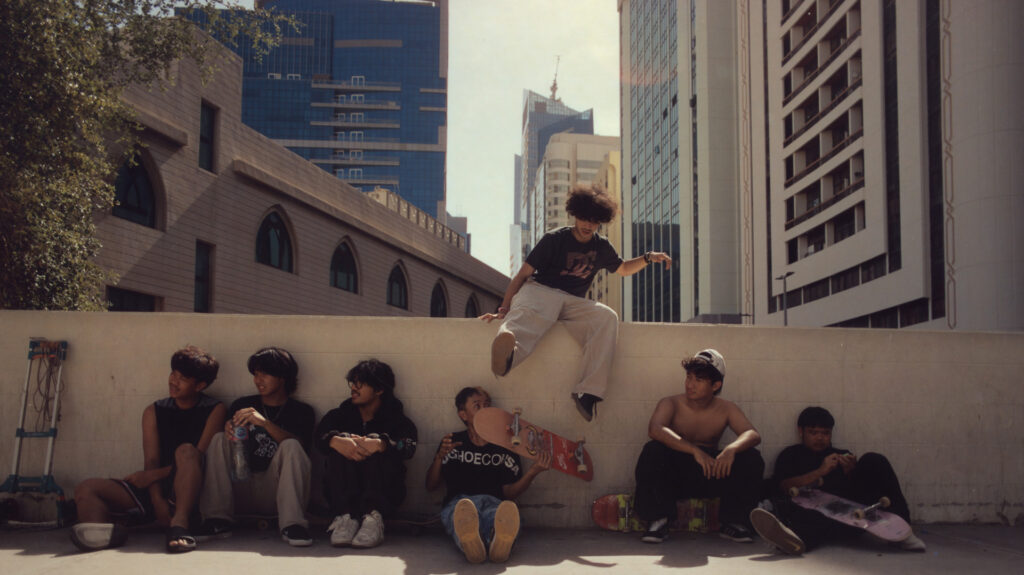
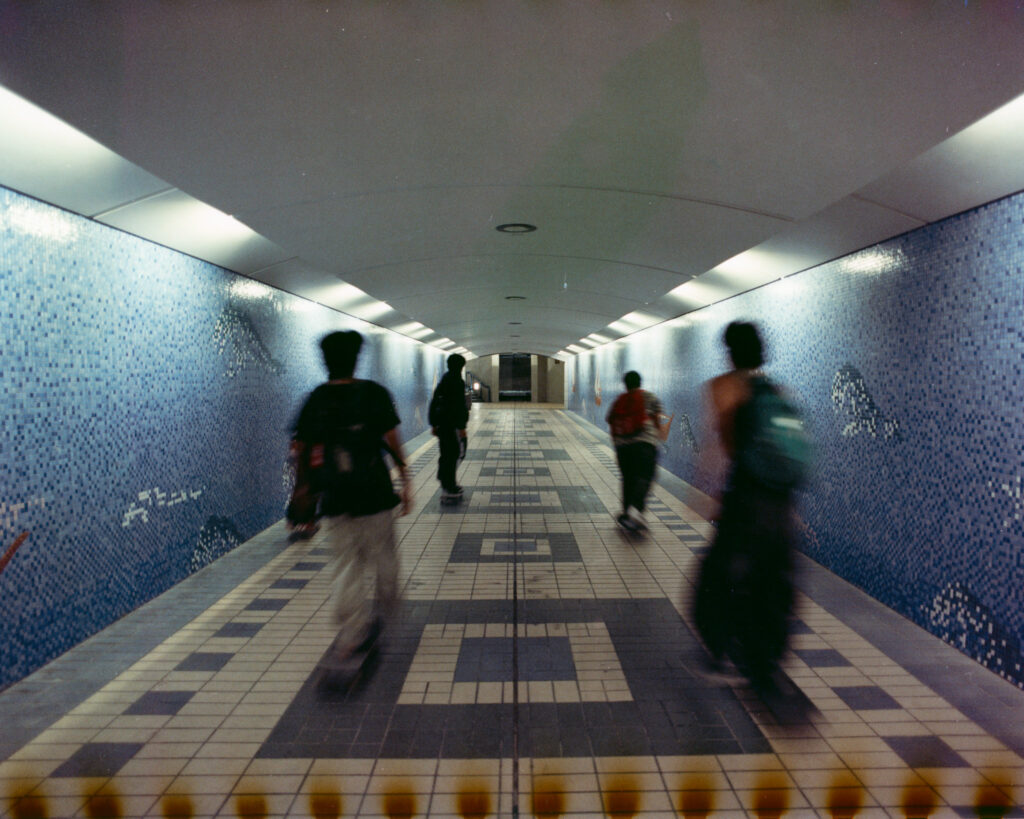
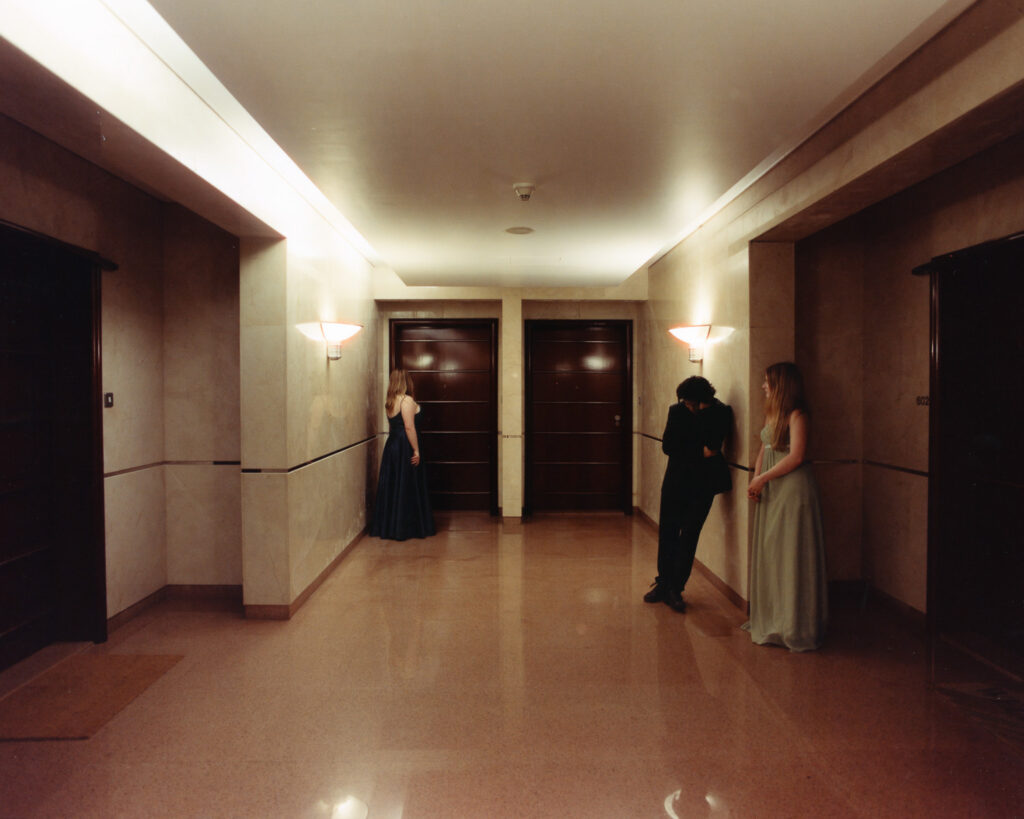
Now for UAE-raised youth, the completion of prom commences an even higher-stakes transition to uncertainty in addition to the aforementioned typical agonies of coming-of-age. Photographer Lucas Troadec, who himself spent his teenhood in Abu Dhabi, explores this through his ongoing photo series On Prom’s Eve, following groups of non-Emirati teenagers on the cusp of their prom night in Abu Dhabi. In the American imagination, prom is a farewell to childhood. But in the UAE, prom is also a farewell to the country these teenagers grew up in. Friends scatter across the world; some return to ‘home’ countries they barely know. Troadec sees prom here as a ‘suspended moment’ in time, one that “often coincides with the [teenager’s] loss of the legal right to remain in the country”, as many lose their residency visas upon departure to university elsewhere. The temporary nature of residency visas in the country means that for some, their parents return to their places of origin soon after retirement, uprooting the only homes they know.
Troadec’s images capture the pervasiveness of American culture and aesthetics as a unifying shared language around coming-of-age. This is especially resonant in the UAE, where the largely non-Emirati, foreign population seeks a universally legible common language. Beyond the commonality of English, the cultural export of the American lifestyle feels most legible. Prom here becomes a defining milestone for teenagers living in a non-American city, the tradition becoming a part of their memories and identities despite most never having lived in, or even visited, America. There is something uncanny about a generation creating its formative memories and feelings through the lens of American aesthetics, while living in a country they will never be native to. To be a third-culture kid, I suppose, is to continually live within everything that’s borrowed.
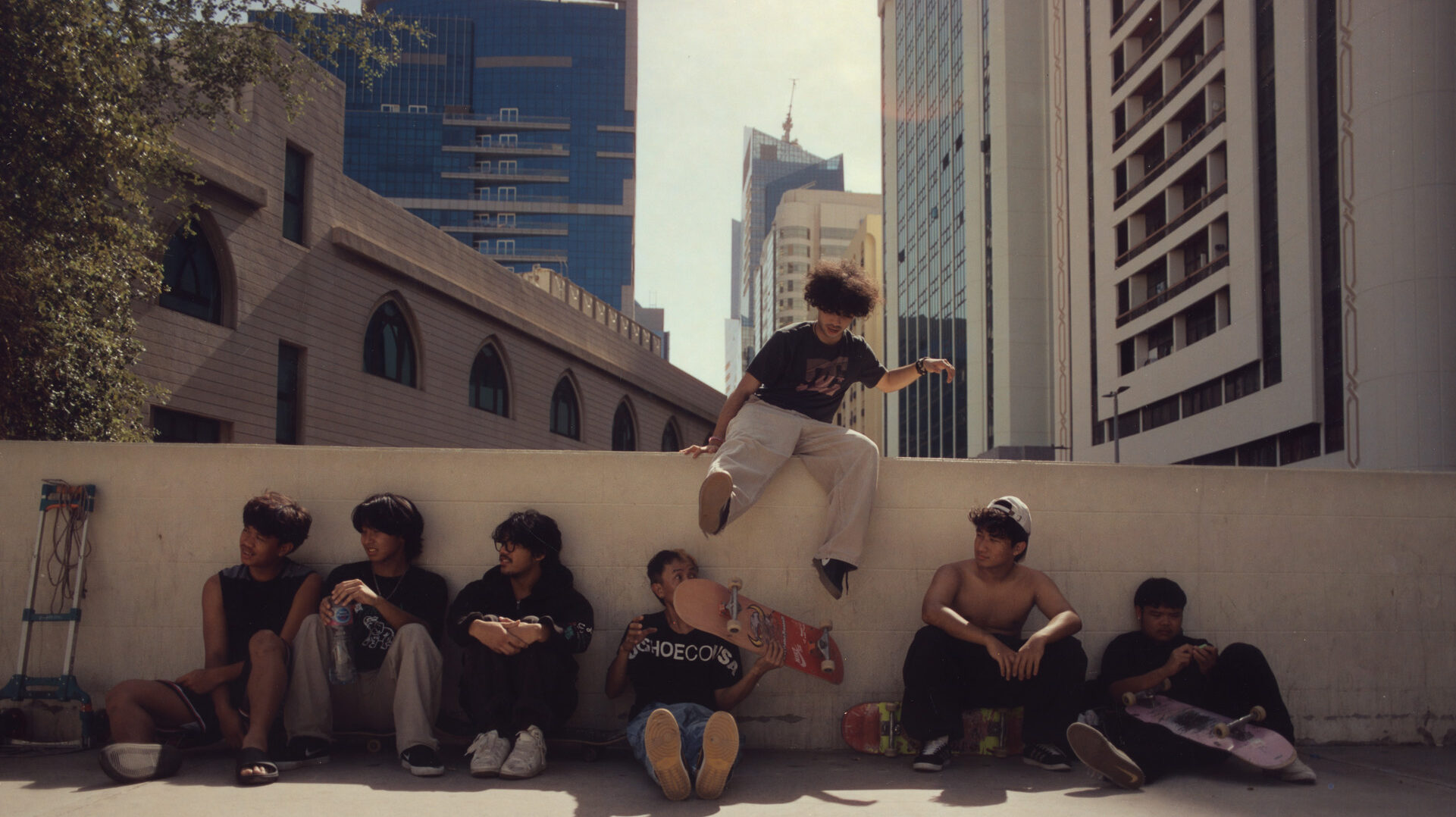
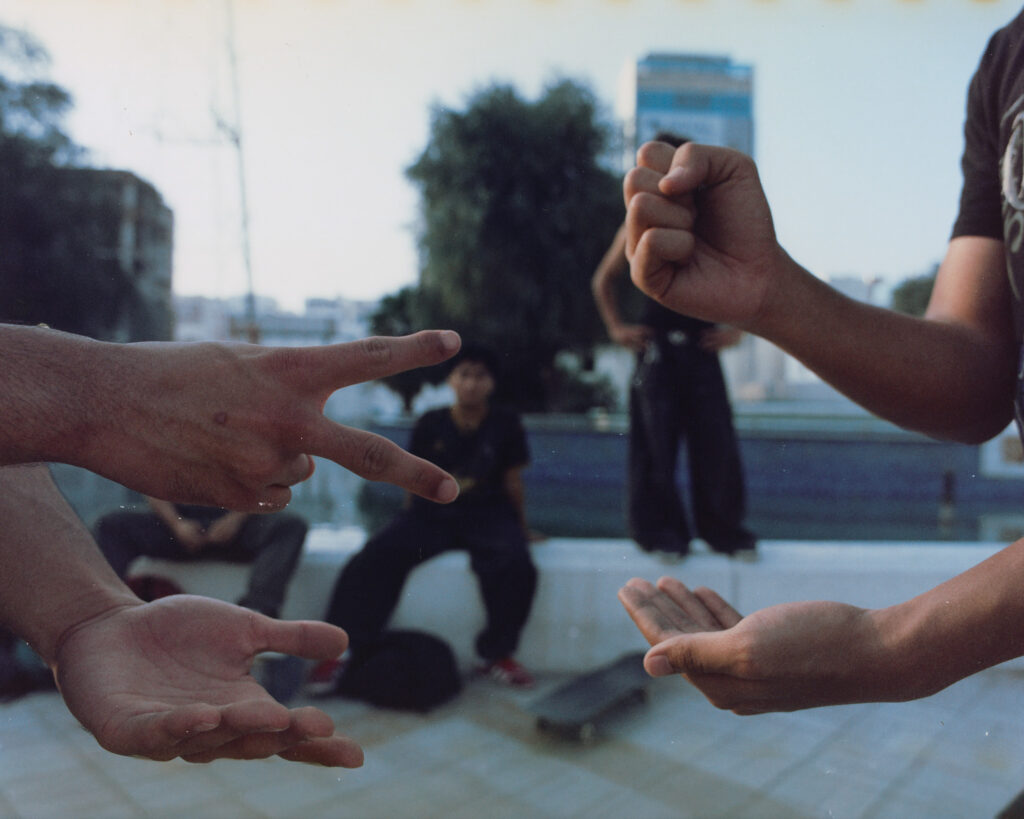
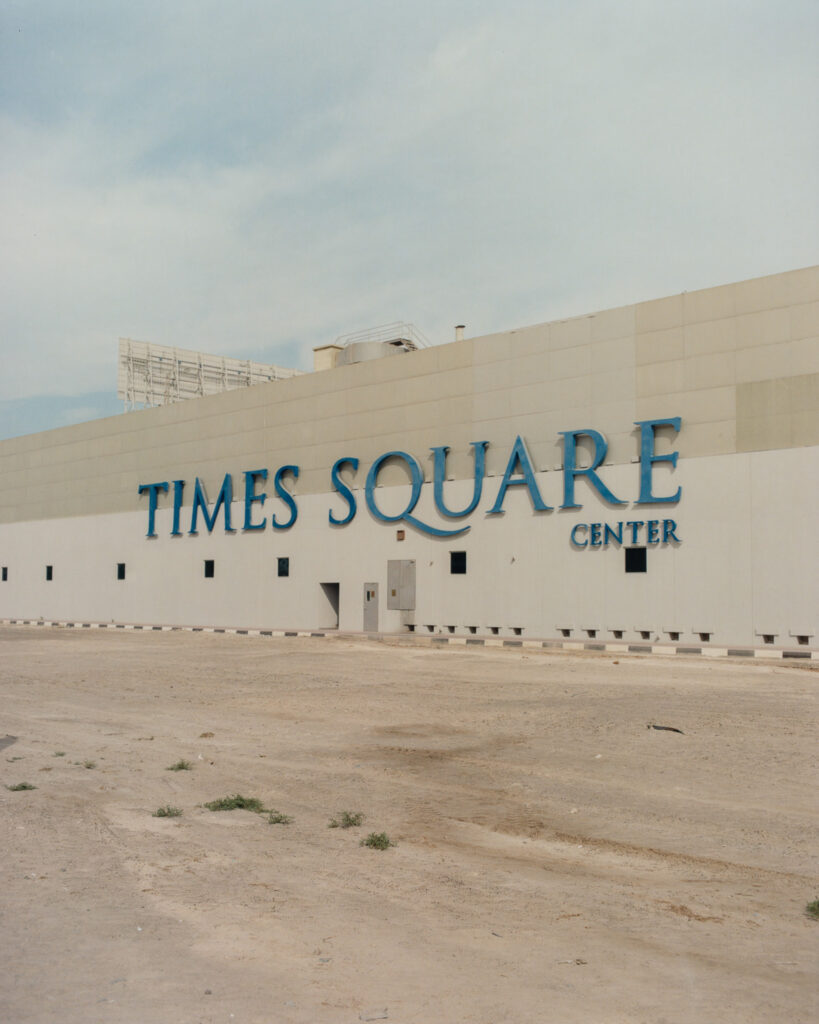
Troadec nods to the hues and framings of American cult-classic coming-of-age films (there are hints of American Beauty, The Breakfast Club, and Stand by Me across the series) as a lens through which to view this Gulf adaptation of American rituals. Against the backdrop of Abu Dhabi’s malls, bus stops, and public parks, the subjects explore both the bittersweet elation of togetherness and the impending uncertainty of departure and independence. Troadec’s juxtaposition of American aesthetics and the UAE’s architecture and landscape highlights the latter as mimicking an idealised prototype of the American dream: car-dominated streets lead to temperature-controlled malls, gated communities, and themed amusement parks, closely resembling idealised American suburbia. A weekend drive from Abu Dhabi to Dubai on the E11 will guarantee countless gas station pit stops and fast-food drive-thrus like scenes from Dazed and Confused. Typical evening strolls and hangouts here are likely at the mall, where hours of window shopping would end with a scoop of Baskin Robbins at the food court. The importing of these urban infrastructures from the U.S. further perpetuates the cult of American youth in the UAE, giving form and place to what would otherwise be an imagined way of being.
Viewing youth in the UAE through American tropes, I suppose, makes it easier to understand. But what is up with this omnipresent legibility of American culture outside of the U.S.? How has Americanness, and in turn whiteness, become the default lingua franca through which our lived experiences are understood? As a teen I never questioned the chokehold American hegemony had on my mental health, self-esteem, and general purview of the world. Much of this reckoning ironically happened while attending an American university. Here I felt radicalised by Frantz Fanon’s Black Skin, White Masks, understanding that my implicit perpetual desire towards whiteness is in fact an imperial tool for control and power. My adherence to American social scripts, and reflex to reach for American media as a blueprint for life, is not my active, conscious choice – but the product of a system designed to perpetuate America as the status quo.
America’s image abroad grows more contested, its promises of liberty and prosperity harder to sell to a world watching its fractures in real time. Soft power, after all, depends on desire, and the exposure of its sociopolitical fault lines threatens this desirability.
I wonder if prom, and the cult of youth it crowns, will outlast it. The American teenager has given many of us a shared vocabulary, a rolodex of referential films and shows, but I’m growing weary of being socially measured by my Americanness. Even as an adult, I’ve been shamed in a party conversation for not knowing Biggie and Tupac, and my friends and I continue to reference Girls and Friends and Sex and the City to diagnose our contemporary adulthood dilemmas. In an increasingly globalised and interconnected world, can there be an alternative to the American baseline as a way to live and relate to each other?