
 Posted in
Music, Underground
.cutspace makes music for the new illiterates
Text Mohamed Jaouadi
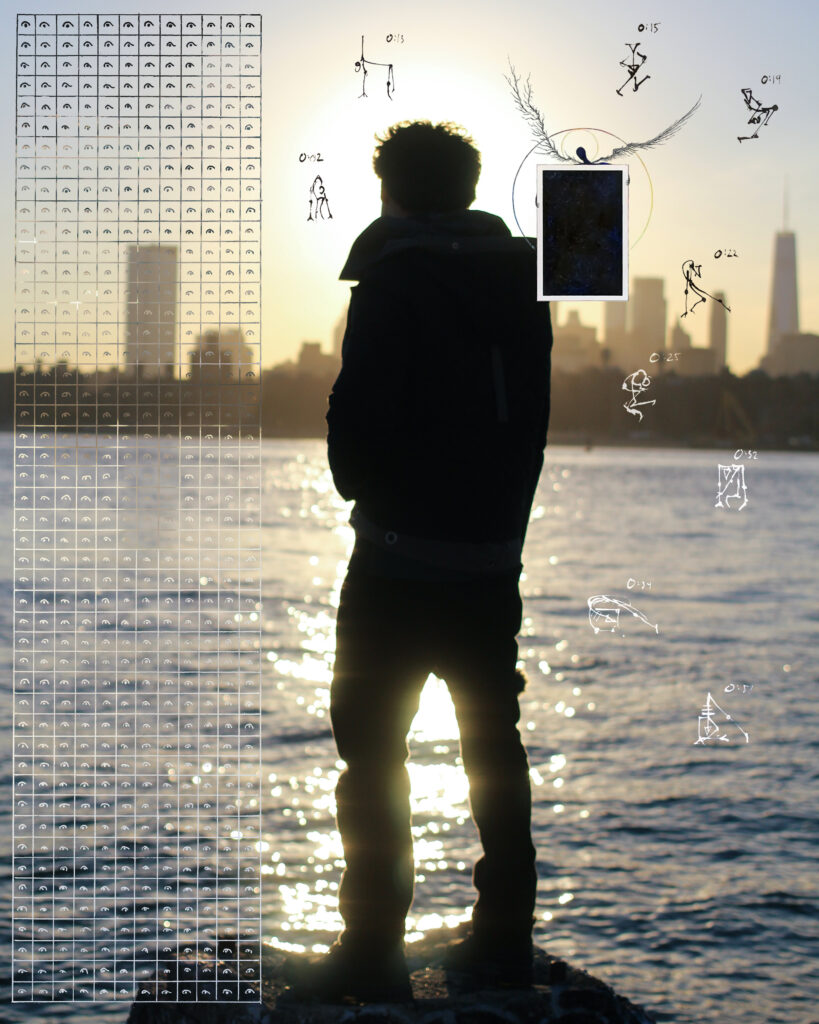
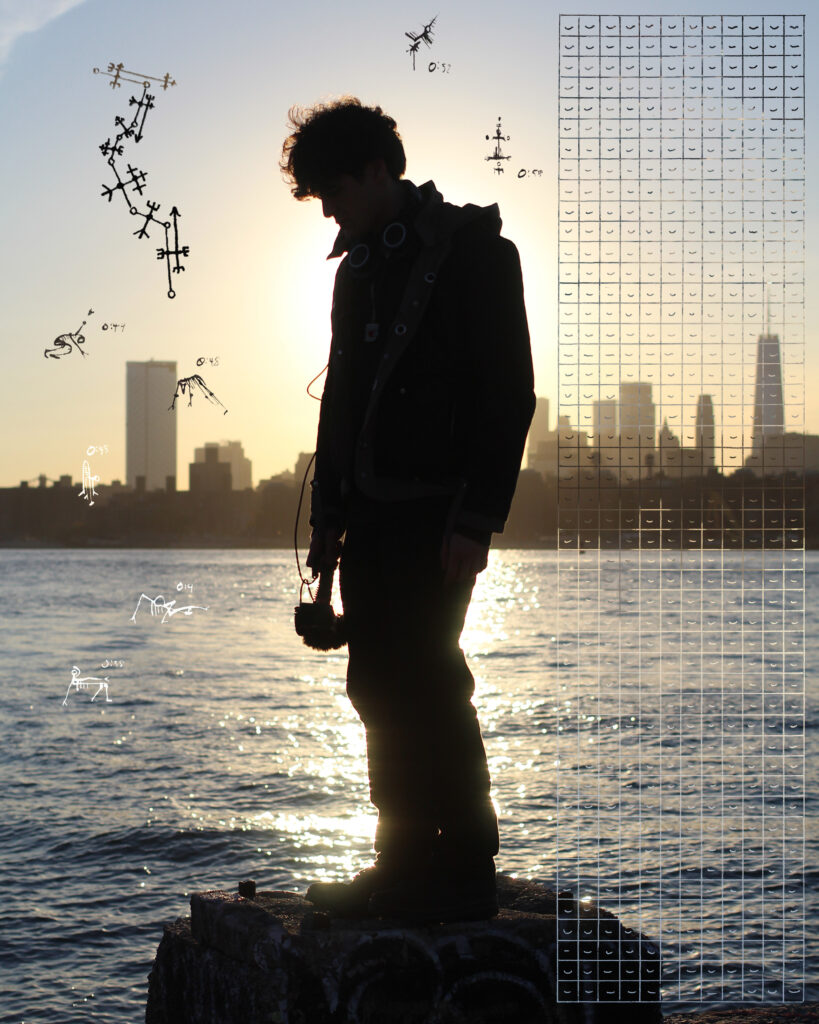
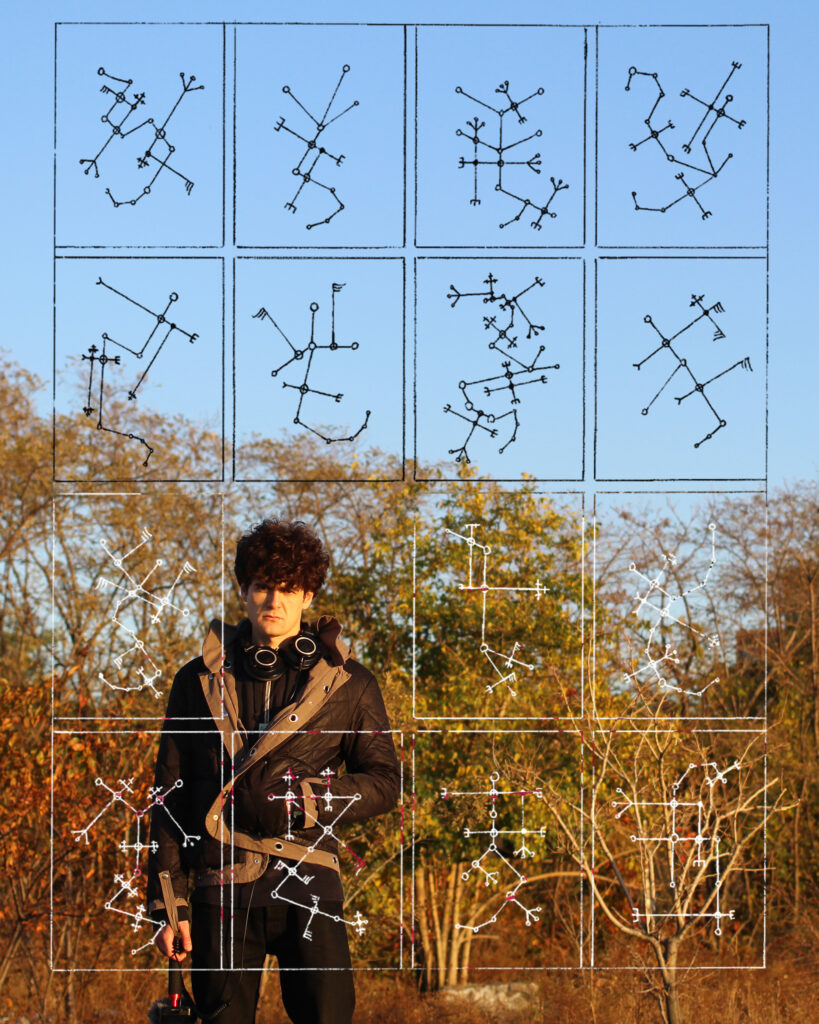
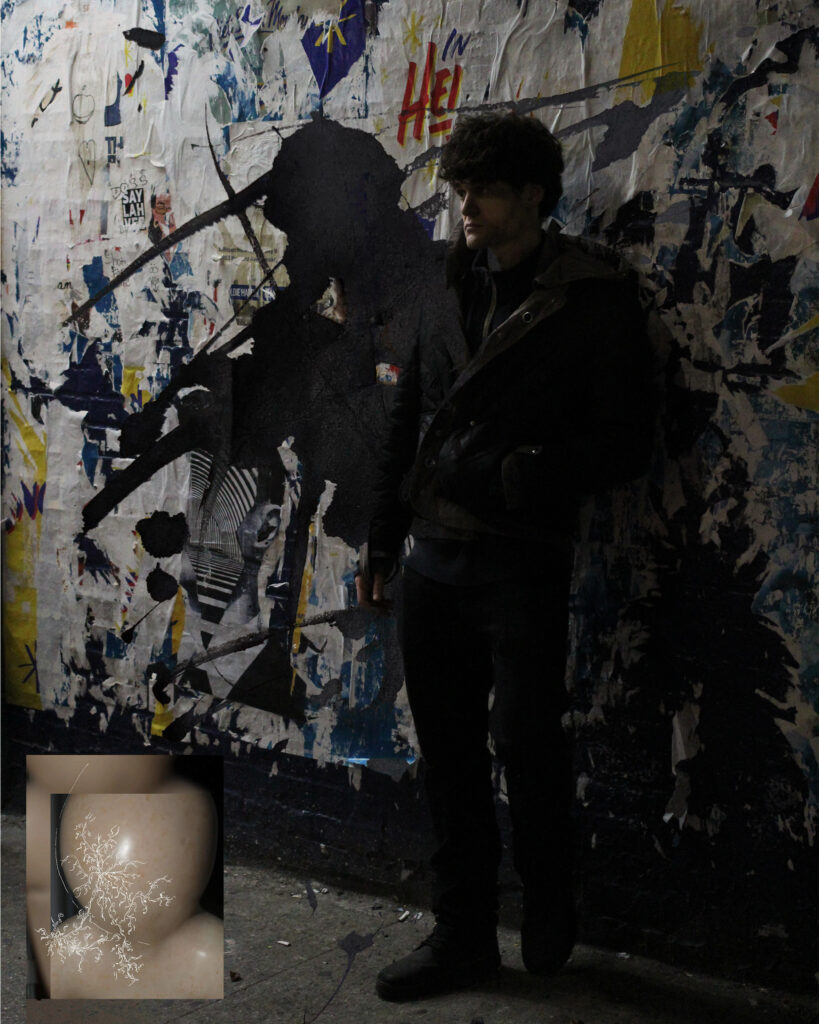
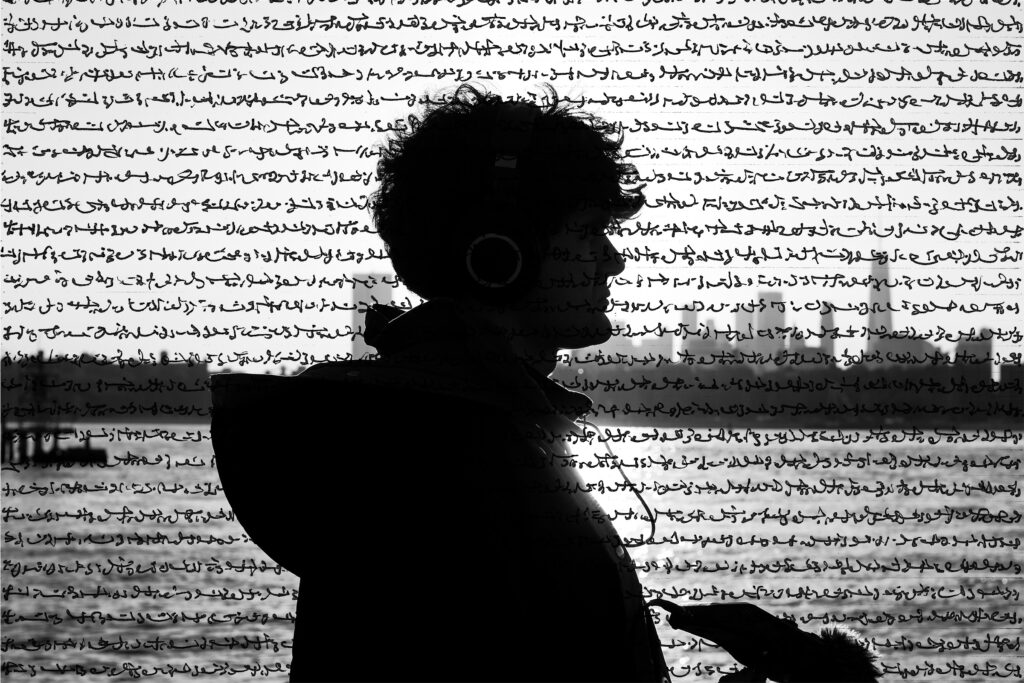
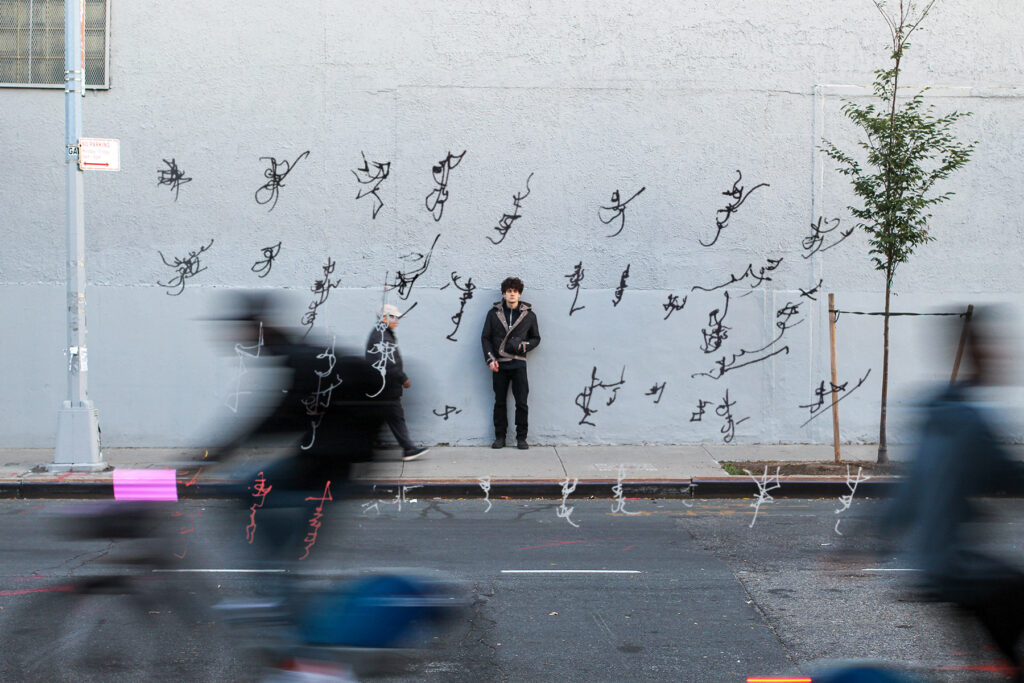
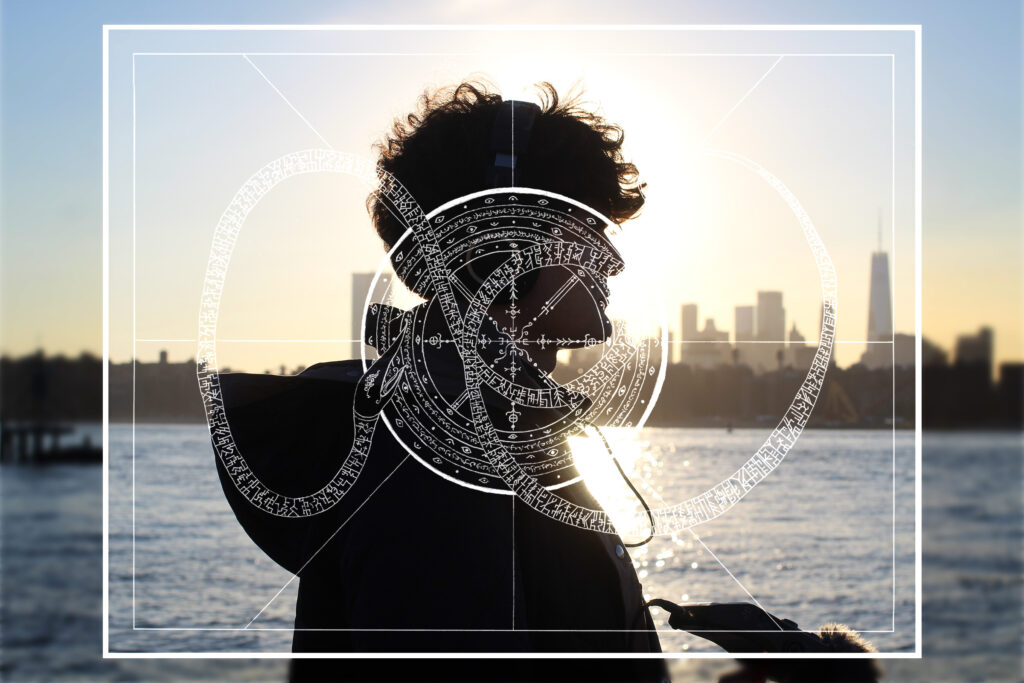
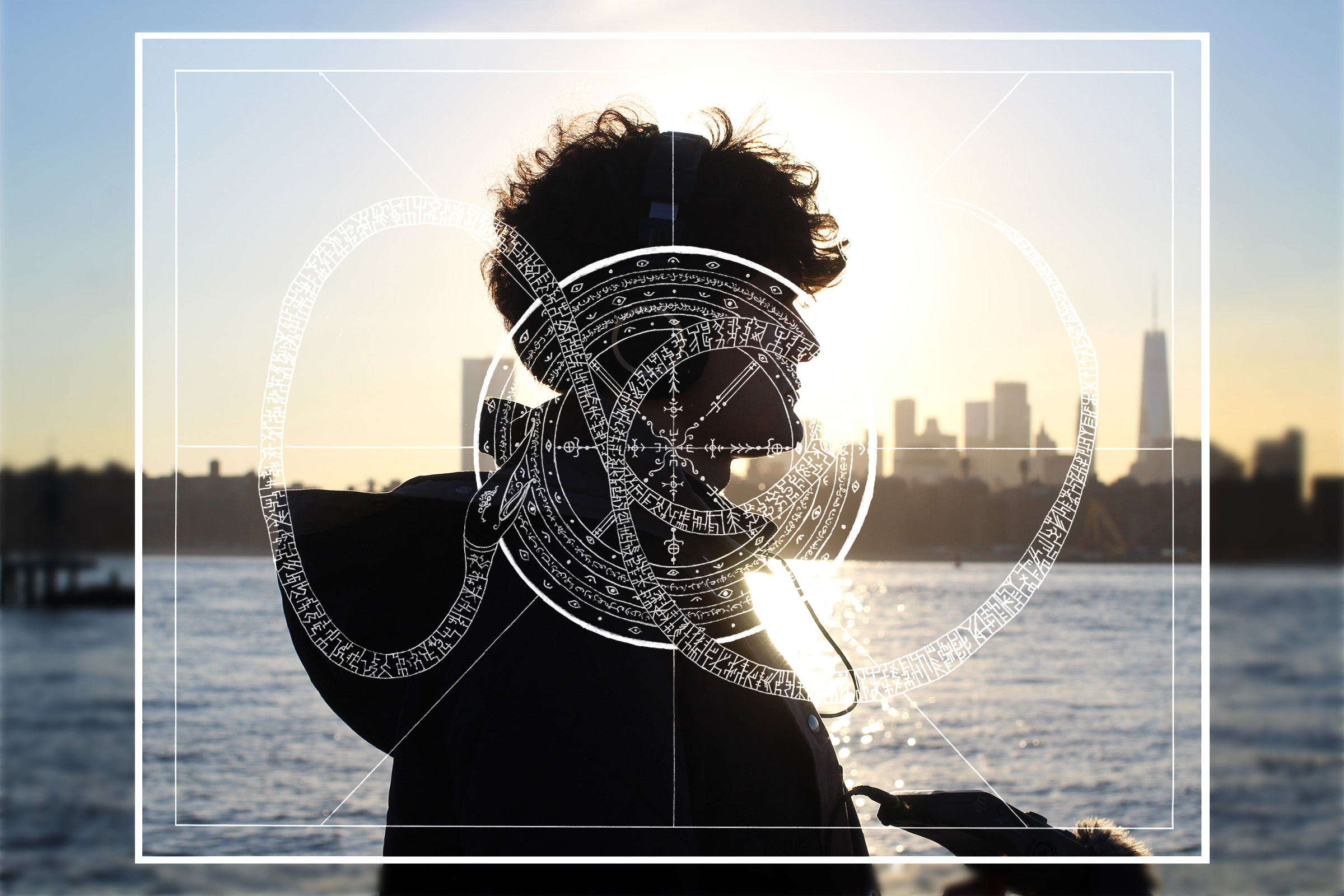
We are all descendants of scriveners. In 1950s Syria, poet Adonis, indicted for his political activities, had a prison inmate who scribed the vatic verses that would later haunt the Arab literary scene for their mythical avant-gardism. Today, the scrivener’s grandson, .cutspace, a New York-based artist originally from Tartus, scrivens his friend atonal.u’s asemic writings into experimental music. I joined this lineage to scribe the polytropos creative project, known as the Illiterate Scribe. In a fashion that is reminiscent of Adonis’ poetry collection Songs of Mihyar the Damascene, the pair, for the past six years, have been releasing cryptic urgent missives that are loaded mythologically in the form of sound, text, and video art.
Wisdom is heightened, the moment it turns asemic.
While the pair is composed of certified netizens, their discovery on the internet remains (until now. . .) a fate-driven encounter. .cutspace’s handle ? | ?? | ? is a stand-out leap of faith towards fate itself. Though it resembles asemic meaningless text, the moniker brings the ancient Mesopotamian cuneiform writing, hailing from Iraq and parts of Syria where his origins lay, to the digital mainstream realm in a manner that paradoxically paralyses algorithmic manipulation. Once bathing in supreme mastery, the algorithm is thrown into the hell of the sublime, unable to capture the presence of its subjects. His discovery, then, becomes less of an algorithmic calculation. Instead, it enters the porous realm of contingency. It is analogous to Deleuze’s formula to evade the pervasiveness of moral law. The thinker, in his book Difference and Repetition, asserts that the subject can overthrow the law not by directly denouncing it altogether but by submitting to it with too perfect an attention to detail. Despite being an internet-based artist, .cutspace’s SoundCloud handle makes him a falsely submissive soul who managed to reach over 6 thousands listeners independently from the tyranny of the algorithm. Stumbling upon his music is a refreshing reward for the digital flâneurs– especially those of us who take pleasure in finding stuff on our own terms.
The interest in these ancient writing systems goes beyond a simple hubris in one’s origin or a trickster desire to turn the algorithm on its head. This fascination springs from these writing systems’ ability to evade fixity, a condemnation that modern languages suffer from. .cutspace and the Illiterate Scribe, as bearers of language and all its flaws, set off to cannibalise language by abandoning it. The duo becomes the modern Calibans of language, and thus of world order. Their creative project is essentially the product of a history of friendship where both parties channel one another artistically to collectively inhabit a forgotten realm. To do so, one must abandon modern language.
The duo, then, declare their Illiteracy.
The digital artist and IG user, atonal.u, started posting a collection of cryptic asemic art texts that he has populated on both digital screens, as well as, streets in a Banksy-ian fashion. While the art was an ambiguous wink to cybersigilist aesthetics and ancient books of Talismans, its meaning remains obscure. Under one of the posts, atonal.u writes the following caption: “beyond comprehension is a space of unborn signs and their unbound souls”.
Atonal.u is, he who writes but cannot read.
Atonal.u’s evocation of sign-systems and language brings to mind Barthes, a French semiologist who dedicated his work to unpacking the hidden signs that rested beneath language yet seemed to control it. In one of his books, Writing Degree Zero, Barthes admits sharply that “no one can pretend to insert his freedom as a writer into the resistant medium of language” for, he adds, “behind the medium of language, the whole of history stands unified.” With the turn towards asemic writing, devoid of all the crap of signs/signifiers/signified, the two seek to restore themselves, readers, and listeners alike to a forgotten world away from history and its markers and emancipate themselves. The experiment wholly rests on this attempt to think and express oneself without reducing thinking to legible and imposed semiotic fields and their reductionist nature. This would be the elementary foundation of their creative practice. Taking this ethos, .cutspace emerged with an asemic sonic repertoire to facilitate this mystical breakthrough into a different world order, with asemic writing as its anchor. He emerges as the musical scribe of atonal.u’s enigmatic texts. The result is a collection of mixes and tracks that are at once noxious, maiming, and deeply attuning given their ambient quality.
.cutspace is, he who sings but cannot speak.
This artistic and staged coup against language and the weight it carries is, however, not, a turn towards the apolitical. This antagonistic, anxiety-inducing relationship with language is largely a product of political failures and historical disasters. We have seen this happen with the poet Etel Adnan. In her experimental book The Arab Apocalypse, written in the first five years of the Lebanese Civil War, we find Adnan to be overwhelmed by the absolute difficulty of attesting to the incommensurability of Lebanon’s condition into words from any language. She would then regularly break down her poems with a series of small asemic glyph bursts between words. When she uses language-as-system, she also turned into another Caliban of language with sentences that are as perplexing as the glyphs (i.e, a quiet blue sun on a card table a red which is blue and a wheel), revealing to what extent language has betrayed her. Adnan is not drawing to prove her drawing prowess for the following text reveals that her practice conceals a large distaste towards language. We have also seen this with Adonis in his poem, The Knight of Strange Words, describing the mythological foundation of his character Mihyar of the Damascene after bearing exile and imprisonment.
He advances beneath a mound of clouds
In a climate of unfamiliar letters,
Bestowing his poetry on downcast winds,
Coarse and enchanting like copper,
A language rippling among the masts,
The knight of strange words.
Adnan, Adonis, .cutspace, atonal.u are all then part of a lineage that has metabolised the passages that Maurice Blanchot has written in his book “Writing The Disaster” when he wrote, “One would have thus to turn toward some language that never has been written—a language never inscribed but that is always to be prescribed—in order that this incomprehensible word be understood in its disastrous heaviness and in its way of summoning us to turn toward the disaster without either understanding it or bearing it.”
.cutspace inaugurated his own complete dismissal towards language and fondness towards the asemic with a track under the paradoxical title, ? In the study ?all of the illiterate scribe. The track, while an explicit nod to his friendship with the artist “the illiterate scribe”, is also the musical accompaniment and the sonic manifesto of this alternative world-building exercise. Set in an archaic medieval-ish library, the song immediately begins with the satisfying sound that arises when one flips pages and takes notes. Undecipherable susurrates and murmurs are imbued with meditative ambient sounds, an homage to the innocent private time the two friends have spent discussing their founding mythology and jotting it down in cryptic codes. This innocence, once private, is now shared and felt collectively as one listener writes a comment under the track, “next page”, suggesting that we have all been transported into this mythological library. It is also a documentation of the innocence that asemic writing and the abandonment of language can simply afford us. All of that is quickly undone with sudden, sharp and harsh beats before we start hearing ravens flying atop in panic. Ravens are the metaphor for the wisdom that the two have unlocked in their reclusive imaginary library. The two manage to resume working as the peaceful melodies of whispers, piano, and orchestra music are restored polyphonically. The sound of havoc, however, encroaches. It comes back periodically before fading again into beautiful, soothing melodies, suggesting the violence that often arrives when we dare to imagine an alternative. The grandiosity of wisdom that bestows two individuals in their practice is, often if not always, marred with injuries.
Another listener writes, “music to study new lifeforms too”. Others immediately vow their illiteracy with cryptic comments like “()” and “guh”. This symphony between the innocence and kinship against havoc and destruction can only prompt one to relinquish all of language. It is a symphony that is characterised by asymmetrical abrupt sounds that are far from random. Instead, they take us back into the world of the Russian composer Igor Stravinsky, who stirred scandals in the Romantic-classical world music for his aptness for harsh dissonances. The artists share with us a collection of asemic notes they have written down during an intense Stravinsky-ian listening session, establishing a new form of music journalism.
.cutspace’s beloved sonic experiments are not merely reserved to the asemic ambient tracks he has released. His mixes provide an extended exploration of his thematic concerns. They arrive tagged on SoundCloud with #Storytelling, brief poetic lines, and are always coupled with an artwork collage from Franz Kline’s paintings, an abstract expressionist artist. The resonances between the two are hauntingly uncanny. Kline chafed his brutal black blots across canvases and telephone book pages. .cutspace rubs his beats onto poetry and different sonic worlds. His third mix ♯₃ ⁽ʸᵉˢᵗᵉʳᵈᵃʸ ᶜᵒᵐᵉ ᶜˡᵒˢᵉʳ⁾, made for the web-radio Palestinian Radio Elhara, contained 28 tracks. The story begins with electroacoustic music, bird chirps, as well as fragments from a growing underground hip-hop scene on SoundCloud. Young Thug’s tunes, Muqata’a’s Ramallah-native beats and Ryuichi Sakamoto’s mastery over the piano are all part of the same story, once .cutspace glues them with his sound. At 16:50, .cutspace mixes one of his original eerie ambient tracks with a reading of Mahmoud Darwish’s poem, Ana Min Hounak (I am From There), before falling back abruptly into the realm of harsh glitchy sounds.
.cutspace, in his mix, summons Darwish to finally complement the poem through sound. While the eerie ambient rhythm reveals the innocence that is embedded in Darwish’s poem about his belonging in Palestine where his loved ones are, the harsh dissonant beats carry the illogical nature of this forceful displacement. However, it also warns its listeners against a romantic reading of this loss. One listener pins down the heightened affective charge of this transition with a wordless comment <3 that feels minuscule and immense at the same time. .cutspace’s mixes are then an attempt to charge the layered emotional charge of poetry and language-based music through asemic beats. His add-ons are an exercise to excavate what has been banished by the tyranny of language, a chance to finally feel the forbidden.
.cutspace’s sensibilities towards turning the ineffable into sound have made a group of Arab underground creatives seek him as a primary collaborator during a critical political moment in the region. In April, .cutspace produced a track for Waja33, an underground Saida-native trap savvy under the title Ghanet.
The track arrives with heavy bass trap beats and an overly autotuned voice that is saturated with the pains of a break-up with one’s partner or perhaps one’s own nation. The first part of the song seems to humorously forlorn the loss of a loved one through Arabic wordplay. This break-up has made Waja33, at once, sing (Ghanet) but also go crazy (Janet). Consequently, Waja33 becomes a double of Ziad Al Rahbani (Hasses 7ali Rahbani), an iconic Lebanese musician who was celebrated for both of his political commitments and refined sentimentality that often raised questions around his mental health. The second part, however, becomes a lamentation over the state of Beirut amidst the ongoing bombardments carried out by Israeli occupation. Beirut, Beirut, Beirut… Kharbene. What has once seemed a track over a breakup becomes an emotional release of the current contemporary malaise around the state of Lebanon among its youth. Waja33’s lyrical prowess collapses the distinction, making listeners leave comments that read #beirutcore in praise of Waja33’s ability, now aided by .cutspace’s beats, to convey a fresh Gen-Z fun yet painful bold take on our political realities.
.cutspace’s distinctive sound has, however, been largely a curse on him. Four years into the project, the identity of .cutspace remains anonymous. He, however, does not shy away from the fact that he has led other independent creative projects that have also remained anonymous. His listeners, eager to satiate their own new illiteracy, are however adamant in figuring out his internet lore. Simultaneously, there was another Soundcloud project under the moniker Hirbawi, named after the last existing and original manufacturer of Palestinian Keffiyeh (though completely unaffiliated with them). Hirbawi has posted 12-mixes, celebrating the different kinds of Keffiyeh according to their regions from Yafa, Safad, Jenin, Ramallah etc. Mix number 02, Um Suleiman, is if you have not guessed already a tribute to Fairuz’s Tuk-Tuk Ya Um Suleiman song that Hirbawi hijacks with a panoply of experimental trap beats. “Is This .cutspace?”, one user comments.
When I asked .cutspace to confirm or deny this association, .cutspace smiled, uttering ? ? ? ? ? ???”. Hanging in with no confirmation, I was left like an illiterate scribe. . .