
 Posted in
Fashion,
Posted in
Fashion,
Legacy Matters: 180 years of Loewe
Text Razan Tayfor
“Before the telephone, before the light bulb, before we walked on the moon,” says Antonio Banderas in Loewe’s 180th anniversary film, an insouciant reminder that the Spanish luxury label has seen it all. Founded in Madrid in 1846, it not only predates the creation of several nation-states, but has also weathered the storms of the most seismic transformations underpinning the modern world.
Taking stock of a history this grand is an almost patriotic duty for the world’s second-oldest luxury house, paying homage to the archives and a sprawling ledger of events, creations, and shifts that remain crystallised in the clothing, each in their own way. But the question at the heart of Loewe’s anniversary is not how the brand has protected its heritage—this is a milestone made possible by remaining relevant without abandoning said heritage, never solely relying on a single fixed image of the past.
Across two centuries, Loewe has reinvented itself while committing to the same fundamental principles: craftsmanship, material expertise, and a very distinctly Spanish way of thinking about culture. If a house has managed to survive for close to two centuries, it’s not because it resisted change. Rather, it has continually reimagined what craft could mean in an ever-changing world.
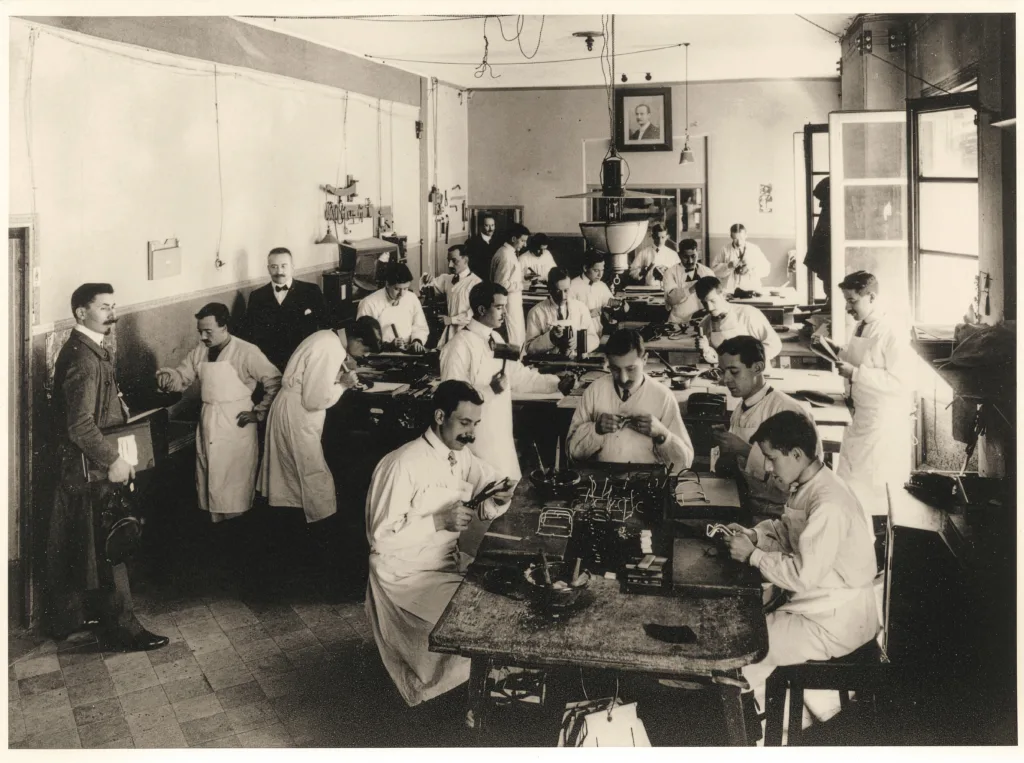
Loewe’s origins offer us an early clue. Unlike many luxury houses that began with a singular designer or couturier, the brand started off as a collective of leather artisans working in a workshop in Madrid’s Calle Lobo. Their expertise was in making, not fashion. They produced practical leather goods ranging from wallets and purses to jewellery cases and accessories. When craftsman Enrique Loewe Roessberg joined the workshop in 1872, he brought along technical precision and, critically, an ambition to expand commercially, catalysing the brand’s trajectory by transforming a small artisanal workshop into a public-facing entity serving the city’s clientele.
With the foundations of the modern house established, the workshop was unified under the name E. Loewe. This craft-first distinction matters because it shaped the brand’s identity from the very beginning. While other brands were built around a particular aesthetic vision, Loewe was built around a material. Its relationship with leather was never merely decorative but existential; the material became the central medium in which the house could continually experiment and evolve.
Spain itself has provided a fertile ground for this philosophy of transformation. The country has long produced artists, filmmakers, and writers who have challenged the established ideas of form and representation. From Francisco Goya and Diego Velázquez to Salvador Dalí and Luis Buñuel, Spain’s history is filled with many figures who questioned how reality could be depicted and understood. Indeed, the period throughout the country’s creative ecosystem was marked by surrealism and magic realism. While the former sought to disrupt conventional understanding of reality through dreams, humour, and unexpected juxtapositions, the latter blurred the lines between the ordinary and extraordinary, treating imagination as something embedded within everyday life.
What united these moments was a belief that creativity was not simply about representing the world as it is but reimagining what it would become. This tension between intellectual inquiry and creative play offers an interesting lens through which to understand Loewe. It would’ve been easy for it to remain a conservator of traditional leather craftsmanship, preserving techniques as a symbol of heritage. Instead, the house evolved alongside the cultural moments surrounding it.
This fascination with experimentation, material reinvention, and unexpected forms feels less like a contemporary departure, and more an extension of a Spanish creative tradition that’s deeply rooted. Alongside this tradition was a parallel of commitment to craft, design, and architecture, particularly during the country’s post-war modernisation. As designers and architects sought to reconcile traditional craftsmanship with a rapidly changing world, questions of innovation, materiality, and national identity moved to the forefront of cultural life.
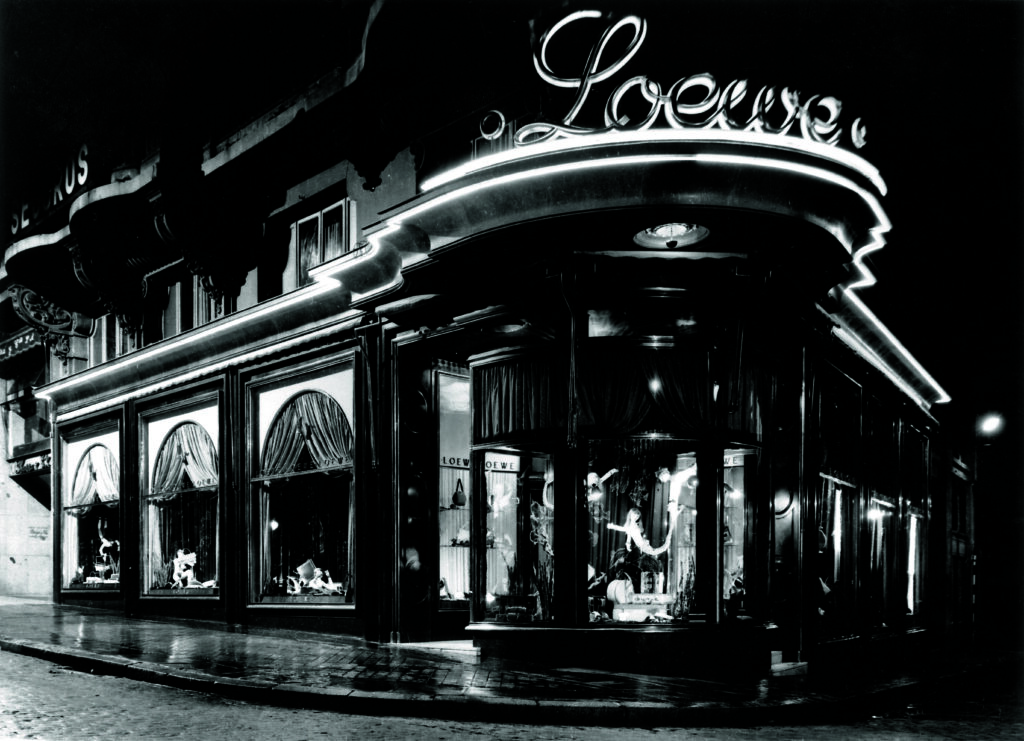
Loewe was not a passive observer of these cultural developments. In 1957, the brand partnered with architects Javier Carvajal and José María de Paredes on the Spanish pavilion at the XI Milan Triennial, a landmark that showcased modern Spanish design to an international audience. This interest in architecture extended beyond exhibitions and into the brand’s own spaces. In 1959, Carvajal designed Loewe’s flagship store on Madrid’s Gran Vía avenue, one of several projects that would help modernise its image during a period of cultural transformation. Rather than treating transformation as something confined within products, Loewe understood it as a way of shaping environments, experiences, and perceptions. Architecture then became a medium through which the house could communicate its values, turning Spanish craft into a cultural language.
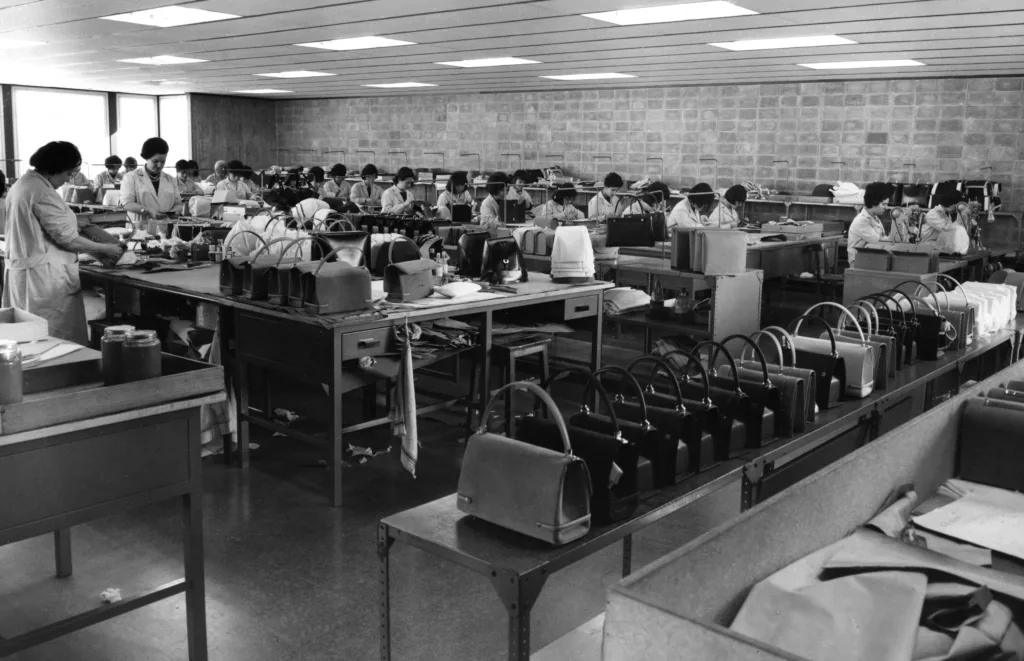
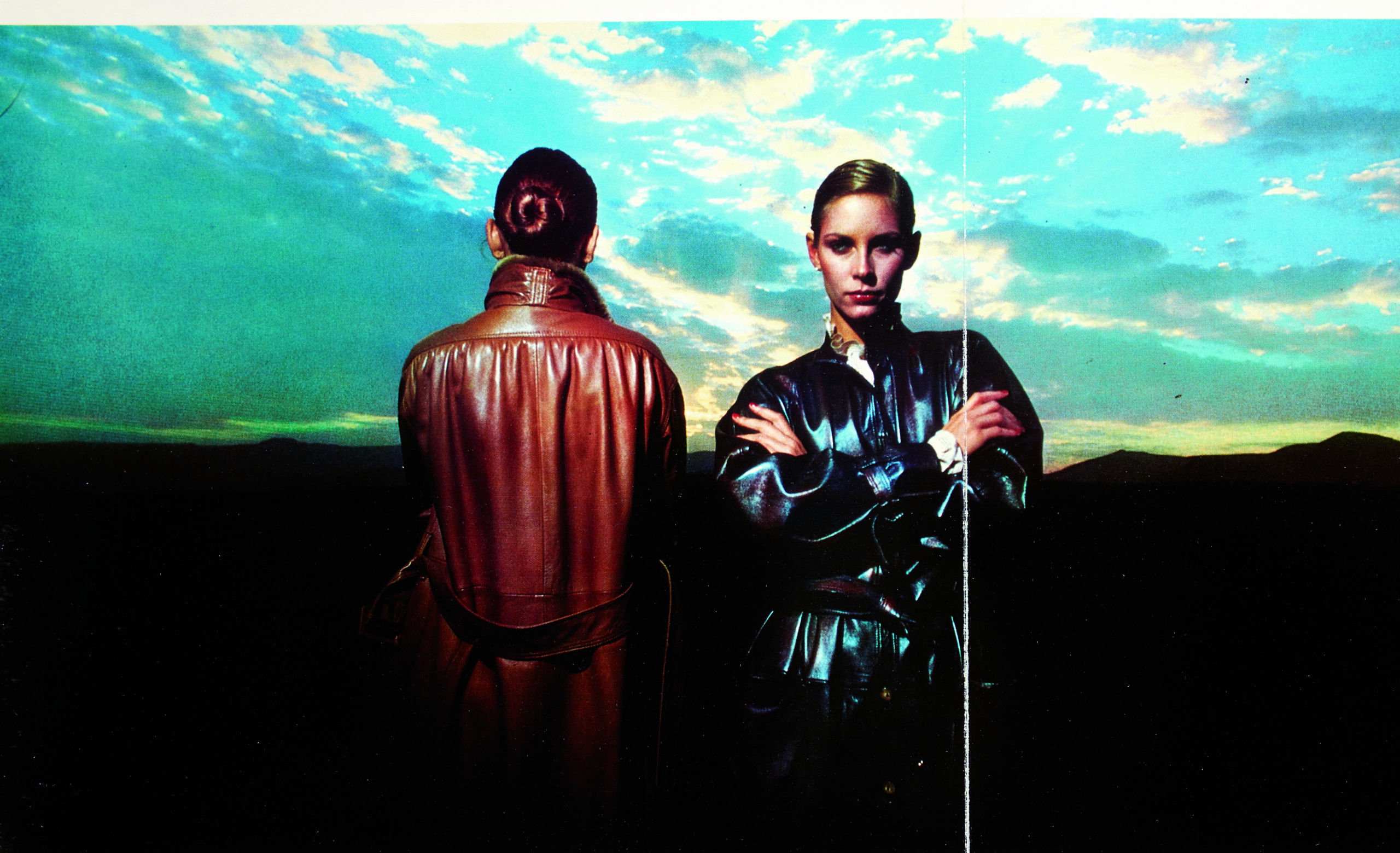
Perhaps no object captures this balance better than the “Amazona” bag. Introduced in 1975, the bag arrived during a pivotal moment in Spanish history. The year marked the death of Francisco Franco, whose authoritarian regime had governed Spain since the end of the Spanish Civil War in 1939. For decades, the country had experienced political repression and cultural isolation, remaining largely disconnected from many social and cultural transformations reshaping post-war Europe. As Spain entered a new democratic era, questions of freedom and self-expression moved to the forefront.
The “Amazona” emerged within this atmosphere of change. Women were increasingly participating in public and professional spaces with greater visibility and independence, and the bag reflected this shift. Practical, elegant, and designed for movement, it became a symbol of modernity and autonomy. Its significance, therefore, extended beyond fashion—it embodied a broader cultural transition, capturing a society beginning to imagine new possibilities.
The choice to revisit the bag for its 180th anniversary is telling. The new “Amazona 180”, created by co-creative directors Jack McCollough and Lazaro Hernandez, is not simply a nostalgic reissue. It raises a question that has followed the brand throughout its history: what does freedom look like now? If the original iteration reflected the aspirations of women in 1975, its revival asks how craft can continue to respond to evolving ideas of identity, independence, and self-expression.
What distinguishes Loewe is its ability to engage with these conversations through design as opposed to direct commentary. Rather than offering definitive answers, it creates objects that reflect the concerns and desires of its moment, translating broader cultural shifts to something tangible. This sensitivity to the present helps explain why Loewe rarely feels trapped by its own history. The brand’s relevance comes from its capacity to remain in dialogue with the world around it, allowing the exploration of craft with both intellectual curiosity and a sense of play.
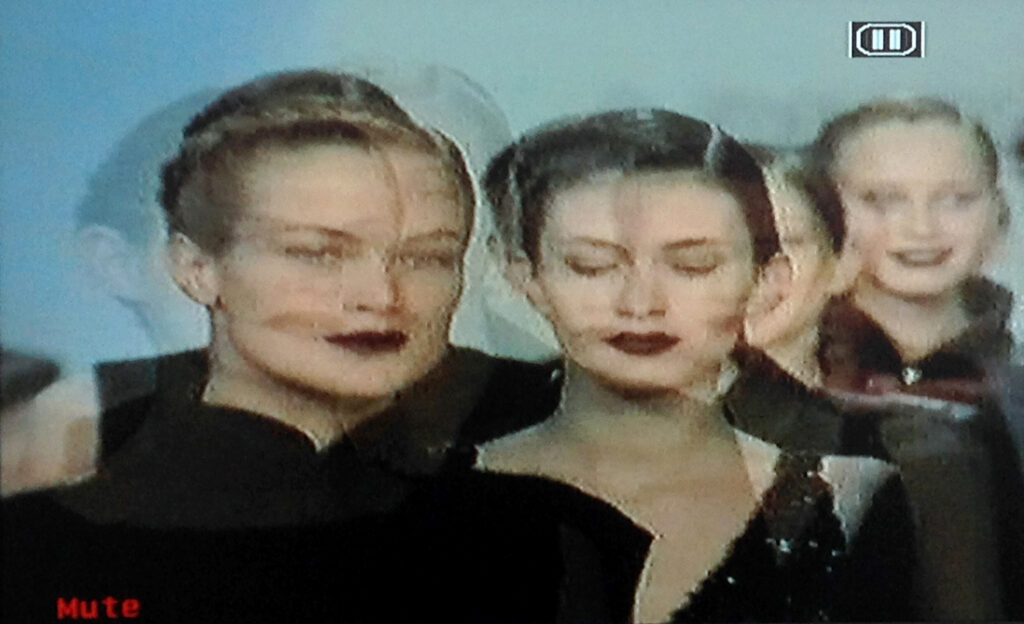
Long before the pioneering Jonathan Anderson’s appointment in 2013, it’s important to note that experimentation was already deeply embedded within the house. Narciso Rodriguez explored unexpected material combinations and architectural forms, whereas Stuart Vevers challenged the possibilities of leather itself, developing techniques that made it appear lighter and more fluid. Innovation existed as a continuation of tradition, not a break from it.
Anderson’s contribution was to make this philosophy visible to a new generation. Under his direction, Loewe became known for creating objects that blurred the boundaries between fashion, art, and design. The “Puzzle” bag reimagined the structure of a handbag through geometric construction. The “Pigeon” clutch transformed an everyday bird into a luxury accessory. Tomatoes, anthuriums, and pixelated garments became a symbol of a house fascinated by illusion and transformation.
In many ways, these objects echoed the surrealist and magic realist traditions that have long shaped Spanish cultural production, finding wonder in the everyday and allowing the familiar to become strange. Yet, reducing Anderson’s Loewe to whimsy misses the point. These objects did not become successful because they were strange. They became successful because they demonstrated extraordinary technical skills. The illusion of these objects became a demonstration of craft and how it becomes a tool of imagination.
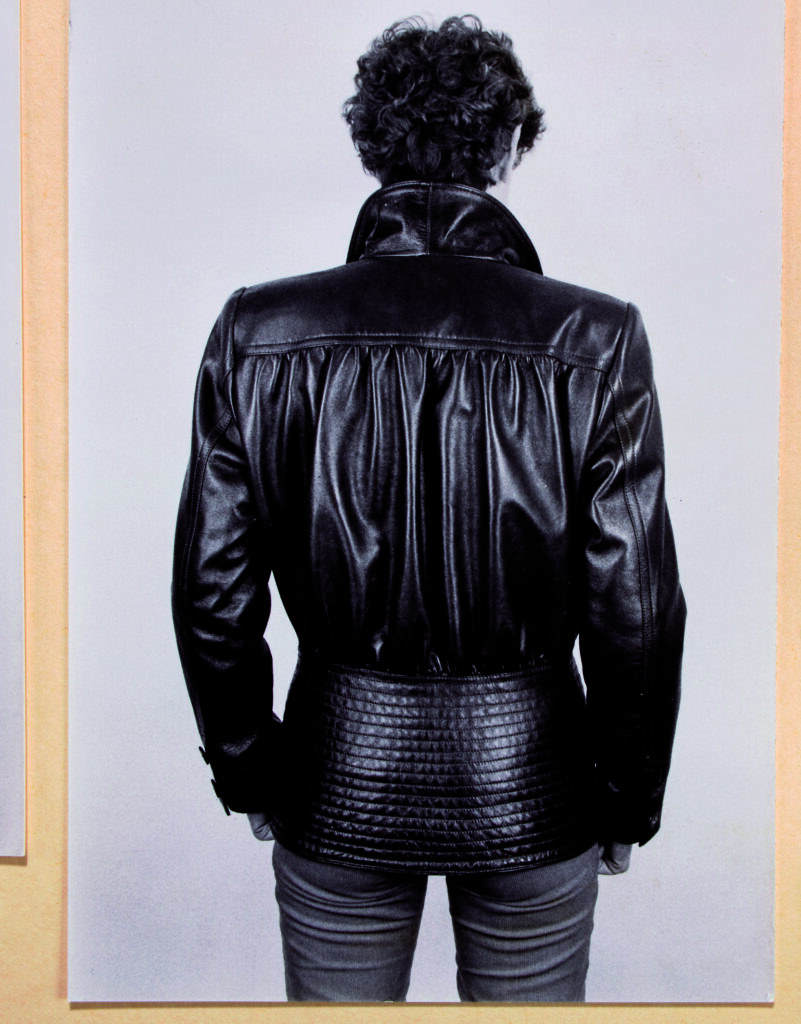
For some houses, craftsmanship is presented mainly as preservation: a means of maintaining heritage techniques and reproducing established forms. At Loewe, craftsmanship often functions as a tool for making. The value lies not only in the skill itself, but also what that skill makes possible. The same philosophy extends beyond fashion.
Since its establishment in 1988, the Loewe Foundation has supported poetry, dance, photography, visual art, and cultural preservation. Collaborations with artists like Tracey Emin, Lynda Benglis, and Anthea Hamilton – alongside costume design work for directors like Luca Guadagnino – positions Loewe as an active participant in contemporary culture rather than a brand simply borrowing from it.
Craft becomes a language that is spoken between disciplines, creating a community united not by products but a shared curiosity for making. Perhaps this is what distinguishes Loewe from many heritage brands—it uses history as a foundation for experimentation, not a source of authority. The past is not presented as something complete or untouchable; it’s a material that can be continually reworked and reinterpreted. At this stage in its evolution, Loewe remains willing to question its history, translating to a heritage brand that feels contemporary even today.
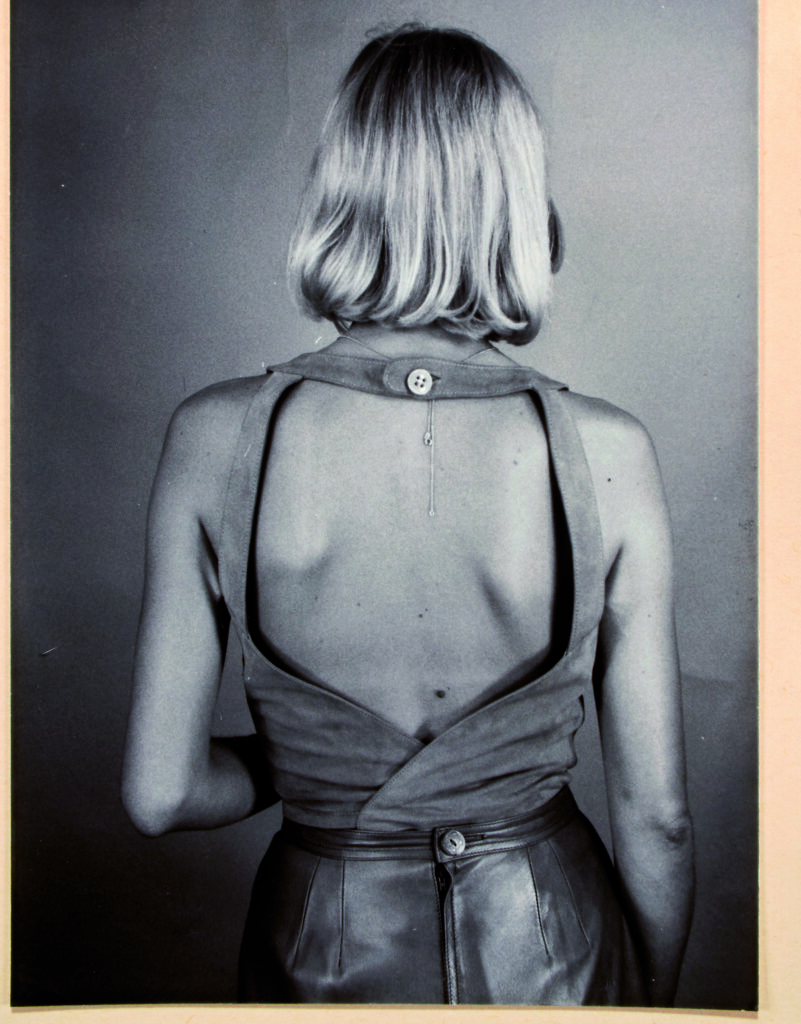
As McCollough and Hernandez begin a new chapter, the challenge that occurs isn’t in the preservation of a 180-year history but how to continue on a path of reinvention. Their early emphasis on materiality, touch, and craftsmanship suggests a return to the values that have always taken centre stage. In a digitally increasing world, where experiences are mediated through screens and algorithms, Loewe’s focus on the intelligence of the hand feels especially relevant. It feels refreshingly, even urgently, tangible.