
 Posted in
Anniversary Issue, Lebanon
Posted in
Anniversary Issue, Lebanon
Revisiting Gabriel Ferneini’s story of land, labour, and return in Lebanon’s Beqaa Valley
Text Nur Turkmani
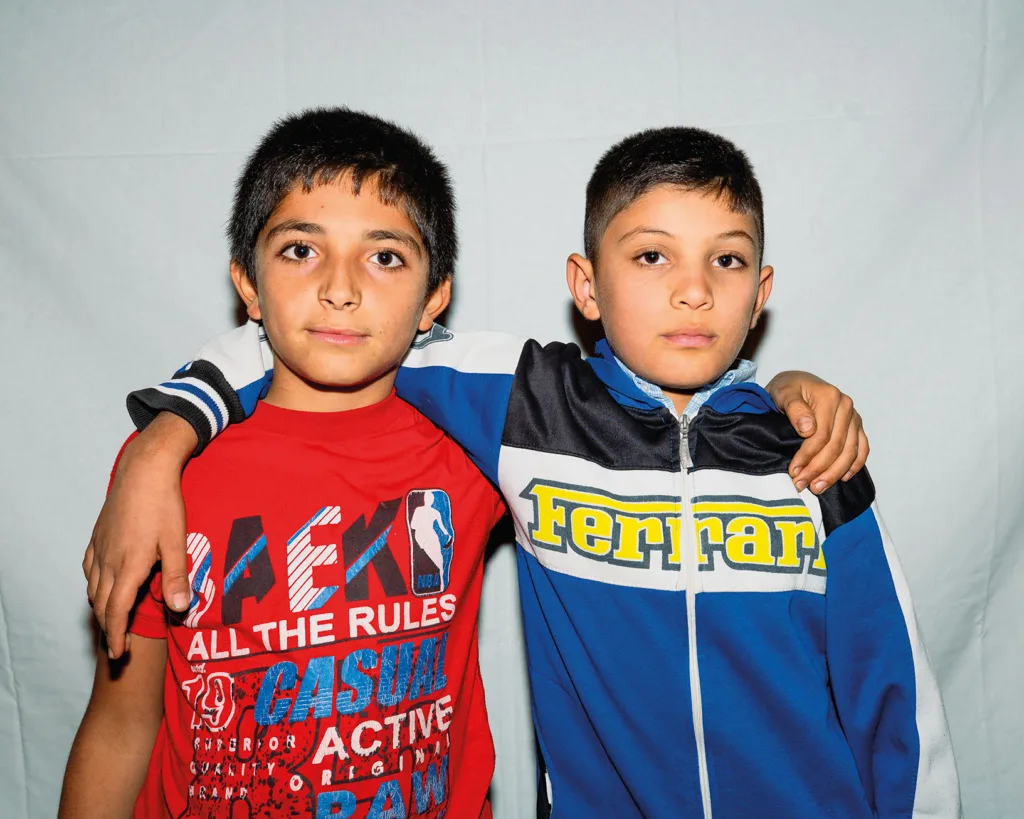
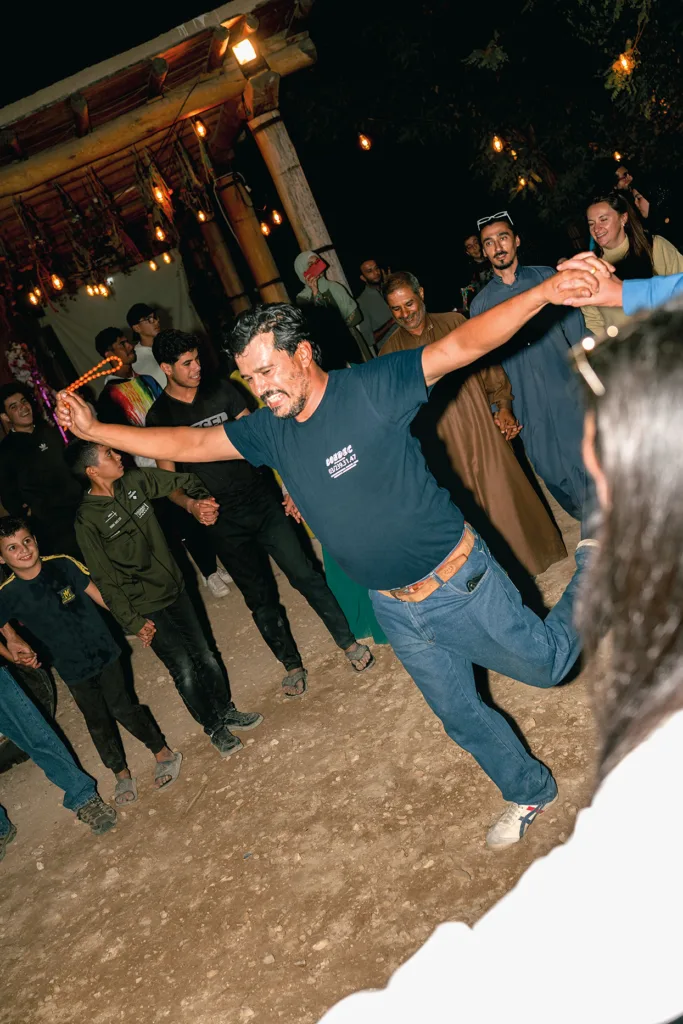
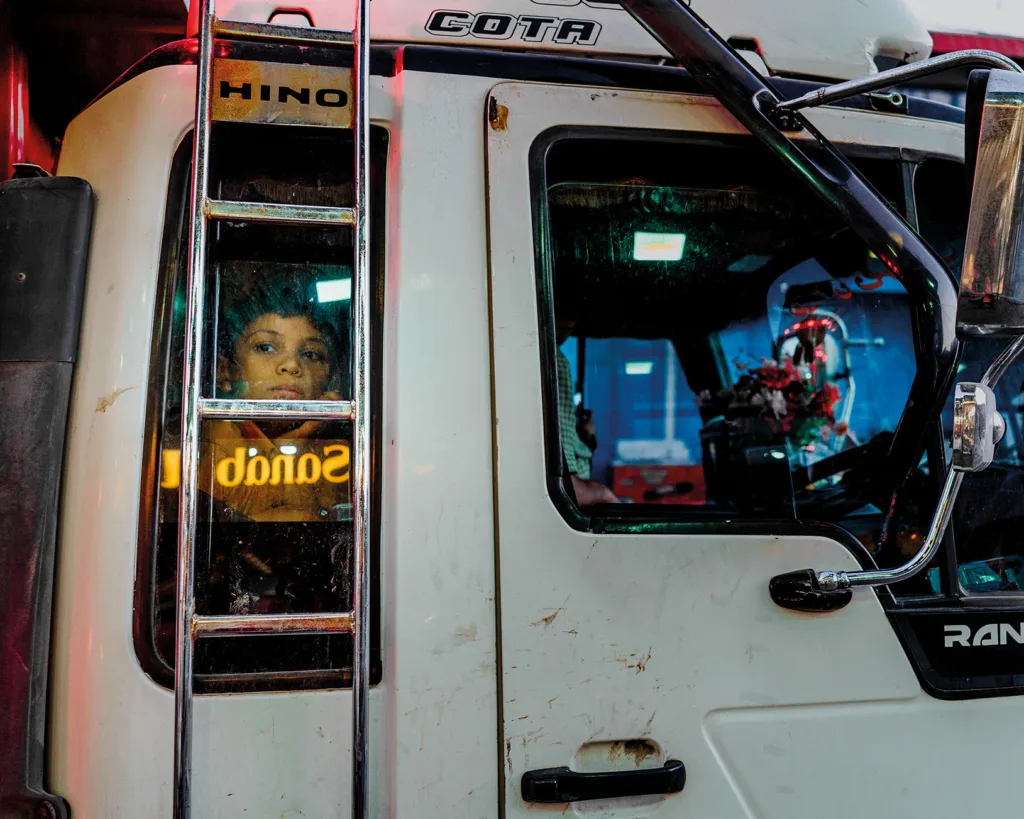
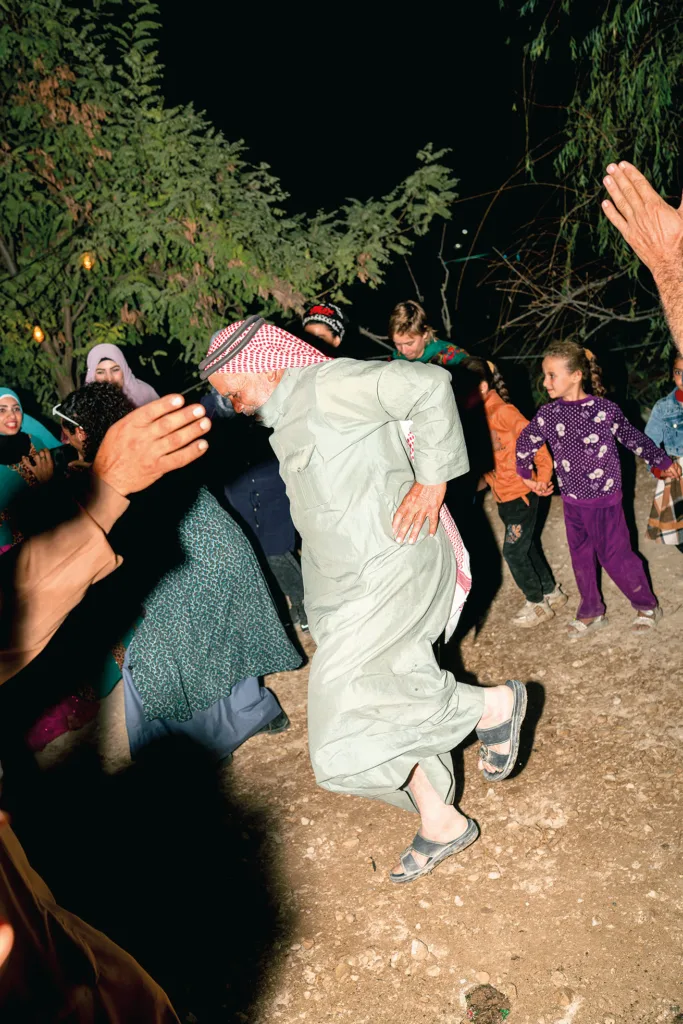
To meet Photographer Gabriel Ferneini is to enter a field. I admit to bias: he’s one of my dearest friends, but also one of the most introspective and magnetic people I know. His work is wide open: a terrain as unflinching as it is tender, as disorienting as it is confident. We first collaborated for Dazed MENA’s inaugural issue, documenting the work and lives of Walid and Fidda, a Syrian couple on an heirloom seed farm-library, Buzuruna Juzuruna, and how their relationship to land, labour, and heritage resisted displacement and reimagined belonging across fractured geographies.
But this time, when the team invited me to write about his photography series, I Will Return in Spring, for Dazed MENA’s one-year anniversary, I wanted to bring readers into Gab’s charged field instead. I caught him mid-fever this November – in the chaos of his World Press Photo presentation no less, juggling assignments for his work across Lebanon and Syria – and managed to pull him back into questions we’ve been walking through for years. The interview maps how mood shapes seeing, the tensions between spontaneity and control, what it means to build trust as a photographer, and why Walid and Fidda’s story deeply matters a year later, after much has changed—once again.
Nur Turkmani (NT): When I move through I Will Return in Spring, I feel such a range of tone and atmosphere: Walid with his children, the labour of hands in soil, the violet skies, the grey mountains. There’s light and fog, closeness and distance, realism and mysticism. It’s so attuned to shifts. I’m curious how your own states of being shape what you see. Do you find yourself projecting your inner state onto these moments, or do they awaken something already within you? Or does it move the other way? Does your photography begin as a conversation with the world or yourself?
Gabriel Ferneini (GF): I think it’s impossible to take a photo – or do anything really – without projecting your inner state onto the moment in front of you in some way. To answer your question, it’s really a balance of both. You’re always projecting something of yourself, but ideally, you project as little as possible and remain open to what the moment itself is showing you.
I’ve been working on this project for so long that it has grown alongside my own photographic journey. In the beginning, when this wasn’t even a project in my mind, I was anxious about doing a good job—about getting it ‘right’. I still have anxiety every time I shoot. Over the years, however, as I was building familiarity with Walid and the whole family, I’ve also built confidence in my practice. I started allowing myself more freedom to experiment and play, but more importantly, to be present. And that’s an ongoing, lifelong process.
As I got more comfortable, I realised that’s how you make good images: not by imposing yourself on reality, but by tuning into it. Of course, you inevitably give it a twist with your own subjectivity, but it’s really a conversation that happens both ways. The world impresses itself on you consciously, and you impress yourself on the world subconsciously.
But of course, that’s just one part of it. There’s the moment of taking the image, where all of this applies. And then there’s the moment of sequencing and editing, when I’m actively choosing what image follows another and how to weave a story. Even then, I try to reconnect with the mood of taking the image. Sometimes, a single photo can hold that feeling. Other times, I need to weave several images together to build the mood I want to express, and that [sequencing] is a whole world in and of itself.
NT: These photographs follow Walid and Fidda’s family—their life in Beqaa Valley after fleeing Syria in 2011 and their final days in Lebanon before returning home after the fall of the Assad regime in 2024. Within such political rupture, you attend to ordinary moments: the brothers climbing trees, gestures between parent and child, meals unfolding. There’s intimacy but also restraint, or perhaps respect. Can you talk about what it meant to be invited into their world, and how you navigated proximity and perspective?
GF: I first met Walid and Fidda on an assignment back in 2022. They’re part of a farm and cooperative called Buzuruna Juzuruna, which is dedicated to preserving and sharing local and heirloom seeds from across the region. They see these seeds as part of everyone’s heritage and right, vital for food sovereignty and autonomy. The farm itself feels almost utopian, bringing together Syrian, Lebanese, and international farmers and volunteers.
When I first went there, I felt welcomed immediately—not just because of the project’s ethos, but because of the atmosphere they’ve created. Documentary photography often gives you time to build a relationship, and I was lucky enough to return many times. I still remember the first time Walid invited me for dinner after a day in the fields. Sharing food, playing with the kids—that’s how genuine relationships begin.
As a Lebanese photographer, I’m deeply aware of the racism and xenophobia faced by Syrians in Lebanon. I’m conscious of my position and the power dynamics at play. I try to ‘correct’ that imbalance by giving the family the agency that was always theirs; they know they can always say no to a photo or ask me to stop. I’m not there to extract something; I’m there because I care about them. Over time, that care goes both ways. We’ve witnessed each other’s changes, and that’s a rare and special place to be.
NT: Through this family, we begin to witness something much larger. There’s a sense of history, though, at a human scale. What do you think their story tells us about this moment—about Syria, Lebanon, and the region more broadly?
GF: For me, their story tells us many things. At the most basic level, it reminds us how close Lebanon and Syria really are, geographically and as people. There’s been so much discourse designed to divide us, to demonise refugees – so much so that even the word ‘refugee’ has become loaded – that we sometimes forget how intertwined we’ve always been.
While documenting their lives, I kept wondering what it feels like to leave your home for a place that looks and feels so similar – same climate, same trees, same language – and yet, you’re constantly reminded you’re not. That question became central: how does it feel to care for the same land and still be treated as a stranger?
It made me want to challenge the borders between Lebanon, Palestine, and Syria because the land has always been one continuation for people who live along them. They used to move freely, seeing it as a shared space, not as one divided by settler colonialism and oppression. Their story – and this moment – shows that we’re not just historically or culturally close, but physically and humanly close in ways we can’t ignore. Our futures and our pasts are deeply intertwined.
NT: Geography feels like a main character in your work. There’s a fixation on land and crossings, an obsession with space. The landscapes between Lebanon and Syria flow into one another, yet remain divided. Can you talk about how you think of land as something lived and worked, but also remembered and separated?
GF: I’ve always felt spatially sensitive. I’m one of those people who, not to sound pretentious, can visit a place once and remember exactly how to get there years later. I love maps, and I love how land isn’t just a setting where history happens, but a character in itself.
Before I ever crossed into Syria at 33, I’d always looked at the mountains of Beqaa as this barrier between the known and the unknown. But when I finally crossed them, it felt like stepping through a mirror. The mountains that once separated us became a threshold. And on the other side, everything felt familiar: the same landscape, the same language, the same history.
I’m a bit obsessed with landmarks like Jabal al-Sheikh (Mount Hermon) and Qornet el-Sawda. They can be seen from multiple countries at once and, in turn, watch over multiple places. They’re anchors of familiarity in a fractured geography. We focus so much on human actions and narratives, but all of this happens on a land that’s witnessing and reflecting it back. I think places and even objects are charged with meaning, and I try to capture that feeling. When I stand in southern Lebanon and look towards Palestine, I know I’m standing where the tectonic plates of colonisation and resistance meet.
If this land weren’t so valuable, it wouldn’t be so sought after by those who seek to occupy it. And if the land weren’t so valuable to those indigenous to it, it wouldn’t lie at the heart of our resistance either. The land itself is at the core of all of this, so it’s not that I give land space in my work, it’s that I capture the space it already occupies in our lives.
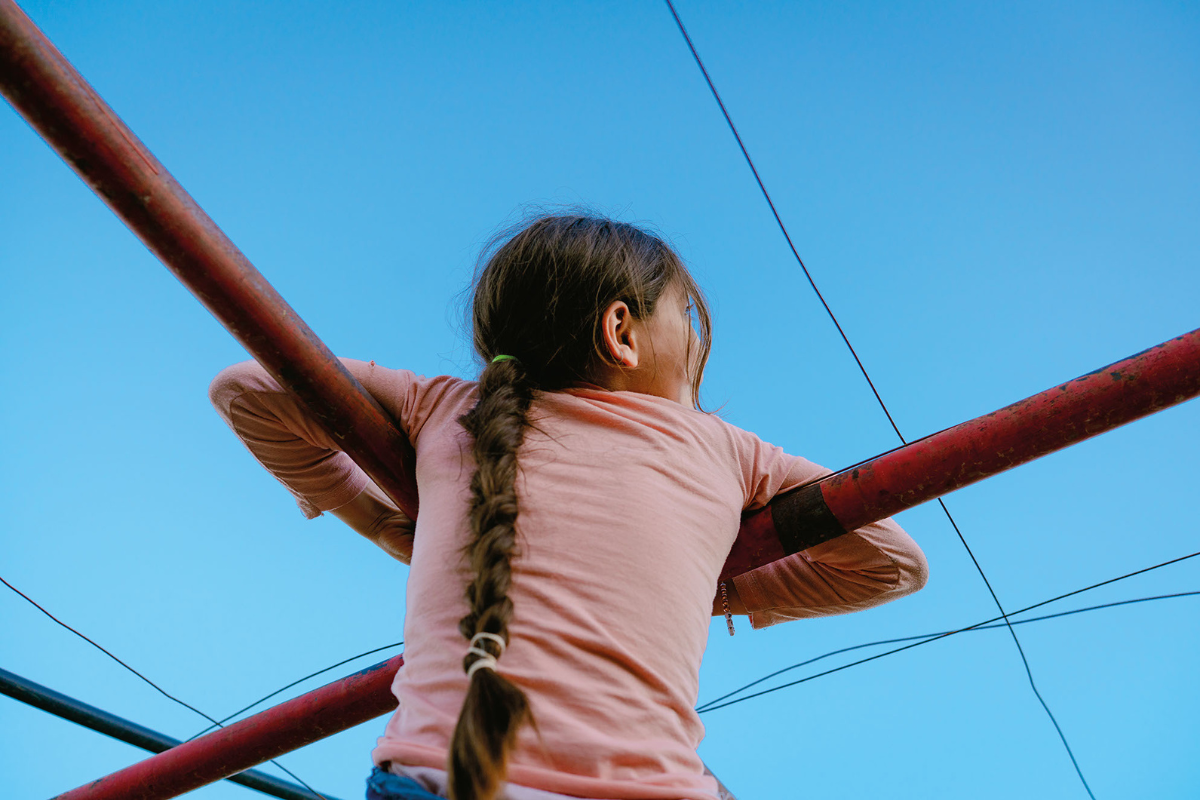
NT: I really love the photograph of Walid’s daughter gazing upwards, her hair in a long braid, leaning between two red metal bars. The sky fills the frame, interrupted only by a few crossing wires. How do you find that balance between control and spontaneity, between what’s composed and what simply unfolds?
GF: This ties closely to what I mentioned earlier about presence and balance. To capture that mix of control and spontaneity, you need to be fully attuned to what’s unfolding around you. It’s about leaving space for the moment rather than imposing yourself while being present enough to recognise when something’s about to happen. Children embody that naturally. They hover between structure and freedom. The beautiful and sad fact is that we lose our child-like freedom as we grow older.
In terms of imagination, someone once told me not to spoon-feed the viewer, to frame a bit wider, to let the viewer discover what matters. That idea stayed with me. It’s about leaving room for the photograph to breathe, to suggest that you caught the right instant, but that it might have slipped away. That tension between what’s composed and what simply unfolds is what lets a photograph open onto something larger than what’s visible.
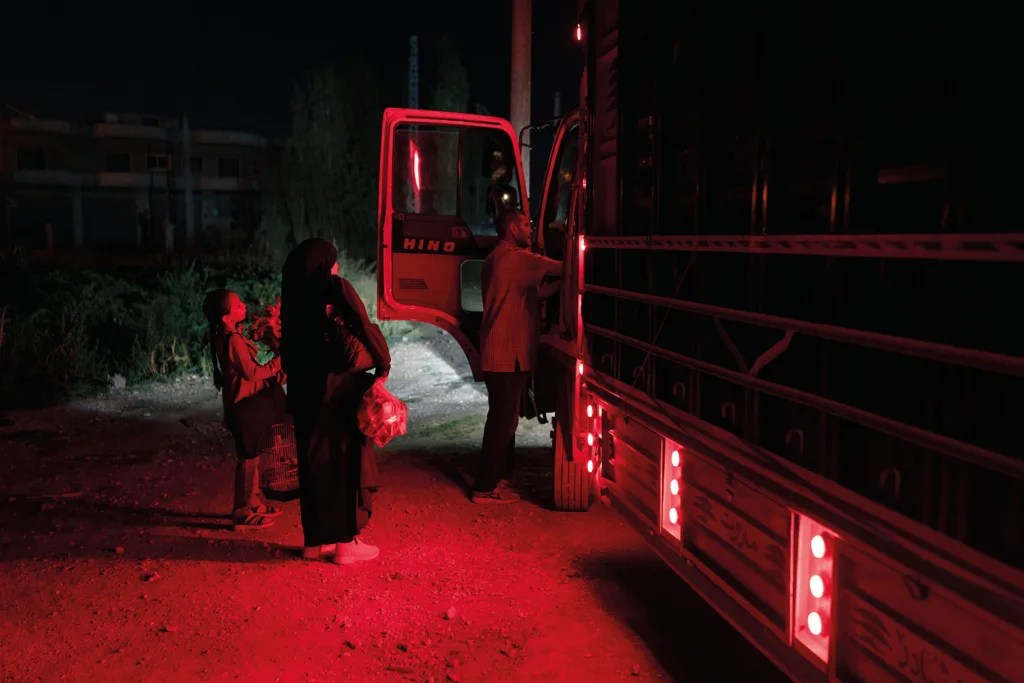
NT: There’s another photograph I kept returning to: the bird in its cage on the dashboard of a truck, its door open, and people walking in the distance. What’s the story behind that photograph?
GF: When Walid told me they were finally leaving for Syria after all these years of exile, I knew I wanted to be there—to help, to be present, to say goodbye. I was taking photos, but also notes, trying to stay as present as possible.
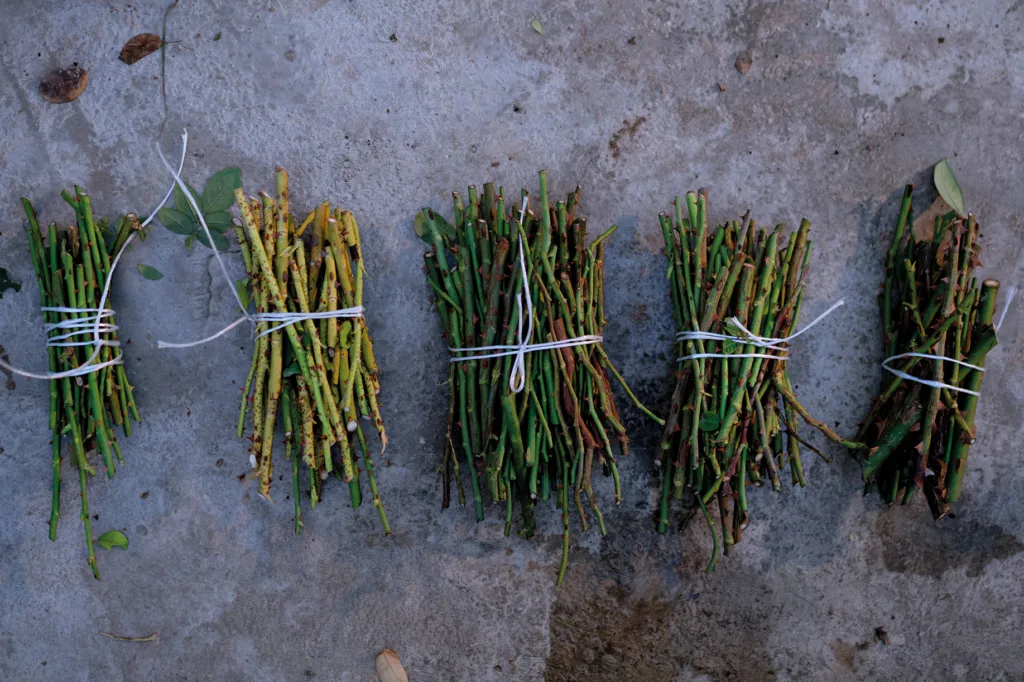
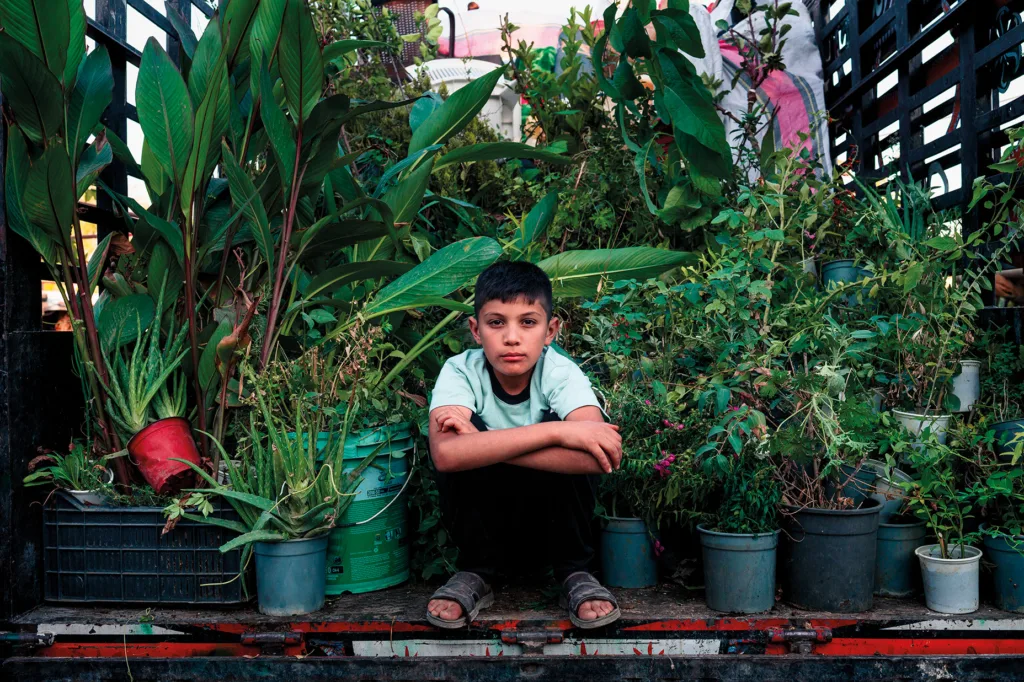
I remember being struck by two things the family took with them: the seeds were expected, but the plants! They took cuttings of roses from their garden in Lebanon so that they could plant them again in Syria as soon as they arrived. In a way, their garden was moving with them.
The other was the canary. It may sound like an obvious metaphor, but I found it moving how this small bird was travelling while remaining in its cage. There was something both happy and sad about it. The canary was finally moving, yet still confined. It felt like a reflection of our own movements as well as those of Walid and Fidda. Even when we move, when our perspectives shift, we remain conditioned by so many forces.
That opposition, between movement and entrapment, really stayed with me. The bird and its cage somehow contained all the questions I was asking myself about Walid’s time in Lebanon and what it meant for him to return. In Lebanon, he may have felt caged, but it was also where he built something extraordinary: a vital, generous community. And now he was going back to rebuild from scratch, but on his own land.
So this question of where freedom lies, what freedom is, and what home means, I felt all of it in that bird. And maybe that’s the strange curse of metaphors: they get duller when you explain them. I don’t usually try to cram a lot of symbols in a picture. That usually ends up being too obvious, but sometimes things align and you can’t not take the picture. Then it becomes a matter of whether people will catch onto the question I’m putting out there.
NT: The title I Will Return in Spring is very loaded. How do you think about time in your work? Does photography become a kind of return, a way of holding on or re-entering what has passed? And what does spring mean to you now?
GF: I don’t know if I ever consciously think about time in my work. Looking back at some of my long-term projects, I realise I’m always trying to capture a state of being. And for me, states of being have this particularity of feeling timeless.
That’s something I tried to explore in my project Doumari, the sense of confusion and not knowing how to navigate the darkness that Lebanon was going through. It’s still going through it, but back then, when there was no electricity anywhere, that darkness was both literal and symbolic—so I’m not interested in showing evolution in time. I’m drawn to cycles, to suspended moments and people caught in between things.
At the same time, even if I don’t deal directly with time, it inevitably becomes part of my work, especially with a documentary practice that unfolds over long periods. In I Will Return in Spring, I follow the natural seasons – planting, harvest – and those rhythms shape the sequence of images. Maybe it’s not very clear yet, but when I think about showing the work, I see time as a character, just like land. It affects everything and everyone it touches.
When I consider how I present my work, I take a deliberate stance. While I am aware of the historical context I’m working in and try to fuse that awareness into the images, I don’t want to ‘locate’ the work in time for the viewer. I’d rather they lose track of when and where something was made and do their own work to place it. When I photograph southern Lebanon or Syria, or think of Palestine, I know these are places marked by decades of resistance, but I’m not interested in explaining that. If those realities could still shock people, things would have changed long ago. I want to make someone feel something now, here, in the present.
Maybe that comes from psychoanalysis or this idea in Buddhism that reincarnation continues until the soul resolves what it hasn’t yet understood. I think I’m fascinated by that idea of being stuck in cycles because I hope that, one day, something breaks through—not materially or politically, but spiritually or psychologically.
As for the place of photography or images in my own life, I don’t use it as an anchor. I rarely go back to my old images. Maybe it’s because of image saturation, or maybe it’s personal. My partner Myriam, who’s a photographer, documents everything and finds comfort revisiting those moments; it makes her feel alive. But I’m too caught up in trying to get closer to the emotion I want to capture, and that is always lying ahead.
It’s ironic. I avoid returning to my own images, yet I constantly return to the places I photograph. I connect more deeply when I do. I believe in returning to places, not necessarily to pictures. That’s maybe because looking back at images means confronting my own limits and failures, which is never easy.
Even as a child, nostalgia was one of my earliest emotions. I used to feel heartbroken when things ended: a trip, a summer day, a moment of joy. I was haunted by the impossibility of returning. Now, paradoxically, I feel like I’m in a race forward that’s still cyclical. Besides, I’m wary of nostalgia because of how it’s been used to sell ideology and sow division, so I try not to look back unless it’s to learn or grow. I’d rather look ahead and try to imagine a world better than what we have now.