
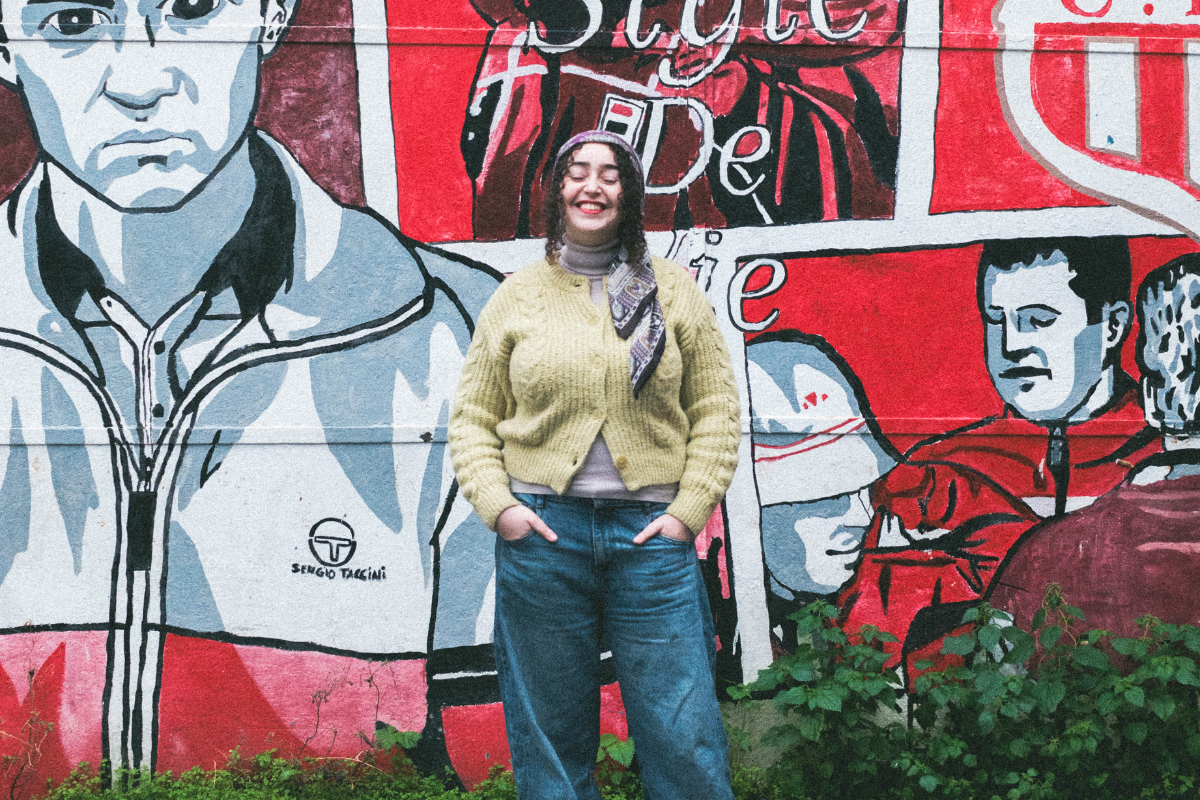
 Celia Bougdal by Osama Cornawy
Posted in
Art & Photography, Celia Bougdal
Celia Bougdal by Osama Cornawy
Posted in
Art & Photography, Celia Bougdal
Here/Now: Celia Bougdal’s photography of memory, self and Algeria
Text Hamdi Baala I Photography Osama Cornawy
Photography came to Celia Bougdal through a detour. After abandoning plans to study music and being unable to attend Algiers’ École Supérieure des Beaux-Arts, she enrolled in architecture at the University of Blida, where what began as site photography for class soon became an obsession of its own.
“At first, I was taking site pictures because we needed them in class. Then I took a liking to it and started shooting other things and posting on Instagram,” she said.
After graduating in 2019, Bougdal worked as a product designer in Algiers while continuing to photograph. Though her work was well received, she remained unconvinced. “A lot of people liked my photos, but I didn’t take myself seriously. I had imposter syndrome,” she said. Her boss, photographer and Collective 220 co-founder Youcef Krache, encouraged her to apply for an open call to join the group.
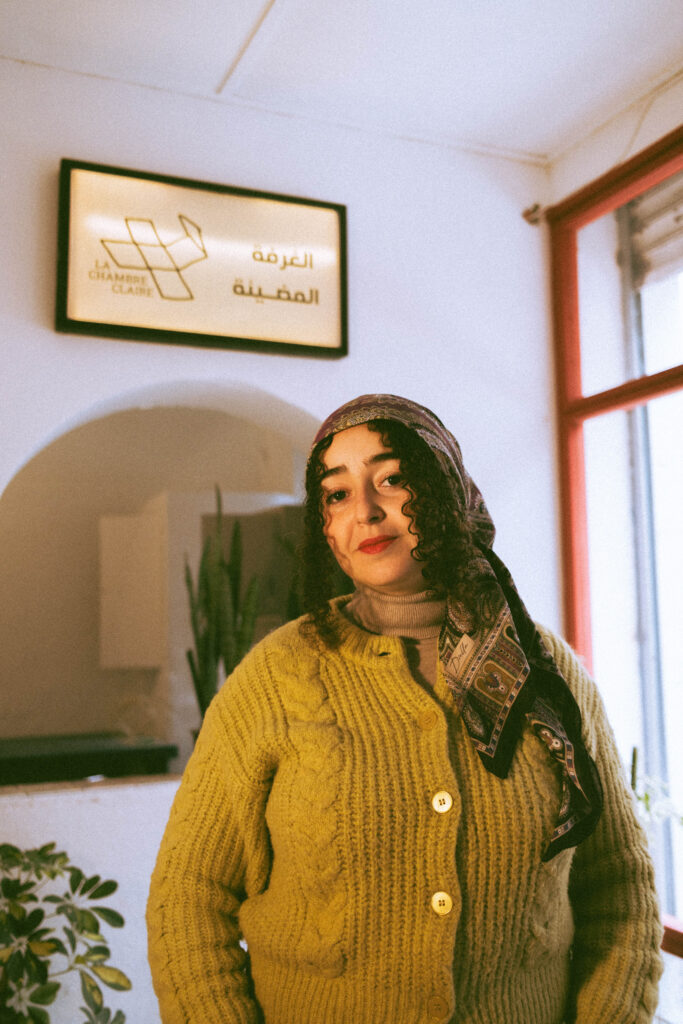
Already a longtime admirer of the collective, Bougdal applied and was accepted through an open call. The moment marked a turning point, not only for her confidence as a photographer but also for how her family viewed her work. Her father, uncle and maternal grandfather each gifted her a camera, a sign of their growing support for her practice.
Born in 1994, Bougdal grew up in Dellys, a coastal town east of Algiers. When she was four years old, her paternal grandfather died, a loss she says she never fully recovered from.
“I was never able to mourn him, and I’m still trying to figure out why I suffered so much following his death,” she said.
She remembers crying every time she watched Heidi, Girl of the Alps, the story of a young girl growing up with her grandfather.
“I wanted to be like her.”
Years later, those questions around grief, memory and absence became the starting point for You Can See Me but I Can’t, her first photography project.
Developed with the support and mentorship of the Arab Documentary Photography Project (IDPP), the project took Bougdal back to her childhood home, an abandoned house where her grandfather once lived. Accompanied by her father, she photographed walls and trees, furniture and old photographs, letters and landscapes.
The resulting images are often rich in shadow, with faces, doorways and garden trees emerging from lines of light. For Bougdal, photography became a way of making sense of those feelings.
“I was never good at expressing myself in writing, but I believe pictures help me better understand and communicate what I feel,” she said.
The same questions resurfaced in her second project, Night and Day. After finishing her studies, Bougdal spent a long period at home in Dellys, burned out and severely depressed. She spent her days taking photographs on her smartphone. Years later, while revisiting the images, she noticed a pattern. The photographs taken during the day told a different story from those taken at night.
“It’s as if there were two Celias: the daytime one didn’t want to show her family that she wasn’t feeling well, and the one left with the pain at night when the mask falls,” she explained.
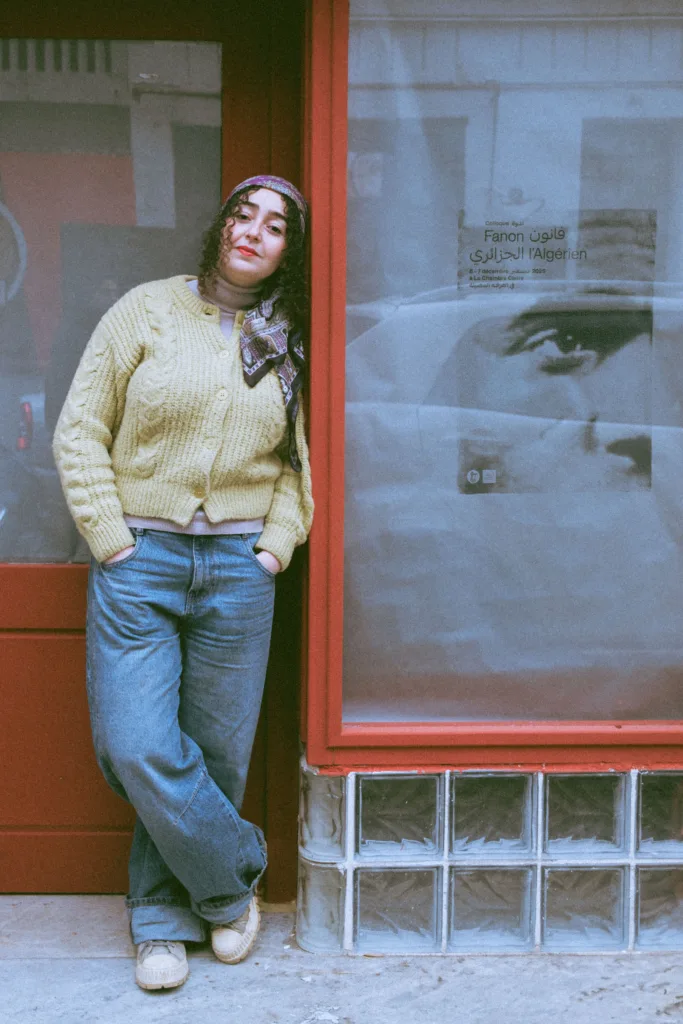
Through Collective 220, Bougdal has exhibited in Algeria, Switzerland, Spain and Oman. She credits the collective with helping shape her development as a photographer.
“I’m still learning,” she said.
Among the photographers she admires are fellow Collective 220 member Abdo Shanan, alongside Tanya Traboulsi, Martin Borgen and Pia-Paulina Guilmoth.
More recently, Bougdal has turned to film photography, finding in its unpredictability a parallel to the subject she keeps returning to: memory. Her next project, an extension of the work she began around her grandfather, explores the fragility and distortion of memory.
“You don’t really have control over film; you never know what the result will be. And you can’t control memory; it’s either there or it’s not. That’s why I chose to work with this process this time,” she said.
The project was recently developed during a residency in Morocco and formed the basis of her first solo exhibition in Marrakech.