
 Fwad by Osama Cornawy
Posted in
Art & Photography, Fwad
Fwad by Osama Cornawy
Posted in
Art & Photography, Fwad
Here/Now: Fwad makes space for the unfamiliar
Text Hamdi Baala
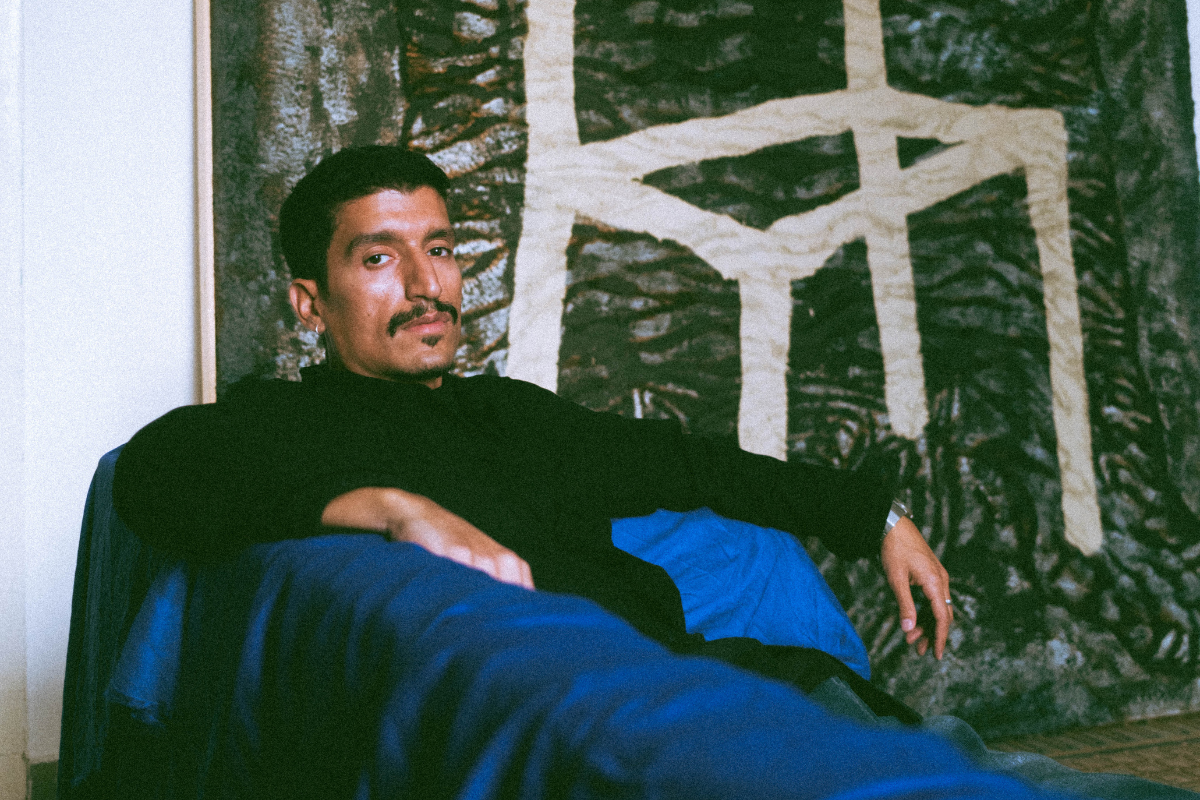
Fouad Yehiaoui took part in his first collective exhibition at the age of 12. At the time, he was taking visual art classes at a cultural centre. He had only just begun his training when a teacher encouraged him to participate in an exhibition usually reserved for more advanced students.
Born in 1996 in Oran, Yehiaoui grew up in a family with artistic sensibilities — his father is a writer — but his path was largely self-directed. He explored music, theatre, painting and sculpture before eventually settling on art and design. He went on to study interior architecture at the Fine Arts School of Algiers, alongside several art training programmes.
“It was really a passion and an instinct inside me that I followed,” he said.
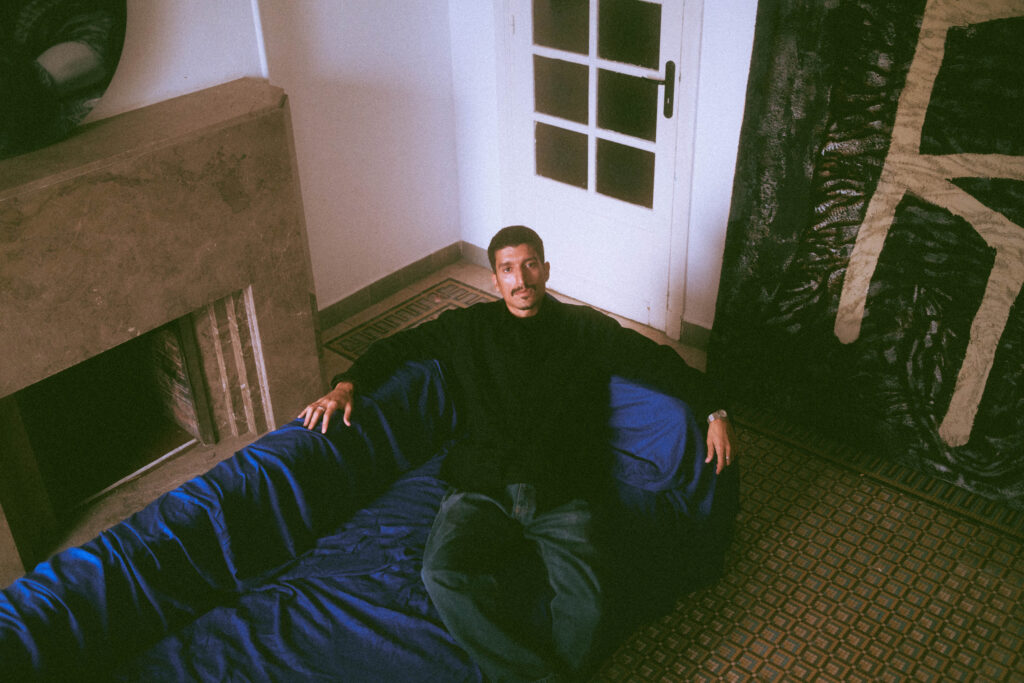
Today, that instinct finds expression across sculpture, design and installation, often through explorations of Algerian heritage and the built environment.
In a recent series titled Architectures, Fouad, who works under the name Fwad, explores the rich and varied urban architecture of Algeria. Three wall-mounted sculptures represent Haussmannian and Mauresque architectural styles, alongside “Fawdawi” (shanty town), a form of housing that shapes the landscape of many urban areas across the country. The pieces are made from materials including wood, metal scraps and ceramic tiles recovered during a house renovation in Algiers’ Casbah that Fouad worked on.
“Fawdawi” is both a critique and an attempt to better understand this type of construction, which the artist compares to the favelas of Brazil and the informal settlements of South Africa.
“They are born out of sheer necessity and often built by the inhabitants themselves,” Fouad said, adding that “it’s also a way of celebrating this style of habitat”.
The series formed part of a July 2025 exhibition titled Anemoia. The term refers to nostalgia for a time or place one has never known. Coined by American author John Koenig in 2012, Fouad argues that the word’s relatively recent emergence reflects a feeling that is becoming increasingly widespread.
“I believe it is a byproduct of globalisation, as cultures around the world are flattened by modernity and lose their traditions,” he said.
Younger generations increasingly search for those qualities in photographs, souvenirs, and other traces of the past, becoming nostalgic for moments they never experienced.
“We are living a universal experience of looking to the past for authenticity, tradition, and real human experience,” he added.
Those ideas found their way into many of the works presented in Anemoia. “Karantika”, an oil painting on canvas, depicts a chickpea-based dish reportedly invented in Oran under Spanish influence. A burnt section of the painting is inspired by the map of the dish’s city of origin.
The wall sculpture “By Covering the Sun with a Sieve” features celestial elements moulded onto sieves using couscous grains and a binder. Its title references an Algerian saying that roughly translates to “you can’t hide the truth”.
Other works in the exhibition draw on traditional clothing, jewellery and music.
“The research and creation work for this exhibition really inspired me and allowed me to better understand the cultural richness of my country,” Fouad explained.
Since his first solo exhibition in 2020, Fouad has set himself the challenge of presenting a new exhibition every year around June 14th, his birthday. So far, he has managed to keep the tradition alive.
“I view each as an artistic journal of the preceding year,” he said. “It encourages me to produce more, to express the ideas that drove me, but also to see the evolution.”
Fouad is also one of the three founders of XBM Studio, an art gallery in Algiers that opened in 2023. The project grew out of personal necessity. Before launching the space, he often struggled to find places willing to exhibit certain projects, particularly those that “weren’t understood or appreciated” by the general public.
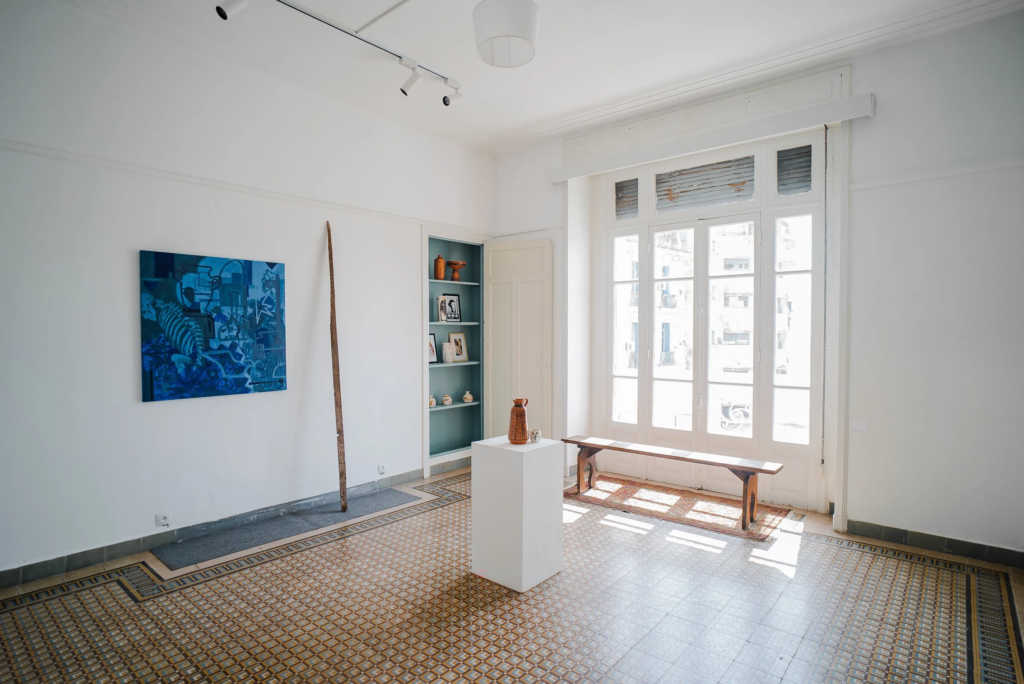
Seeing this as a form of censorship, he teamed up with fellow artist Mohic and exhibition designer Inès Megrad to create a new space for artistic expression.
“We are a completely independent space, we are not supported by any foundation,” Fouad stressed.
Today, XBM has evolved into a creative agency with seven full-time employees and a wider network of collaborators. According to Fouad, the initiative seeks to democratise art and break down elitist barriers.
“We also try to promote cultural exchange and to encourage as many collaborations between artists and talents as we can,” he said.
Looking ahead, he is already preparing next June’s exhibition. While he remains reluctant to reveal too much, he describes it as “a new concept and a project that is very important for me.”