
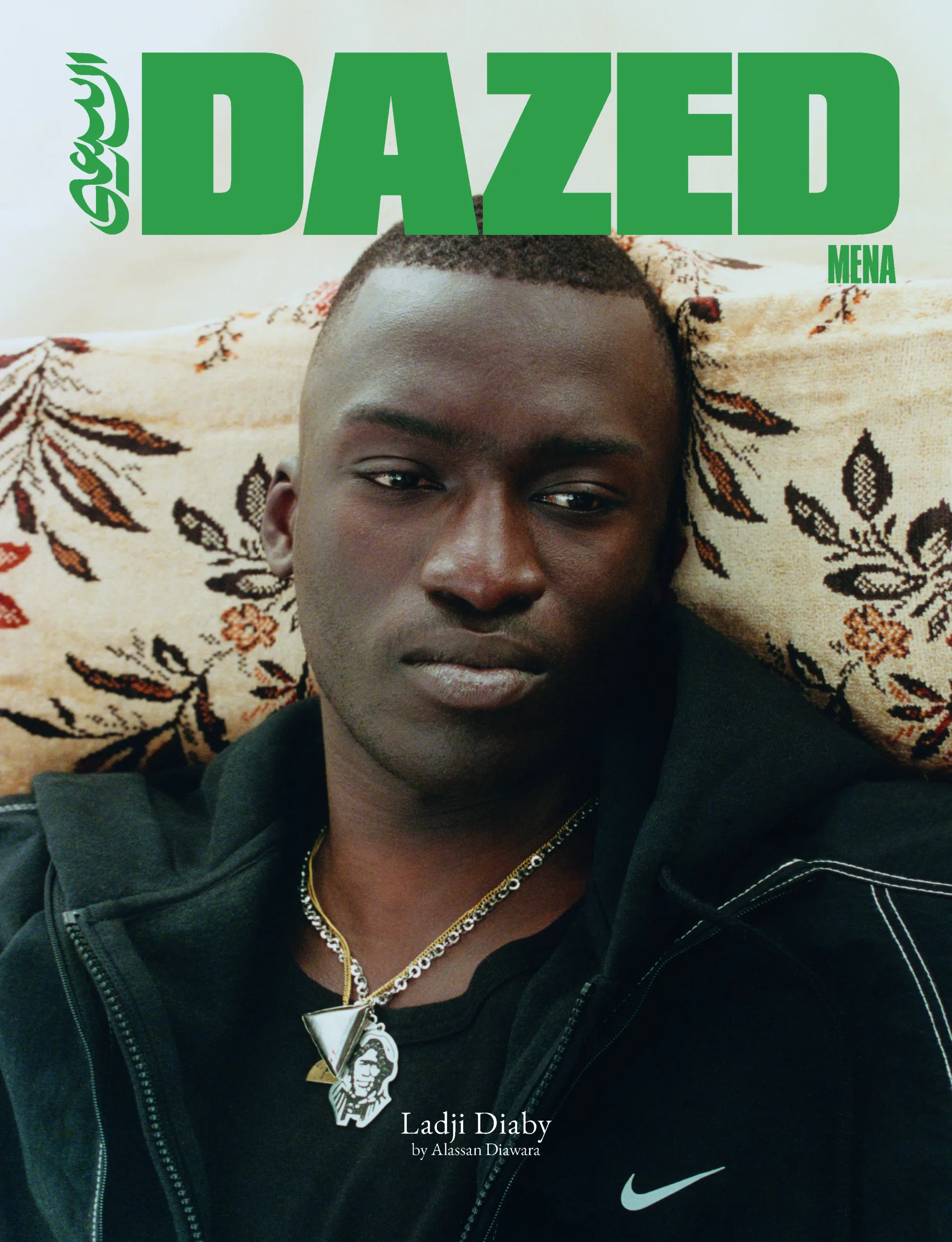

Text Tiffany Dornoy Rezaei | PHOTOGRAPHY ALASSAN DIAWARA | STYLING EWA KLUCZENKO
Originally published in Dazed MENA Issue 06 | Order Here
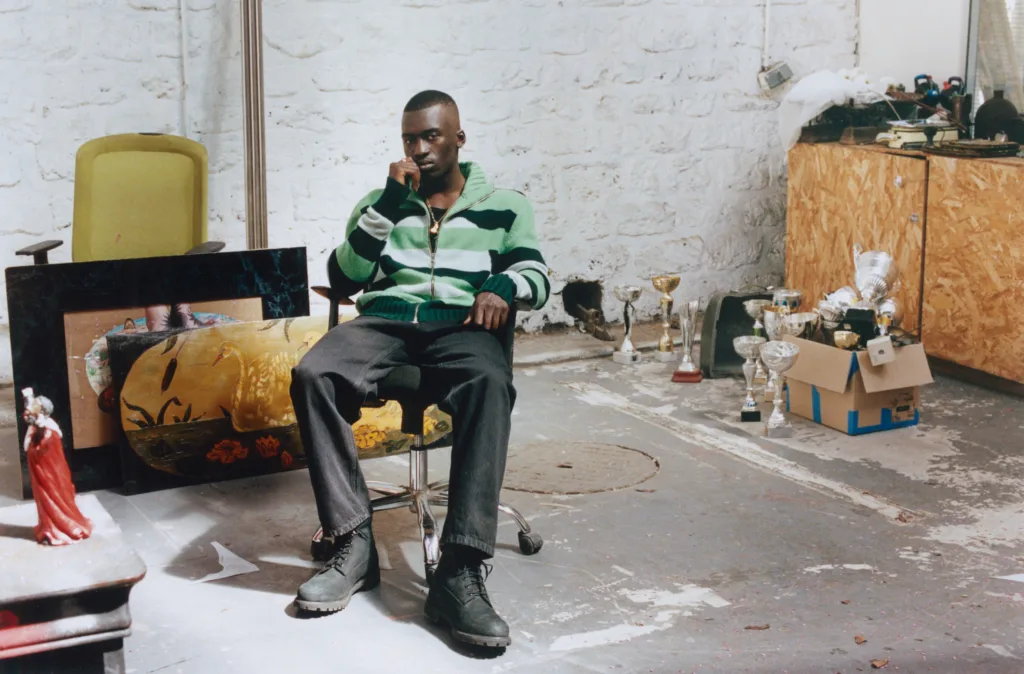
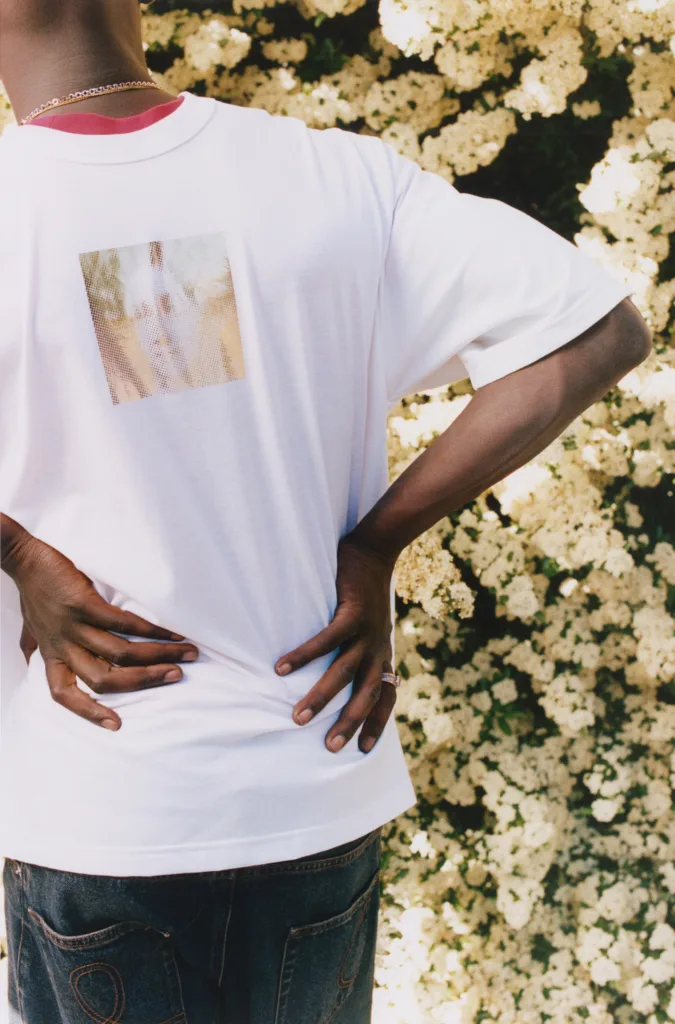
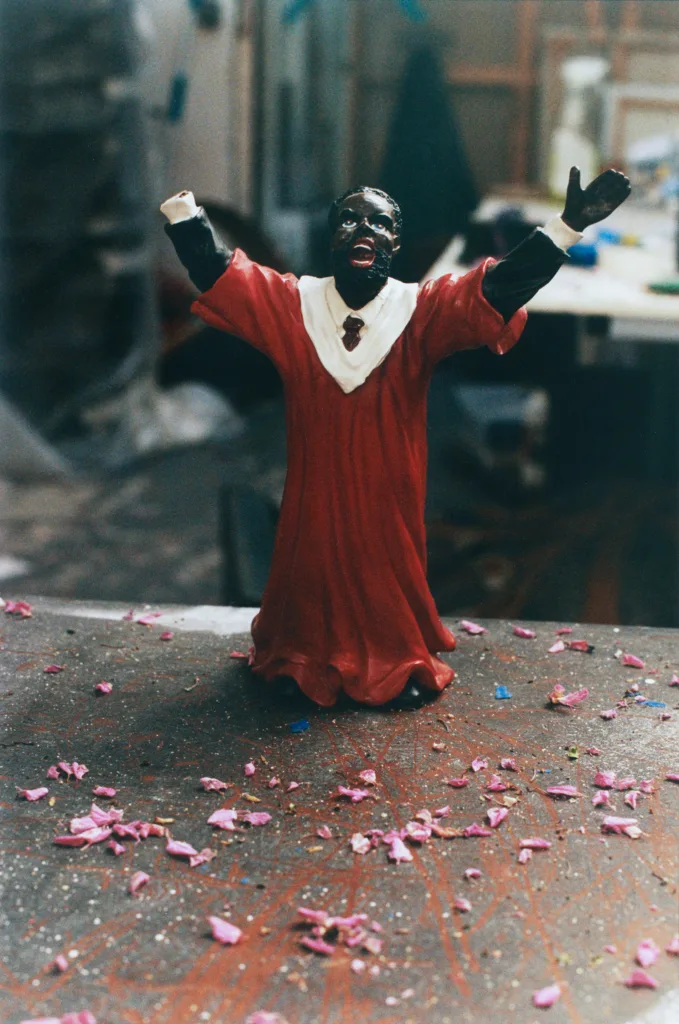
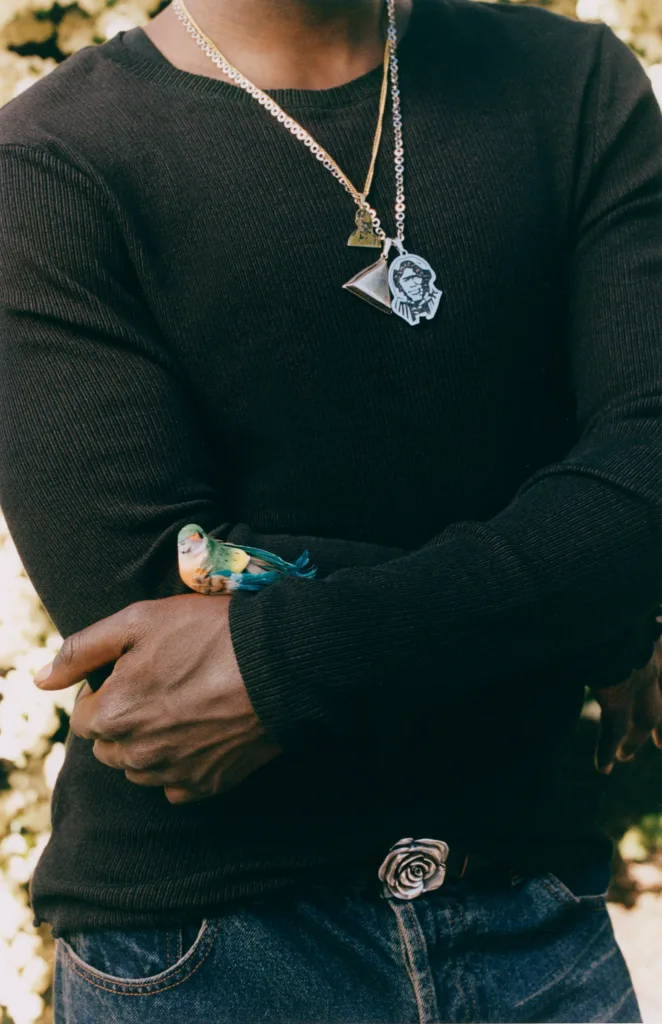
CUMING, jewellery TALENT’S OWN
As a kid, Ladji Diaby would watch his mother customise the furniture she brought home, adding fabrics, changing colours, and tweaking objects until they felt more personal. It was an ordinary domestic gesture that would later shape the logic of Diaby’s entire practice. Today, the 25-year-old Malian-French artist approaches objects with the same spirit of transformation; each ephemera is a vessel of belief, its status fluctuating according to the conviction placed in it.
With this tactile approach, Diaby investigates the most fundamental questions of human existence—those around belief, power, identity, transmission, and the afterlife of violence from deep inside a singular, embodied experience of a young Black Malian man born in a banlieue Parisienne, shaped by diasporic inheritance and navigating multiple worlds at once. The more particular, the more universal. Diaby already knows that the further inward he goes, the further out it reaches.
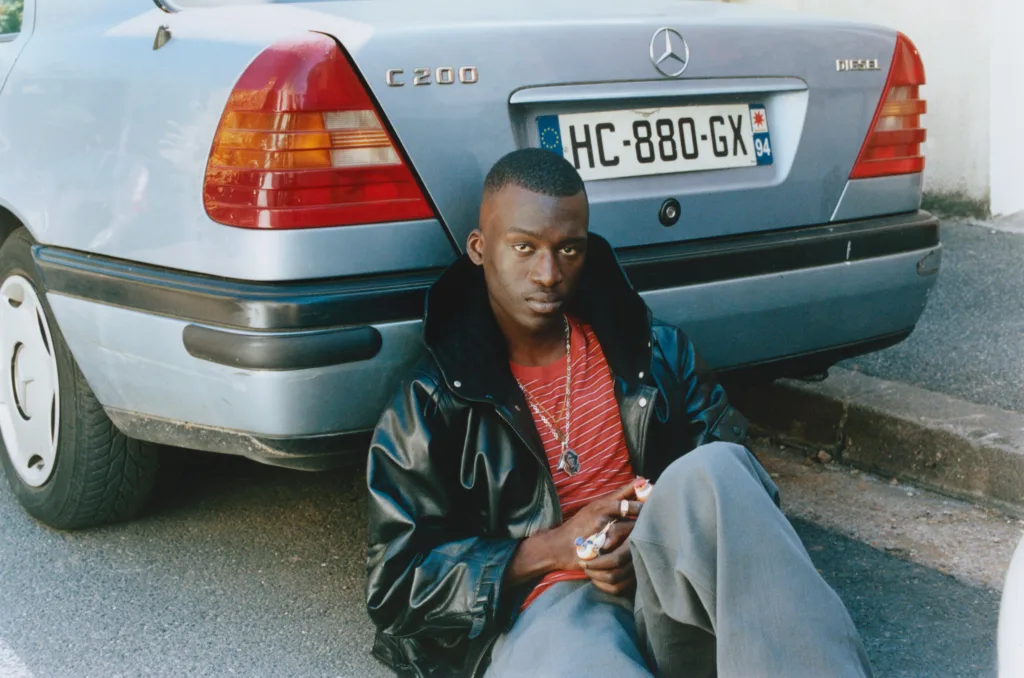
Born in Ivry-sur-Seine in 2000 and a recent graduate of Beaux-Arts, Diaby belongs to a generation less interested in critiquing dominant systems than in contaminating them from within and building the conditions of their own participation. Dismantling the symbolic architecture of western consumer culture, Diaby’s work builds a cosmology infused with spiritual imagery, domesticity, counter mythology, and diasporic memory. In doing so, it inhabits a stranger and more unstable site that feels at once ritualistic, intimate, and connected to a broader global conversation about who gets to construct our imaginaries.
Raised within the saturated circulation of images and digital folklore, the artist assembles a symbolic universe with references and obsessions where cinema, sacred traditions, manga, gaming culture, and occult imagery converge as legitimate political and spiritual vocabularies. Through this syncretic language, he articulates a personal system of values. Belief becomes medium—permeable, transferable, endlessly reproducible. A vector of contamination. Beyond critique or depiction, Diaby actively redefines the cultural moment.
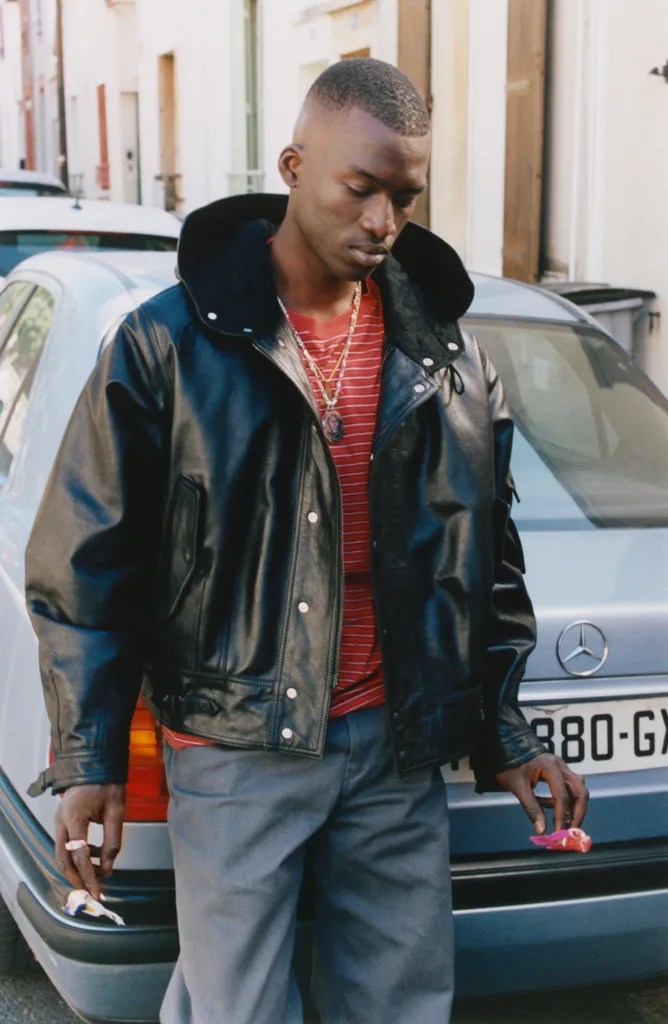
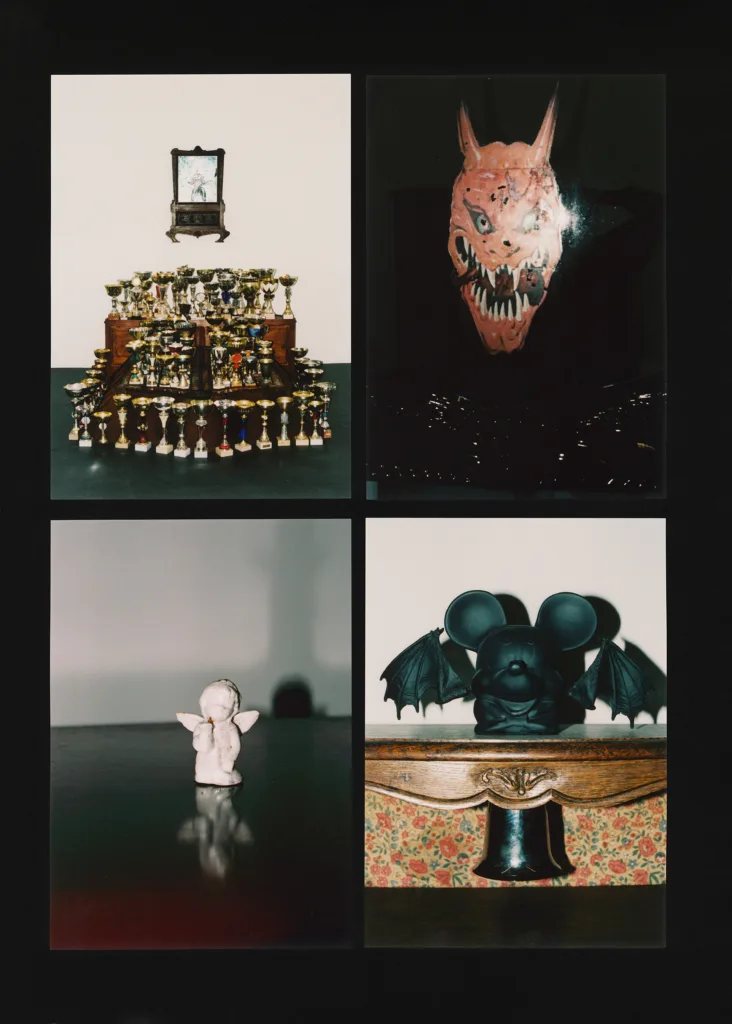
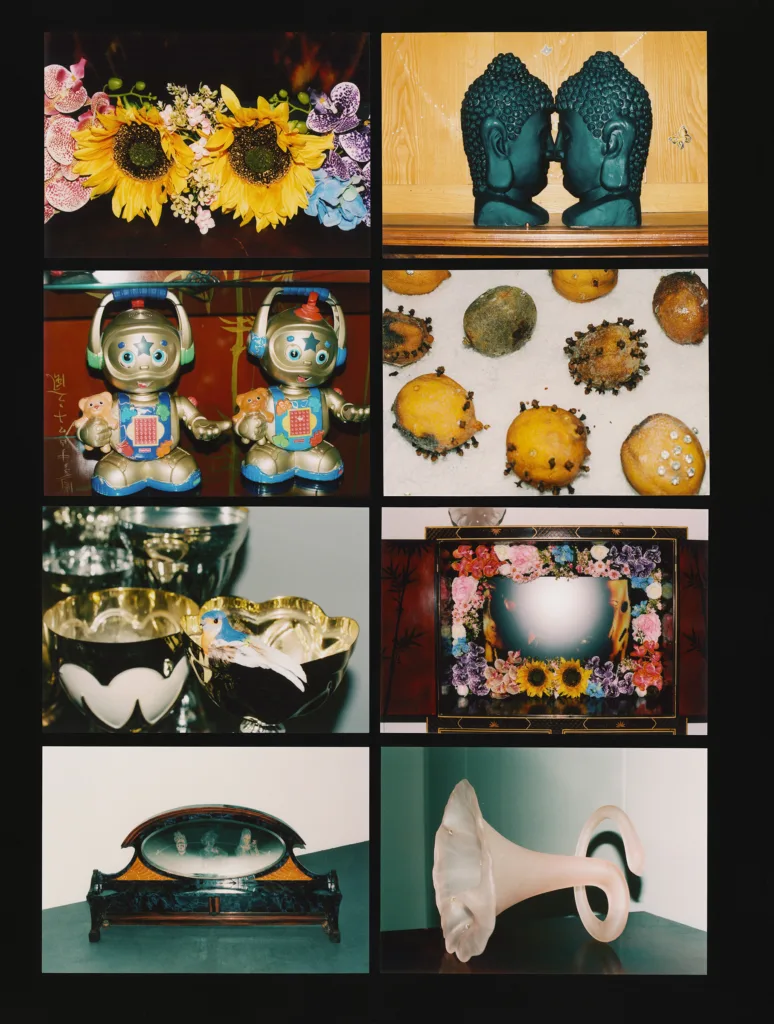
For his current and first solo exhibition, Who’s Gonna Save the World? at Lafayette Anticipations in Paris, he departs from a specific typology: furniture and objects inspired by a fantasised, essentialised East, sometimes mass-produced and drained by the systems that circulated them. His artefacts become receptacles: objects of projection, conviction and displacement operating within what he calls an economy of means. Grafting, sampling, and erasing, he extracts these materials from the consumption circuit and recharges them through belief, magic, and intention. They resist determinism while revealing the silent tensions of the social worlds from which they emerge. His installations rest on an implicit pact of credulity with the viewer.
From the demonisation of Black bodies in western Christian iconography and manga as the Global South’s shared counter-imaginary to the CIA’s role in constructing art history and the quiet politics of growing up in a communist suburb of Paris, the conversation that follows covers a lot of ground. Talking with Diaby is a lesson in simultaneously holding the intimate and the cosmic—how a selfie taken in a mirror at a show opening can carry the same weight as centuries of racial iconography, and how a childhood memory of marble-effect sticky paper can become the foundation of a visual language.
Sitting with him at Buttes-Chaumont park on a bright afternoon in spring, one thing becomes clear: Diaby is not waiting for the art world to catch up. He is already somewhere else, building, recharging, hexing. This is the moment before everything shifts.
Tiffany Dornoy Rezaei (TDR): I’m always drawn to genesis—the obsessions, the influences, the small things that accumulate before a work even exists. What does the very beginning look like for you?
Ladji Diaby (LD): I don’t really think in terms of ‘project’. I think concretely of a material result, an object, an idea in the form of an image. Suddenly, it becomes a surface, a pattern. Lately, I’ve been obsessed with the figure of Archangel Michael, this opposition between the white angel crushing a demon that’s either red or black. I have a whole research axis around how the depiction of the demon in western Christianity has been used to justify dehumanisation and render Black bodies monstrous, how demons almost became a discriminated community. I don’t believe in hell or paradise; if hell exists, it’s on earth, and the demons are right in front of us.
TDR: Like, there is no clean dichotomy between good and evil, as if the figure of the demon were above all a tool for moral delegation?
LD: Exactly. The figure of the demon, for me, is a completely disempowering figure. I refuse to believe in possession, this idea that the evil in us comes from somewhere else. It’s like the mirror piece [Who’s the hell call me down here?] that I’m showing at Lafayette Anticipations, where a demon’s head devours a Black baby—people have been taking photos of themselves replacing their head with the demon’s head since the opening.
TDR: Was that intentional, or did the way visitors engage with it reveal something you hadn’t really anticipated?
LD: No, I realised it when people started doing it. I loved the mirror for what it was, but that was literally the first thing they did. And I found it incredible. Suddenly, the object and the interaction make complete sense.
TDR: It creates something interesting in those layers of reading, unfolding maybe across time between those who stop at the interaction and those who might only clock it later, scrolling past their own selfie. Does that gap between these two modes of reception interest you or concern you?
LD: People didn’t even stop to read, which is actually kind of great. There was nothing beyond that moment of seeing themselves in the mirror. And I’m starting to want to work with that, really dig into the visitor’s experience, putting them in a position where I’m questioning them ideologically, morally, and culturally. What’s their place in all this? I thank them for participating; they’re the ones making the system visible. It takes everyone—their effort, their gaze.
TDR: Do you think artists catch something other people don’t see yet?
LD: We’re just symptoms. We all have practices that are symptomatic of the reality we live in. We make something in the present, that’s all. Everyone has the potential to tell their own stories. I have my experience as a Black Malian man living in the suburbs of Paris. I keep going back to the fictions that obsessed me as a kid—rereading them, rewriting them, proposing alternative versions. Since I was young, projecting myself into those fictions was a way of surviving an unbearable reality, both socially and economically.
TDR: That brings me back to the piece we showed together in Mexico at Third Born a few months ago, Anti-evil kit, with the figure of the Black Power Ranger as one that somehow travels across geographies and generations way beyond where it came from.
LD: It’s something that runs through the popular culture of millions of people from the Global South. Take my obsession with manga: oppressed communities across the world found themselves in it. They moved past the need for a character who looks like them to identify with. Those stories mapped so easily onto our experiences, our ambitions. Even though a mangaka made it without thinking of us, something resonated. There’s a globalisation of narratives, of intimacies that is possible. That’s what hooks me—patterns that feel intimate to my own experience but don’t belong only to me.
Manga is a product of the colonisation of Japan, its rise after the atomic bombs and the American invasion created a before and after. These characters who always carry demons who fight to reclaim their own power inside them, a darkness that surfaces at the moment of death. That’s a form of resistance to western influence. At its core, my work is about my own emancipation. Art gave me permission to read my own reality, understand it, and act on it rather than just endure it.
TDR: In the works you’re currently showing at Lafayette Anticipations, you’re summoning Buddhas and Pharaoh heads, sacred figures that ended up on mugs and tattoos somewhere along the way. You bring them back into an art space. What’s the gesture here? Are you reclaiming them or turning them against themselves?
LD: It’s a repurposing of all these spiritualities atrophied by the consumerist machine, reduced to patterns, logos, and empty shells. I think of myself as creating a simulacra of spirituality. What interests me is the structure, how a belief system operates as a system of values. In the end, everything is constructed, everything is made. The angel, the alien, the demon—figures so wrung out by fiction that they’ve become wallpaper.
I love creating vertigo out of that, resolving intimate problems on a cosmic scale, summoning entities and syncretising them. These images have weight, you have to reckon with them. As a Muslim who grew up in France, I’m far from the only one who grew up with Christian and Catholic images of God, hell, and paradise. Islam is an iconoclastic religion, so the images that helped me visualise what I was being told came from TV and cinema. One foot in, one foot out.
TDR: I’m asking partly because I know that feeling. My mother came here from Iran, and even being French from one side, there’s always that diaspora thing, an inherited imaginary that doesn’t quite match the ground you grow up on. How do you carry that?
LD: I just feel like myself. I’m neither Malian in France nor French in Mali. I’m both in both places at once. It’s not an easy position, but it’s impossible to be 100% anything. I’m the first in my family born here. My grandfather was 18 during the year of Malian independence [1960], but he still talks about it like it was yesterday. I’m just a link in a long process – racial and colonial – that’s only just beginning to be studied, questioned. There’s still a lot of work to do.
TDR: Your own genealogy makes that clear. Meanwhile, the term ‘decolonial’ has become institutionalised, academised at the risk of dispossessing those who live it most directly, as if the prefix implies that it’s already behind us. How do you navigate that?
LD: I have a hard time with that term. I think we’re simply anti-colonial. We need active action. I’m always wary of how over-intellectualising a present phenomenon can dispossess those living it most violently. Who talks about it and who defines it, that’s not necessarily who suffers it on the front line. And you end up in absurd situations: terms like ‘wokism’ are so over-instrumentalised that they’ve stopped meaning anything.
That applies to art history, too. It’s a construction, not a natural order of things. The CIA boosted American modernism in the 1950s to place Pollocks and Rothkos across European institutions and make New York the world capital of art. There are geniuses we’ll never know because the world decided to silence them. These were political choices, not universal truths, so I sometimes go quiet. I put a wall between myself and people. The missing part is for others to fill in.
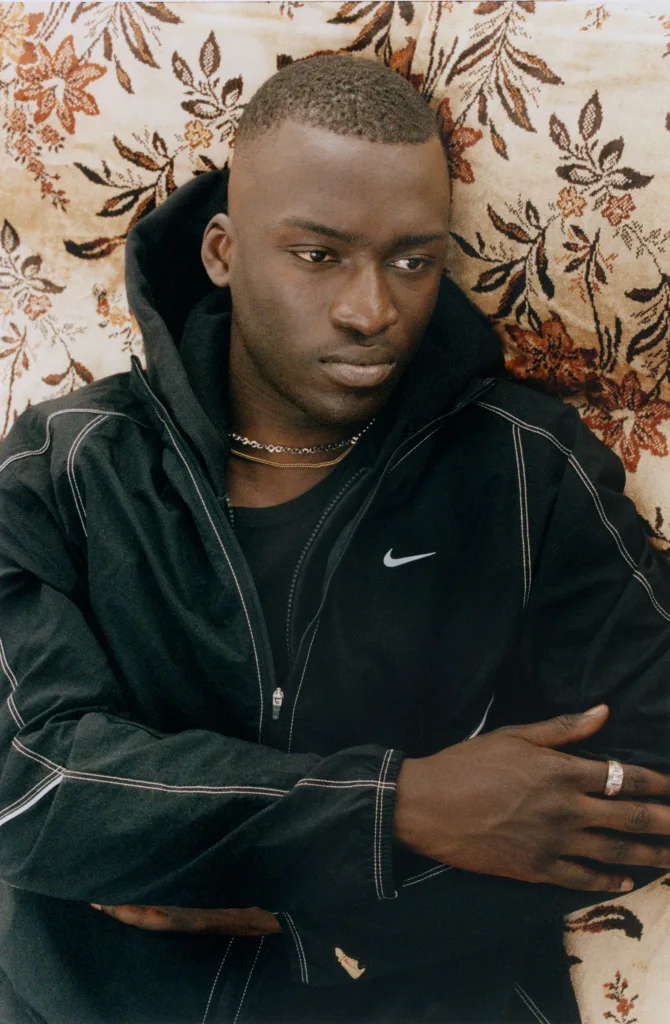
top RON DORFF, jewellery TALENT’S OWN
TDR: Yes, I feel it’s exactly what you practise in your work—keeping a part of it opaque, leaving a zone of indeterminacy that forces the viewer to actively engage in the construction of meaning.
LD: I ask the viewer for a pact of credulity, to believe in the world I’m building for them just for the duration of the observation. That’s how we really come to believe in something because we’re active inside it.
TDR: You come from a city with a very particular political history, celebrating 100 years of communism this year. Did that geography politicise you, or is it something that was built elsewhere?
LD: I didn’t clock the political leanings of Ivry-sur-Seine until I became politicised myself. What I always loved was its cultural policy, making things accessible through school, holiday camps, and museum visits. I still remember every museum I visited as a kid. The Louvre really stayed with me. It was also the sensation of not working; through art, I never feel like I’m in exhausting labour. I like efficient things, efficient gestures. Being surprised. I want the effect that hits like magic, like a way of continuing to enchant myself.
With time, I realised that cultural policy was no accident. It’s a vision, a social choice. It taught me that the conditions you grow up in are never neutral. They come from decisions, from power dynamics. Maybe that’s where my politicisation started without me even knowing it.
TDR: How do you situate yourself in relation to the art market? Do you play the game, work around it, or both?
LD: I won’t produce more or less than I want to. But I need to own my means of production, to know what I’m making, when, and where it goes. It’s pretty intense right now. I’m starting to understand how things work, how people position themselves. It’s a very insular world; people are friends and do business among themselves. I’m realising it’s not the only reality of the art world, not the only way to make a living from it. Being everywhere at once—proposing, teaching, setting up projects in other disciplines. Things with less ego, more distance.
I try to keep that lightness in my practice, too. I’ve always loved opaque narratives, choral films like Hana-bi. Multiple stories layered on top of each other, always finding points of intersection where something beautiful happens. I joke with my friends that I work in the studio like Jay-Z: I don’t write, I freestyle. I show up, do the work, leave. If it works, great. If not, easy.
TDR: Speaking of means of production, you work alone. You are your own labour force.
LD: I need it. I have a thing about self-sufficiency. It’s not that I mind depending on people, but I need everything close, accessible, at my scale. That’s actually why I started working with found objects. Every pattern, every idea—I think through my own small prism, at the scale of my small life, but I always hope it reaches a little further than me.
TDR: With all of this to say and show, how do you think about who’s actually in the room? You know Lafayette Anticipations brings certain types of visitors.
LD: At first, always facing the same crowd got to me. I was pretty detached from the questions I was raising, so I decided to change my practice, push much harder. I stopped simply transplanting my reality into the contemporary art world and really brought everything in—the cultural obsessions, the mystical ones, belief in ghosts and magic and curses. Making them perceptible. Almost imposing belief.
TDR: You’re hexing them, too.
LD: Clearly. Trick or treat. These are spaces where I expect people to behave. And if they don’t, I hope the hex falls on them. [laughs]
TDR: Do you feel the weight of a responsibility towards both the communities whose stories you carry and those who never had the same spaces to tell theirs?
LD: Yes, I need a certain precision in how I carry these stories. It’s a form of respect for the people they concern as well as those who look like us and never had the space to speak. Because in the end, even as a Black man in France, I’m still fairly privileged. If I had been a Black woman, it wouldn’t have been this easy. We don’t exist in the same way, we’re not subject to the same pressures.
It’s my responsibility to make sure people who look like me can access my work, the narratives that concern them, too. I work in the neighbourhood where I grew up, in the school where I was a student, trying to connect these two worlds. There’s a whole crew coming out of ‘the 94’, and we’re gradually taking back our story. Art has made me a better person—more tolerant, more understanding, more empathetic.
TDR: And your grandfather, what does he think of all this?
LD: It’s not that he doesn’t care, it’s more that my family already knows the stories I tell better than I do. The credibility expected of me in the art world isn’t the same as what my family needs from me. It’s a double life: Ladji from outside, Ladji at home. I have a younger brother, four younger sisters. I just want everyone’s life to be a little easier. I hope my work is useful to them and the people who look like them.
Originally published in Dazed MENA Issue 06 | Order Here
Talent LADJI DIABY, photographer’s assistant JEANNE PHELIZON, stylist’s assistant SARA BEVAGNA