
 Posted in
Fashion,
Posted in
Fashion,
Hussain Rehar’s SS26 Nargis blooms in excess
Text Amun Chaudhary
Pakistani fashion’s investment in The Bride as a symbol rather than agent is a long-standing norm. Despite bridal wear being a defining factor (in prestige and profit) of the nation’s fashion industry, the bride herself is a canvas rather than a figure to be shaped by; rarely a sovereign energy that can and should emanate in the garments.
With his SS26 bridal collection, Nargis, unveiled early this year, designer Hussain Rehar argues with this notion. Continuing to use his craft to expand the language of couture – elevating it beyond nostalgia, he uses heritage to occupy new spaces in fashion. Through sculptural form, layered historical references and a focus on presence and scale, the collection repositions bridalwear from being a tried-and-true segment of fashion to a site for the active expression of identity and power.
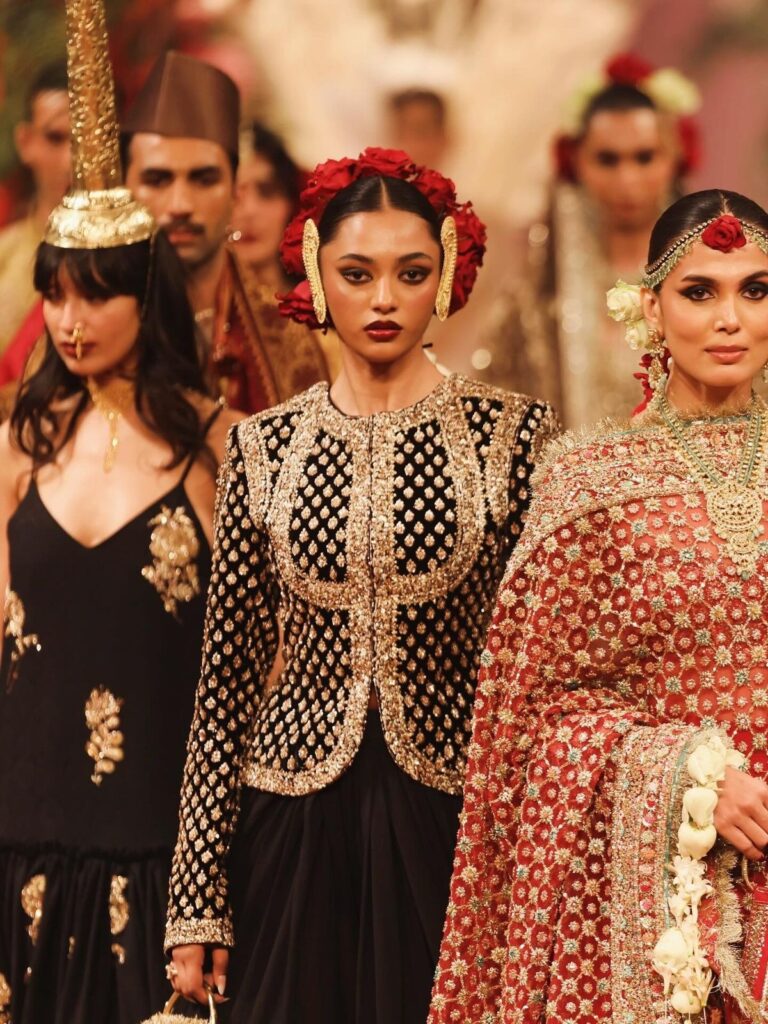
Hussain sat down with us to discuss the making of the show. “The moodboard was rooted in atmosphere rather than a single muse. Government College [a 19th century Lahore institution] became central to that vision, a colonial-era building with Mughal echoes, where multiple histories exist within the same space. I was interested in that coexistence.” This dialogue translated directly into the garments. Many of the outer layers referenced Mughal court jackets and brocade traditions – ceremonial, ornate and rooted in royal dressing. Underneath them, the gowns and shirts carried subtle references to British Raj-era dressing through their length, layering, and composition. “The contrast was intentional.” Hussain explains. “It reflects how our aesthetic identity has been shaped by overlapping histories rather than a single narrative.”
Each facet of Hussain’s collection re-negotiates how history can be represented through garments, and breaks away from the trope of nostalgia holding South Asian fashion by the throat, or the colonial binary of art that merely resists.
The show’s title, “Nargis” meaning narcissus or daffodil, didn’t begin with a focus on floral motifs, but the emotional atmosphere of the collection was shaped by an intention to have the work “linger,” for the impact to be fragrant and atmospheric.
This intention is not lost on the audience. Watching the show was experiencing a sort of theatre. The models walked with a purposeful pace, elegantly holding fixed gazes, allowing the eye to absorb each detail of every outfit. The classical soundtrack was immersive, and the lighting was moody with a central focus on the runway. Hussain wanted to create an environment rather than a runway: a timespace that on the surface felt nostalgic, but was disrupted by pieces that pushed the boundaries of what that environment’s fashion has thus far been restricted to.
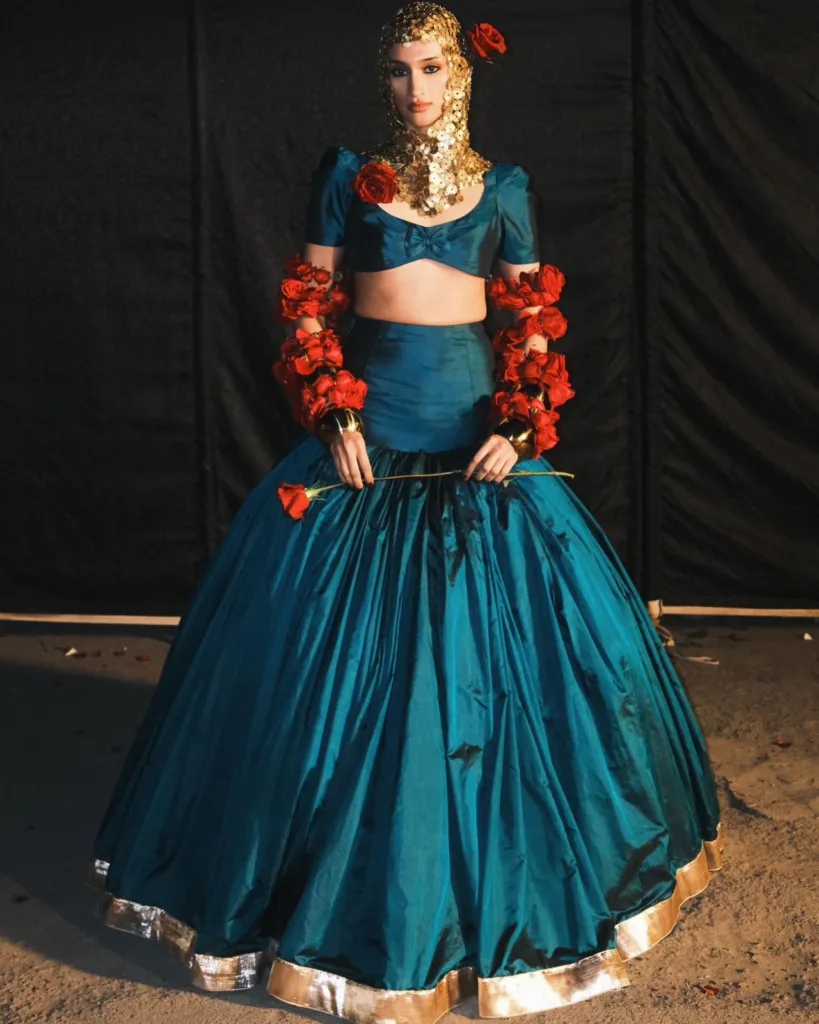
Hussain’s fresh use of form is impactful. Despite the decadence of Pakistani bridalwear, brides often feel hidden within it – encouraged to be coy amidst fabrics that present grandeur. This collection plays with scale and volume. Hussain was particularly interested in how volume could feel controlled rather than overwhelming. “The pink lehenga, for instance, was built to expand outward but still feel anchored at the waist. Even the florals were integrated into the structure so they followed the movement of the garment instead of sitting on top of it. It was about creating a shape that feels intentional from every angle.”
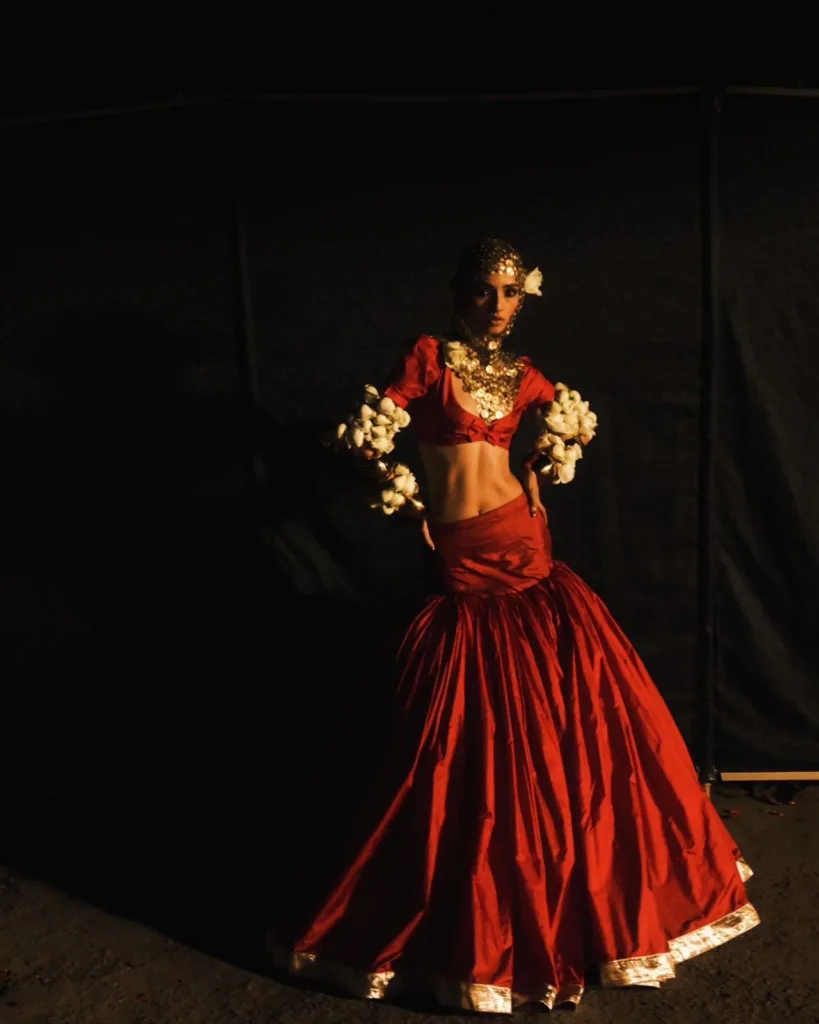
A Hussain Rehar bride occupies space – she is marked by a clear sense of presence. The opulence of her clothes ornaments her, “I leaned into grandeur, bold ornamentation and strong beauty, the kind of bridal that feels ceremonial and powerful. What I’m deliberately leaving behind is the idea of the overly demure bride who disappears into tradition.”
Nargis is a collection that feels as though its femininity and decorativeness emanate outwardly from a clear understanding of the complexities of the Pakistani woman. The styling brought an exhibitorial quality to the show that mirrored installation. “[The styling] carried the same sense of control as the garments. It was dramatic and nostalgic but never chaotic. The florals, layered jewellery and bold beauty looks were intentional; they heightened the emotional intensity of the collection while maintaining composure,” Hussain said. He was clear that any styling would have to uplift the central point of the garments: the silhouette, never distracting from them.


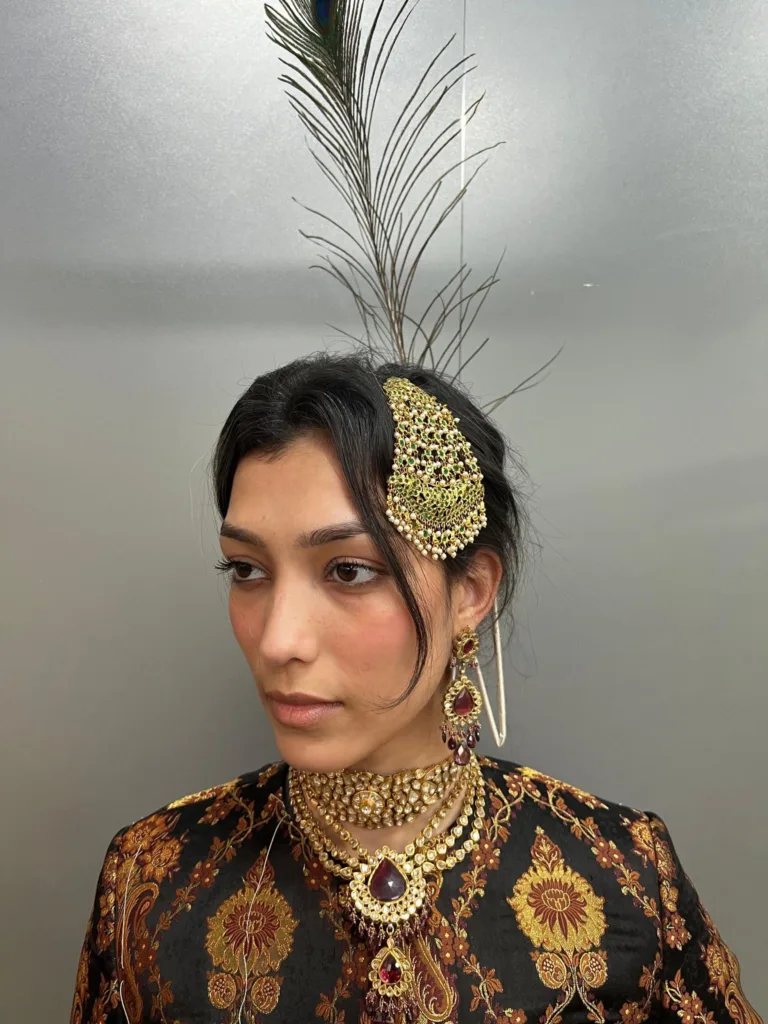
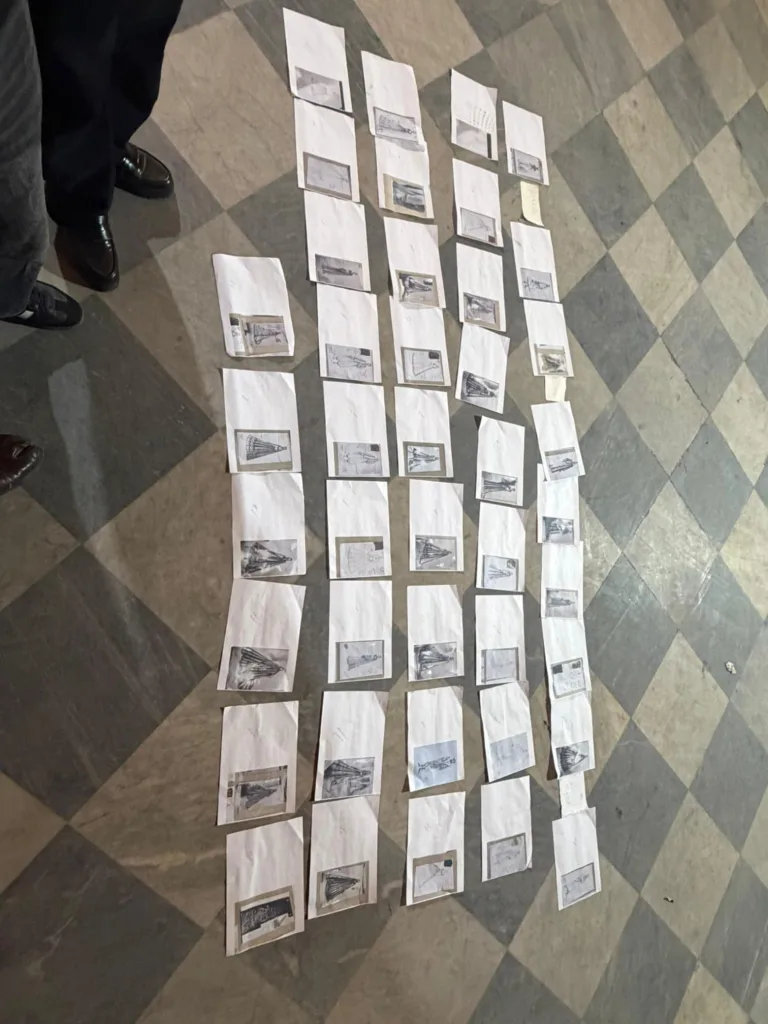
Hussain’s collection is steeped in ceremony and theatre, whilst provoking tropes of fashion and identity that persist in Pakistani culture, and shaping the art forms that reflect it. Hussain’s work is not rebellious or uninterested in the status quo of Pakistani fashion, especially bridal. Rather, he leans into the ornamentation, the grandeur, the opulence and mobilises those notions to create pieces that feel contemporary and subtly disruptive.
The storytelling of each garment is as invested in the future as it is shaped by history and the traditions of the past.
“With this show, I was interested in revisiting that sense of old-world ceremony, the grandeur of historic spaces, the weight of jewellery, the drama of presence. It’s not about recreating the past, but about reinterpreting that feeling of authority and romance in a way that feels relevant today.”


Hussain’s pieces embody the women he observes and the beauty that surrounds him, whilst carefully filling a gap for couture that refuses to keep questions of identity in tight boxes, tucked away from mainstream fashion houses in Pakistan. Nargis resists the binary of past and present, refusing to treat heritage as something to either preserve or dismantle. Hussain Rehar treats it instead as material — to be constructed, scaled, and re-authored. In Pakistan’s sociocultural context, this refusal to be easily categorised is energising, yet the collection never relies on that resistance for its impact. Building a new language for Pakistani fashion, Rehar positions couture as a deliberate, self-aware expression of identity, where power lies not in rejecting tradition, but in commanding how it is worn.