
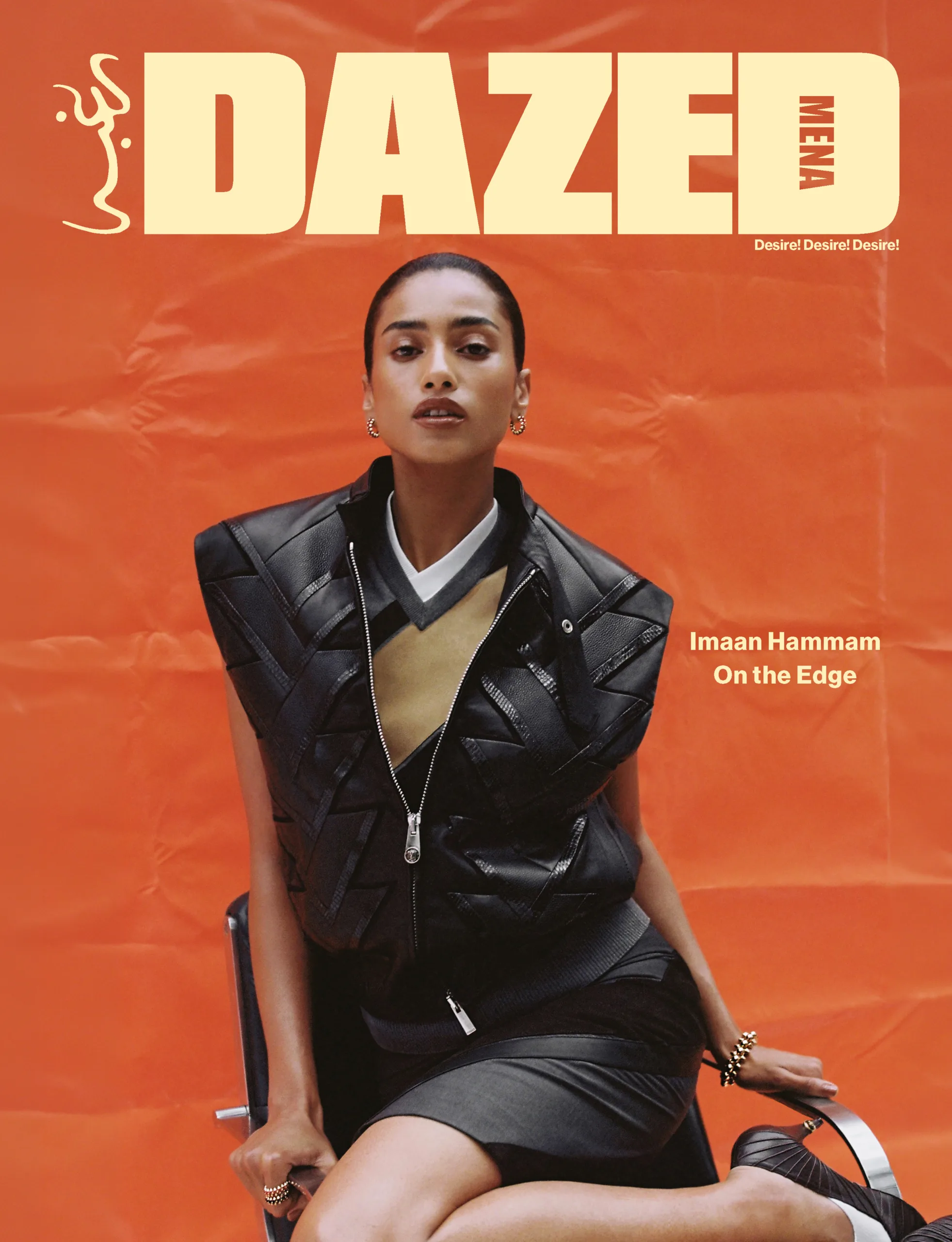

Text Sarra Alayyan | Photography Davit Giorgadze | Styling Omaima Salem
Imaan Hammam passes every screen test.
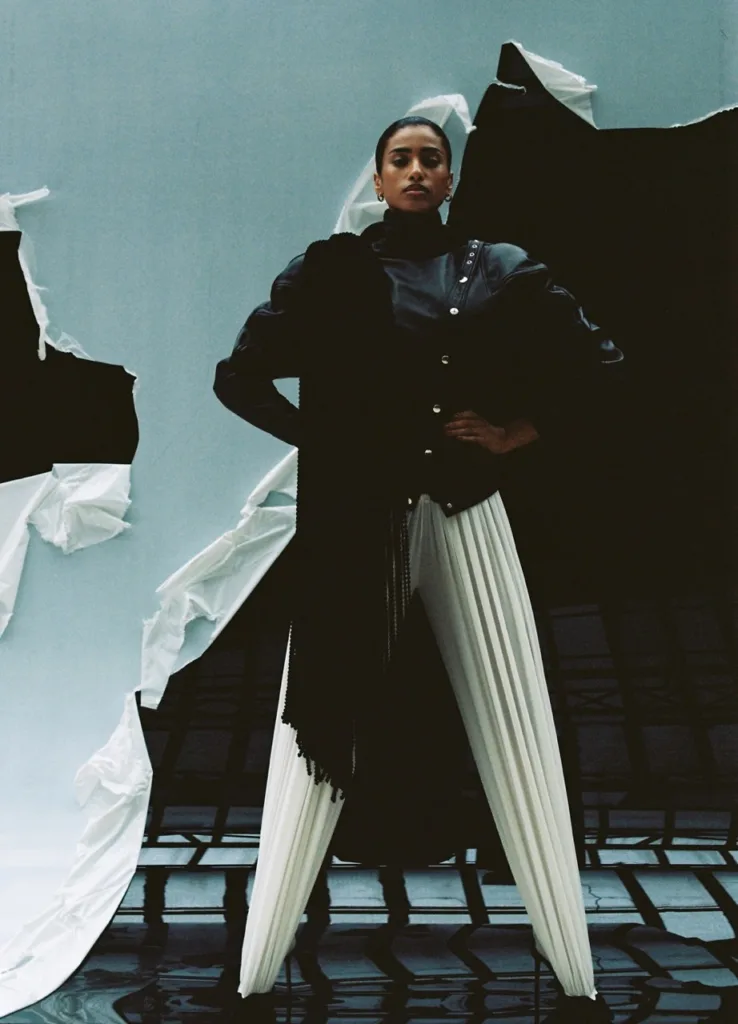
The Moroccan-Egyptian model has held a coveted place in the fashion industry since 2013, gracing the covers of all major fashion magazines and runways alike. Raised in the Netherlands and marked by her debut at Jean Paul Gaultier, she is a reliable face in the public psyche. Her image somehow remains omnipresent despite being corralled within the infinite scroll—year after year, a growing audience trails behind her towering figure with impressive dedication.
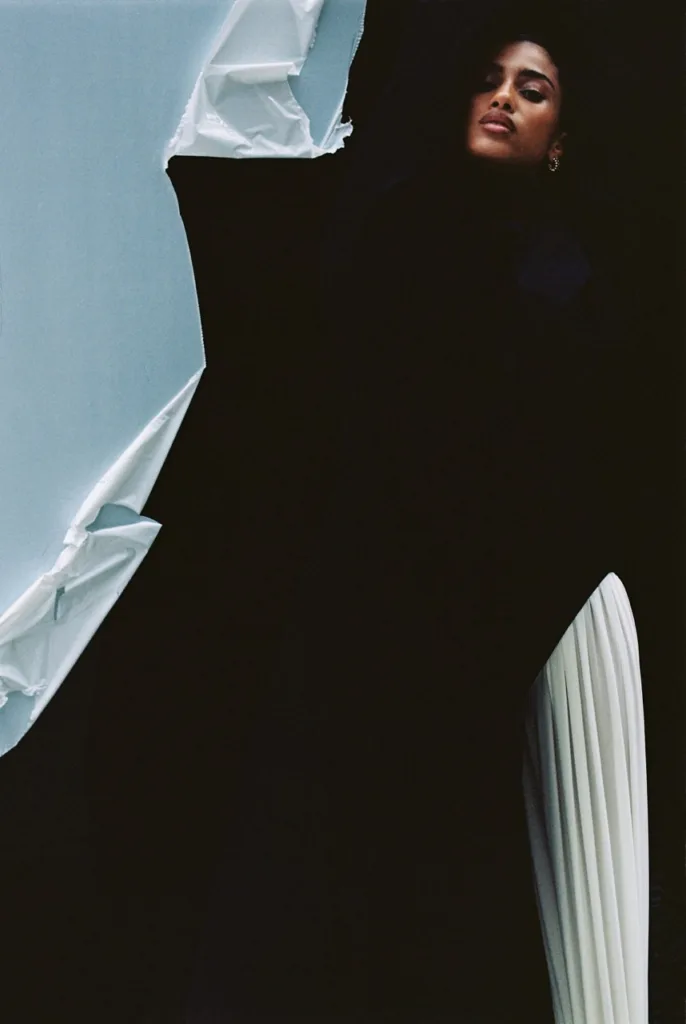
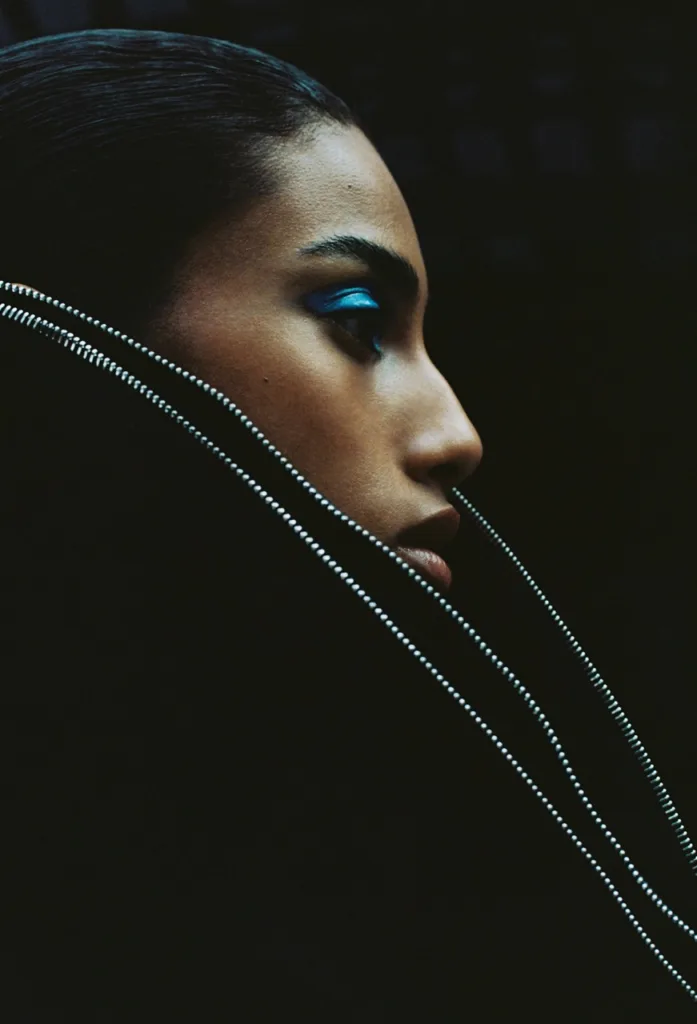
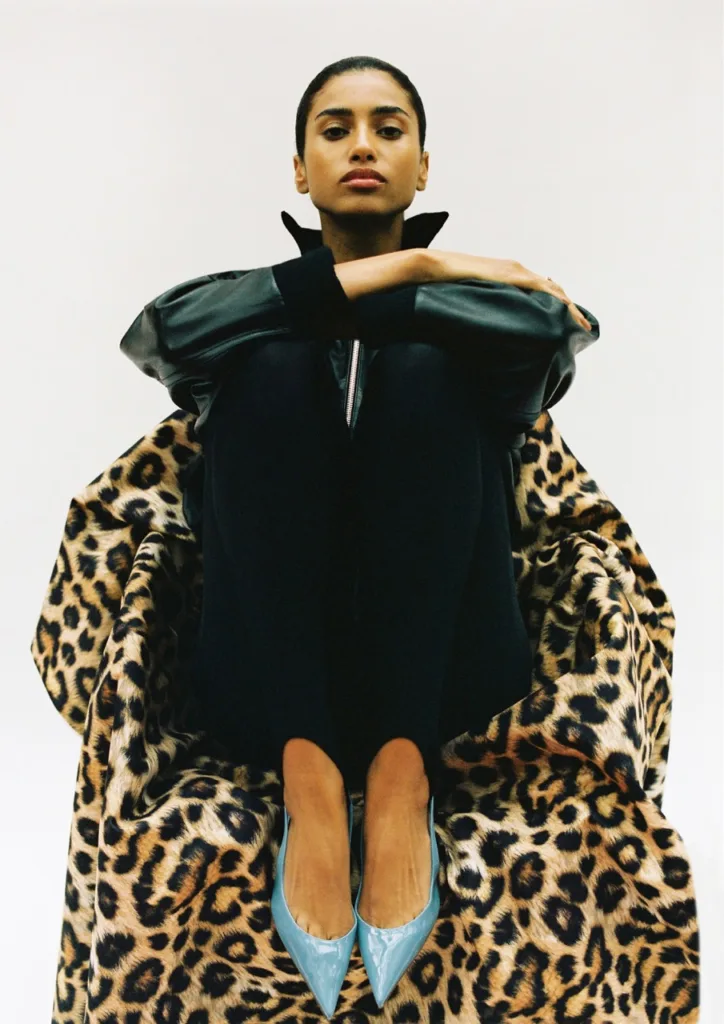
Jacket and shirt SAINT LAURENT BY ANTHONY VACCARELLO, Clash de Cartier earrings in rose gold and chalcedony CARTIER
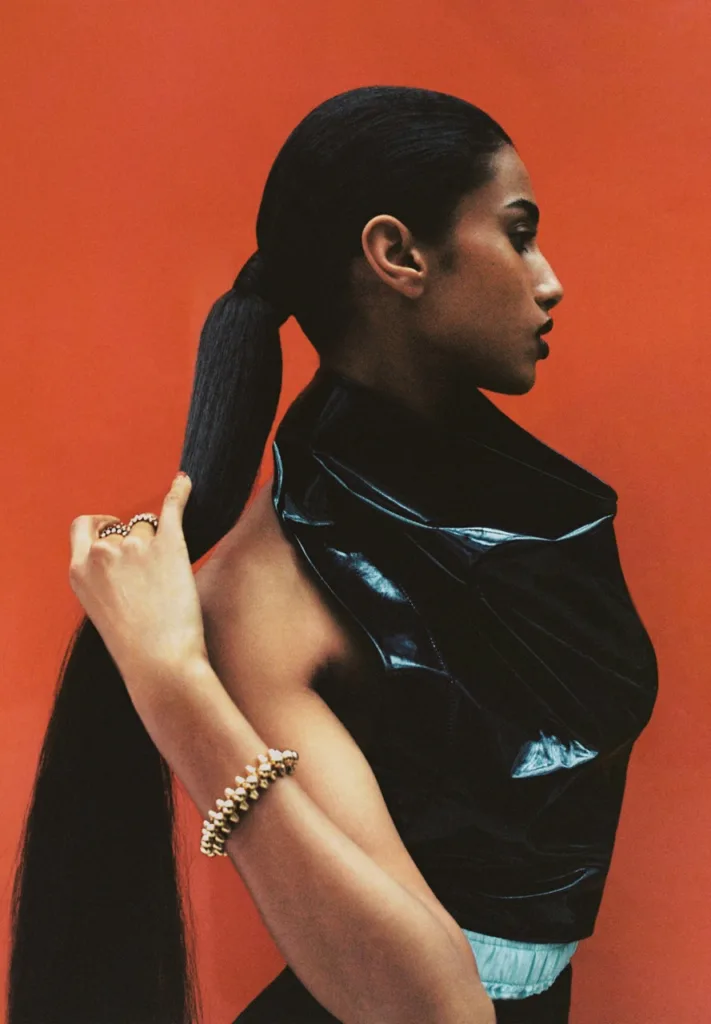
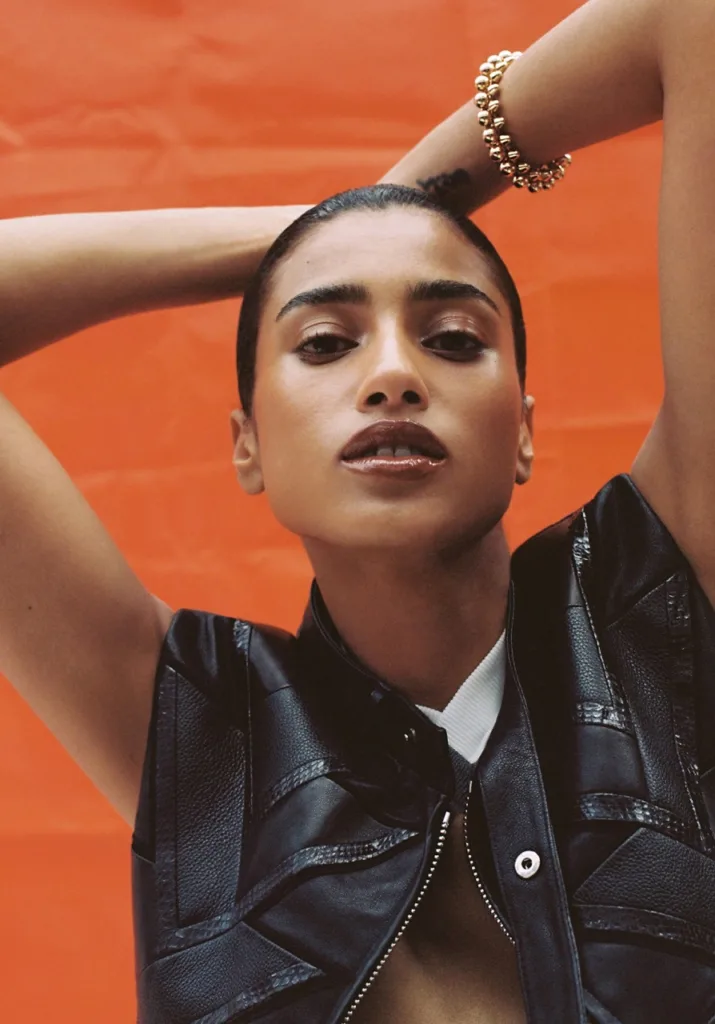
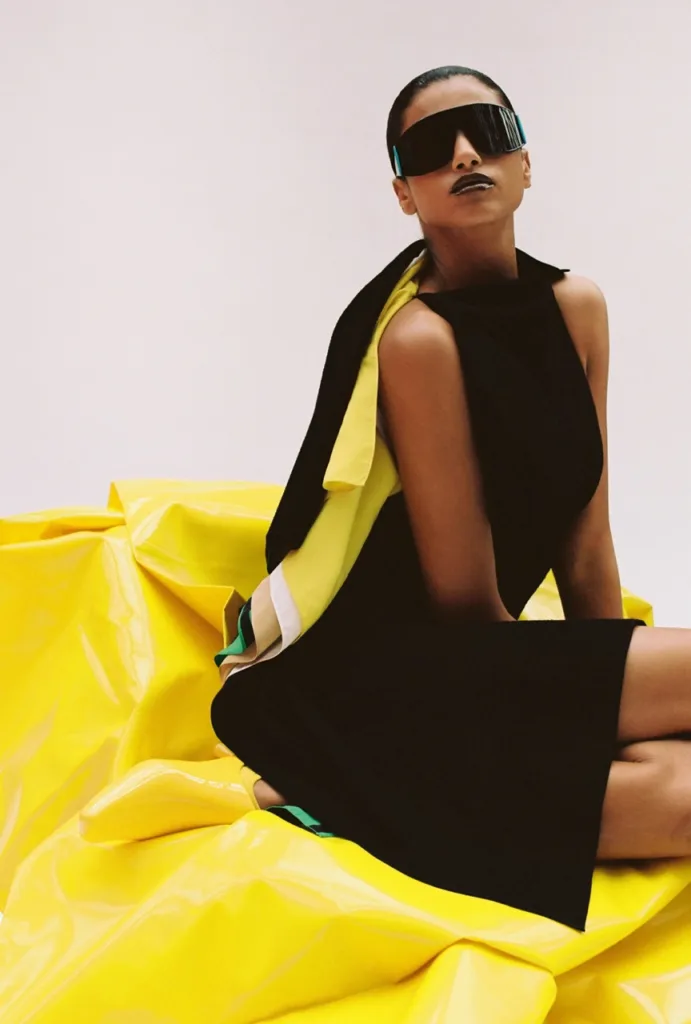
rose gold CARTIER

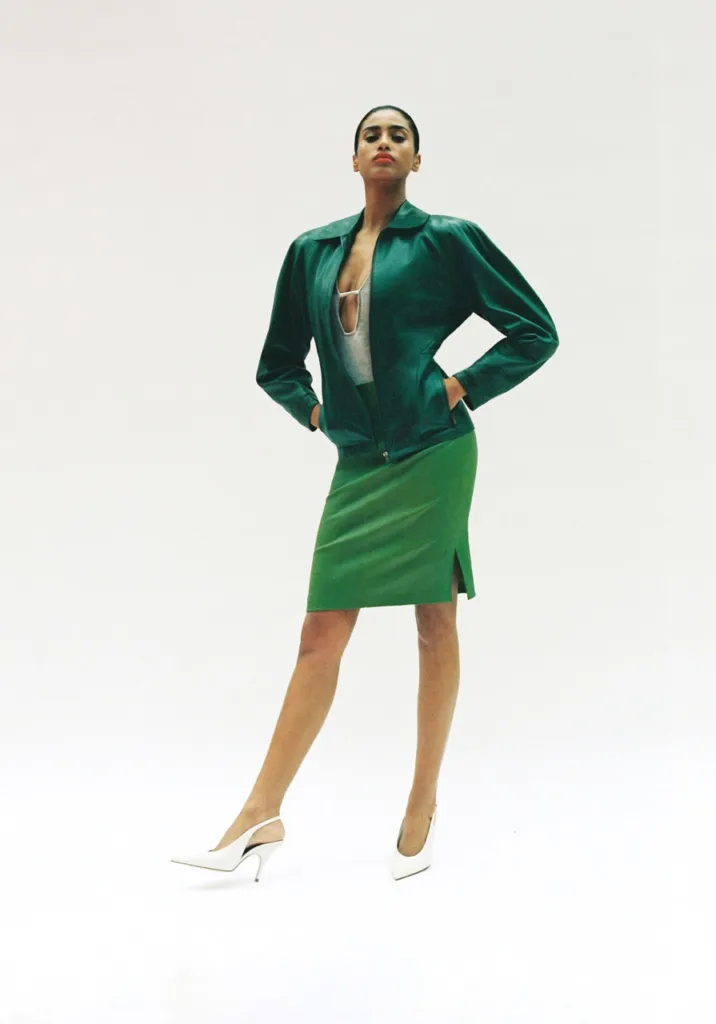
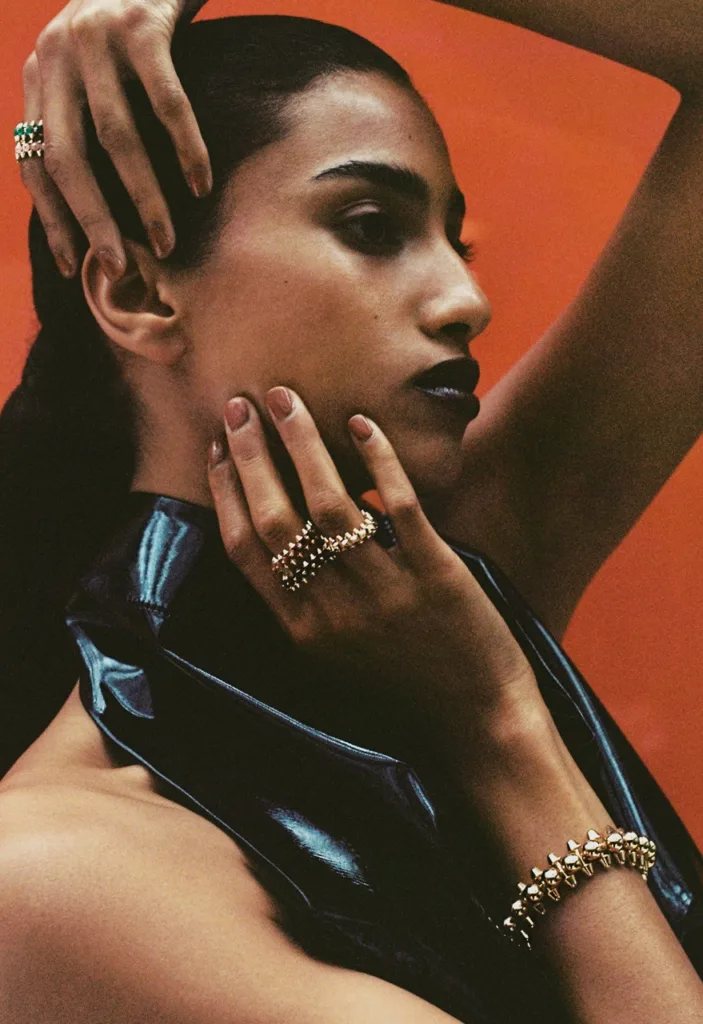
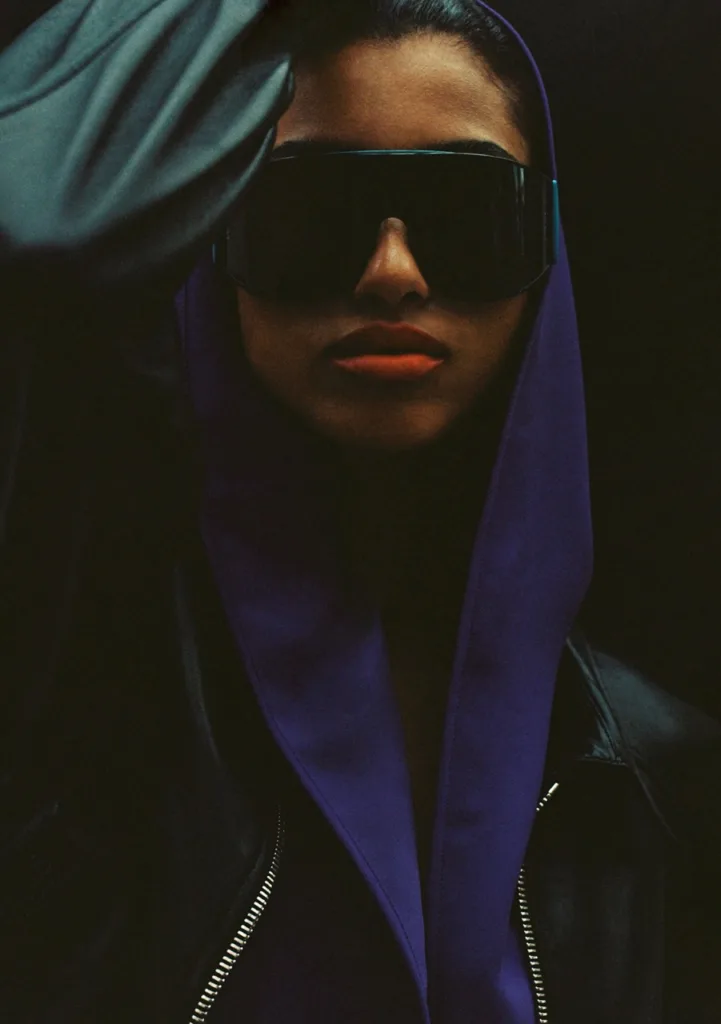
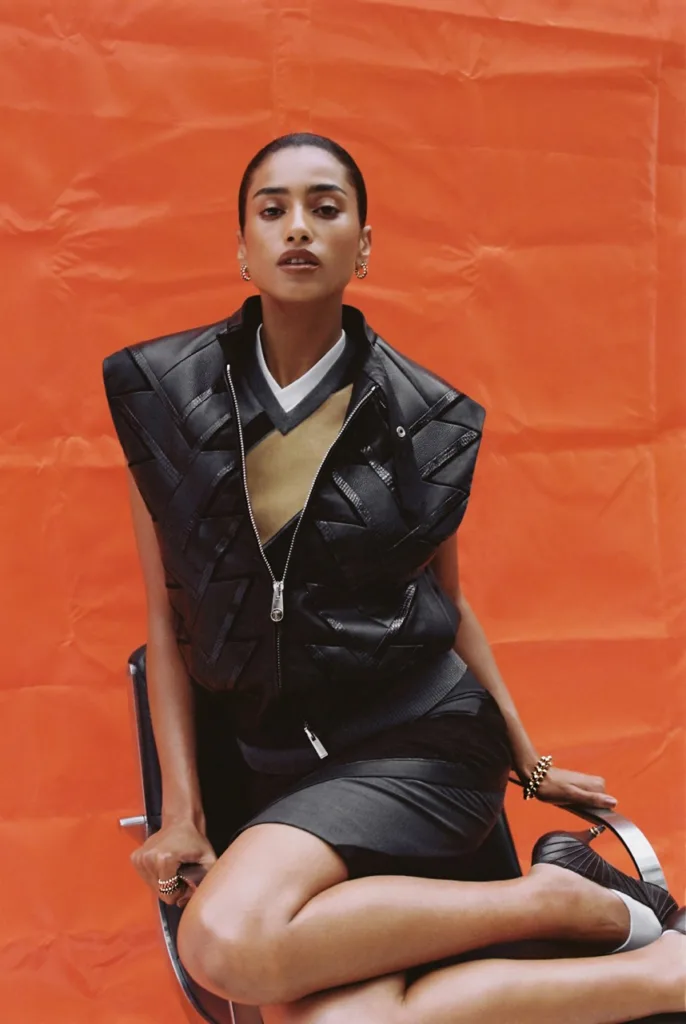
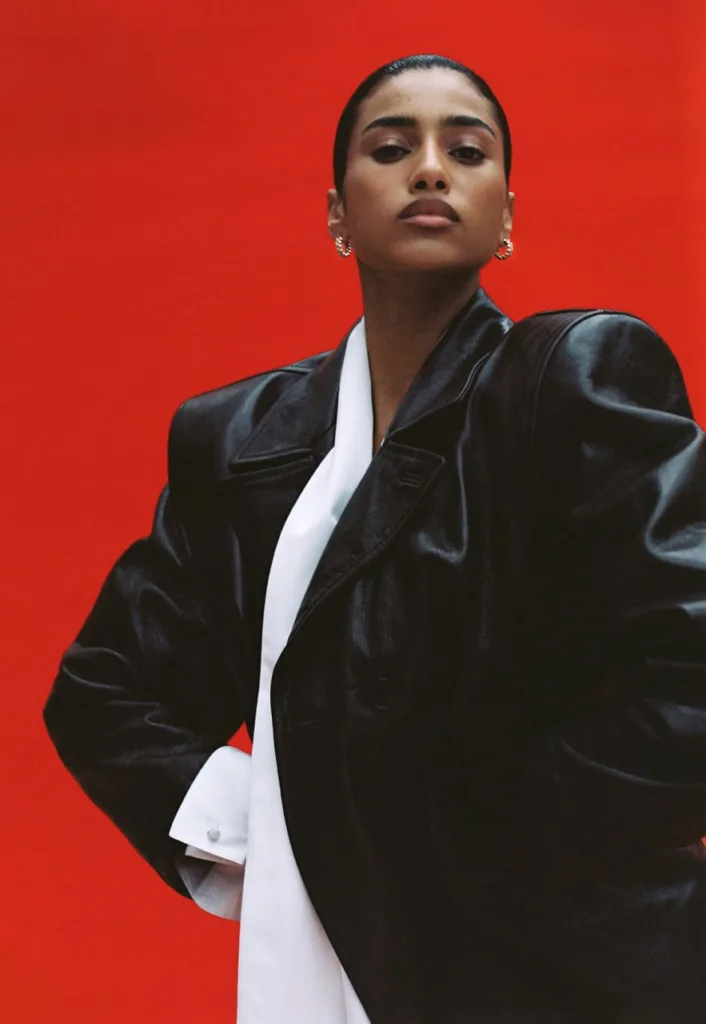
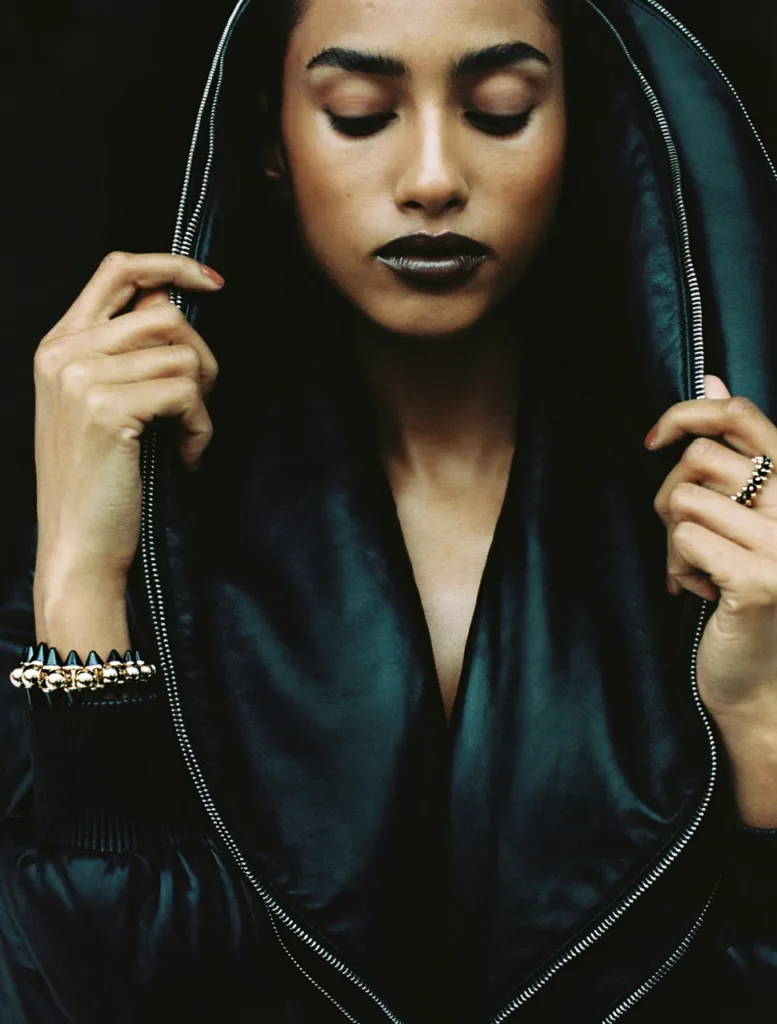
Clash de Cartier earrings in rose gold and red dyed agate, Clash de Cartier rings in rose gold with red dyed agate and onyx, Clash de Cartier bracelet in rose gold CARTIER
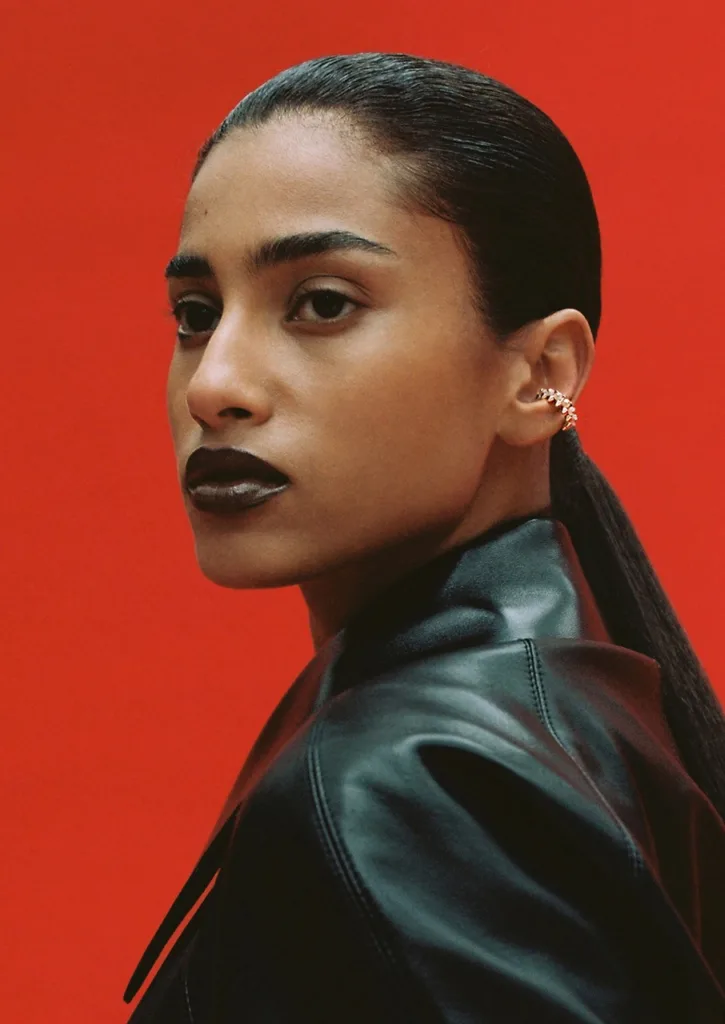
Cognisant of her own reach, Hammam has decided to branch out from fashion. However, opting for a refreshingly different approach to the traditional beauty-brand pipeline that most of her contemporaries have chosen, she’s going for something slower and more vulnerable: a curatorial archiving platform called AYNI.
Translating to ‘my eyes’, AYNI seeks to archive and visibilse cultural production across the region, with an initial emphasis on cinema (although she’s readily expanding into all spheres of culture with the hope of eventually creating physical gatherings). So far, alongside regular reviews and director spotlights, the platform has invited certain members of Hammam’s network to curate a list of films (call it the anti-Letterboxd), underscoring a clear motivation to drive intentional, discerning community as well as taste.
“AYNI has allowed me to reclaim authorship over my own narrative; to show where I come from, what shaped me, and what inspires me beyond the image,” she explains. “It felt important to create something meaningful and lasting, something that contributes to culture rather than just existing within it.” More than to the films’ content itself, she seems drawn, perhaps, to the reflexology of filmmaking, engaging with the camera and its aura, which she knows intimately. Still, cinema lends a new mystery and tension—the static image against the moving. Which one does Hammam see herself through more? The answer is more complex, with each medium contributing to a wider vocabulary through which the model expresses herself.
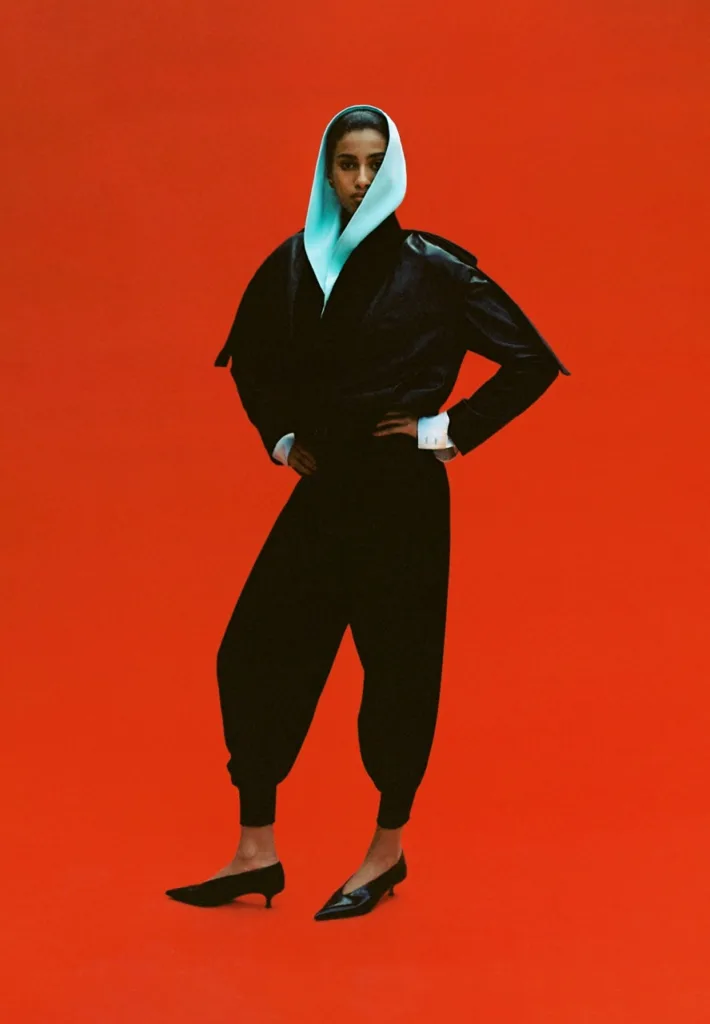
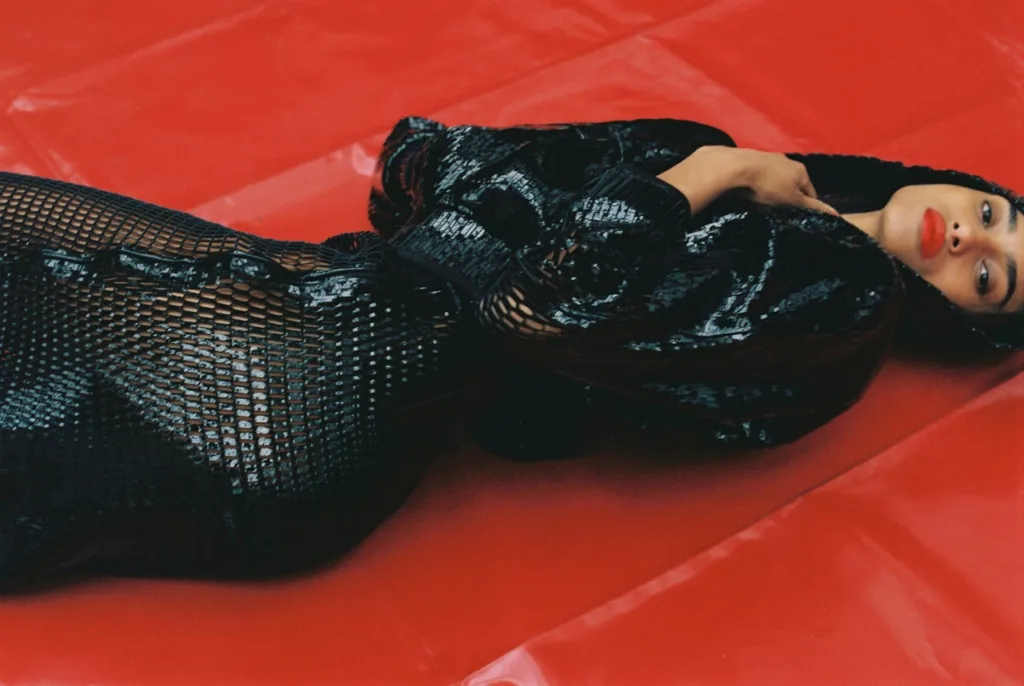
For this cover shoot, the model adopts different archetypes, conveying her chameleonic tendency to transform across storylines. As she meets Davit Giorgadze’s lens, the pair spar tenderly, each frame a wink to high celebrities across film and art; references of a reference baked in scantily enough to not be recognised but there nonetheless—beyond the image, like Hammam herself.
You were born and raised in the Netherlands. Can you tell me a bit about your upbringing? What was it like growing up in the Egyptian-Moroccan diaspora?
I grew up in Amsterdam, in a very strong and loving household led by my mother. She migrated from Morocco at a young age and carried so much resilience with her. Our home was deeply rooted in culture—surrounded by community, Arabic music playing in the background, the smell of Moroccan and Egyptian food on the table.
At the same time, growing up in the Netherlands, I was very aware of existing between worlds. Outside, I was part of Dutch society, and inside, I was deeply connected to my Arab and North African identity. I didn’t see girls who looked like me represented in fashion or media for a long time, and that can make you question where you belong. But it also gave me a strong sense of self. With time, I realised that my identity wasn’t something to shrink from but something to celebrate. Being part of the diaspora taught me adaptability and pride in where I come from. It shaped my perspective, my work, and the stories I feel drawn to tell.
You’ve mentioned before that, growing up, you were surrounded by film thanks to your father. What films would he watch?
Some of my earliest memories are of my father watching old Egyptian films at home. He loved musicals featuring the greats like Abdel Halim Hafez, Mohamed Abdel Wahab, and Farid al-Atrash. Their voices would fill the house. There was always music, always emotion. I remember seeing actresses like Faten Hamama and Soad Hosny on the screen; their presence was so powerful yet so soft. Even as a child, I was mesmerised. I didn’t fully understand everything at the time, but I felt it. Those films carried romance, longing, and poetry. They made me curious about where I came from. Looking back, that early exposure planted the seed for my new curatorial platform, AYNI.
You’ve cited Youssef Chahine as a director who left an impression on you. Considering his career spanned over 60 years, his style transformed significantly. If you had to choose, which one do you resonate with more: the musical Chahine, seen in films like Alexandria, Again and Forever, or a darker and more visceral Chahine, like Cairo Station?
I’d say his darker work resonates more. There’s something very raw about the way he portrays people—their loneliness, their desires, their contradictions. He wasn’t afraid to show complexity. It feels deeply human. His musical films are so beautiful and nostalgic, and they remind me of my childhood, but the darker ones stayed with me because they ask deeper questions about identity, belonging, and society. That honesty is something I’m very drawn to.
Who is your favourite on-screen character? Is there any character you particularly relate to?
I’ve always been drawn to the characters portrayed by Soad Hosny. She carried this incredible duality: strength and fragility, joy and melancholy. She felt very modern, very free, but also deeply emotional. And Faten Hamama had this quiet power. She didn’t need to say much because you could feel everything through her presence. I think I relate to characters who are in a constant process of becoming—navigating identity, searching for belonging, evolving. There’s something very human in that. And I think that’s something I continue to explore, both in my own life and through AYNI.
On that note, can you tell us a bit about AYNI?
AYNI, which means ‘my eye’ in Arabic, is a curatorial platform and archive dedicated to preserving and celebrating Arab storytelling, starting with film but expanding into art, literature, music, and fashion. It really came from a personal place. Growing up in the diaspora, so much of my understanding of my identity came through old films, music, and imagery. But I realised that many of these works weren’t easily accessible, especially to younger generations. AYNI is my way of preserving those stories and creating a space where people can discover them through a more personal, emotional lens. It’s both an archive and a living platform.
Why was it important for you to carve out this space and show people this side of yourself?
For a long time, people knew me primarily through fashion, which is a huge part of my life, but it’s not the whole story. Film, art, and cultural preservation have always been deeply personal to me. AYNI allowed me to reclaim authorship over my own narrative; to show where I come from, what shaped me, and what inspires me beyond the image. It felt important to create something meaningful and lasting, something that contributes to culture rather than just existing within it.
AYNI is a great addition to the growing number of platforms from the region that both archive and curate artistry beyond institutional spaces. Why are platforms like this valuable?
Because for a long time, many of our stories were either overlooked, misrepresented, or filtered through an external lens. Platforms like AYNI allow us to archive and present our own histories on our own terms. They create accessibility as well as dignity. They allow younger generations to see themselves reflected in complex, beautiful, and honest ways. Cultural preservation is not just about the past; it’s about shaping how we see ourselves in the present and future.
Are there any platforms that you love and look up to?
I’m really inspired by platforms like Afikra, which create space for conversations around Arab history and culture in such an accessible and thoughtful way. The Middle East Archive has been incredibly important in preserving visual memory and everyday histories from the region. I admire Watermelon Pictures for supporting and distributing films that centre our narratives, and Radio alHara for building a global community through sound—it feels deeply rooted yet borderless. Dazed MENA has also been very important in redefining how contemporary culture from the region is seen, giving space to new voices and perspectives across fashion, film, and art. All of these platforms show how powerful it is when we archive and present our stories on our own terms.
Who are the directors, designers, or artists from the region currently inspiring you?
Directors like Kaouther Ben Hania and Nadine Labaki continue to inspire me with their emotional depth and fearlessness, as does the incredible sensitivity with which Meryem Benm’Barek-Aloïsi portrays the quiet emotional realities of Moroccan women. In fashion, creatives like Mohamed Benchellal and younger designers emerging from the region are redefining what Arab fashion looks like globally. I’m also inspired by photographers and multidisciplinary artists who are documenting our generation in a very raw and intimate way, creating a visual memory for the future.
You’ve mentioned that you want to grow AYNI into a community beyond the archive itself. How do you hope it expands?
I see AYNI evolving into a living cultural space, both online and physically, hosting independent film screenings, exhibitions, and conversations where people can come together and experience these stories collectively. The archive is the foundation, but the goal is community. I want AYNI to support filmmakers, amplify voices, and eventually expand into producing and directing to help bring new stories to life. Ultimately, I hope it becomes something that lives far beyond me.
There’s a sense that AYNI allows Arab stories to exist without being translated or simplified for a western eye. Is that something you’ve considered?
Yes, a lot. AYNI isn’t about explaining our culture—it’s about presenting it as it exists. There’s beauty in complexity, in specificity, in nuance. For so long, Arab stories were often reduced to stereotypes or framed in ways that made them more digestible to others. With AYNI, the intention is to centre authenticity. It’s about creating a space where our stories don’t need permission to exist.
As one of the most visible Afro-Arab public figures in global fashion and culture, do you ever encounter pressure to present yourself in a certain way to be more accepted?
Earlier in my career, there were moments when I became very aware of how different I looked and how rare it was to see someone with my background in those spaces. There can be an unspoken pressure to assimilate or simplify parts of yourself. But over time, I realised that my identity is my strength. Being Afro-Arab, being North African, being part of the diaspora—these are things to honour, not dilute. The more I embraced that fully, the more I felt aligned with myself and my purpose.
Do you feel a responsibility that comes with that visibility?
I do, but in a conscious way, not in a heavy way. Representation matters. If my presence allows even one young girl to feel seen or proud of where she comes from, then that means everything to me. Through my work – and through AYNI – I hope to contribute to a broader, more honest representation of who we are. Being an Afro-Arab comes with its own nuances. It means carrying multiple histories within you. Growing up in Europe, there were moments when I didn’t see myself fully reflected anywhere, but I gradually realised that existing between cultures is also a form of richness. It shaped how I see the world—with sensitivity, awareness, and pride. Today, it means honouring every part of where I come from and creating space for those stories to exist visibly.
What is something people assume about you that isn’t true?
People often assume they know me based on the image, but I’m actually quite introspective and sensitive. I spend a lot of time observing, learning, and reflecting. Much of what drives me happens quietly.
What is something you wish people acknowledged more about you?
The intention behind what I do. Whether it’s modelling or AYNI, it always comes from a deeper place of storytelling, preservation, and connection. It’s never just surface.
So many of the films you platform on AYNI explore womanhood and becoming. How has your understanding of womanhood evolved over the years?
Womanhood, to me, has become less about how you’re seen and more about how you know yourself. When I was younger, it was about growing into my body and finding confidence. Now it’s about softness, boundaries, emotional depth, and self-trust. It’s an ongoing process of becoming.
What changes in the fashion industry are you excited about?
I’m excited to see more diverse faces and stories being embraced, and creatives from different backgrounds stepping into positions of authorship. What I hope continues to grow is depth, moving beyond representation as a moment and making it a lasting shift in how stories are told.
On a lighter note, what’s your favourite Moroccan or Egyptian dish?
It depends on the moment, but nothing compares to my mother’s couscous, and molokhia always feels like home.
Finally, what’s a moment in Arab pop culture that altered your brain chemistry?
Watching old Egyptian musicals as a child—the colours, the music, the emotion. And seeing women like Soad Hosny on screen, existing with such presence and depth. It made me realise how powerful our storytelling is.
Originally published in Dazed MENA Issue 05 | Order Here
Model IMAAN HAMMAM AT VIVA MODEL MANAGEMENT LONDON, casting 11CASTING, hair PAWEL SOLIS, make-up ANTHONY PREEL, manicurist HANAE GOUMRI, set designer RAF MEDEIROS, stylist assistants ZOE ZANZOLA and EVA RAPTI, make-up assistant SHANA MONTIER, set designer assistants BRUNO FELICIANO and VERENA WIELAND, production FARAGO PROJECTS