
 Posted in
Feature, Archives
Posted in
Feature, Archives
Against Archives of Emptiness: Ghost Women and the Politics of Memory in the Khaleej
Text Jood AlThukair
“Inside the woman a lake of funerals”
—Zaina Alsous, Bird Prelude
Beyond the theatre of the archive, preservation and memory are now popular buzzwords in contemporary creative spaces. From curated Instagram dumps to improvised attempts at cataloguing the peculiar, the ‘archive’ has swollen into a host category for fragments, miscellanea, and digital residue. But when everything is called an archive, the word begins to hollow out. What does it mean when fragments, spam, and scraps are given the same weight as history itself? This informal archive may appear harmless, but it obscures the fact that real archives have never been this way; they are built from decisions about who and what is worth keeping.
Here, the institutional archive presses itself in—not as a visual trend, but a tribunal of power. It decides what survives and what dissolves into silence; it is a monster locked in a cage. The ‘real’ archive is materialised by its hauntedness, making it uninhabitable to its core, lingering in the corners of the room and draping over its curtains in a suspended pause. I often engage with it as an inherently spectral space, a foreignness that renders me motionless.
When I requested access to the archives during my graduate studies three years ago, the person in charge was expecting a boy—not only because of my name, but because it seemed unimaginable that a Saudi woman could access this institution. When I approached, his eyes skimmed past me and remained upward, waiting for a much taller figure to emerge. Entering that room meant I had to rummage through the wastelands—to make contact with the very real and meticulous forms of displaying death. I saw ghosts everywhere; when I held the Saudi Arabia portfolio, it mostly housed messy, overexposed pictures I later realised were of the desert. I couldn’t tell the sky from the ground. This ‘barrenness,’ framed to embody ecological emptiness, seemed to affirm land-death: a territory imagined as vacant, yet open to extraction, and belonging to no one.
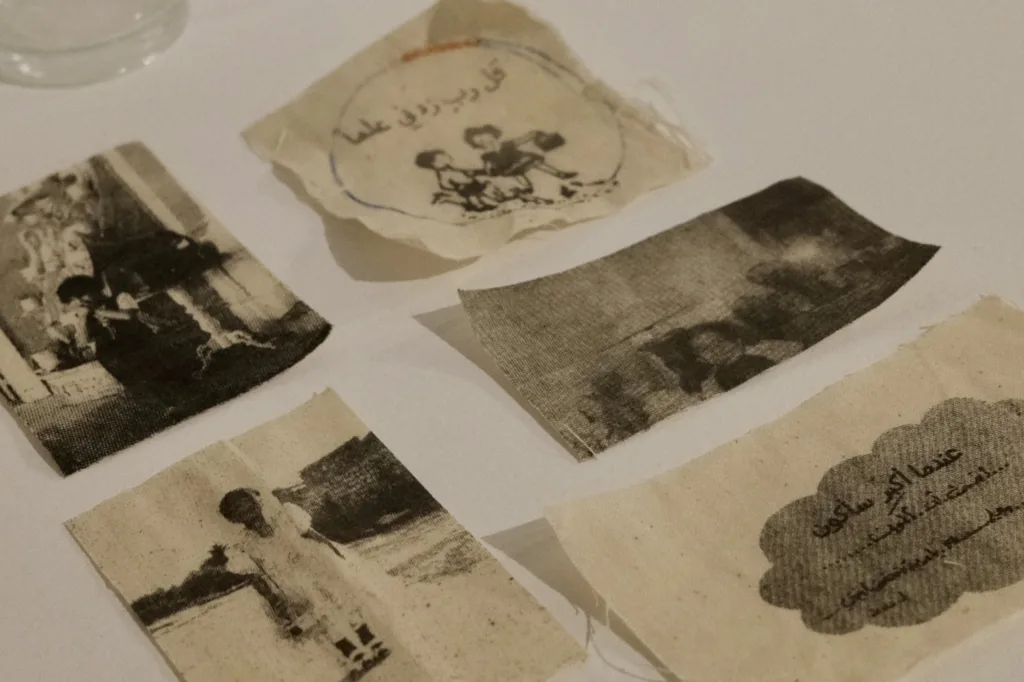
More tellingly, like these portrayals of the desert, the archive was almost empty of women—not in the Saudi portfolio, nor across the rest of the Khaleej. When they did surface, they appeared as hazy silhouettes, melting into the same phantom backdrop of the desert where they cannot be traced as real people. Writer and theorist, Tao Leigh Goffe, states that “Colonial histories are haunted by armies of No Name Women.” It was only deeper into my research that I saw the jagged tear between Khaleeji women and the archive. What ghosts haunt this absence? What entanglements of memory and silence have slipped through the cracks?
The hauntings I speak of are not metaphors. Death in the archive is structural: the refusal to record a woman’s name, or the flattening of a desert into infiniteness—it is bureaucratic killing carried out in silence. Ghosts are what remain when erasure fails; they are the residue that insists on being accounted for. To name death is to expose the archive’s violence. To speak of ghosts is to insist that what has been cast out still lingers, demanding another way of keeping, another way of telling.
I’m known to be obsessed with teeth; my recurring nightmares consist of my molars falling out. I think this obsession partly stems from my obsession with language—how everything we know of the world begins from the mouth. When I formally entered my family’s oral archive, I was told by my mother that our great-great-great-grandmother, Hailah AlKadi, had sent a satchel of her teeth to India, where her husband resided for over twenty years as a merchant. When asked to elaborate, my mother said it was to make a point: that she had been the pillar of this household for too many years. That she can no longer language.
Had I not pushed into the story, I wouldn’t have known Hailah existed. Oral archives may have been the official source for historicizing the local narratives of the Khaleej, but there is always a risk of forgetfulness. Why couldn’t I trace back my fifth grandmother? How can I mend the thread? In her Tree of Guardians, Manal AlDowayan confronts the glaring absence of women in family trees by inviting participants to draw their own, consisting only of their female lineage. “Thus it was women (…) who became both the repositories and the transmitters of traditional culture, ethics and ideals, often in an oral fashion,” AlDowayan reminds us. As her daughter, I imagine Hailah already knew she was becoming a ghost. Peering into that abyss, AlDowayan turns the very tools of erasure into opportunities of rebirth, rebuilding the archive on her own terms. The only step left, then, is to strike a match and set the institutional archive ablaze.
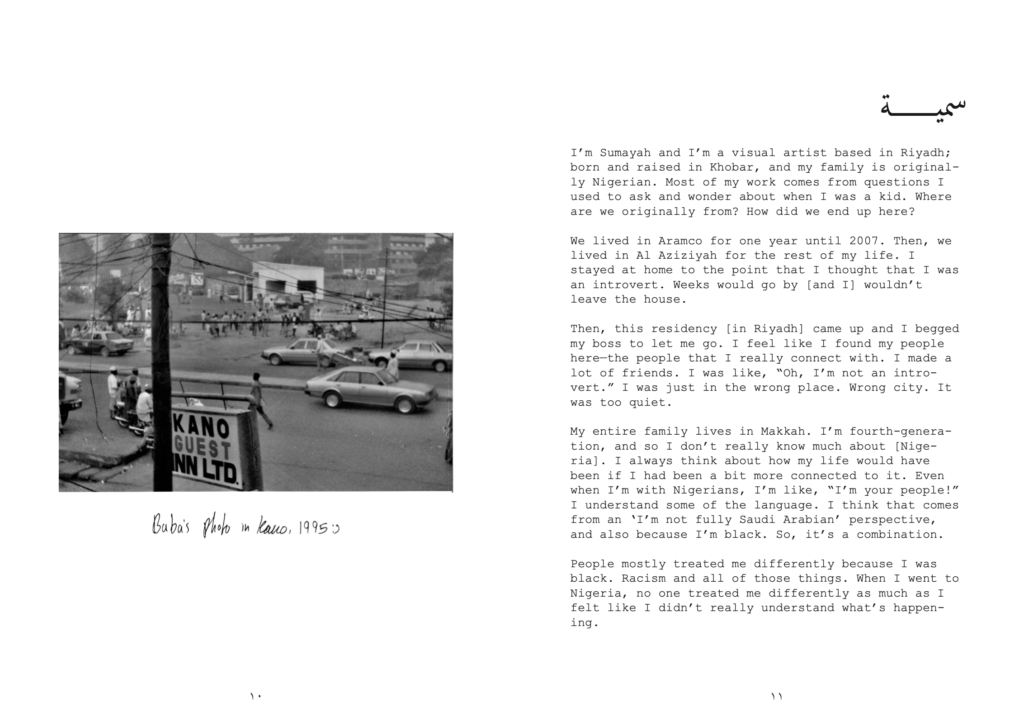
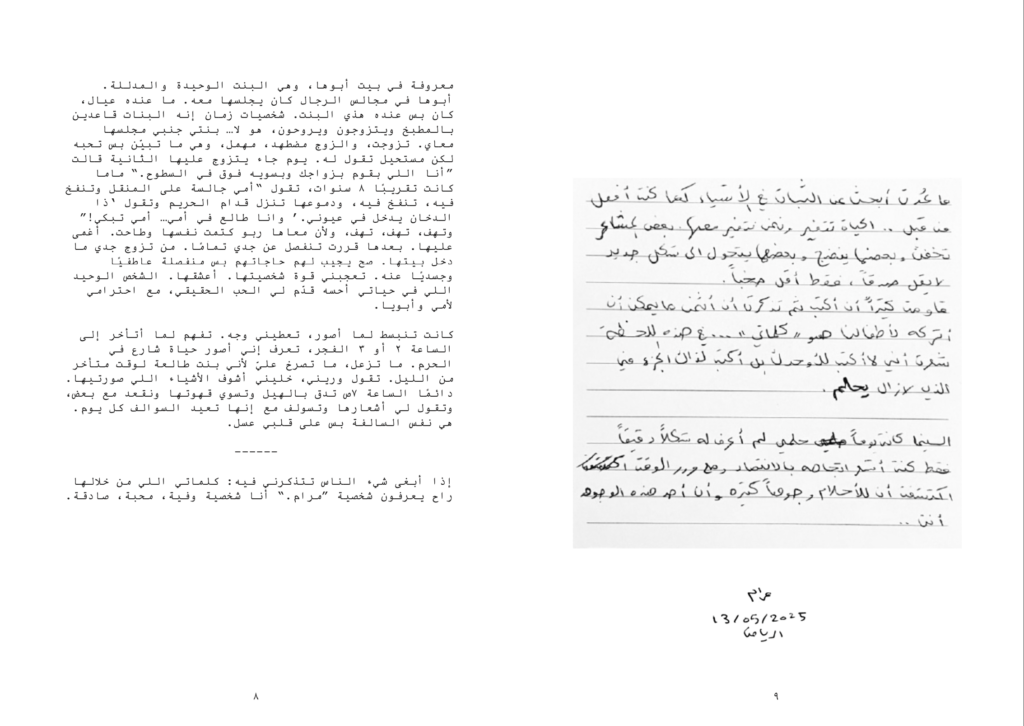
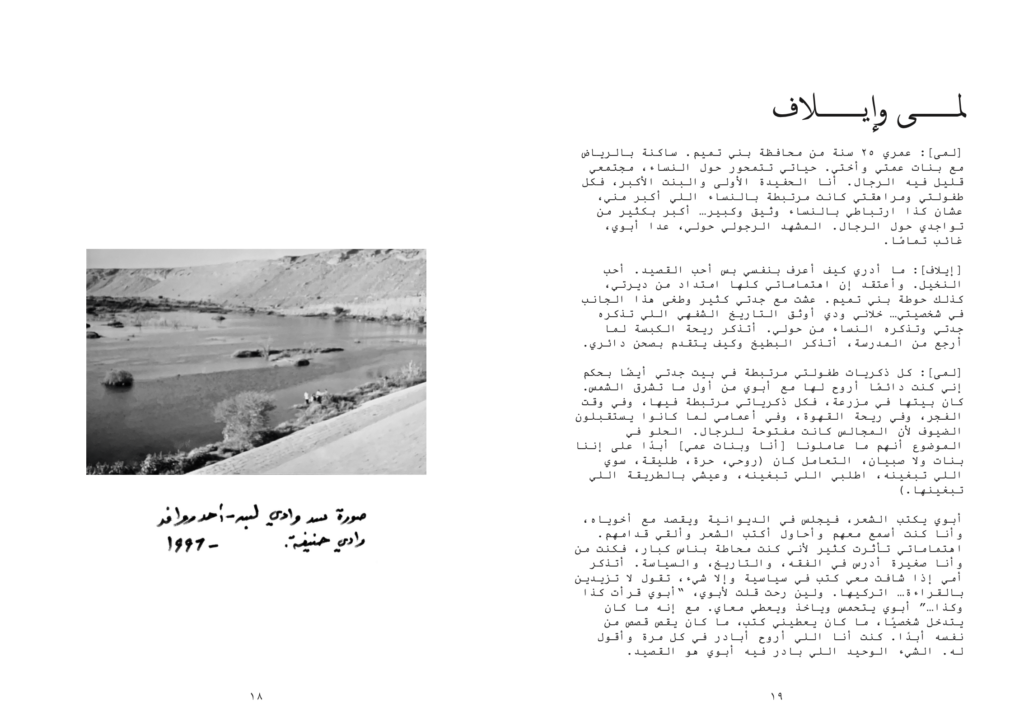
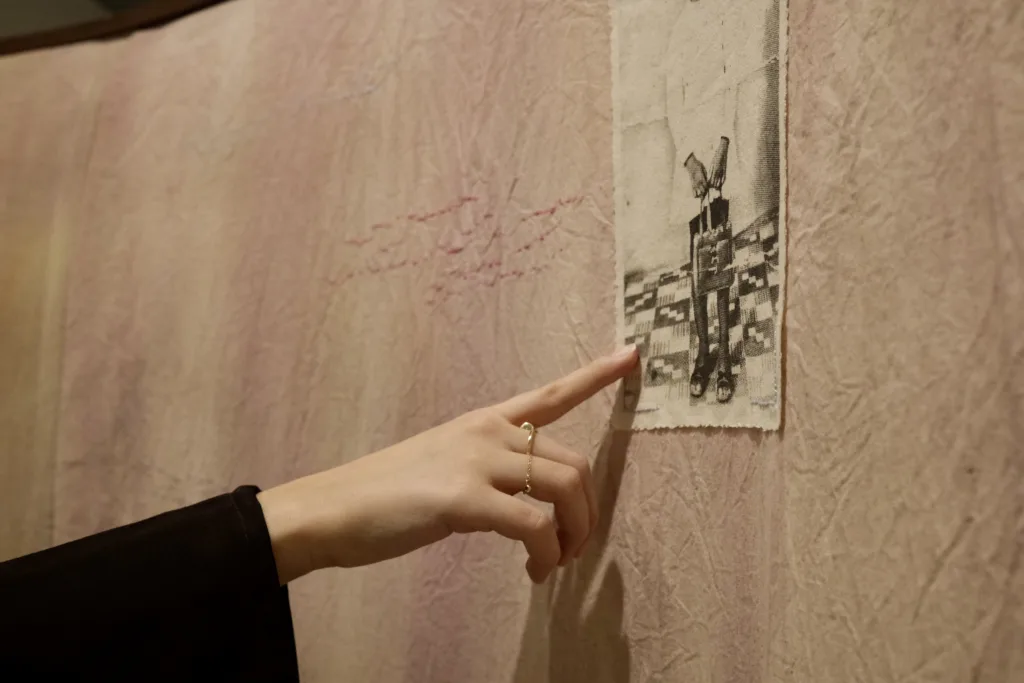
Standing on AlDowayan’s shoulders, my recent residency at Misk Art Institute intended to further write ourselves in. I invited Riyadh women, of all ages and nationalities, to record their histories in my studio. There will be no amorphous figures here—these were women who cut their daily commutes between schools, hospitals, and government offices to reconfigure the archive with me. Once the studio door was locked, we sat cross-legged over tea and the narrative almost immediately spilt over.
With small clip-on mics pinned at the collarbone, more than seventy workers, mothers, daughters, widows, and refugees narrated their personal and family histories, each session spanning from thirty minutes to an hour and a half. There were those who arrived with heavy bags of miscellanea, and there were others who spoke without prompts, letting memory move where it wished. Certain collaborators would also take the day off to steady themselves, and others chose a simple cup of chamomile tea to soften the weight of the workday before speaking.
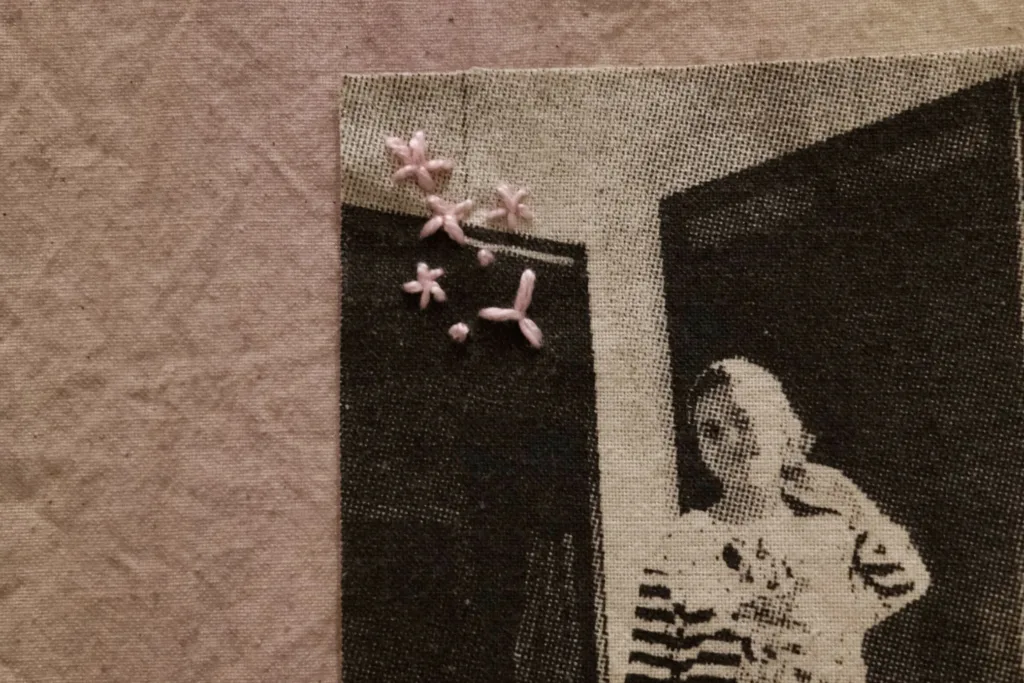
The crux, however, is to not turn them into extractive archaeological sites. Borrowing from Palestinian anti-archival theory, ‘unarchaeology,’ as Fargo Nissim Tbakhi tells us, is “about rescuing our stories from their clutches.” Archaeologists are able to perform their violence because “their position in the world comes with the power to enact and create discursive truths, regardless of the responses, protestations, or subaltern knowledges of others.” Alternatively, the unarchaeologist “opens the process of meaning-making to others, collaborating on the project of reburial.”
The question is what grants a person the right to be kept. One thing to establish is that the archive is a cabinet of corpses lined up per merit. The archival apparatus is a conscious vehicle of who gets to exist, and while gender segregation was at its apex, other modes of erasing women circulated alongside it. Class, identity, and geography shape what is deemed worthy of preservation. Those who fell outside the sanctioned frame were cast into nothingness—labourers, migrants, women, even entire landscapes. To look into the gaps of the archive is to realise that it was never neutral; it was always a machine that sorted, excluded, and prioritised. The issue is not simply what remains, but what has been made to disappear.
As the vision clears, the institutional archive begins to look more like an archaeological ruin. We notice the broken clay, the skulls, the objects uprooted from their habitat. The empire knows too well that violence doesn’t always have to manifest in weaponry. Erasure is in itself a battlefield. To summon our ghosts, we must first responsibly unbury them. One of my collaborators’ first encounters with death was through her grandmother’s goat that miscarried, after its amniotic sac was dug into the soil in front of her. When the audio installation was displayed, one visitor approached me in tears, saying the story reminded her of witnessing her mother’s miscarriage. To rebirth the archive is to follow the stories of those who preceded us, to account for all the deaths folded within our bodies.
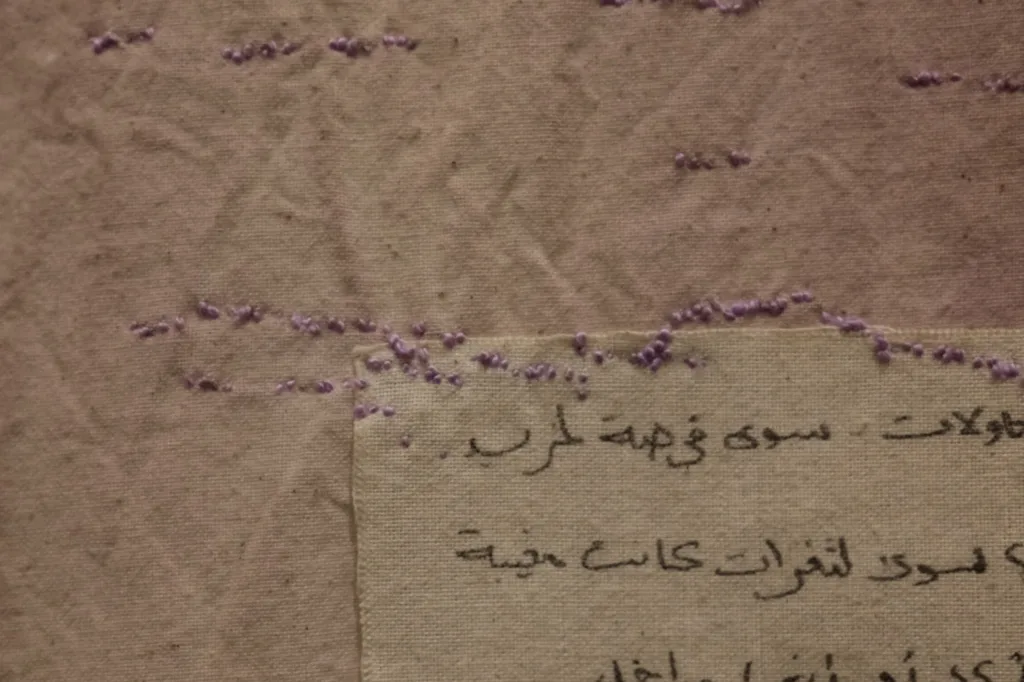
Where to go now, with these new tools in our hands? First, we dig. The animal graves, the broken compasses, the clusters of teeth; these are the tools that can set us free. Second, we refuse the aerial view that reduces the desert to nothingness. We chart otherwise: through women’s commutes across the city, through the bustle of its streets, and through the histories we know of ourselves. Third, we keep the archive unruly. Not a cabinet of merit, but a breathing chest—part burial, part exhumation, part invention. It may live as a recording played in a kitchen, a family photograph that circulates without caption, a coffee circle where memory passes hand-to-hand without the need for ink.
To put this into action is to build spaces where ephemera are allowed to remain ephemera. Our archive must be a practice of dispersal. It is the decision to share stories, to let them travel and multiply. It is a refusal to centralise memory, to let it belong to one authority or one institution foreign to us. The point is not to secure permanence, but to keep the archive alive by making it vulnerable to touch, to decay, to repetition, and to misremembering. These are not failures; they are our archive’s endurance.
Our dead remain with us, haunting the blank pages. Let them extend their hands. Gaze through their telescopes. Then, lay them to rest, toward the beam of light, spooling.