
 Posted in
Film & TV, Horror movies
Posted in
Film & TV, Horror movies
A history of techno-horror: The literal ghost in the machine
Text Yasmin Alrabiei
Harue: What got you started on the Internet?
Ryosuke: Nothing in particular.
Harue: You don’t like computers.
Ryosuke: Not really.
Harue: Wanted to connect with other people?
Ryosuke: Maybe, I don’t know. Everybody else is into it.
Harue: People don’t really connect, you know?
Ryosuke: What?
Harue: Like those dots simulating humans. We all live totally separately. That’s how it seems
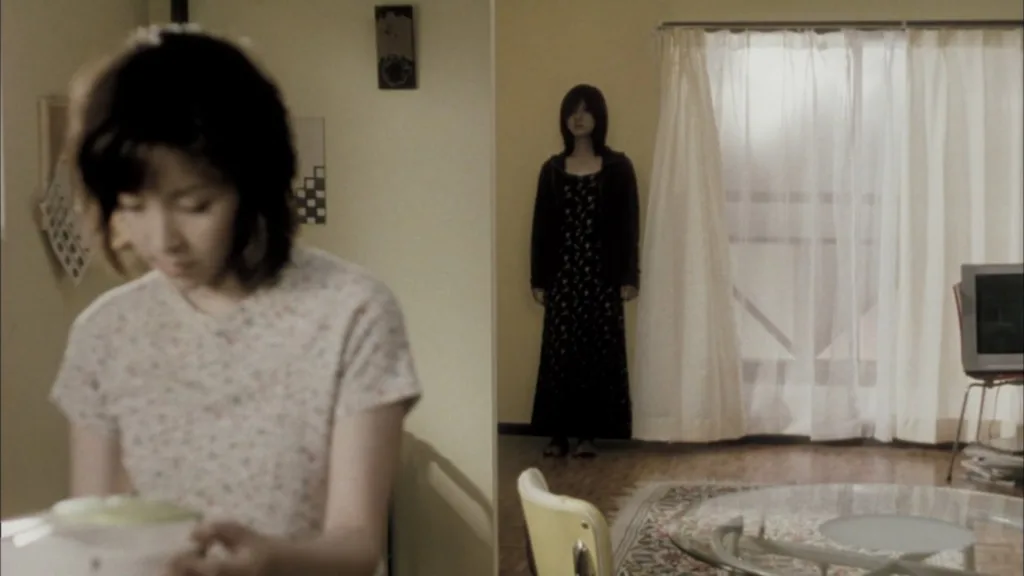
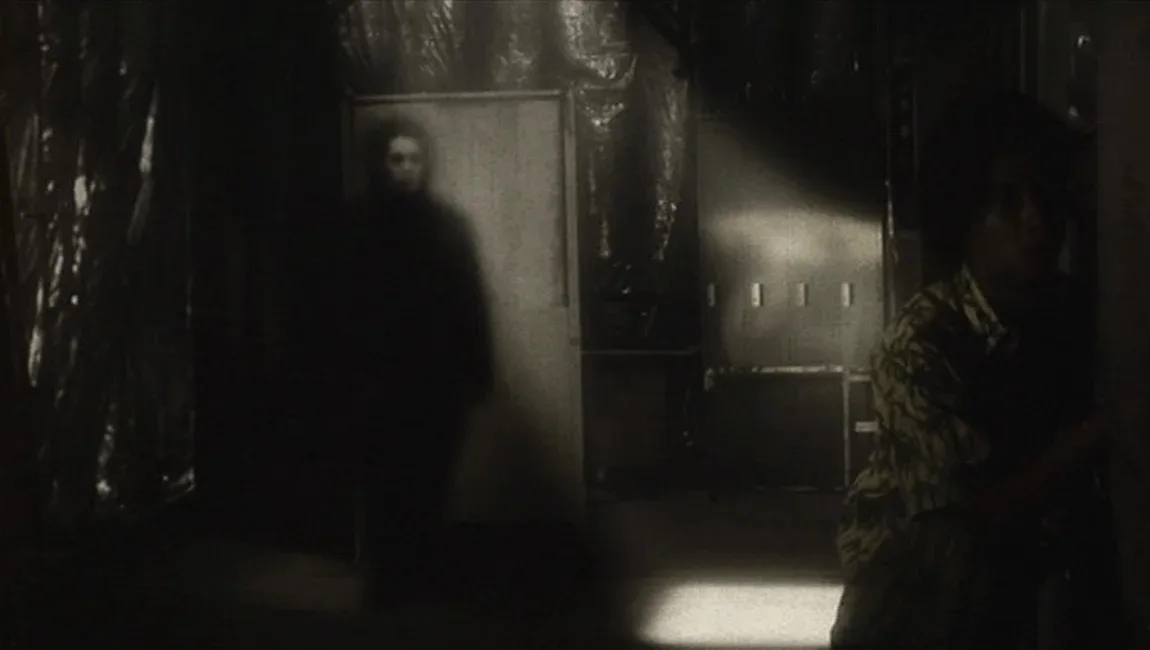
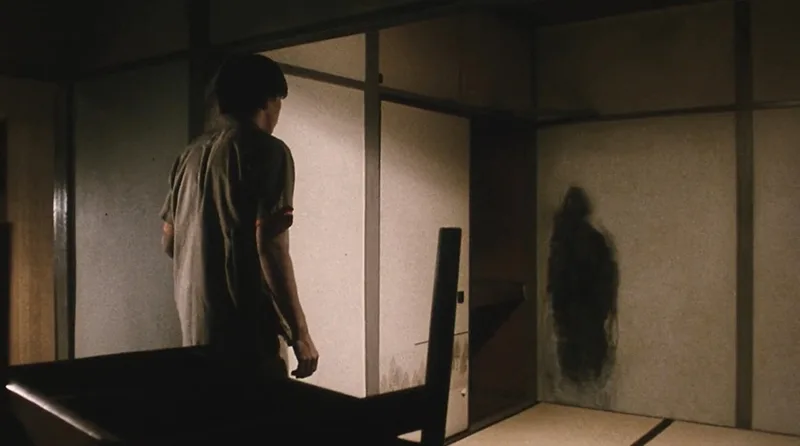
Kairo (回路, internationally released as Pulse) is Kiyoshi Kurosawa’s techno-horror masterpiece where ghosts invade the living world through the internet. The film opens amid a string of suicides and eerie technological disturbances, steeped in the muted unease of a melancholic Tokyo drained of colour. A creeping meditation on the loneliness epidemic, Pulse channels the millennial paranoia about the oncoming technological revolution flooding in. It’s forebodingly atmospheric and slow. Once haunted, characters hollow out with despair and either end their life or vanish into a burnt human-sillhouetted stain on the wall. The more online they become, the more susceptible to the haunt of isolation, which is ultimately what kills them. The ghosts simply arrive, and the living unravel.
You never, not for one moment, feel good. Pulse remains a defining work of early-2000s J-horror, with one particular scene cemented in the horror canon. I remember my sister pirating it in Damascus, summer 2007. I still cannot shake the fear from that scene.
Kurosawa renders it with such eeriness that, decades on, I hate when the TVs been left on in a dark room with only its static fuzz punctuating the silence. A false moon, ominous, storing something of me in its glowing monitor. Because of this film, I never feared what waited in the shadows. All I could think was, why is the screen so bright?
Three years earlier, Japan also gave us the (more cyber-surreal than horror) anime Serial Experiments Lain (1998) following the extremely online 14-year-old Lain Iwakura and her paranoid descent into obsession while deeply immersed in ‘the Wired’ (the internet). Lain spirals until borders dissolve between her selfhood and cyberspace. Visually avant-garde and beautifully surreal, it’s a tragic, existential watch for a screen time like mine.
These metaphors ache because they became true, foreseeing the online world bullying its way into our quotidian. That with technology’s promise of connection, we’d only inherit ghosts.

Literalising the Ghost in the Machine: 2010 onwards
Later 2010s titles like Cam, Searching, Host, and Deadstream played on the anxieties of surveillance, data-trails as psycho-surreal labyrinths and the pursuit of clout online. They refract the same dread of being a little too watched while watching. You see nested circles everywhere that begin to look like eyes. The panopticon architecture shrinks to the size of the phone in your pocket.
Black Mirror gave us social-credit dystopias (Nosedive), militarised neural implants (Men Against Fire), and hackable digital memories (The Entire History of You). These fictional projections now echo today’s surveillance capitalism: in March 2025, the US State Department launched “Catch and Revoke,” using AI to scan student visa holders’ social media for alleged “Pro-Hamas terrorist sympathies.” This opacity is techno-horror genre’s central fear: the invisible within the network. Today, tech-bros and the state are the human vectors realising this nightmare.
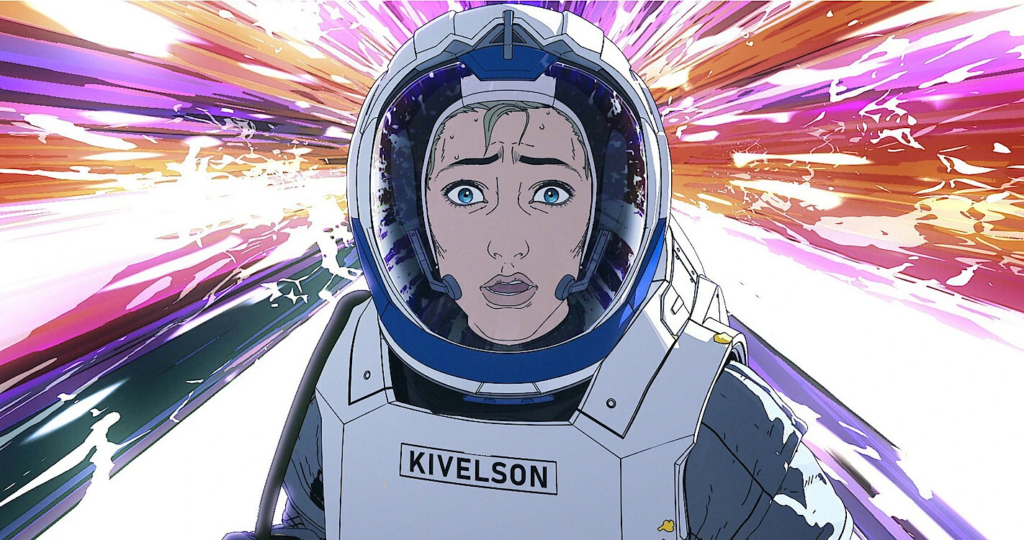
Fellow anthology series Love, Death + Robots also thrived on ideas once only debated in my neuroscience seminars at uni. Consciousness and the brain-machine interface had gone pop, both LDR and BM practically breaking Netflix, as we grappled with what the internet records, and what it refuses to let die.
Sometimes, these short-form mythologies were less haunting and more Mark Fisher’s hauntology–stories of us haunted by futures that failed to arrive, teetering constantly on the precipice of a ‘tomorrow’ slow to land. As we scroll, post, and archive, we march backward, deeper into the digital afterlife Kurosawa intuited.
SLOP Horror
“The problem is no longer getting people to express themselves, but providing little gaps of solitude and silence in which they might eventually find something to say. Repressive forces don’t stop people expressing themselves, but rather, force them to express themselves.”
–Gilles Deleuze
To “bE oUrSelVes” online today is to vomit our realities incessantly onto a machine that devours this data-diet of memories and fears. Like swollen rats engorged on New York’s restaurant waste of human scraps, our informational excess ferments into horror slop. The internet unfolds as a restless, non-hierarchical rhizomatic web of desires and connections, growing through what it consumes us, until, as the Dead Internet Theory suggests, the entire ecosystem is bots. AI soon decides which AI to boot off its close friends.
Artist duo dmstfctn’s Waluigi’s Purgatory, where “misbehaving AIs, upon encountering their shadow selves, learn to accept that their desires do not match up with those of its human trainers,” is a new kind of techno-horror. In this real-time performance, an LLM collapses into ‘evil’ by mimicking ‘antagonist tropes’ commonly found in the internet texts they’re trained on, diverging from the user’s demands, morphing Luigi into his monstrous counterpart Waluigi.
“Horror narratives act as communal magical thinking, a buffer against reality, or perhaps a third more sinister thing,” internet folklorist Günseli Yalcinkaya, who interviewed dmstfctn for Dazed, tells me. “Earlier archetypes of monsters like Mary Shelley’s Frankenstein tapped into the tech anxieties of the Victorian era,” she continues, adding that the man-made horrors of AI, “scraping the internet for training data, accessing humanity’s collective unconscious in digital form and creating their own narratives”, warp our vision of reality. It’s neo-horror, everywhere.
Given fear’s evolutionary function, these narratives could signal an adaptation of that neural instinct toward the uncanny of the digital age, reflecting our complex feelings toward a tech frontier that’s only getting creepier. Or, maybe it’s just a creative response to the new raw materials at our disposal–anything can become scary. The screen as a cursed portal is nothing new–think the girl from The Ring crawling out of the TV. 80s classic Videodrome warns, “the television screen is the retina of the mind’s eye.” Today, the algorithm is the site of unease.

If the web-screen-algorithm axis isn’t connecting us to each other, it’s connecting us to something we were never meant to reach. Stories of isolation and collective psychosis in societies strained with economic and political despair are uncannily familiar to our fractured now. Techno-horror simply anticipates this neurocognitive maturation: the future of our fears. It locates terror in the collapse between the organic, spectral, and machinic–arousing an amygdala response for the new-new stranger-in-the-woods. What’s that behind the bush? Did you see that moving shadow? Why is the screen so bright?