
 Posted in
Dazed MENA 100 2025, Dazed 100 2025
Posted in
Dazed MENA 100 2025, Dazed 100 2025
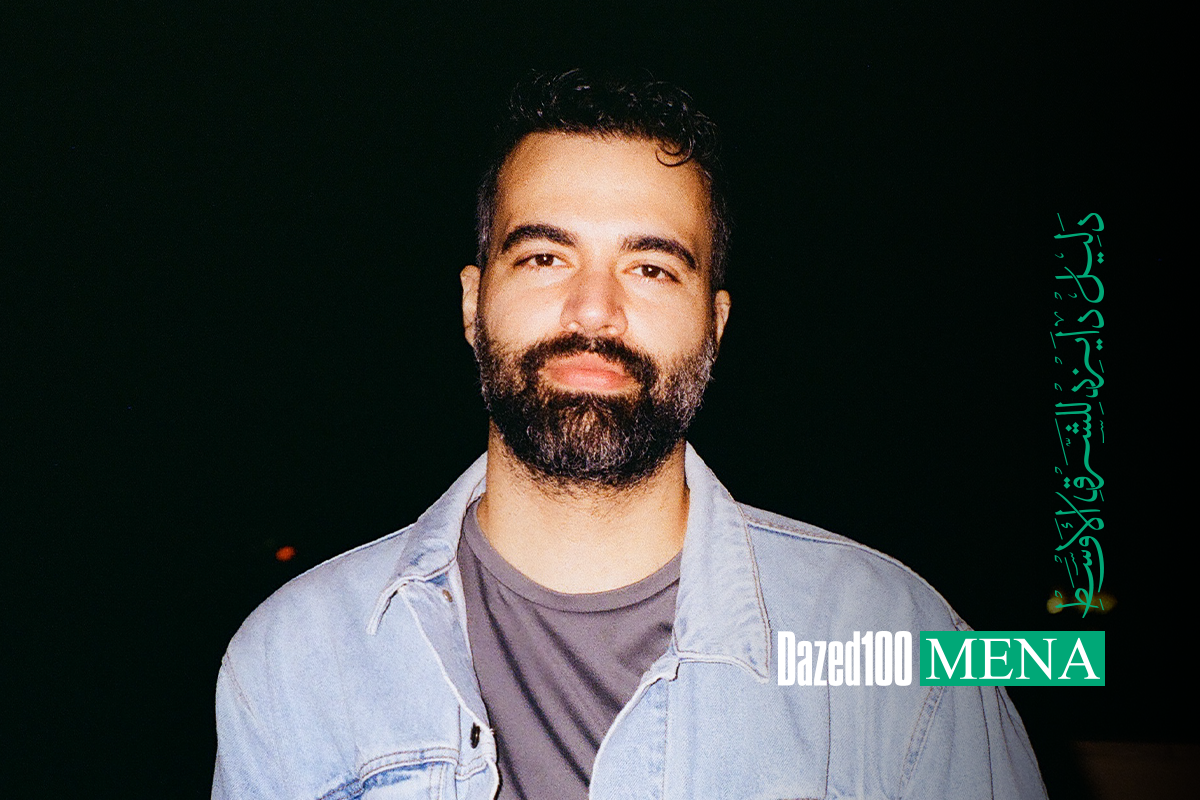
Jad Rahmé: Filmmaking Between Sincerity and Absurdity
Text Raïs Saleh
Jad Rahmé’s filmmaking has never been about grand declarations or singular turning points. “I’ve always known I wanted to make films,” he says. “No big epiphany, just a constant and ever-growing love toward imagery, people, and stories.” This conviction defines Rahmé’s approach to cinema.
The Beirut-based director has built a body of work that feels unmistakably his own: stylish yet sincere, humorous yet humane. His films unfold with the rhythm of real life—unpredictable, intimate, and occasionally absurd. Whether it’s the Dazed MENA × Gucci cover film or music videos for artists such as Al Shami, Rahma Riad, and Stéphanie Atala, Rahmé’s visual language carries a rare balance of craft and emotional honesty.
“The Arab world is my constant inspiration,” he explains, citing the nuances that draw his lens. “How we do things, how we host, how we argue, how we dress a room—that’s where my stories begin. I want more work that’s stylish and precise but emotionally honest, reflecting our culture as it truly is, without polish.”
That attention to truth, even when it’s inconvenient, runs through Rahmé’s work. “Consistency and authenticity fuel my process,” he says. “I show up, even on low-inspiration days, and I do what I believe the film needs, whether it’s in the requirements or not. Discipline over mood always.”
His recent Dazed MENA × Gucci project was, by his own account, a defining one. “I had full creative control and made it in my own visual language,” Rahmé recalls. “I trusted my gut and went for it, and the response was both heartwarming and overwhelming. The pattern, I think, matters more than the spike.” It’s an approach that reflects his broader philosophy: a career shaped not by sudden breakthroughs, but a steady refinement of instinct.
Rahmé’s perspective on the regional creative scene is as pragmatic as it is hopeful. “I want fewer copies of global trends and more investment in development—writers’ rooms, longer prep, proper post,” he continues. “And braver distribution pathways so that work can travel beyond YouTube and festival bubbles. Most of all, stories that keep our accent and still move globally.”
For all his precision, Rahmé resists the notion of elaborate artistic agendas. “I don’t think in grand targets,” he says. “I work with what resonates with me now; that’s when the work feels honest and alive. What I want is simple: to keep making films I enjoy and for them to land with people, make them feel something, see themselves clearer. If that changes anything, great. But the aim is always truth first.”
It’s his refusal to overstate and a trust in quiet persistence that makes Rahmé’s voice distinct. His films don’t strive for perfection so much as they seek presence in moments that stay, images that linger long after the frame fades to black. “There’s a lot of exciting work in the pipeline,” he shares. Wherever it takes him, Rahmé’s compass remains unchanged—a filmmaker guided, above all, by sincerity.