
 Posted in
Dazed MENA 100 2025, Dazed 100 2025
Posted in
Dazed MENA 100 2025, Dazed 100 2025
Raphaelle Macaron: Sketching Arab Life Across Borders
Text Raïs Saleh
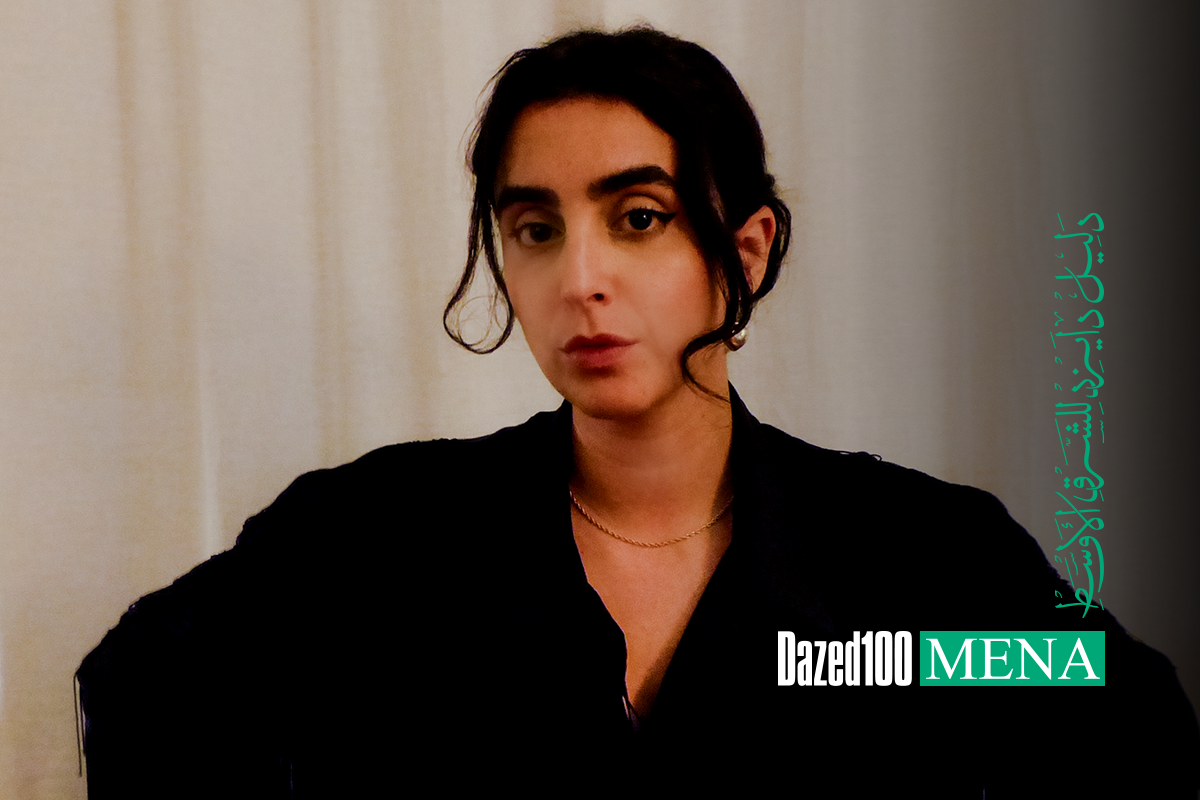
Raphaelle Macaron has carved a singular path, one that threads together the sensibilities of an archivist, the eye of a designer, and the instinct of a storyteller. Now based in Paris and working on her second graphic novel, the Lebanese illustrator and author occupies a space where personal narrative becomes cultural testimony, rendered in a style that is both unflinching and warmly familiar.
Macaron describes drawing as the most intuitive form of expression she has ever known. “I’ve been drawing for as long as I can remember,” she says, recalling a childhood in Beirut shaped by sketchbooks and a persistent urge to narrate. “Merging both story and drawing”, comics emerged naturally, allowing her to translate private experiences into a vocabulary capable of holding complexity.
Collectively, her influences form an unexpectedly cohesive arc: vinyl records, vintage memorabilia, bold poster typography, and the sun-soaked contradictions of Beirut. “I am greatly influenced by the music I listen to and the records I collect—big, bold, efficient, and striking is what I aim for when I am composing a poster or an image,” she explains. Yet the city remains her central muse: “Beirut is an eternal muse; she always finds her ways into my stories.”
What distinguishes Macaron in the contemporary Arab cultural landscape is not only her aesthetic sensibility, but also the quiet tenacity that permeates her work. Her illustrations – seen in The New Yorker and on the album covers of Habibi Funk and Khruangbin – often carry traces of longing and belonging, but also speak to a generation negotiating identity between geographies. “I hope they’re received in their full complexity, without compromise or adaptation,” she says.
As an artist whose approach is neither apologetic nor adapted for external consumption, Macaron has occasionally been a figure of subtle controversy in the Arab context, but her work after the Beirut blast changed the narrative. By selling US$20 prints, she raised over US$90,000 for NGOs in Lebanon. “The experience really empowered me in believing that I can mobilise my work for actual social impact,” she reflects. It was activism through illustration.
Her creative engine runs on observation: a conversation overheard, a familial tension, a political rupture. “My work is personal and often a way to cope with life,” she says. Travel, too, widens the horizon—from new cities to unfamiliar foods, each encounter becomes a seed. The result is a body of work that feels both intimate and communal, tethered to moments that shape identity across distance.
Today, she is drawn toward experimentation. “It is hard to find the energy to suck at something new, but it’s the only way forward,” she admits with characteristic candour, hinting at a growing interest in painting and textured mediums. Her upcoming graphic novel tackles the emotional tension between leaving home and staying—fictionalised, yet deeply personal. “The characters are vessels for many personal topics that I’ve been meaning to address,” she says.
In a cultural moment when Arab narratives are often framed through crisis or nostalgia, Macaron offers something more potent: a visual language that insists on nuance and the right to complexity.