
 Posted in
Feature, Africa
Posted in
Feature, Africa
Constellations of purpose: Nigerian defender Michelle Alozie on playing her own game
Text Sarra Alayyan
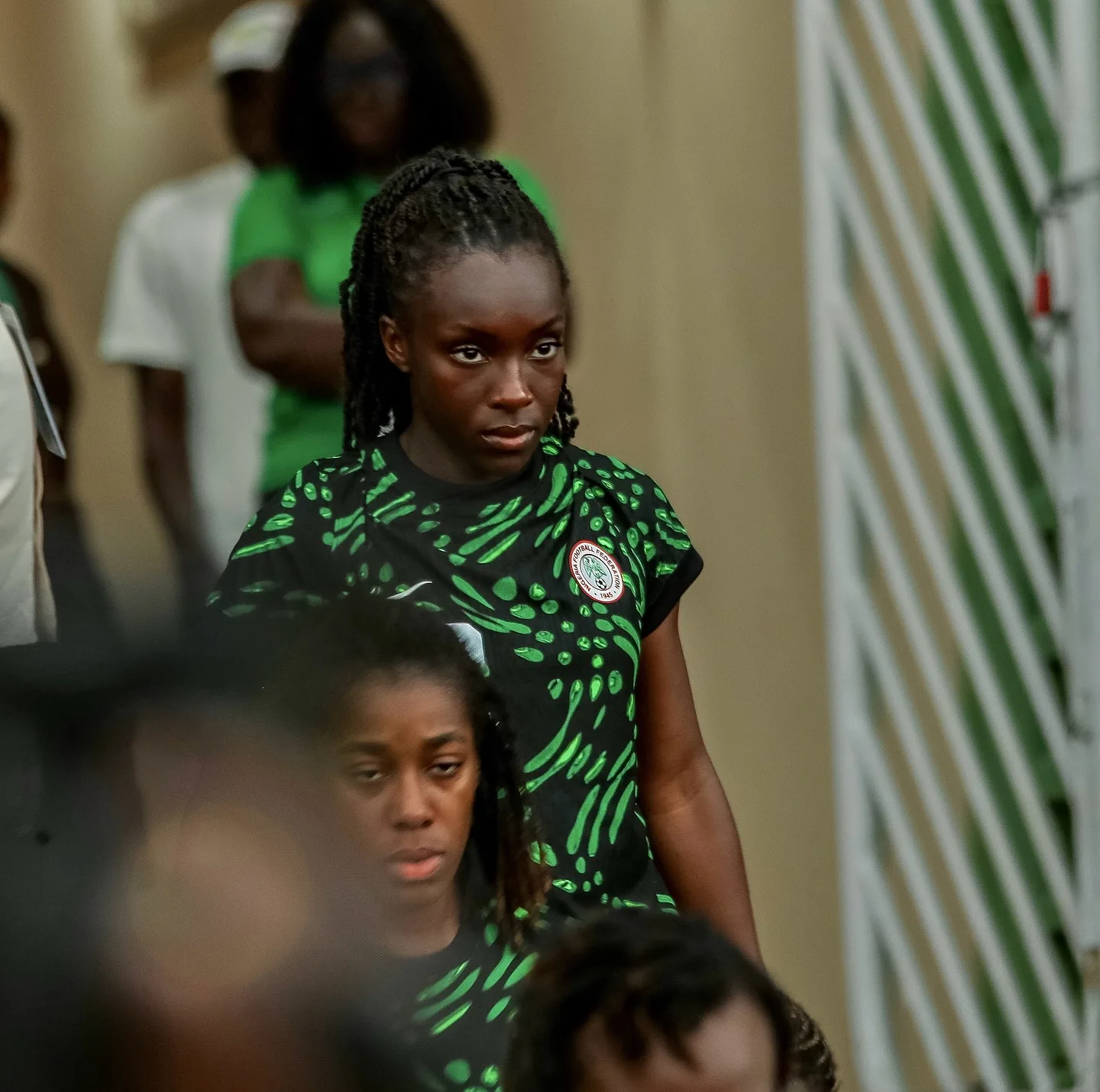
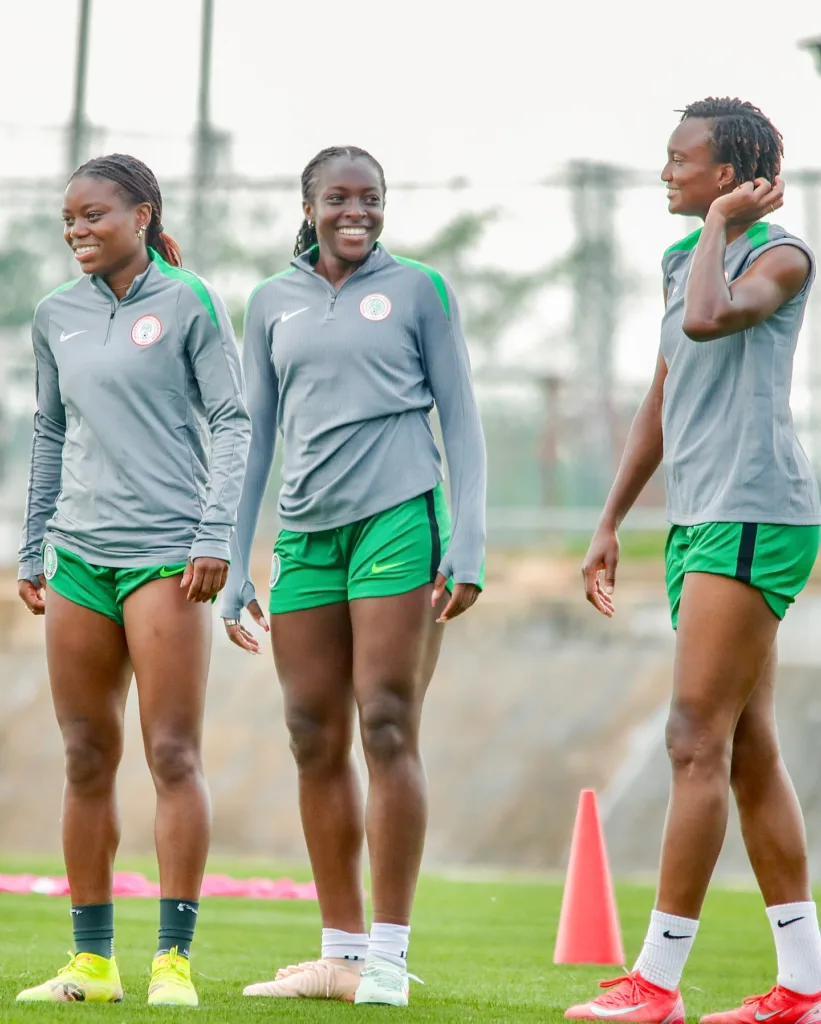
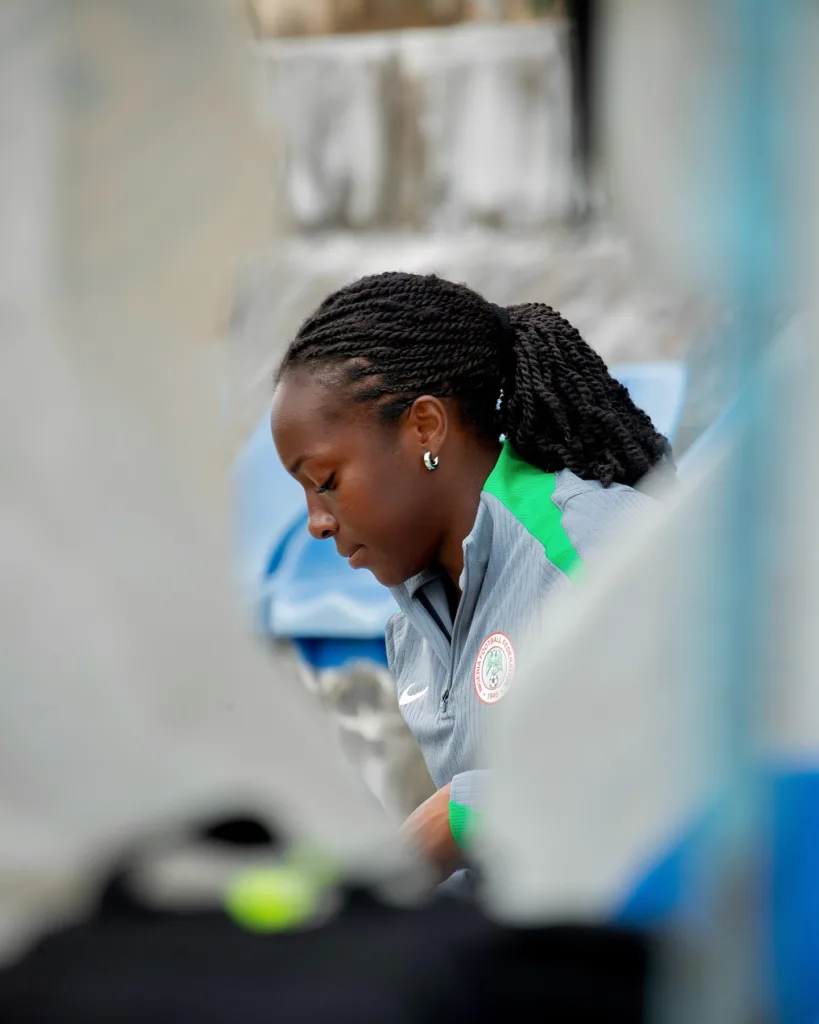
Michelle Alozie knows how to hold multiple positions at once, literally and figuratively. A forward at her club, Houston Dash, a defender for Nigeria’s Super Falcons, and a trained medical professional working part-time as a cancer research technician in Texas in between, Alozie is a multi-hyphenate with a rigorous and intuitive playbook. In a world that often demands women simplify themselves to be legible, Alozie’s approach, like that of the rest of her teammates on Nigeria’s national team, is defiant and expansive. Her career is not a linear narrative of ambition, but a constellation of passions that span sports, science, fashion, culture, and country.
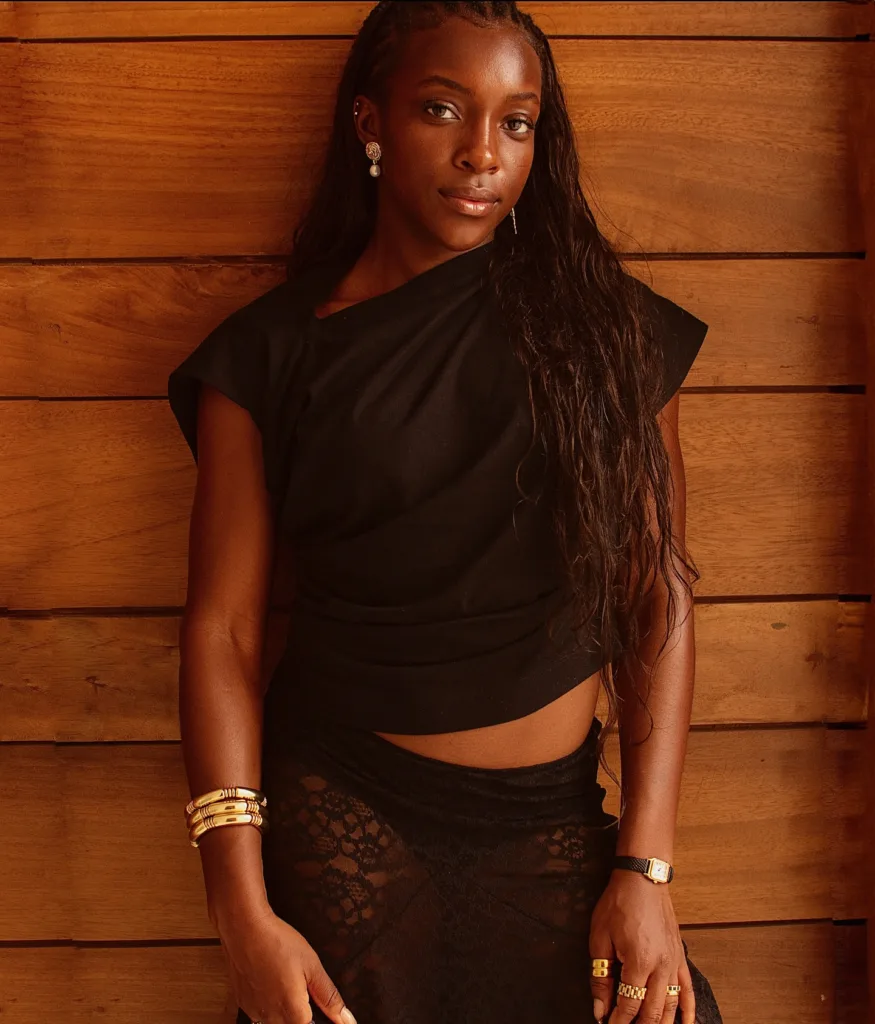

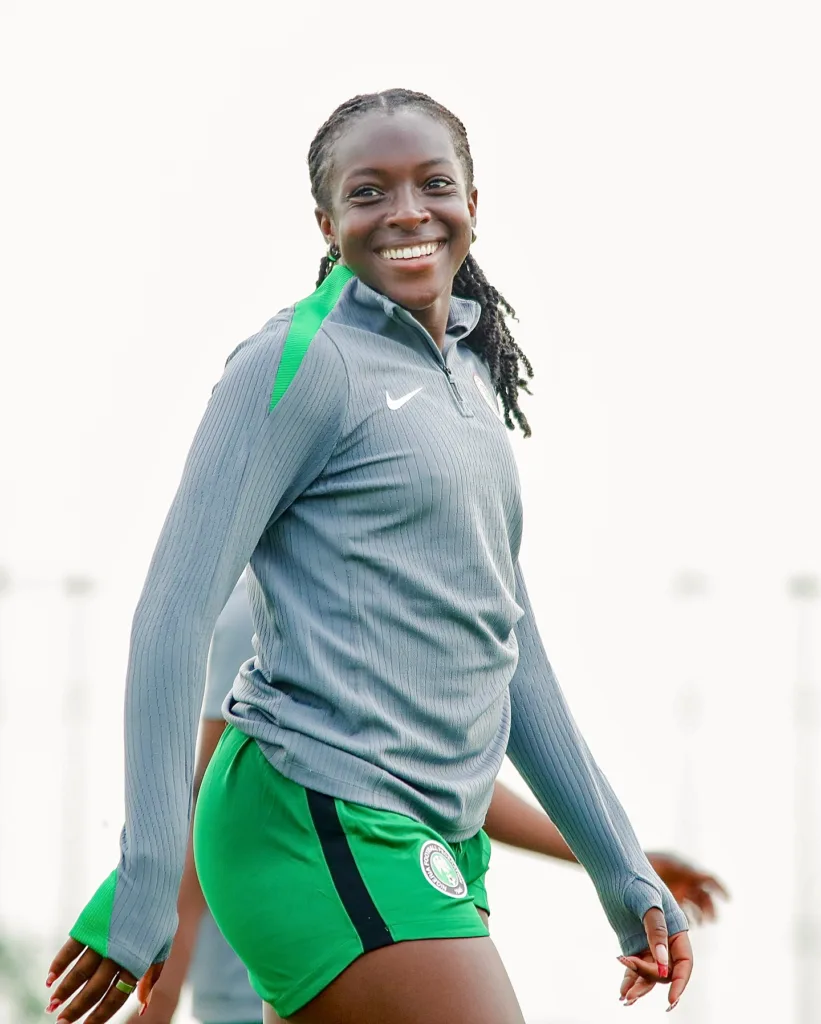


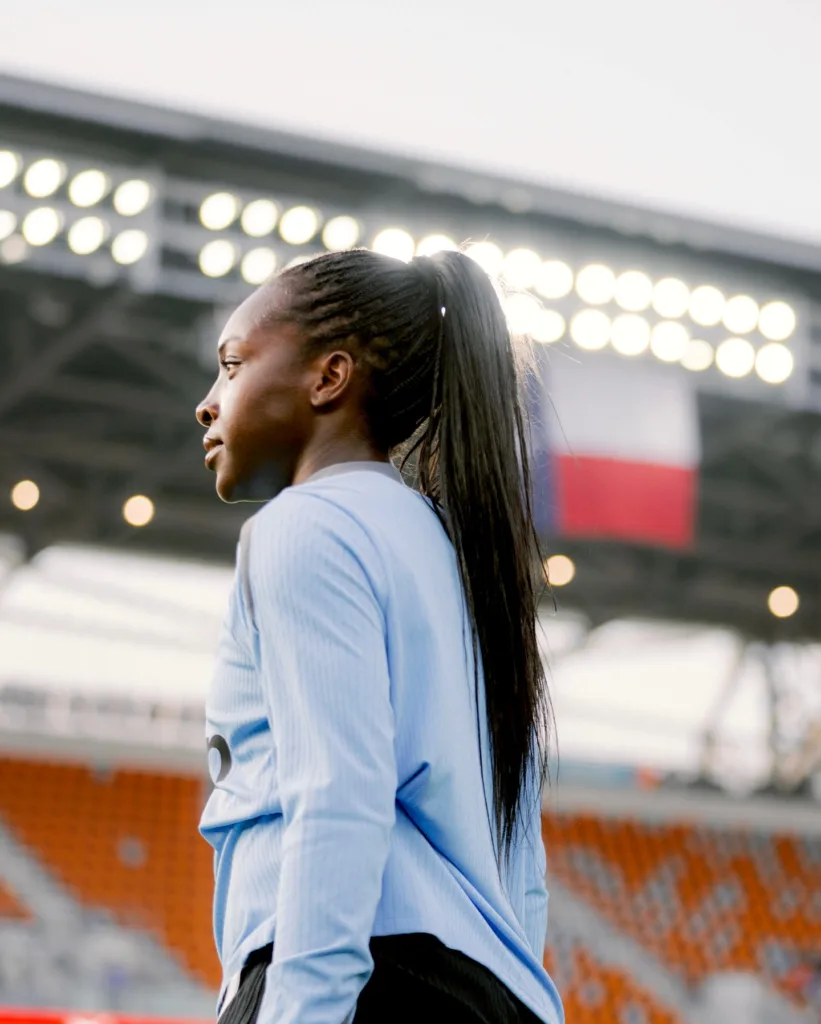
In conversation with Nigerian curator and producer Faridah Folawiyo, the parallels between pitch and practice become sharper. If Alozie operates at the intersection of muscle memory and clinical poise, Folawiyo moves through the art world with equal parts intention and Lagosian improvisation. Her curatorial work, which draws on Nigerian histories, diasporic exchanges, and a refusal of Western gatekeeping, is less about putting things on display than about insisting on new contexts in which they can exist.

Speaking over Zoom for the first time, they reflect deeply on discipline, cultural responsibility, love, and joy for the beautiful game, as well as the burgeoning future for African women within the sport. At the same time, considering what it means to inhabit multiple roles without being reduced by any of them, they show how play, when done with intention, becomes its own kind of authorship.
Faridah: How are you feeling about WAFCON? What are your goals going into the tournament?
Michelle: I’m definitely excited for this WAFCON. It’s going to be my second one. I was here in the last rendition when we finished fourth for the first time in history. So coming into this WAFCON, there’s obviously pressure not just because we didn’t win the last one, but also because people are expecting us to bring the trophy home.
Last time, the goal was to win it for the 10th time and qualify for the World Cup. This one’s a little different; there’s no qualification attached, but the expectations are still high. We expect more from ourselves, and everyone’s expecting us to take the trophy home. That pressure is exciting. It’s a good thing. When you have a whole country behind you, people who genuinely want you to succeed, it gives you something bigger to fight for. You’re not just playing for yourself, you’re playing for your family, for the name on your back, for your nation.
This time around, I feel more at ease because I’ve experienced it before. At the last WAFCON in Rabat, I didn’t know what to expect, but the football culture in Morocco was amazing. The games were all sold out, and the fans were incredible. They brought so much energy, in a really good way, and I’m excited to feel that again here in Casablanca. We also have a completely different team this year. It’s a younger squad, filled with rising stars, and I’m excited to see how it all comes together. This group has so much potential, and I’m really looking forward to what we can do.
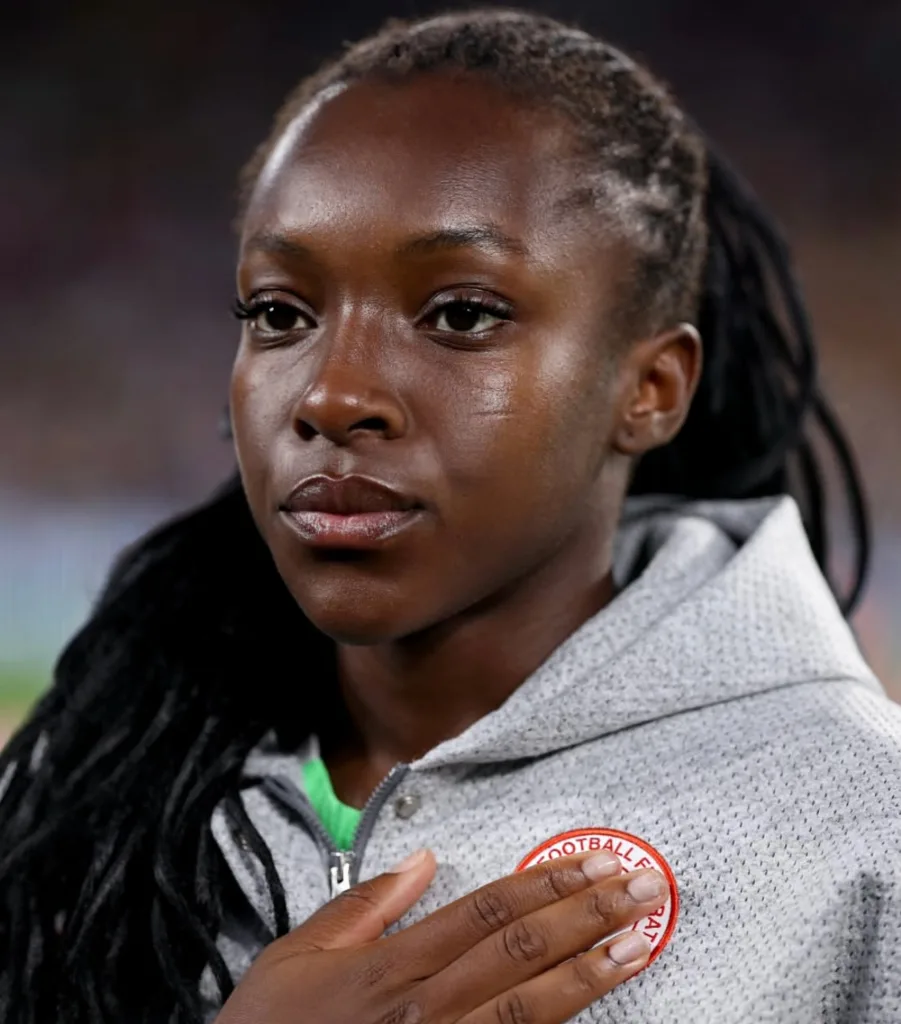
Faridah: You play in America in terms of your club side. What are the differences between playing in America and playing on the continent, representing your country? How do you differentiate between the two and how do you feel about both?
Michelle: Yeah, obviously with my club side, I train almost every day, for like eight or nine months out of the year. So it’s very different when I come into camp with the Super Falcons, where we only have around 10 days together at a time. This is actually the longest camp we’ve had, so it’s always interesting to see how we mesh as a group and see how we come together, understanding each other’s playing styles individually, and then learning how to operate collectively.
At my club side, I play as a forward. But when I’m with Nigeria, I play as a defender. So I literally have to shift my mindset when I arrive, and honestly, I enjoy that challenge. It keeps things fresh.
There are so many different nuances, but at the end of the day, I just want to win, I want to perform, and I want to grow with my team, both with my club side and the national team. That’s the biggest takeaway for me.
Faridah: Do you see yourself as a forward or defender? Are you happy to do both?
Michelle: I mean, of course, I’m going to say I’m happy to do both. I’m happy to do what the team needs. I love being a forward, though, I’ve been a forward all my life. I feel like all Nigerians have been (laughs). You know, there’s no Nigerian defender; it was just a forward who got knocked down. So I love being a forward, but I’m obviously super grateful and thankful to play wherever my team needs me.
Faridah: What you said is so interesting, because when I think about, football cultures, we know very much about Joga Bonita and I feel like, with Nigeria, we also have this very specific culture of very expressive players and I guess that’s in line with what you said about most Nigerians wanting to be forwards because of that expression. In football, generally, there has been an argument about the game becoming too robotic, including the tactics, coaches, and all these other aspects. I think, obviously, as you said, with national teams, you have less time to train together, and I was wondering how you see the relationship between self-expression and the anchor of tactics, and how do you balance the two?
Michelle: The beautiful thing about African football, in general, not even just Nigeria, is that you almost don’t know what to expect whenever you play an African team and that’s why a lot of teams, especially now, are having difficulty playing against us, which I think is amazing. It shows the growth of soccer. Not everything will be tactic-based; it’s more than that.
I think obviously, with the way that the world and football is changing, and how all countries are kind of getting more of a level playing field, you can see that this expression that has always been a part of African soccer is what sets them apart and what is able to get them this extra point or make it difficult for the likes of England or US or Canada when playing against us. That’s the African way – for example, you’ll have goalkeepers doing step-overs or something with the nines. I think that self expression is what makes us so difficult and unpredictable to play against.
Faridah: In terms of the mental side of things, how do you stay locked in? Do you have any routines or things that help you stay mentally on top of things?
Michelle: When we have a long camp like this, I love to just completely disengage from football. Even though it seems hard because I’m with the team in a hotel in a foreign place for a month, just relaxing, FaceTiming someone, not talking about football at all, playing games with my teammates, or card games, definitely helps me.
I try not to do too many rituals, just because I don’t want a ritual to then change how I play, or how I am if I can’t do a certain thing. But just being able to unplug, almost, that’s what I’ve been able to do for most of my career, whether it’s with fashion or going to the hospital, or something else, just to completely forget about soccer for a second, so I can fully reset.
And then, when I go back to football, I’m enjoying it. I’m happy, I’m excited. It’s like a kiddish joy that I always have with it, instead of stress. Because it could easily be a stress, it’s obviously my profession, but keeping it a joy, keeping it fun and lighthearted, that’s what keeps me wanting to play, and keeps me energised for the next day.
Faridah: I read that you’re also a part-time medical practitioner, which is insane to say. That’s incredible. I’m curious, have you always been like this? In terms of having interests outside of the sport, and balancing multiple things at once?
Michelle: Yeah, definitely. I went to Yale, and one thing they really instilled in us was that we are not just our sport. They didn’t want athletes to feel like we are our sport. And I think that’s when you have a lot of athletes, when they’re nearing the end of their careers or dealing with injuries, they kind of don’t know what to do with themselves when they’re done with their sport. At Yale, those four years showed me that I’m way more than soccer. I’m way more than football, I love fashion. I love medicine, and that’s something I’ve always wanted, and just because I have this athletic career doesn’t mean I can’t also devote time, if I want to, to my other loves.
And again, I feel like that allows me to love football more as a joy than a profession because it’s something I get to do. It’s something I’m constantly grateful to have the opportunity to do, alongside all the other things.
Faridah: Who were some of your football idols?
Michelle: Oh my God, these are always so controversial! My idol growing up, which people don’t understand, was Mario Balotelli. He was almost like this villain figure, and I just found it so fun to watch him. He obviously had a really complicated, even troubled, past that shaped who he was. But he was always Mario, whether that was good or bad, and I really appreciated that about him. I resonated with the way he played. He was powerful, fast, and decisive. I used to watch every clip of him. I’d go on YouTube all the time just to watch him play. So yeah, definitely him.
Faridah: That’s a really good one. In terms of Nigerian football, is there someone you’ve always looked up to?
Michelle: Yeah, I love Jay-Jay Okocha. I think a year or two ago, he followed me on Instagram and I almost passed out (laughs). I was so excited and I was like, “Oh my god. Jay-Jay Okocha knows who I am!” So definitely him. He’s literally a living legend.
Faridah: How do you feel about representing Nigeria right now? What does it mean to you to be able to represent your country, specifically at this WAFCON?
Michelle: Yeah. I mean, it’s always been everything. I think a lot of people stipulate that when there are Nigerians in the diaspora who play for Nigeria, it’s because they weren’t able to play for a different national team and that is definitely not the case. I’ve always wanted to play with Nigeria. I think, for me, the difficulty was just, how do I play with Nigeria? I think other countries, there’s a little bit more of a clear, cut way of how you can get on the youth teams and then work your way to the national team and I had no idea how to do it.
But thankfully, I had the opportunity when they came to Houston. I just remember calling my parents when I got selected and them being so proud of me — calling my uncles and aunts that are back in Nigeria, and everyone just getting an Alozie jersey and repping me anytime there’s a game.
It’s amazing, because again, it’s not just about me playing for myself. I’m doing it for my culture, I’m doing it for my family, especially since I wasn’t able to grow up in Nigeria, doing it for my parents, for my uncles, for my aunts, it’s everything at the end of the day.

Faridah: Before you were playing for the Falcons, did you spend a lot of time in Nigeria?
Michelle: Oh, no, I only went to Nigeria once, when I was 18, for a big family trip. But other than that, I never went.
Faridah: What has it been like now, travelling more and seeing different parts of the country?
Michelle: Yeah, it’s really cool to see. As an adult, I’ve been able to experience so much more, things I probably wouldn’t have been able to do as a kid.
I’m in Nigeria at least two or three times a year, so it’s always fun getting to see different parts of the country. Usually, we’re based in Abuja, and when I’m around for Detty December, I’m usually in Lagos.
It’s been great to explore more of Nigeria, and to have such a fun, passionate fan base that really rides for the Super Falcons, that’s been amazing. People recognise us when we’re there and it just feels really good to know that we have support, that the country is behind us.
Faridah: Another interesting thing about sports in general is how we as consumers engage with it and the amount of pressure we put on other people, in terms of the players, where we essentially let our happiness ride on if someone else wins or loses, right? What does that pressure feel like as an actual person in the arena?
Michelle: Yeah, I mean, I think that’s definitely difficult, because you feel like, you know, win or lose, either people are going to be very happy or very disappointed in you.
But I think, for the most part, we, Super Falcons, really give it our all. And so I feel like, even if the outcome isn’t what we expected, you almost can’t be mad at our performance, because we truly gave it everything we had.
At the end of the day, I feel like, although that pressure is there and it’s good, you can’t be afraid of it; it’s just going to happen. We are blessed enough to be on this stage and to have this opportunity to represent a nation, and that comes with the good and the bad. And you know, if anything, that should just give us a little bit more jinja to fight and to get the win to make everyone proud.
Faridah: Just to shift a bit and talk about women’s sports more broadly, especially how it’s been for you, as a woman in what’s traditionally been a very male-dominated space. Whether it’s media coverage, publicity, or just general visibility, football has historically centered on men. But now, it feels like we’re in this moment where women’s football is finally getting the recognition it’s always deserved. What has that shift been like for you? And what would you say to a young girl who wants to become a footballer today?
Michelle: Growing up, I always wanted to play soccer professionally, but I didn’t know what that would actually look like. In the States, the women’s professional league started and folded at least three or four times, so it didn’t really feel like a career that could offer longevity for women.
But seeing where the game is now, coming off a World Cup where all the tickets were sold out, the stadiums were packed, you come to WAFCON, and the stadiums are packed. Or you see these incredible deals in the U.S, where the women are getting more of a turnout than the men.
I just hope the younger generation knows the kind of trials we’ve been through, and not so much my generation, honestly, but the one before me, so that the future can have more stability. So they can feel okay about foregoing college and going straight pro, like they do in Europe, and knowing that it’s a viable career, instead of people speculating about how much you make or whether you’ll need a second job. It’s amazing to watch it grow in my lifetime, and I can only imagine what it will be like for the next generations to come.
Faridah: Is there like a Nigerian way of life, or phrase, or something that kind of you think, like shapes the way that you approach football?
Michelle: I never thought about that. I would honestly probably say, “No wahala”. Again, I love to have football be something that I’m doing for the kid inside me. I love to do it. If I didn’t love this sport, I definitely wouldn’t be playing it right now. And although I get amazing opportunities from it in the end, I’m just loving the chance to do this for the younger side of me. And so if there was ever wahala to come, I would probably just wash my hands of it and be like, “okay, you guys got it, I don’t want to do this anymore.” But, yeah, I’d probably say it’s that.
Dazed MENA: Faridah, let’s flip that question back to you. Is there something from Nigerian culture that shapes how you approach your work?
Faridah: I think there’s this kind of audacity that Nigerians have and I love it. I think it’s misplaced a lot of the time, but that doesn’t matter. It’s still powerful. When I first started putting on shows, I definitely felt that imposter syndrome creeping in and I really had to tap into my Nigerianness, like, we’re not imposters. Nigerians are everywhere, doing everything, all the time. And so I think that there’s this boldness and ability to just get up and do something that has always been part of who I am. Also, because I’m from Lagos which is such an entrepreneurial place, if you want to do something and you don’t see it happening, you just do it. I think at the time, I was still in my late 20s, and I wasn’t entirely sure I could do it, but there was that boldness that came from being a Lagosian, which allowed me to just do it and push forward.

Dazed MENA: As an athlete or a curator, when do you both feel most inspired?
Faridah: I went to school in America, and one of my professors used to say something I’ll never forget. He used to always talk about how he had to live in the U.S. to make ends meet, but he knew the real cultural well was in Lagos. And I feel the same. The energy, the spirit of that city, there’s truly nowhere else like it. I could work in London all year round, and still, just one day in Lagos would give me all the creative energy I’ve been missing the entire year. So yeah, I’d say the city. Definitely Lagos.
Michelle: I think for me, it’s whenever I’m wearing whatever uniform I’m in. So, if it’s a lab coat at the hospital, or if it’s one of my jerseys, I love just being able to have any sort of impact on people. And seeing that impact, or hearing about it, just shows me that what I’m doing is purposeful. I feel like I can kind of get lost in wondering if what I’m doing is really of purpose, like, is this really what I should be doing? And I feel like whenever I’m wearing whatever uniform I’m in, and I see that purpose, day in and day out, I’m inspired to keep pushing and be a person that someone can look up to, for any generation to come.
Dazed MENA: If you had a few words of advice to give to young women today, what would they be?
Michelle: I would say, just be you. Be authentically you, no matter what situation you’re in. It’s so easy to look at other people and how they’ve gotten to where they are and when they started, and compare yourself. But at the end of the day, God has His own plan for you, and you just have to be you and follow it, instead of worrying about what others have done or are doing.
Faridah: I concur, and I’m also not saying this because of Nike, but I was actually just gonna say: Just do it.
Michelle: Dang it. That was a good one.
Faridah: You know! Pick up the football, pick up the paintbrush, do whatever. Honestly, just do it and think about it after.