
 Posted in
Life & Culture, issue03
Posted in
Life & Culture, issue03
Palestine as the heart of the anti-imperialist struggle
Text Palestinian Youth Movement
Min al mayye lil mayye, Falasteen arabiye
من المية للمية فلسطين عربية
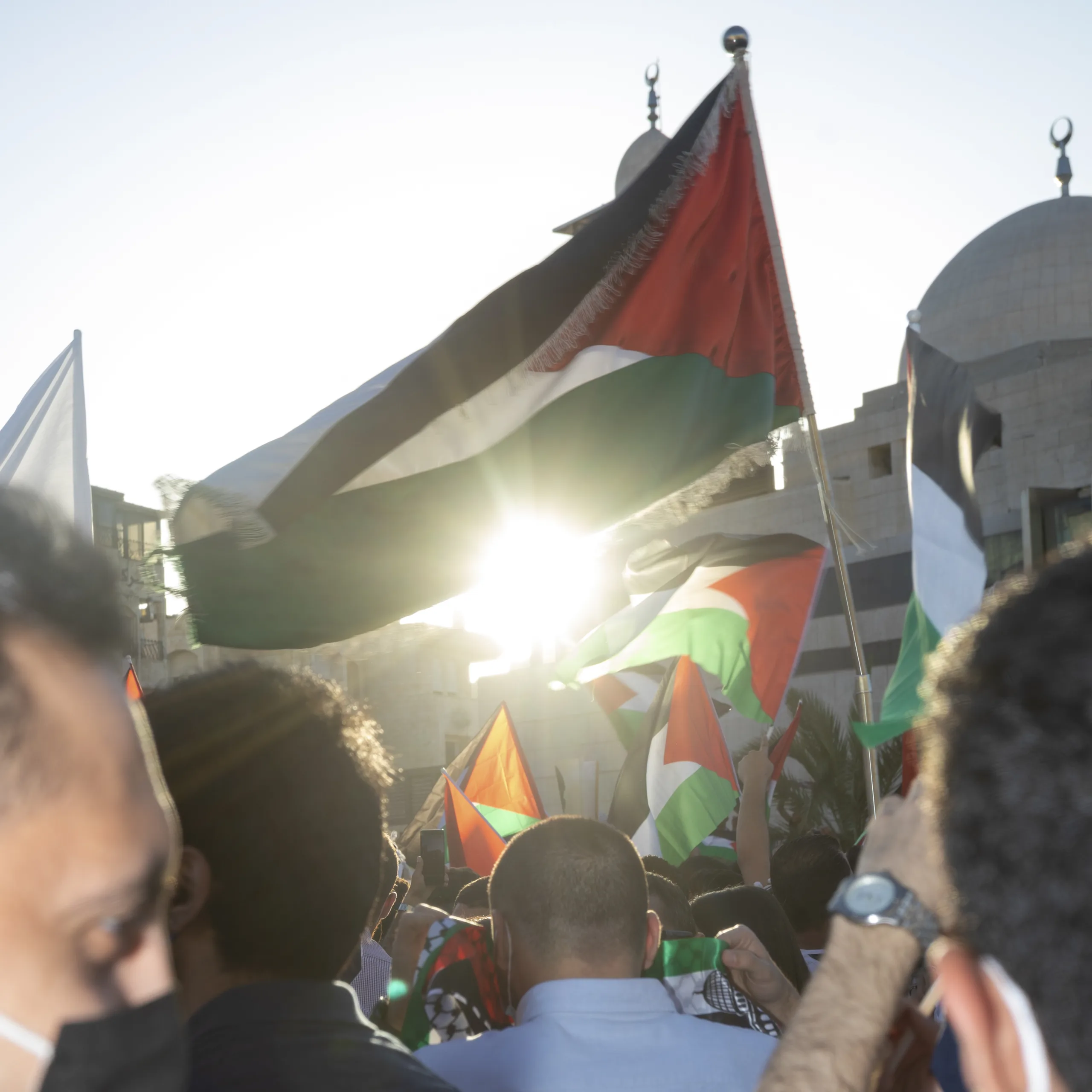
We’ve all lost count of the number of times we’ve repeated this chant over the last two years of mobilising for Palestine. There’s an inherent risk when we repeat things over and over—that they become monotonous, lose their meaning, turn into slogans rather than attestations or commitments. But chanting that Palestine is Arab, from the river to the sea, means something precisely because one of the core reasons that the zionist entity was established was to stifle Arab unity.
The unity of our region posed a threat to western imperialism that was, at the time, British-led, and is US-led today. So, we continue to repeat the chant, affirming the Arab dimension of our struggle and nodding to the promise that a liberated Palestine will free not just our region but the entire world from this chokehold. Despite attempts to fragment our people and our region, the Palestinian struggle has always been a site where Arab unity is not only affirmed, but also actively practised. Looking back at our history is a prerequisite for forging our path forward. By understanding how our struggle has unified Arab masses historically, we can glimpse into the future.
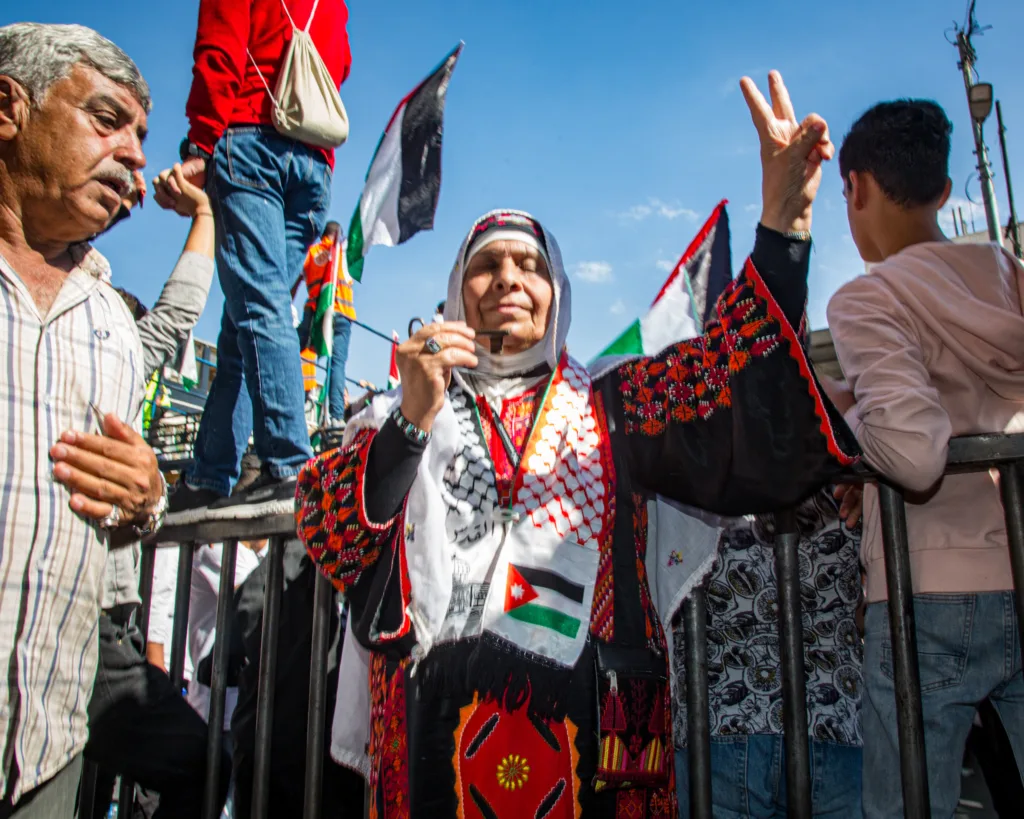
Between 1936 and 1939, Palestine witnessed the Great Arab Revolt, whereby organising and mobilising occurred across the colonially imposed borders of the Sykes-Picot agreement. While calls for transformation were echoing across the land, it was sparked by the assassination of Sheikh Izz al-Din al-Qassam, who was exiled to Palestine after being sentenced to death by the French for organising against their occupation of Syria. The Syrian imam is one example of many embodiments of the Arab dimension in the Palestinian struggle, as is an examination of the Nakba and resistance against it.
The Arab Liberation Army that resisted against the Nakba was led by Lebanon-born commander Fawzi al-Qawuqji. The Martyrs cemetery in Jenin, meanwhile, is where 44 Iraqi fighters were laid to rest in 1948. These Iraqi fighters and their heroic resistance inform the lineage of struggle in the triangle of villages in the 1948 territories, like Umm al-Fahem and Qalansuwa, which continue to maintain their Arab character to this day.
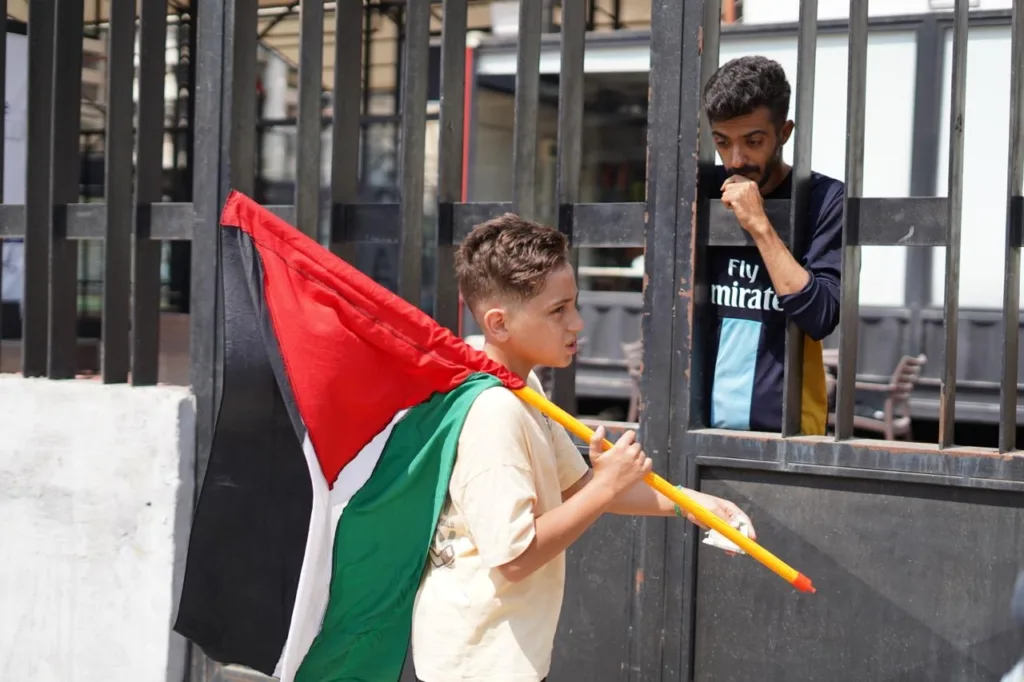
Meen qal al shaab mat?
مين قال الشعب مات؟
The signing of the Oslo agreements in 1993 and 1995 marked a phase of defeat for the Palestinian struggle, transforming a movement built on the liberation of all Palestinian land and the return of all refugees into a state-building project on a portion of the land. Crucially, the process delinked the ‘interior’ from the ‘exterior’, stripping Palestinians in the diaspora of the historic role they have always played in the struggle and severing the Arab masses from the movement.
One of the ways we confront the fragmentation of the Palestinian and Arab people imposed by zionism is by building a global mass movement for Palestine. The Palestinian Youth Movement (PYM) was born out of the post-Oslo moment; we understand our community to be Arabs, and our membership is Arab as a refusal of the fragmentation of Oslo and an insistence on the historic Arab character of the Palestinian liberation movement. In building power around the world, we can confront zionism wherever it rears its ugly head and assume responsibility for our collective liberation from wherever we exist in the world. In other words, we must not only imagine a liberated Palestine that unites Arab people, but also actively fight for it from wherever we are.

This dimension of the Palestinian struggle has been reaffirmed over the last two years of genocide. Across the region, from Egypt and Morocco to Yemen and Iraq, Arab masses have risen for Palestine, proclaiming that Palestine is freeing us all—a reminder that there are no free Arabs while our region remains infiltrated by zionism and imperialism.

In our thousands, in our millions
We are all Palestinian
Our cause unites not just Arab people, but all people of conscience around the world. The reason why Palestine continues to be a unifying force today, as it has been historically, is because the forces that Sheikh Izz al-Din al-Qassam and Fawzi al-Qawuqji were fighting still plague our world today. We have a collective responsibility to continue fighting on their behalf. Ghassan Kanafani famously said, “Imperialism has laid its body over the world. The head in Eastern Asia, the heart in the Middle East, its arteries reaching Africa and Latin America.”
His words got to the heart of why the Palestinian struggle is one that intersects with popular, anti-imperialist movements worldwide. For example, Israeli billionaires finance illegal settlements using wealth extracted from the Congo. The weapons that are manufactured by companies like Elbit Systems are “field tested” on Palestinians and then used on the Kashmiri population by the Indian government. Palestine, then, is a central node in the circulation of global and military capital and, therefore, a central node of struggle.
This is why, in July 2024, when student protests erupted in Bangladesh, we saw the Palestinian and Bangladeshi flags raised side by side. This is why it was South Africa that brought the historic case against Israel to the International Court of Justice. This is why, every year, Cuba grants 200 fully paid scholarships for Palestinian students to study medicine. Ultimately, this is why Gaza will be the graveyard of imperialism.
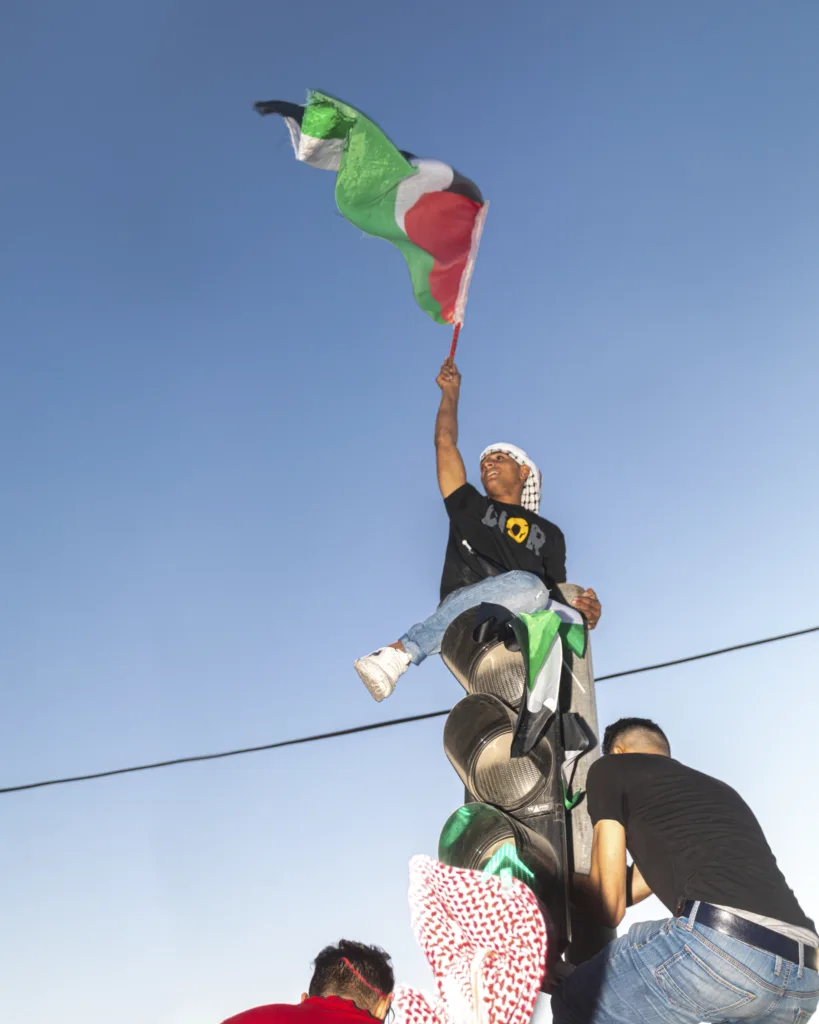
Courtesy of Omar Shaa
The people united will never be defeated
Unity is one of the greatest weapons we have. For zionists, the fragmentation of Arab people (broadly) and Palestinian people (specifically) is necessary for their project’s survival. From the point of view of western imperialism, stifling anti-colonial and anti-imperialist movements globally is also necessary for its survival. This is because there is little else that binds these forces together other than the exploitation and colonisation of our land and people.The past two years have exposed cracks in zionism and imperialism and, as these cracks are widened, our unity is the only force that can widen them further. It is incumbent upon us, as Arab people and people of conscience, in the region and worldwide, to take this responsibility seriously. To come together and mobilise, organise, and rise for Palestine because, in freeing Palestine, we free ourselves.