
 Posted in
Feature, Dazed MENA Issue 06
Posted in
Feature, Dazed MENA Issue 06
Power Moves: in conversation with Saudi history-maker Saud Abdulhamid
Text Omar Ghonem | PHOTOGRAPHY VICTOR LABORDE
It was nearly four years ago that the Saudi national team stunned football fans around the world by defeating Argentina in their opening game of the FIFA World Cup in Qatar. Although they exited the competition in the group stage with those three points as their only tally, the Green Falcons left a lasting impression on that edition; it remained the only team to defeat Argentina, which ironically went on to lift football’s most coveted trophy.
With the 2026 World Cup inching closer at the time of writing, Saudi Arabia is preparing not only to replicate that symbolic achievement, but also go even further. The team enters this new campaign supported by a genuine transformation taking place across Saudi football, with a rapidly developing domestic league packed with international stars, fierce competition, and a generation of players capable of performing at the highest level.
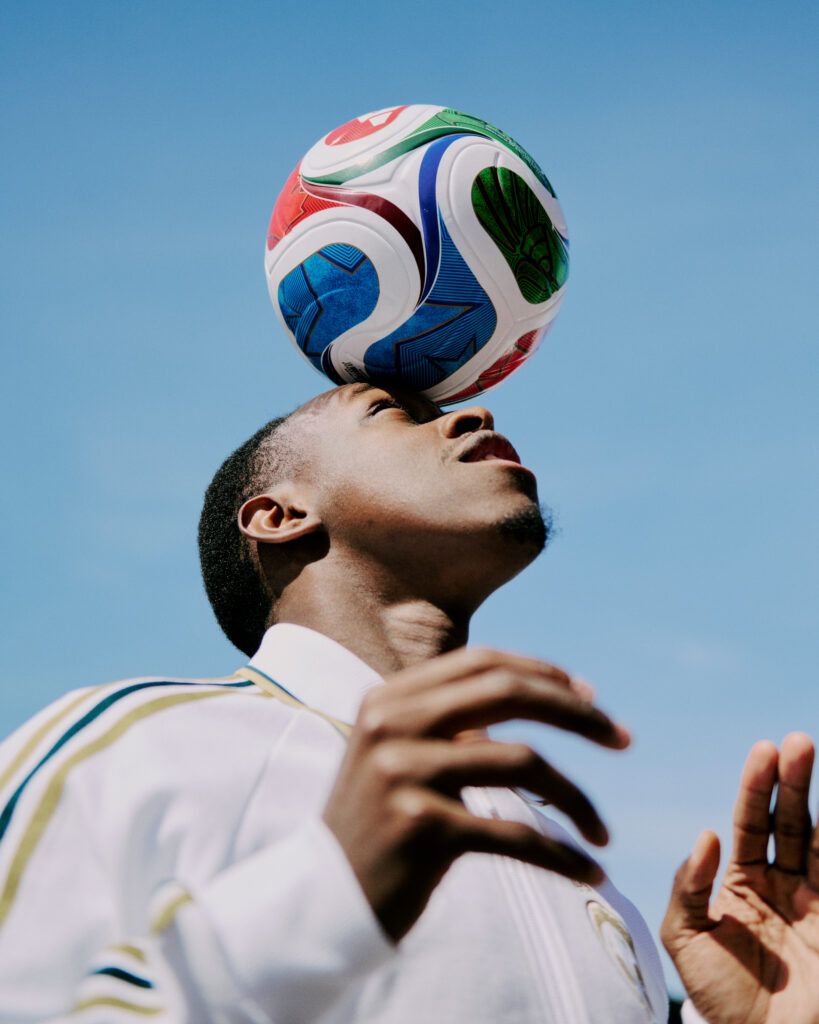
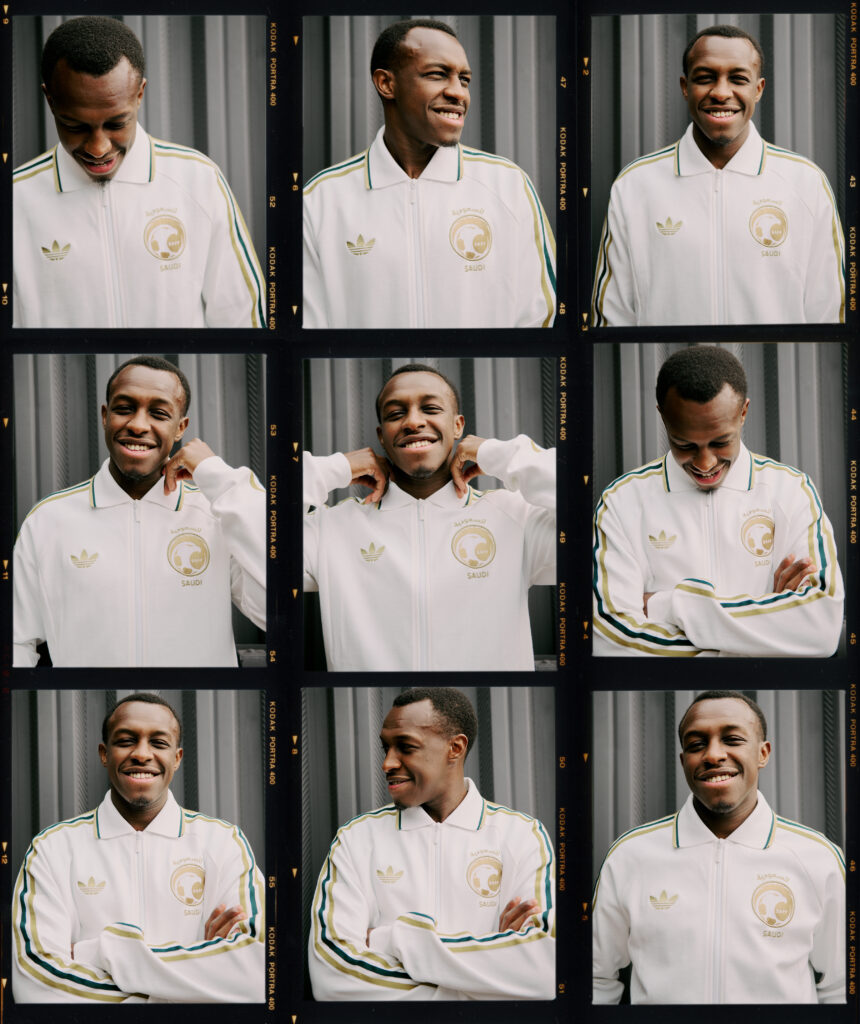
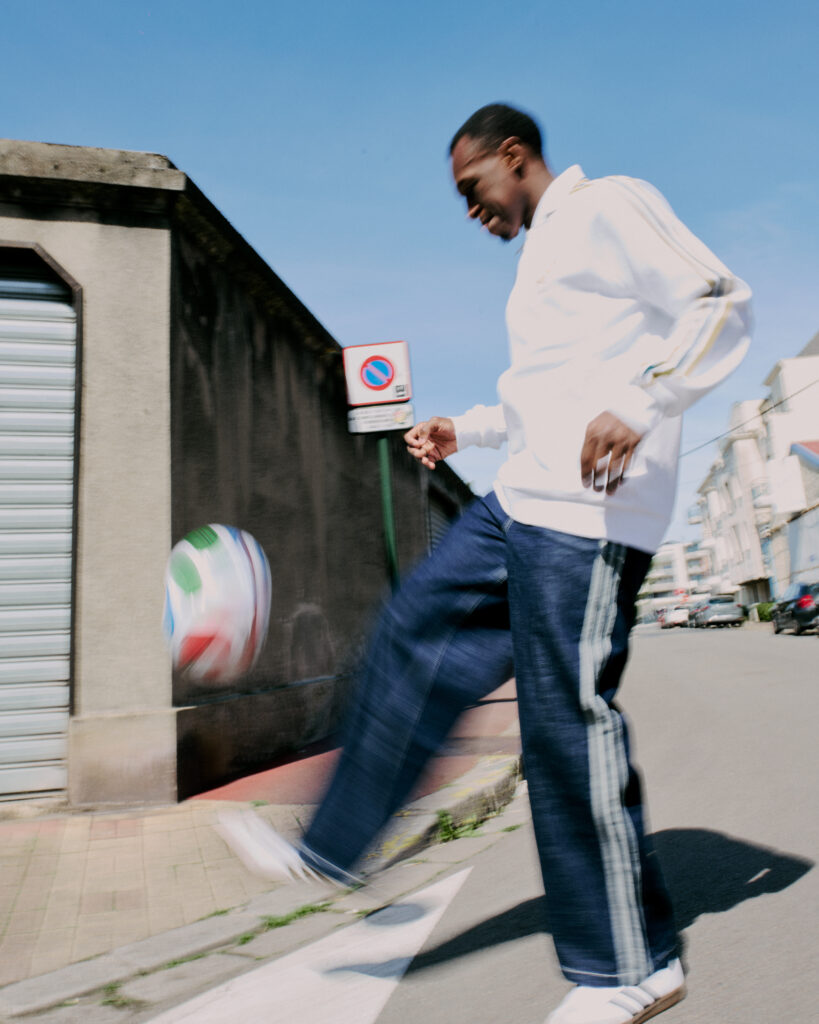
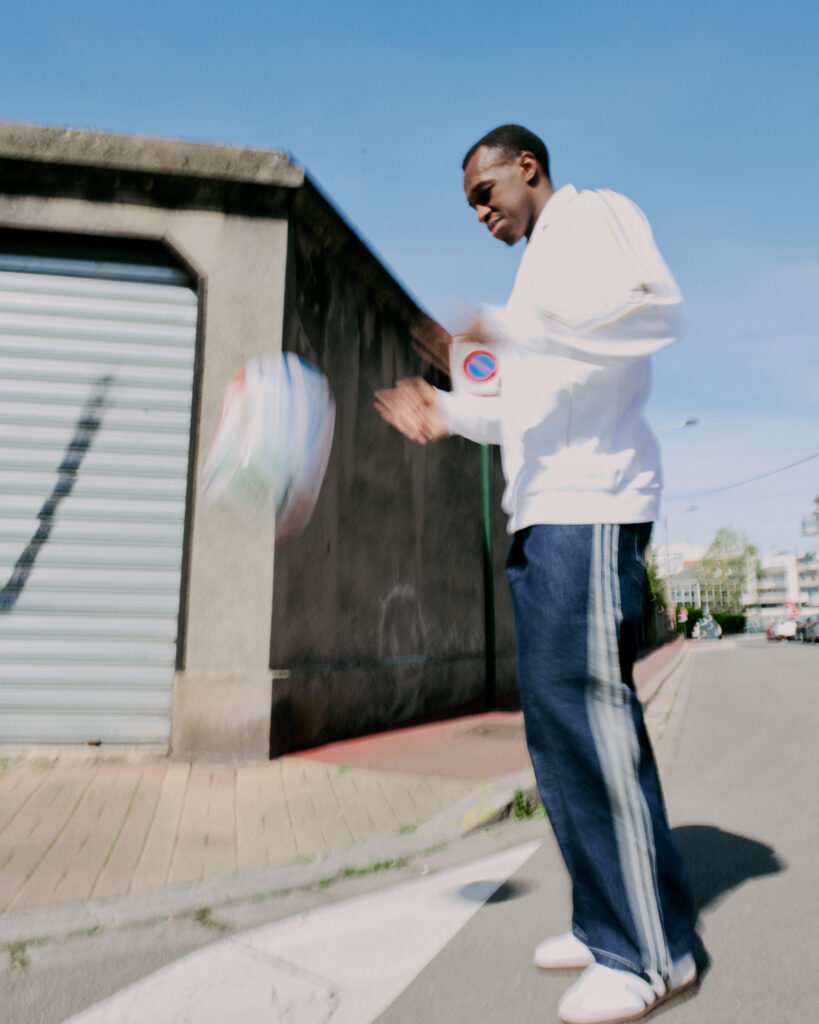
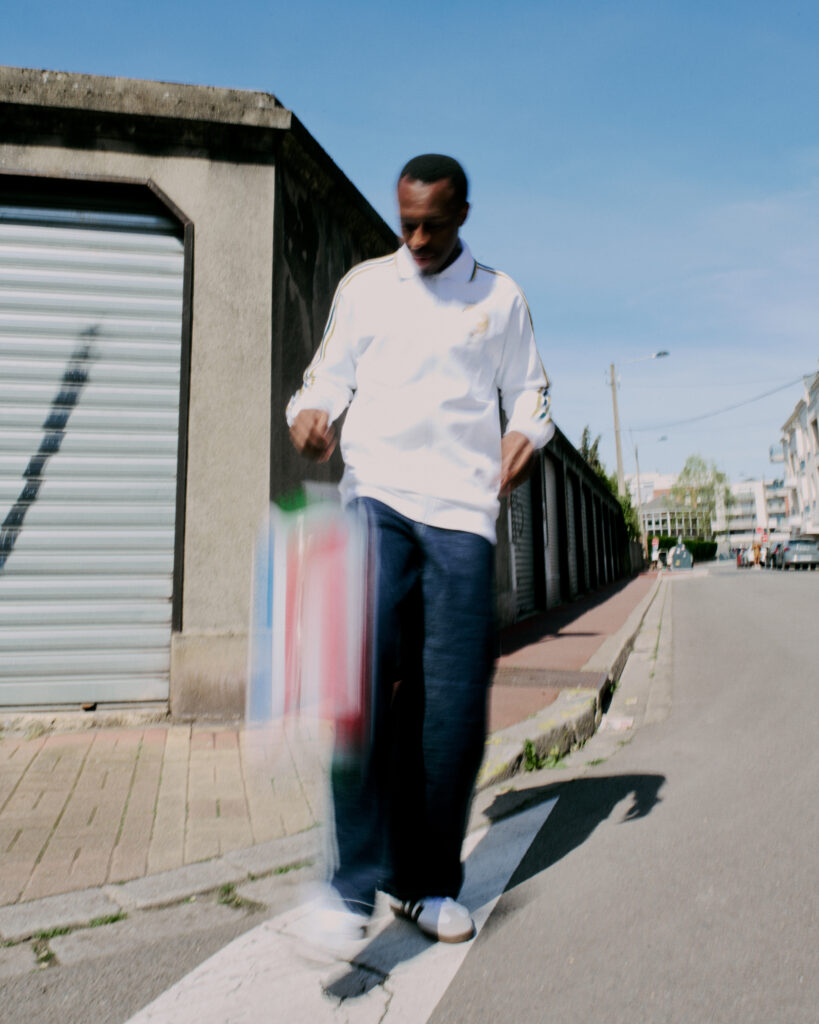
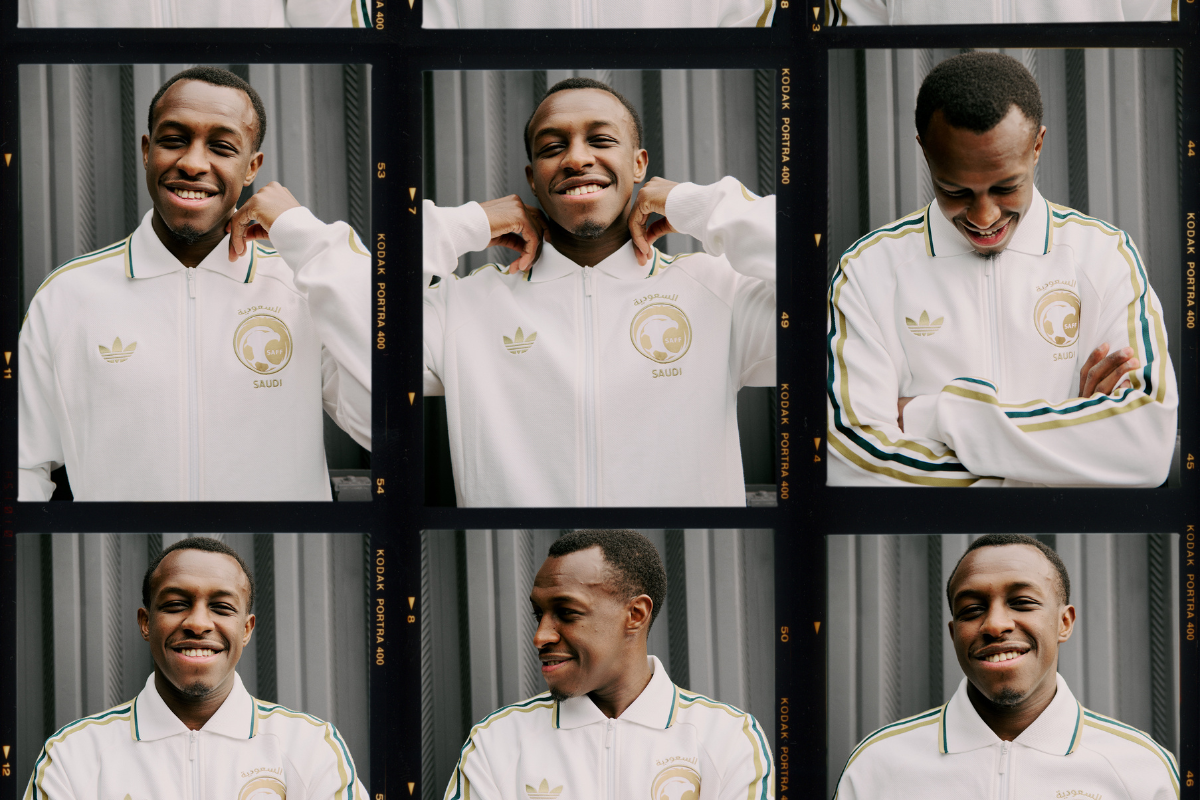
Amid the influx of global stars and unprecedented investment reshaping the Saudi Pro League (SPL), Saud Abdulhamid stands out, personifying an entirely different measure of the country’s development in the sport. While Saudi football has largely accelerated by attracting elite talent from abroad, the right-back became the only local player to carve a path in the opposite direction. His moves to AS Roma and later RC Lens made him the first Saudi footballer to establish himself in Europe’s top five leagues.
Growing up in Jeddah, Abdulhamid experienced football less as an organised structure, and more of an ubiquity. Streets, local pitches, and endless informal matches shaped his relationship with the sport before elite facilities and development systems entered the picture. “Neighbourhood football was everything for me,” he recalls. “That’s where the passion really begins—playing with friends, competing for hours, debating football, and learning organically on the field.” But these nuances are hardly unique to Abdulhamid.
Across Saudi Arabia and much of the wider Arab region, football culture long preceded infrastructure. Talent emerged mostly from communities rather than academies and developed through repetition and instinct. In many ways, Saudi football’s current modernisation project is being constructed atop an already deeply rooted subculture that has existed for generations.
After breaking through with Al-Ittihad, Abdulhamid developed into one of the country’s standout full-backs before making a move to Al Hilal in 2022, where his career accelerated alongside the broader rise of the SPL. Across two dominant seasons with Al Hilal, Abdulhamid won almost every domestic trophy, proving himself to be one of the national team’s most vital players. He also became known for a style well suited to the demands of the contemporary game thanks to his relentless energy, technical composure, and tactical flexibility.
The rapid evolution of the domestic league introduced a different level of daily competition and professionalism—training environments changed, as did expectations. The margin for surviving at the top level narrowed significantly. Abdulhamid believes that the shift had a direct impact on Saudi players themselves, particularly in how they approached football mentally. “When you train and compete alongside world-class players every day, it naturally pushes you to become more disciplined, focused, and professional in every aspect of the game,” he says. Just as important, he explains, is the psychological effect of this proximity. “It changes your mentality because you start seeing new standards up close.”
Abdulhamid’s own development mirrored that transformation. Calmness and composure quickly became defining characteristics of his approach, qualities that allowed him to adapt to the mounting pressure surrounding both his club career and growing role within the national team. Yet even that composure, he insists, is something that he developed deliberately rather than inherited naturally. “I’ve always been quite calm, but over time, I’ve also learnt how important it is to manage emotions and pressure as a professional athlete. It’s something you build and work on daily.”
That mindset became increasingly important as Abdulhamid approached the biggest transition of his career: he joined AS Roma in August 2024, becoming the first Saudi player in the history of Serie A. The move carried symbolic weight beyond the transfer itself. Saudi football had spent years bringing world football inward while Abdulhamid was suddenly moving in the opposite direction.
Moving to Europe, however, meant entering a different reality. The pace accelerated, tactical demands intensified, and every aspect of the environment – from training sessions to match preparation – operated with a different level of scrutiny and intensity. For Abdulhamid, the challenge extended beyond adapting on the pitch. Europe represented not only a professional leap, but also a psychological one. “I had already established myself in the Saudi Pro League, but moving to Europe meant entering a completely new environment with different expectations and perceptions,” he admits.
For European players arriving from established footballing nations, adaptation is often viewed as a natural step of career progression. For a Saudi player, the process comes layered with additional assumptions and questions about quality, readiness, and belonging. Abdulhamid arrived at Roma not as a finished star, but largely as a prospect and an experiment of sorts. There was little doubt about his athleticism or technical ability, but he still had to prove that he could withstand the tactical complexity and physical demands of European football.
His first season in Italy reflected those dynamics—minutes remained limited, competition was intense. Yet even within restricted opportunities, Abdulhamid accumulated milestones. The first to appear and start in Serie A aside, he also became the first Saudi player to score in European competition with Roma, too. More importantly, the experience forced him into the most demanding developmental phase of his career. “The pace, intensity, mentality, and expectations are all different,” he explains. Rather than frame those differences as obstacles, though, Abdulhamid recognised them as part of the education. “I tried to approach it as an opportunity to grow.”
Growth, in his telling, rarely arrives dramatically. Instead, it emerges through difficult training sessions, tactical adaptation, uncomfortable moments, and the constant process of proving yourself within unfamiliar surroundings. “Every difficult moment became a lesson,” he asserts. “Those experiences helped me develop both as a player and a person.”
That process continued after his loan move to Lens in 2025, where he found the rhythm, continuity, and responsibility that had eluded him in Italy. In France, Abdulhamid evolved from a symbolic arrival into a dependable first-team player. He became the first Saudi footballer to play and score in Ligue 1, helping Lens secure a second-place finish behind European champions PSG. Across the 2025-26 season, he registered three goals and eight assists while establishing himself as an important part of the team.
The season reached its defining moment when Lens lifted the Coupe de France, making Abdulhamid the first Saudi player to win the competition. The achievement carried resonance well beyond the trophy as Abdulhamid was no longer merely arriving in Europe as a novelty or experiment but actively contributing to silverware within a nation dubbed a football giant.
Pressure naturally accompanied every phase of that progression. “There have been moments where it felt very heavy,” Abdulhamid reflects. Yet, his understanding of pressure feels notably shaped by support systems as opposed to isolation—family, teammates, coaches, and close relationships appear repeatedly throughout what he describes as difficult periods in his career. “What helped me was having the right people around me,” he says. “I’ve learnt that pressure can either freeze you or push you forward.”
His journey from Jeddah to Italy, and later France, has unfolded at a time defined by Saudi Arabia’s growing ambitions in football—ambitions that extend beyond building a strong domestic league and infrastructure capable of producing talent. The kingdom is actively positioning itself as a leading force in the sport across the Arab world, complete with aspirations of competing for major continental and international honours, starting with this year’s tournament.
Abdulhamid’s generation grew up watching legends such as Sami Al-Jaber and Yasser Al-Qahtani, along with other icons of Saudi football who led the Green Falcons to domestic and continental glory. “Players like Sami Al-Jaber showed my generation that Saudi footballers are capable of competing at the highest level.” Yet, the ambitions of previous generations of Saudi football ultimately stalled on the World Cup stage. Despite appearing in seven editions of the tournament, the national team’s greatest achievement remains its run to the Round of 16 at the 1994 World Cup in the United States. Beyond that historic campaign, Saudi Arabia’s subsequent appearances have largely been limited to participation rather than contention.
This is where Abdulhamid and his peers differ. While acknowledging the legacy of the Saudi greats who came before them, this generation is defined by the scale of its ambition. “There is a genuine sense of belief within the group,” he says. Whether those ambitions will ultimately translate into success in football’s ultimate showcase remains uncertain. But for arguably the first time in decades, Saudi Arabia enters a World Cup cycle with a generation shaped by higher levels of competition and greater international exposure. As for players like Abdulhamid? Products of this ongoing transformation, their objective is simple: to push beyond the limits that have historically defined the Saudi team’s presence at the World Cup.