
 Photogrpaher: Mariam El Gendy
Stylist: Laura Jane Brown
Fashion Coordinator: Ali Ammar
Fashion Assistant: Omnia Eldraib
Senior Producer: Steff Hawker
Project Coordinator: Chloe Christodoulou
Production Coordinator: Abdulrahim
Photography Assistant: Salem Bafaqas
Posted in
Feature,
Photogrpaher: Mariam El Gendy
Stylist: Laura Jane Brown
Fashion Coordinator: Ali Ammar
Fashion Assistant: Omnia Eldraib
Senior Producer: Steff Hawker
Project Coordinator: Chloe Christodoulou
Production Coordinator: Abdulrahim
Photography Assistant: Salem Bafaqas
Posted in
Feature,
Breaking Ground: Saudi’s indie renaissance
Text Fady Nageeb
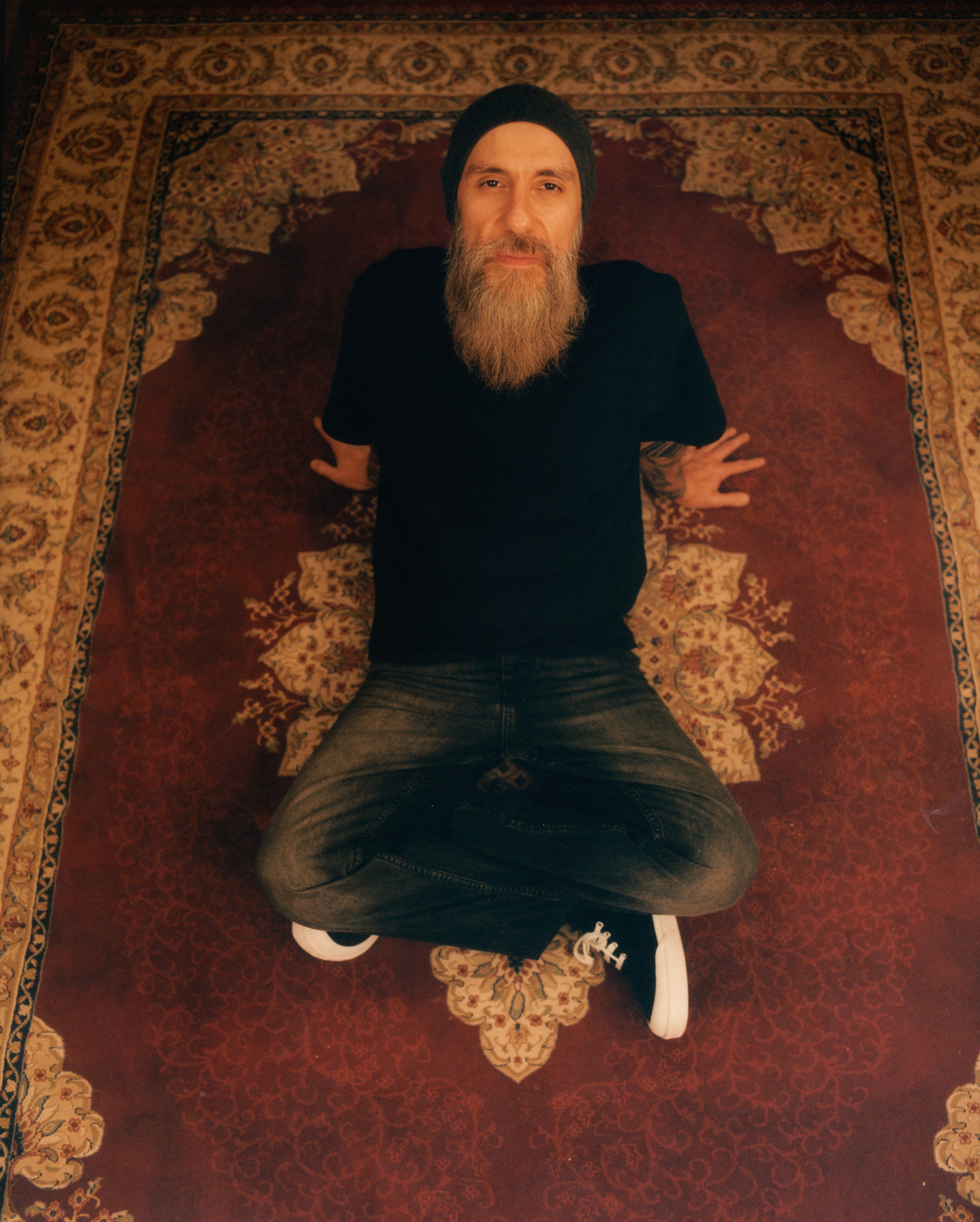
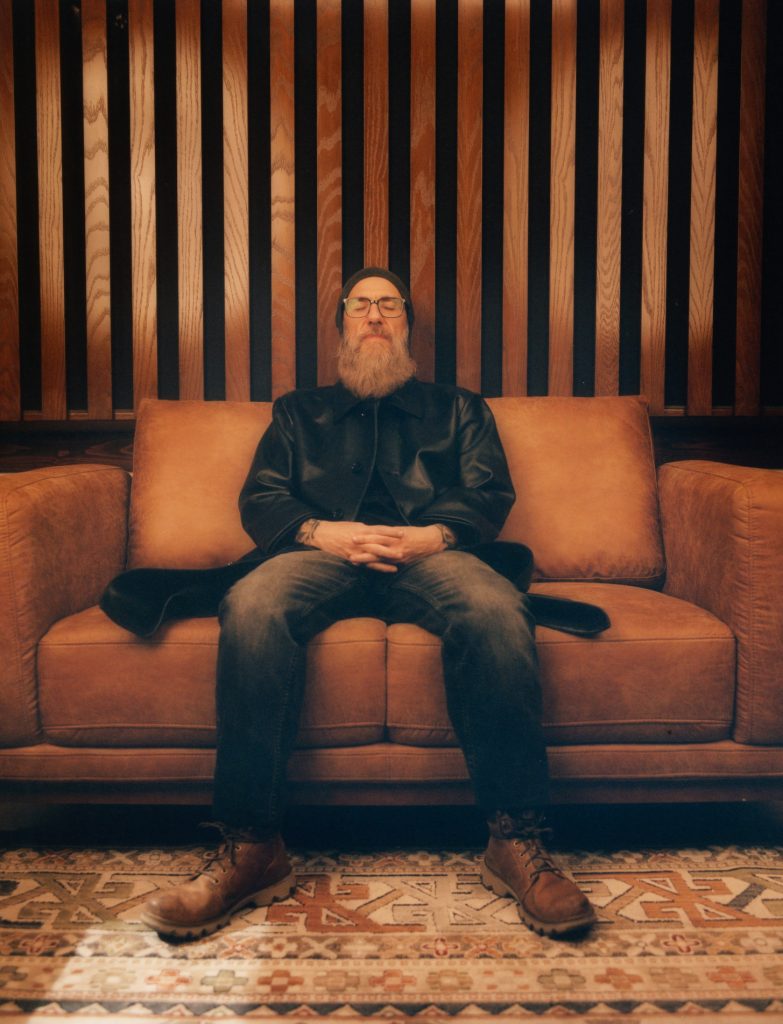
“My older brother Haisam was a doctor; Faisal, my twin, is a doctor; Safinaz, my sister, is a psychologist. I was a very rebellious boy in a way. I always tried to do things differently,” Ahmed Shawly divulges from a spacious white couch at the centre of his Jeddah listening room. The space feels more like a shrine dedicated to his lifelong passion for music. Surrounding him on all four sides are shelves housing a little over 9,000 meticulously organised, pristine-condition CDs he has collected over the years.
Stacking CDs wasn’t something Ahmed got into recreationally, despite what his collection might imply, but something he did daily, for months on end, at his first job in Jeddah’s famed Rotana Music store on Tahlia Street. The job was a far cry from what his parents envisioned for him, particularly his diplomat father, who, while supportive, often questioned Ahmed’s decision, exclaiming, “I am an ambassador! How can my son work as a shopkeeper?”

Stylist: Laura Jane Brown
Fashion Coordinator: Ali Ammar
Fashion Assistant: Omnia Eldraib
Senior Producer: Steff Hawker
Project Coordinator: Chloe Christodoulou
Production Coordinator: Abdulrahim
Photography Assistant: Salem Bafaqas

Talent: Nomarch
Photographer: Mariam El Gendy
Stylist: Laura Jane Brown
HMU Artist: Lina Abo Srea
Senior Producer: Steff Hawker
Project Coordinator: Chloe Christodoulou
Producer: Nadia El Dasher at SNAP14
Production: SNAP14
Photo Assistant: Salma Olama
Styling Assistant: Maria Fathy
Production Coordinator: Marwan Rizkhallah at SNAP14
Production Assistant: Yahya El Helaly, Noran Ageel, and Mariam Bahy at SNAP14
Location: Provence Language School

Photographer: Mariam El Gendy
Stylist: Laura Jane Brown
Fashion Coordinator: Ali Ammar
Fashion Assistant: Omnia Eldraib
Senior Producer: Steff Hawker
Project Coordinator: Chloe Christodoulou
Production Coordinator: Abdulrahim
Photography Assistant: Salem Bafaqas

Stylist: Laura Jane Brown
Fashion Coordinator: Ali Ammar
Fashion Assistant: Omnia Eldraib
Senior Producer: Steff Hawker
Project Coordinator: Chloe Christodoulou
Production Coordinator: Abdulrahim
Photography Assistant: Salem Bafaqas
Originally published in Dazed MENA issue 00 | Order here
Although Ahmed didn’t end up studying to become another doctor in the family, he pursued studies in the comparatively left-field scene of marine geology. But it wasn’t long before marine geology took a backseat to his growing passion for music, rock and metal, an obsession that started after he watched The Crow in 1994 and fell in love with the film’s main theme song: Burn by The Cure.
“That’s when I started getting into music in a scary way. It was the music I wanted to listen to, work to and even write for my girlfriend. Of course, I was still listening to all the pop music then, but The Cure introduced me to this world of darkwave and gothic rock.”
Ahmed’s job at the music store didn’t just serve as an escape from his university studies but opened the floodgates for his musical taste palette. He would spend hours in the shop listening to anything from jazz to Philippine folk music in the store’s “world music” section and unearthing forgotten dusty CDs in the store’s back catalogue section. Soon enough, he was promoted to work the store’s ground floor, as a personified streaming algorithm for customers wandering into the store with no particular purchase in mind.
“I quickly learned how to gauge what people like to listen to just by reading their behaviour. What are they into? Do they prefer Arabic or English? Word around was ‘there’s a young kid named Ahmed Shawly who’s a clever salesman, and if you tell him what you like, he’ll find you more music that suits your taste’.”
Stylist: Laura Jane Brown
Fashion Coordinator: Ali Ammar
Fashion Assistant: Omnia Eldraib
Senior Producer: Steff Hawker
Project Coordinator: Chloe Christodoulou
Production Coordinator: Abdulrahim
Photography Assistant: Salem Bafaqas
Fast forward a couple of years and one completed-but-never-to-be-used marine geology degree, Ahmed’s reputation grew beyond music-hungry customers. He was approached by Music Master, one of the biggest music distributors regionally then, who handled the catalogues of Universal and Warner Music. Ahmed went from selling individual CDs to handling wholesale to stores including his very own.
His rise within Music Master was meteoric: within a couple of years, he went from loading up the trunk of his car with boxes, selling in bulk, and collecting payments to becoming the head of labels within the company, managing Warner, Universal and Sony which he helped land as a third signing. The role catapulted his understanding of music consumption in the region and its sales on a national level across Kuwait, Bahrain, Saudi Arabia, Lebanon, Jordan and Egypt. Responsible for forecasting an album’s sales and placing orders in different quantities for individual countries, there was one thing he wasn’t able to predict: how much streaming and digital media players would derail physical music formats.
“The last two years were financially disastrous. After 2009, you had Spotify, iTunes, and iPods. People were giving each other music on flash drives. The company was looking for any way to increase its sales, selling headphones and iPod accessories, you name it. It was bad.”
In a move that seems entirely antithetical to everything he stands for and all the years Ahmed spent being chased by religious police for his long hair and metalhead looks, he left the industry to join a large Swiss pharmaceutical company in 2013, where he worked in procurement for nearly a decade. It’s difficult to unpack what led to that decision; even Ahmed doesn’t seem to have a clear-cut answer, but rather a fear of not having skills outside of a volatile music industry.
But in 2017, he was drawn back in when he came across a Saudi band named Skeleton Crowd on Twitter. “I heard a song called Masquerading Crowd and it was incredible. I froze. I’d never heard music like this from Saudi in my life. I’d left the music industry for so long, but I remember my wife was in the kitchen, and I yelled at her, ‘Come, come, listen to this song.’ I told her, ‘If I do anything related to music, this is going to be the first band I’m going to sign’.”
Three years later, Ahmed took a leap of faith and ventured back into music. Wall of Sound’s inception wasn’t meant as a record label at first but as a world- class studio that facilitates recording for young, emerging artists in the Kingdom and offers guidance from seasoned industry professionals. Plus, Ahmed, his friends, and other artists would enjoy a big, equipped place to jam. By the time the studio was ready to open in February, COVID had begun bringing the world to a halt, giving Ahmed the chance to push his passion project to its fullest, transforming Wall of Sound into a studio and a fully-fledged record label.
Sure enough, one of his first signings was Skeleton Crowd. Ahmed began to piece together the label’s roster, tapping into Saudi Arabia’s rich, undiscovered creative potential and beyond. From Jeddah-based rapper Nashmi’s gritty, unconventional flow to the genre-bending sounds of EON and the synth-pop artistry of Jordan’s Idreesi, the shaabi-infused EDM of El Waili and microtonal synth rock of Albaitil Ashwai, he found his footing by backing artists with authenticity.
“I just set on this quest to sign edgy and unique personalities. Not ordinary people – risk takers. People with a different sound. I don’t care if they have one follower or 200,000. The most important thing is that it has to be screaming ‘independent’. I am not here to change you or to change your sound; I am here to support your message.”
In many ways, Fulana’s success with Wall of Sound became a model for the label’s potential to elevate Saudi indie talent onto the global stage. Transformed from a bedroom artist to an international performer, Fulana’s career has unfolded from recording solo in her room to performing on stages in the US, Singapore, Jordan and Egypt, plus the Music Commission’s Riyadh International Jazz Festival earlier this year. Fulana, who started out writing songs in English, quickly expanded her discography and experimented with writing in Arabic under Wall of Sound, having one of her biggest hits with the Arabic track Ya Thalam Ya Kabes, which introduced her to a much wider audience and set the stage for her tour.
“This proved my point that with time, artists can accept the change that isn’t forced on them, but with their own intelligence, they can look around them for inspiration, making a change that takes them to the next level,” Ahmed recalls. But the very ethos that gave Wall of Sound its edge also presented financial and logistical challenges.
Without the backing of major labels or established entities, Ahmed found himself managing the label’s growth primarily through personal investments. As the roster expanded, so did the costs of recording, marketing and supporting artists through their creative journeys. “There were moments I felt I’d signed too many artists for us to handle financially,” he reflects, acknowledging that the rapid growth had a cost. He describes the struggle of balancing passion with practicality – an issue made more acute by the demands of a developing industry where the infrastructure for venues, live performances, distribution and appetite for left field music is still limited.
“We still need more time for more bands to emerge, and for these bands to start creating music and then for people to start listening to this music. Just like people have grown accustomed to Mohamed Abdo, Elissa and Amr Diab, they need time to get used to these new genres. Other MENA countries have been through this phase, whether Egypt, Jordan or Lebanon, from George Wassouf to Mashrou’ Leila. I think there was a huge gap between them and this gap closed little by little organically.”
Now, whether resources directed towards building music venues, schools, supporting local festivals and providing financial backing to entities like Wall of Sound can accelerate Saudi’s cultural renaissance remains to be seen. But Ahmed believes the Saudi music scene could see exponential growth, making way for an industry where indie labels like his are bolstered by grants for studio and tour costs, and venues become more accessible to foster live performance culture in Saudi Arabia.
“We as a country are doing so many things better than before. The Music Commission does what it can to promote our culture by hosting concerts around the world – they arranged concerts in Singapore and New York in which we’ve participated – and we, as Wall of Sound, are also behind the lines doing our part in representing Saudi’s emerging music.” Despite the challenges, Ahmed’s mission remains to nurture artists who create music for the sake of passion, not profit – artists unafraid to reach their listeners on their own terms. “There’s no right or wrong in music,” he insists. “Don’t place too many expectations on it. You need to enjoy it before putting it out there – it’s not a fight, it’s not war, it’s music. It always has to be something you love doing. Nobody is forcing you to make it.”