
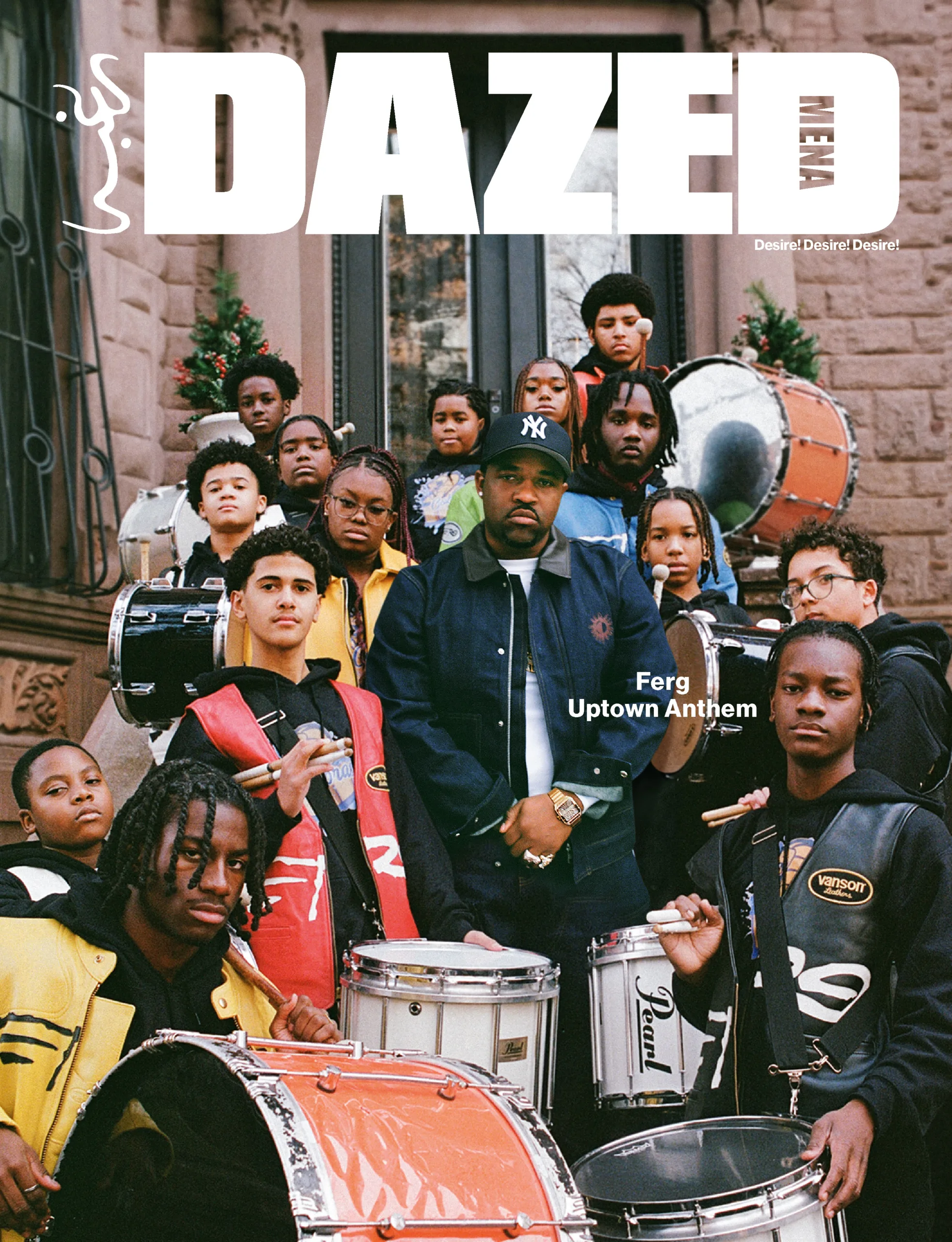

Text Kimberly Drew | Photography Ramshah Kanwal
“Uptown got dark-skin energy,” says Ferg during our recent conversation, marking his first cover story for Dazed MENA. The phrase lands with a swaggy provocation, a smooth (even jive) talk that feels quintessentially uptown, yet it’s eerily precise in this moment in US history, as anti-Black and anti-immigrant policing once again threatens our likelihood of survival. The artist’s invocation of “dark-skin energy” gestures toward the ways that Blackness, dark skin particularly, has long been met with a constrained imagination, a refusal to fully recognise the vast humanity held within our caramel and mahogany hues.
Harlem, a neighbourhood spanning just three square miles, became a haven for African-Americans during the Great Migration that began in 1910, when hundreds of thousands fled the incessant violence and disenfranchisement embedded in the soul and marrow of the American South in search of possibility in cities like Chicago, Detroit, and New York. For many, discussions of Harlem remain frozen in that era, synonymous with the poetry, politics, and larger-than-life Black figures of the Harlem Renaissance.
Today, Harlem exists within multiple renaissances all at once. In approaching this conversation with Ferg, my initial impulse was to foreground his individual story—one shaped by faith, unfettered creativity, and love, both familial and collective. I also wanted to challenge the narrow readings of Harlem as a monolith that looms large in the collective imagination, often stripped of nuance and contradiction.
Yet after our dialogue, I found myself compelled to zoom out and consider not only Ferg’s trajectory, but also the generative power of a collective imaginary as a concept. Listening to him describe Harlem as “just different corners and blocks” prompted a deeper reckoning with the fact that imagination has always been a cornerstone of Black thought and progress. It is through the imaginary made tangible that a 45-block stretch can continue to generate generations of Black creatives striving to survive, stay fly, and hug the block while doing so.
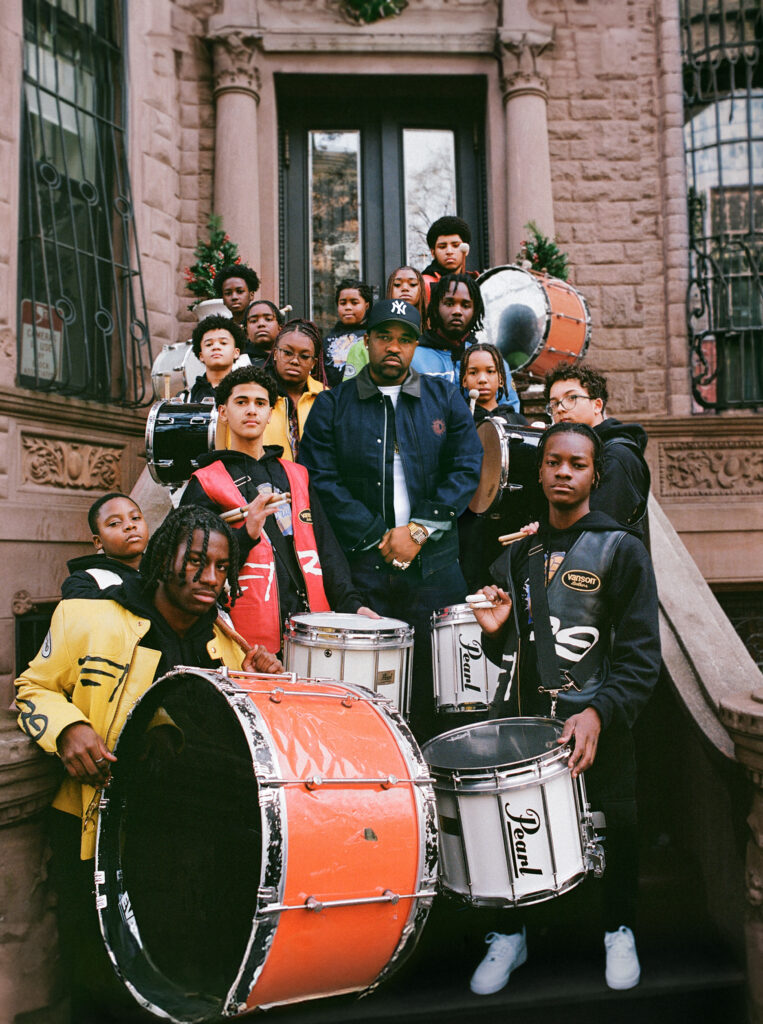
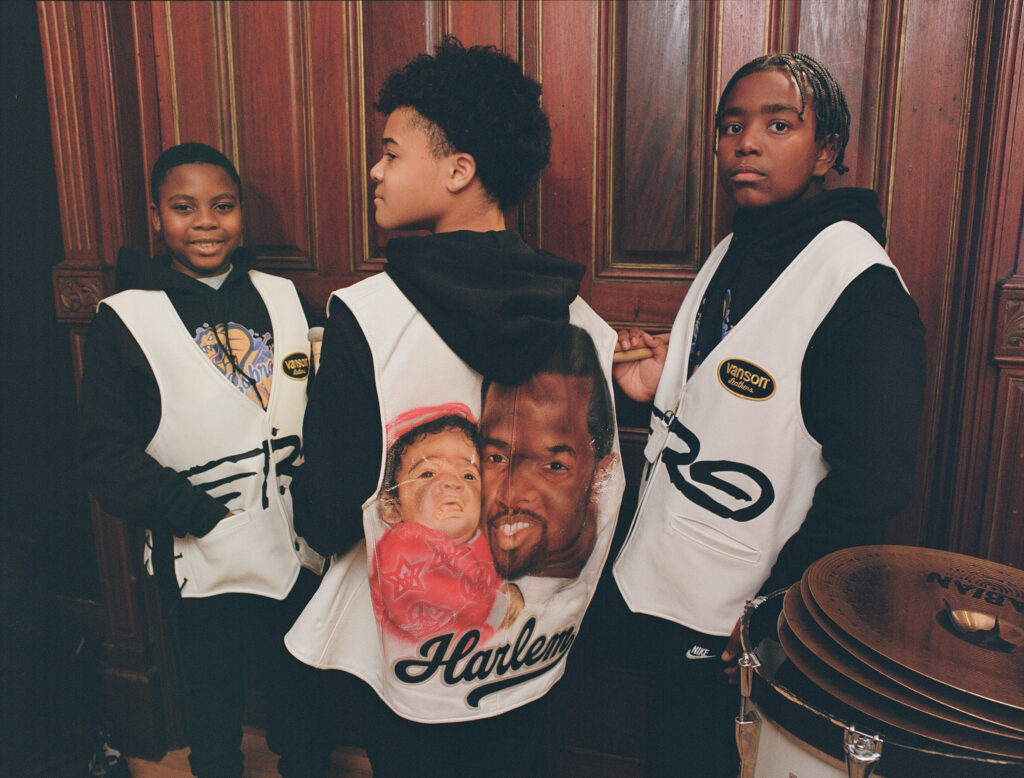
Band wears jackets FERG APPAREL X VANSON, sweatshirts HARLEM COBRAS
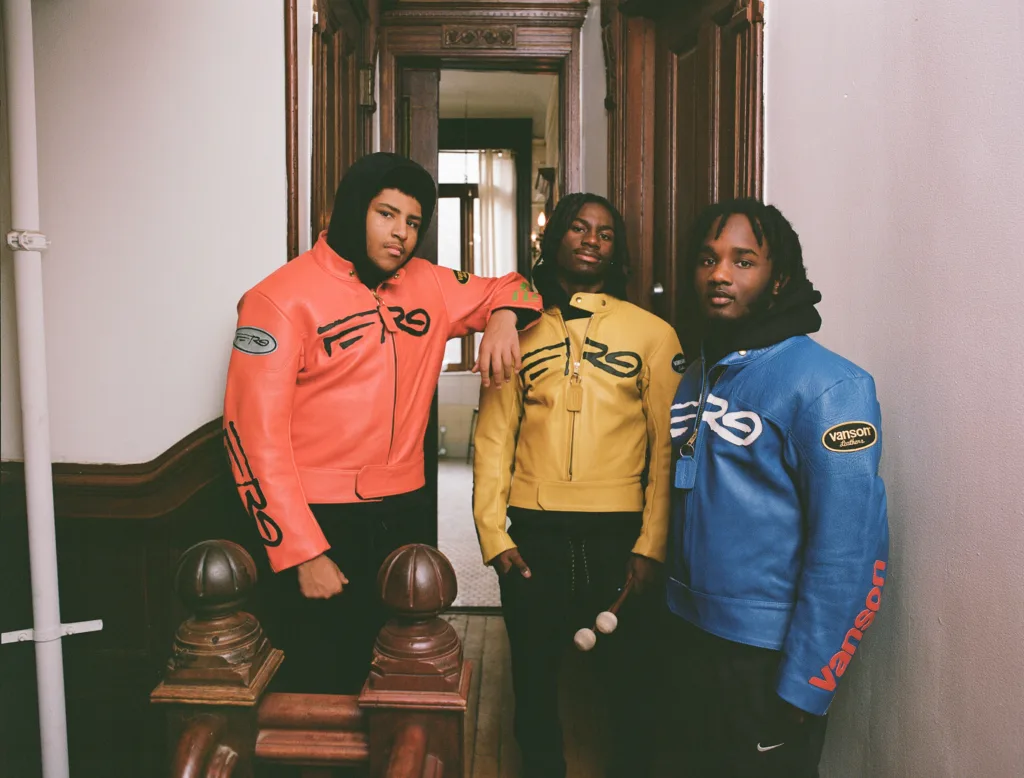
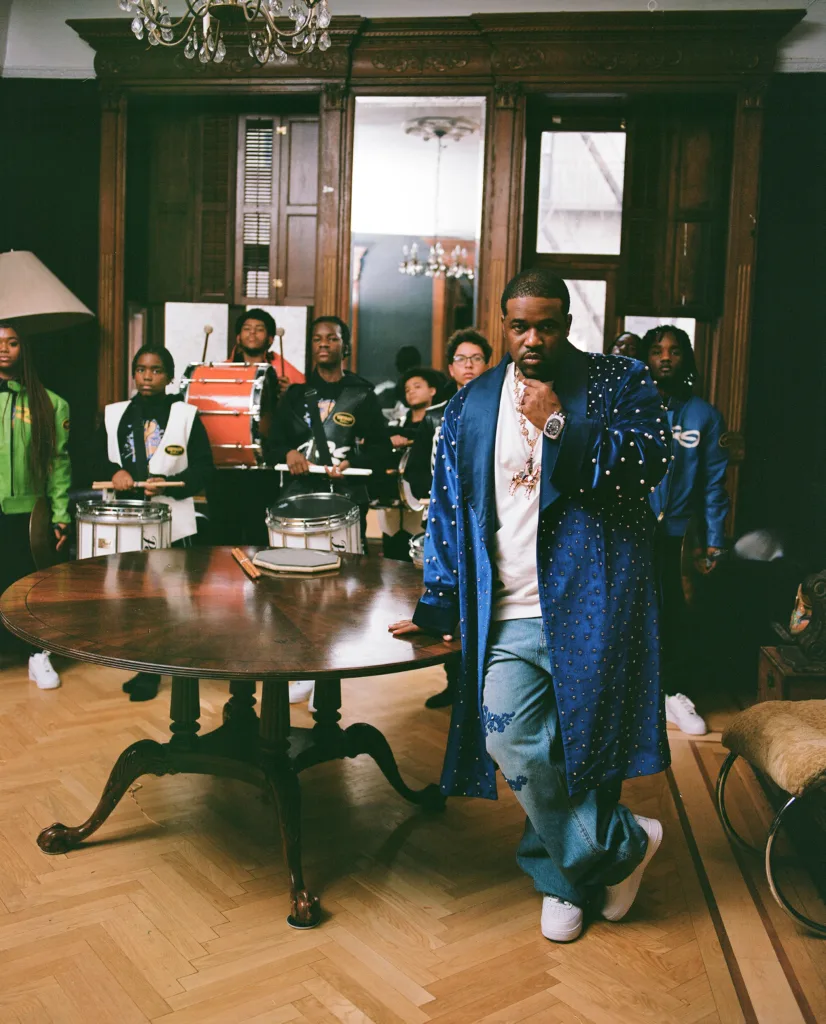
Band wears leather vests FERG APPAREL X VANSON, sweatshirts HARLEM COBRAS, Air Force 1 shoes NIKE
Kimberly Drew (KD): I’ve long admired your career. You’re an artist who, more than many others, embodies complexity. You’re obviously a star but also respect the power of a constellation, a veteran who works as hard as a rookie. Do you feel it’s been something that’s tied to survival, curiosity, or something else?
Ferg: So, my instincts were sharpened in the beginning because of survival. I had to get out of my mom’s crib, I wanted to see the world. I dropped out of college, so I had to make it work. It just had to work, period. Now, it’s more so that I still have so many things to say—I’m no longer working out of survival. I’m working just to get ideas out and make sure that they’re executed to the highest level.
As far as just being diverse and wanting to express myself through different mediums, I’ve never wanted to be boxed in. I’ve always been the person who just feels out culture. I never wanted to look like nobody or do what anybody was doing. I’ve always wanted to stay fresh, and that explains how I’ve been moving throughout my career.
KD: What you’re describing can be very connected to the concept of walking by faith. Does that feel true to you?
Ferg: Faith is the lifeline. Faith is all I have. It’s so important for artists and people to have faith because, a lot of the times when we get visions, we get anointments. It’s because that’s where the higher power, or God, is trying to steer you. But a lot of us doubt ourselves. We drink and party it away, and forget about it—we’re not in tune with that anointment.
I remember being in the hood, growing up in Harlem. It was tough, and it probably comes from trauma, too. If you didn’t have your antennas up, if you felt fear coming around the corner and didn’t move, then that could cost you your life. There have been plenty of times when I’ve been through that, so I’ve learnt to depend on that anointment because the anointment is the appointment.
KD: I love that. Instinct plays into that, too, right?
Ferg: For sure. Faith and instinct work in tandem. You’ve gotta have faith to have instinct. When you believe in yourself or that inner self-talk, in something telling you which way to go, then you might meet somebody who’s going to change your life.
People who are like you are also doing the same thing: listening to themselves. When you follow that instinct, when you’re aligned with it, you find others who are doing the same thing. You link up with your tribe. You’re not supposed to try too hard; just go with the flow and be whoever you’re supposed to be rather than attempting to stick out. The trick is to do whatever your mind is telling you to do.
KD: I love everything you just said. It makes me think about the relationship that Black power holds, where our collective power as people is as political as it is spiritual. Can you talk about your relationships to the concepts of Black power, and how you both maintain it for yourself and inspire it in so many others?
Ferg: It gave me all the power, it charged me all the way up—that is Black power. Just entering that space and knowing how we overcame it, our strength, that we’re here, that we can go all the way to the top is so powerful. If we could get out of that, then we could get out of anything and go anywhere we want.
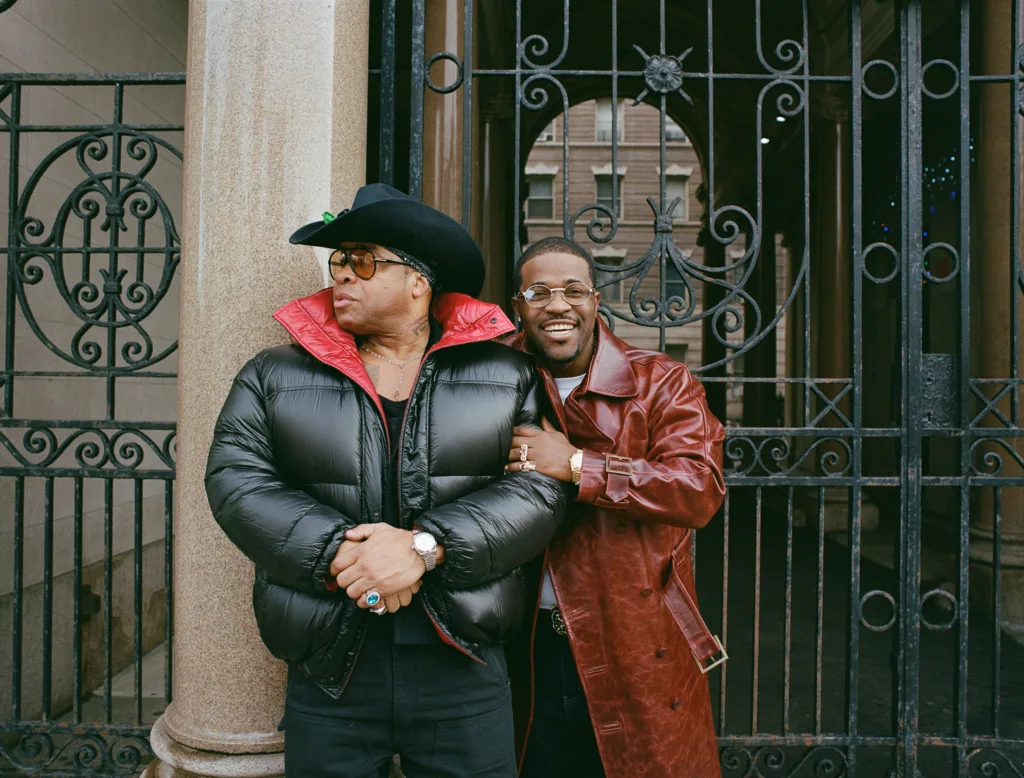
KD: I feel like people from Harlem are some of the most divine and spirited Black Americans, period. A lot of this comes from revolutionary history. I do, however, think a lot of this can be a double-edged sword as people can project an imaginary of Harlem that isn’t necessarily the reality. Can you talk about what parts of Harlem feel most real?
Ferg: All of Harlem feels real. It’s just different corners and different blocks with different energies. I feel like uptown got dark-skin energy, downtown got light-skin energy.
KD: Scream. You have to expand.
Ferg: So, I’m from uptown. I’m from 143rd between Amsterdam and Broadway Avenue. We call that ‘the hill’; we’re secluded from everybody. We do our own thing, we’ve got our own lingo. We don’t really go down the hill to Seventh, Eighth Avenues. We don’t really go downtown on 114th either; the farthest we go is 151st, then back to 140th. We’re uptown on the hill. It’s special if we go down to these different places. But me being super inquisitive, I always wanted to see what else was out there, so there was no place in Harlem that we never touched. And that’s not normal for a lot of people.
I hung out on 151st, and my block had problems with 151st, but my friends lived there, right? So I would have to go there by myself. There was this invisible ’Ferg could do whatever he wants’ rule. I don’t know what it was; I didn’t have any bodyguards, but certain people could move like that. It wasn’t safe a lot of the time, either, but Harlem has that kind of energy where everywhere was fun, even during the dangerous times.
KD: With the new album, you really tap into a nostalgia for Y2K—a time that comes a century after the Harlem Renaissance, of course. Why is nostalgia important as a creative force?
Ferg: Nostalgia is important to me because it gives people a glimpse of what makes me ‘me’. For example, with all my favourite artists, I can break them down and identify their influences. When I was working with Pharrell, he would just laugh because I would break down all of his character references to him. “Yo, you’re crazy,” he’d say. But that’s what makes us interesting because we’re books. People listen to our music, watch our videos, and see us. Why is he doing this? they’ll wonder. Where did he get this from? Where is he from?
That’s part of the fun of looking into an artist, of diving deep into one. When you like hip hop, it’s similar to painting in a way because you’re looking at styles and techniques, right? You wonder what came first? Was it the silk screen, the oil, the abstract, or the spray paint? How did they get there? You know, Basquiat used to paint whole paintings, then paint over them, then paint another one, and then leave this space open. There are layers and layers of layers of character building. It’s the same thing with a musical artist. When you see me with a bandana on my Tims and a Dapper Dan jacket with a bandana all over it, but then I’m also wearing grills and doing a bone thug flow, it’s all of these different things that make me who I am.
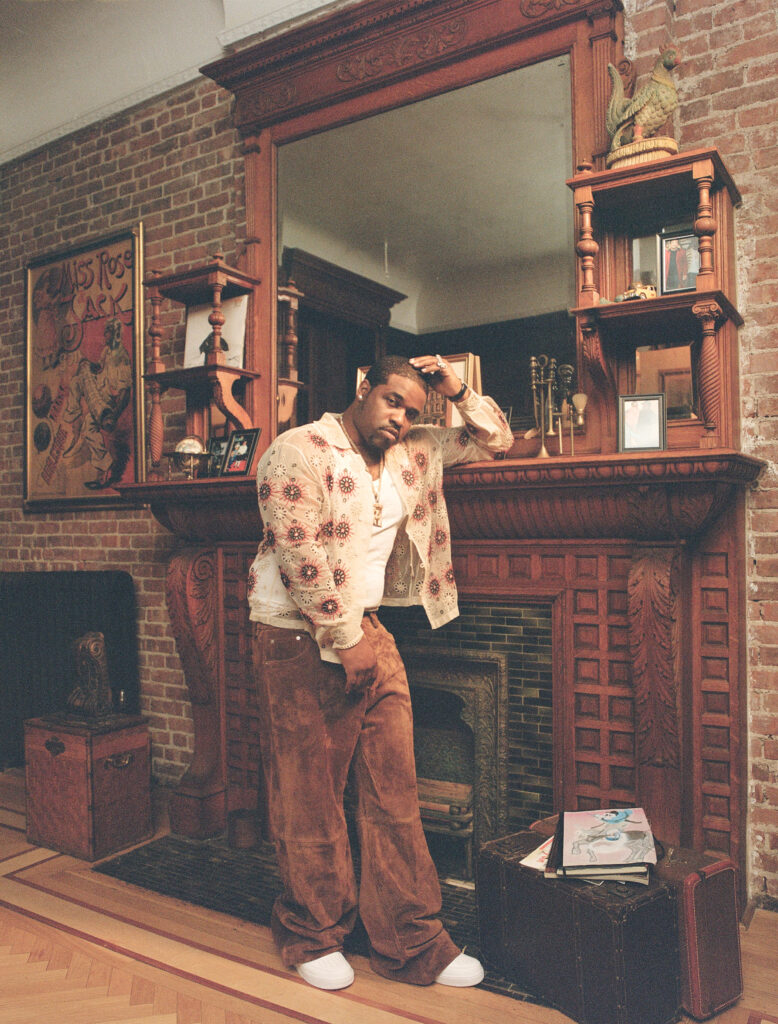
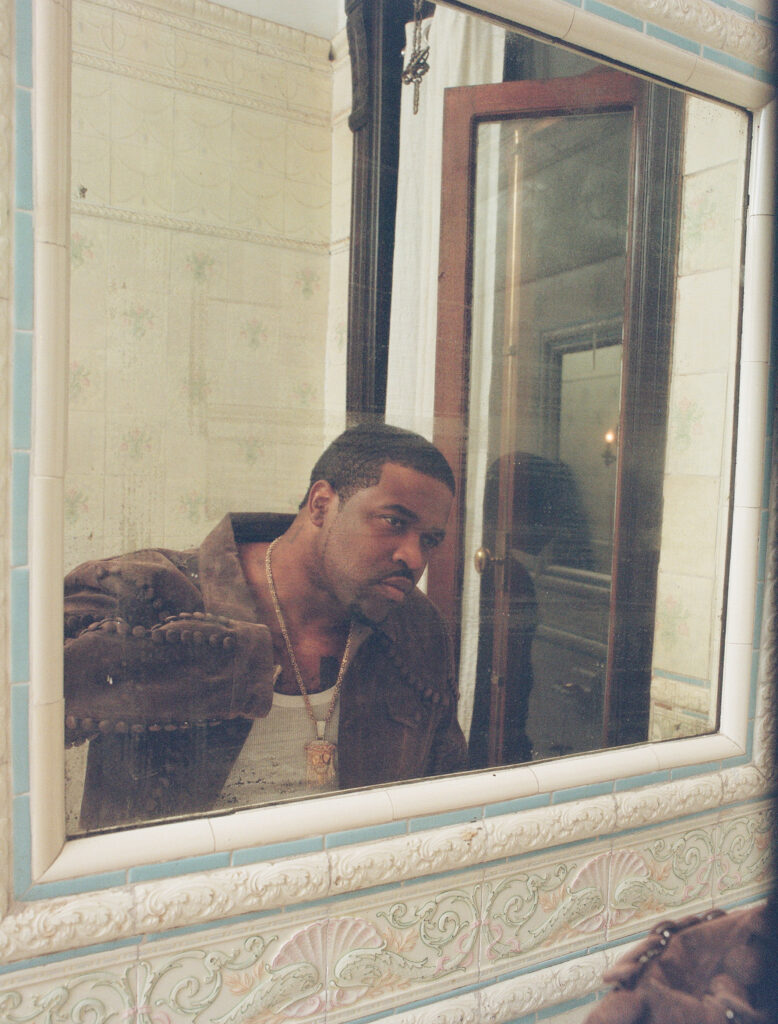
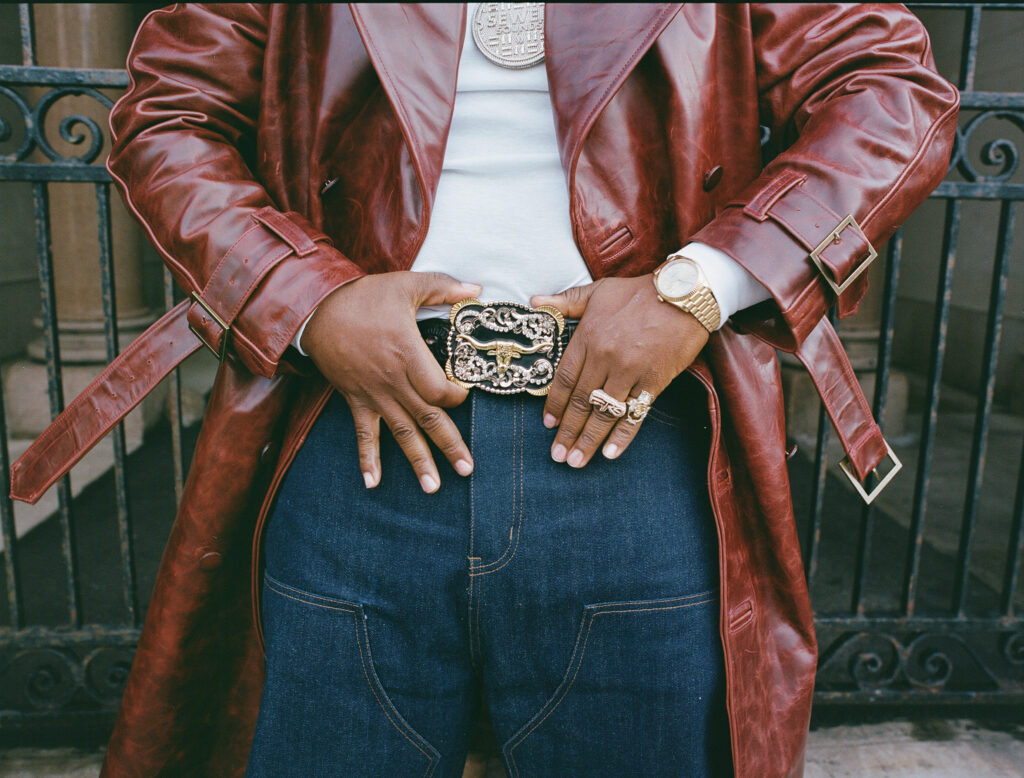
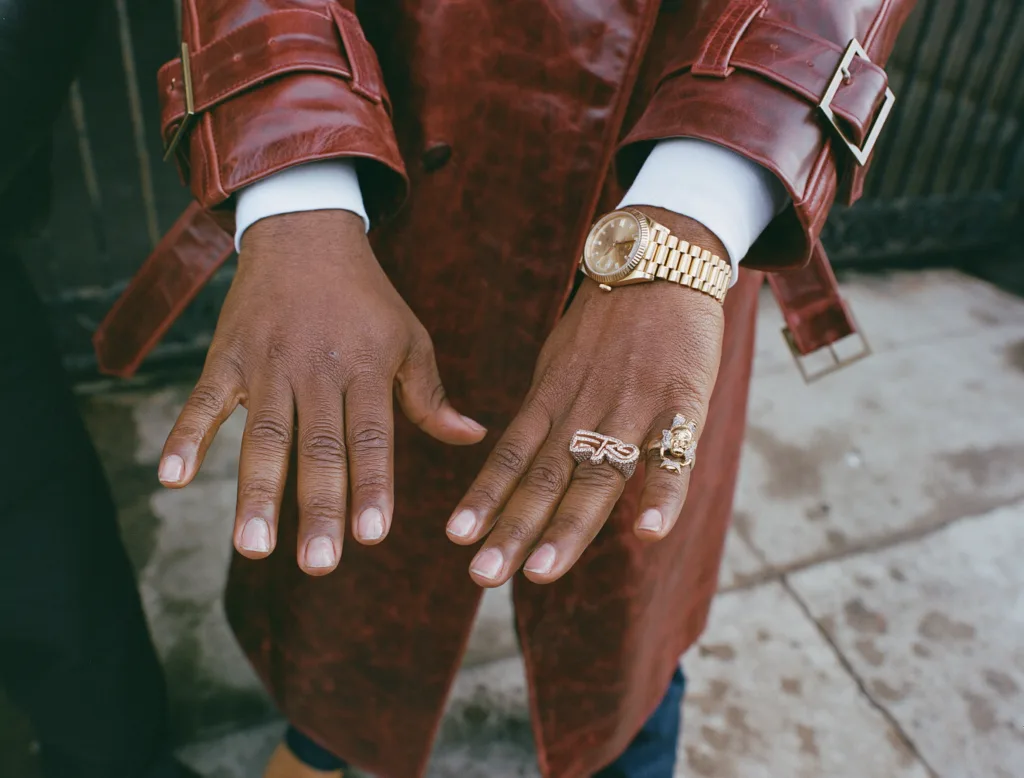
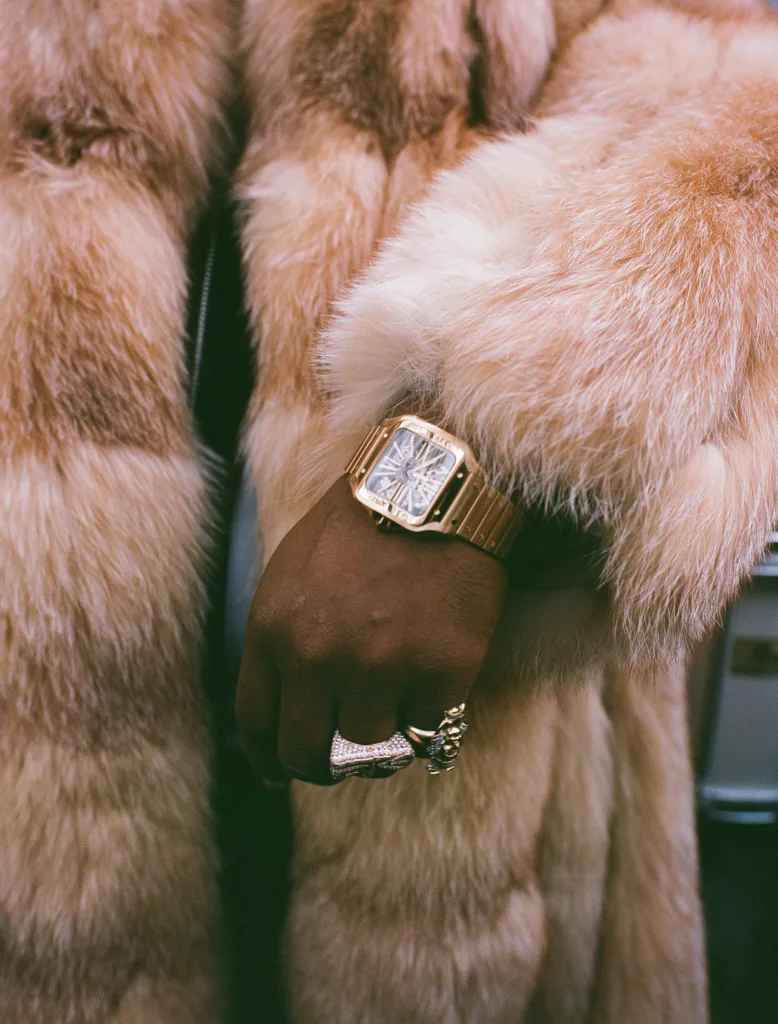
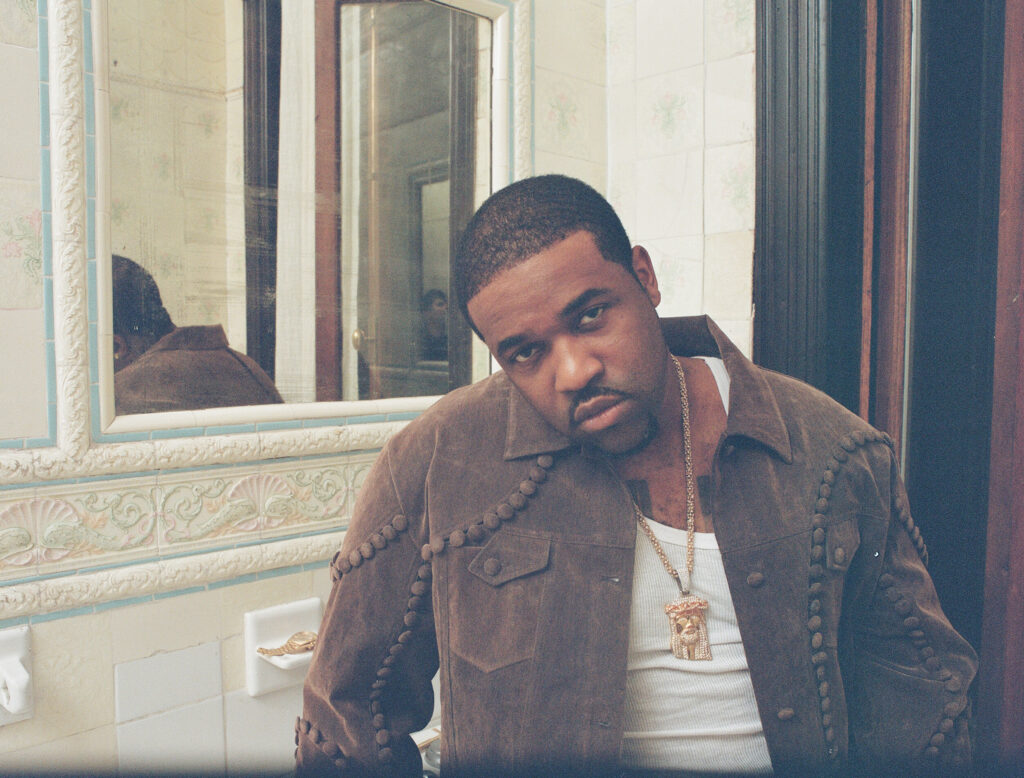
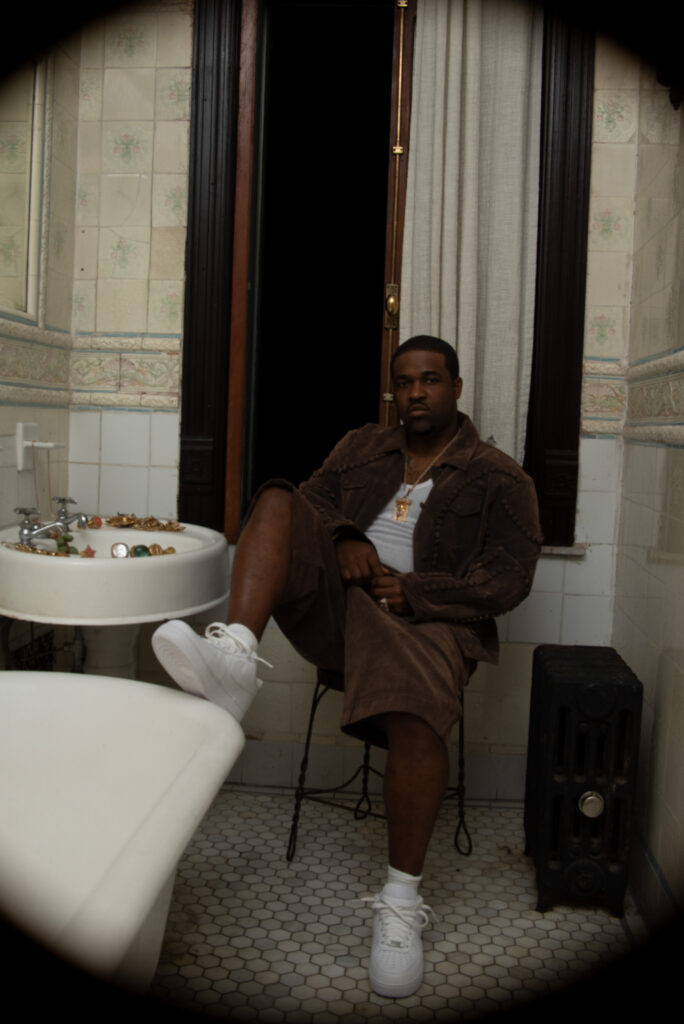
T Ferg wears hat, glasses, rings TALENT’S OWN, jacket VETEMENTS, shirt and trousers CARHARTT, watch ROLEX
KD: You are such an artist’s artist. It’s very clear that something is channelling through you, even here. Does it feel like urgency? Do you feel like you are in a race against time? Is time even a factor when you’re thinking about your process?
Ferg: I think that’s why I’m still here as well. I follow my gut, my instincts, and I’m not just creating because I want to make more money. That’s never been it. I never got into music to make money, as crazy as that might sound. It did create a means, but I didn’t get into music to become a millionaire. I was not even thinking about that. I was just thinking about getting my sh*t off and creating movement, meeting people, just creating for real. It’s a way that I talk to the world.
KD: Makes total sense. It makes me think about your lineage and how you grew up in a creative community—you understand the value of culture and the need for an audience more than most. At least, from what I’ve read about your pops, those kinds of imprints can last the test of time.
Ferg: Definitely. I saw him, my grandmother, my family, and the wider neighbourhood as very community-driven. They wanted to do things for people, they included people. If you’re not a family member but associated with family, then you’re family—we just always move like that. That’s natural for me. What you’re saying just made me think about my first video with Rocky, for “Get High”, which we shot on my birthday at my boy Jay West’s crib. I was just like, “Yo, we could just do a party for my birthday and shoot a video.” It was always about community. I didn’t want to just show that we were making music, that we’re cool-looking people into fashion and art and all that; I wanted to show the movement at the time because that was the footprint of all these different things that were going on.
KD: I think there’s absolutely a healing principle to that connection. Alongside the new album and sharing your artworks, you’ve also been leading runs and other events under Ferg Strong. What led you to this more explicit side of wellness and healing?
Ferg: I credit my health journey to my father’s kidney failure and his passing because that was the only time I ever thought about health. I wanted to understand it more, that’s how it started.
KD: It feels like it’s such a continuum of all the other things. I think we often make the mistake of believing that meditation begins and ends, and then the creative process begins. You go for a run to clear your head in order to do this other thing, but it’s such a profound creative exercise in and of itself. It just completely electrifies the spirit, right?
Ferg: Exactly. You know that you have to maintain a flow, and nothing works without the other thing. So you could go to the gym as much as you want, but if you’re not eating right, it ain’t gonna help. If your mind ain’t right, you ain’t gonna want to get up and go to the gym. It all works together—mind, body, and soul.
KD: Your last album was a lot about healing in the sense of redefining yourself. But then this new album is about healing in its own way because we do need the opportunity for joy, for nostalgia, for the turn up. What’s the bridge between these two projects?
Ferg: With Darold, that was me introducing the world to the man behind the man. Darold is my first name, and Darold is also Ferg, but it’s just another part that the world doesn’t know. So, introducing the world of Darold, it got way more introspective. It was almost like a diary, I wanted to be very vulnerable—the most I’ve ever been in my life. It was so uncomfortable, but I wanted that discomfort so that people would listen to it as super pure. I didn’t want any type of character involved. Then I created Flip Phone Shorty.
Shorty is a character that I’ve made; it’s actually a movie that we haven’t put out yet, but it’s coming. The album is a soundtrack to the movie. So that’s the bridge. And then, you know, when you get that vulnerable, you feel liberated. I felt free, I felt like I wanted to make turn up songs. When you say this album is healing, that’s not surprising to me because the whole flip phone concept came from me wanting to get off the internet and get more into myself. I began asking myself if I should just get a flip phone and, from there, started calling myself ‘Flip Phone Shorty’ because I was off the radar and diving into myself.
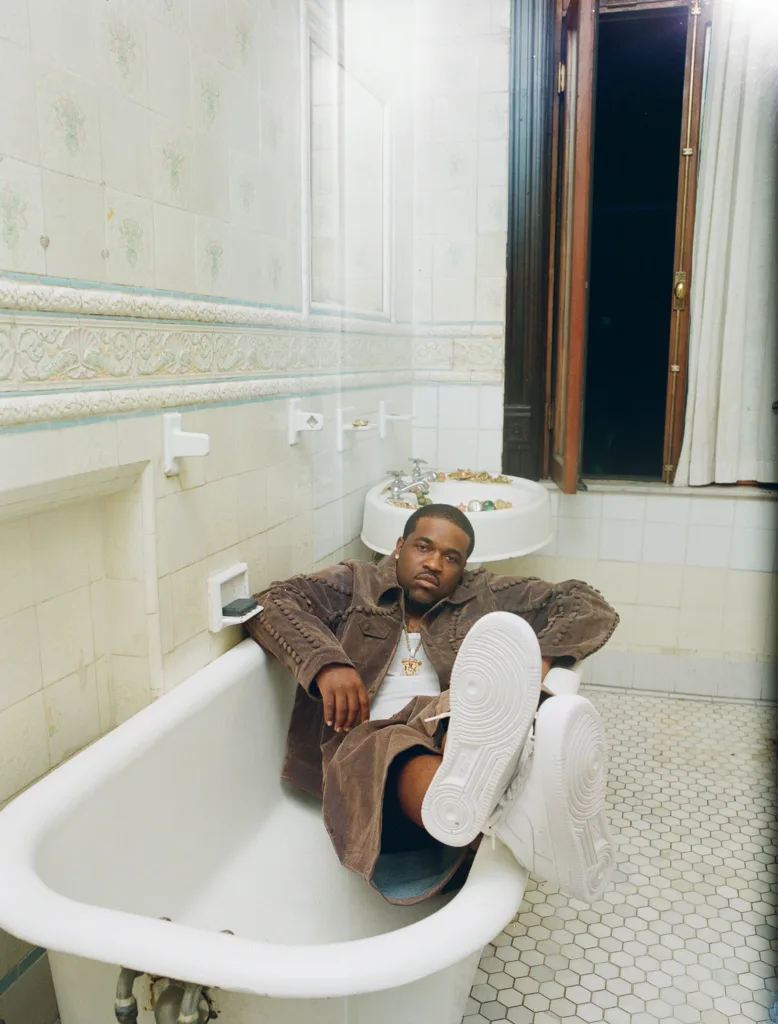
KD: It makes me think about Dungeon Family, quite literally, because they were in the dungeon every day at work. But conscious rap is viewed in a different way than commercial rap versus a blog, rap versus this flow state of creative production.
Ferg: But I have a theory about conscious rap: I feel like all rap is conscious. Because my consciousness is on this level, that doesn’t mean that the rapper that’s rapping about cracking drugs and all of that is not conscious. That’s just his level, and that’s where he’s at. That’s what he sees until he sees something different, then he levels up his consciousness. As long as you’re alive and talking on a microphone, it’s conscious.
KD: I love it. Speaking of consciousness, in what ways is Harlem still shaping your consciousness?
Ferg: Harlem is still teaching me, particularly about community. It’s just these hubs of different people that want to rep this magical place, and we all congregate—you have the older and younger people. It’s a bridge. I feel like I see that more in Harlem than anywhere else. We have these communities where everybody knows everybody. You might see Dapper Dan on a corner, speaking to a bunch of teenagers, and they might look like drill rappers. And then you have Miss Melba with her food and block parties. I see this community continuously happening in Harlem, and I think it’s super important.
KD: We’re talking about Harlem. We’re talking about creative legacy. When people look back at what you’ve accomplished, years from now, what do you hope they understand about who you’re becoming in these moments—and not just the final creative product?
Ferg: What I want to leave behind is service to the people. Service yourself and service people, and you’ll find a lot of enjoyment in that. Follow your heart and live life the way you want. I don’t know all of the answers to life. I mean, I’m probably not the best person to answer this or ask this question because I’m still figuring things out. You know, it might be something different next year, but right now, it’s just do what you feel is right and keep it pushing.
Originally published in Dazed MENA Issue 05 | Order Here
Grooming ALEX PIMIENTA, creative producer FATIMA MOURAD, producer ZANO NKOSI, line producer AMNA ALI, production INTIMA STUDIOS, marching band COBRA MARCHING BAND, videographer JIX, styling assistant ROBERT GREEN, photo assistant KEVIN MUNOZ, lighting and photo assist FALLOU SECK, touchups KALI TAYLOR, production assistants ZAMOI MURRELL, SIM, BRANDON DESOUZA