
 Posted in
Music, independent
Posted in
Music, independent
How to start a record label
Text Driss Bennis | Illustrated by Ryuji Oguni
Driss Bennis is the founder and operator of the Moroccan imprint Casa Voyager, developing one of the most distinctive sonic and visual identities in electronic music over the past decade. Also known for his OCB project, Bennis has released music on Metroplex Records, arguably the world’s first-ever and longest-running techno label. Today, he’s created a definitive guide on how to start your own record label:
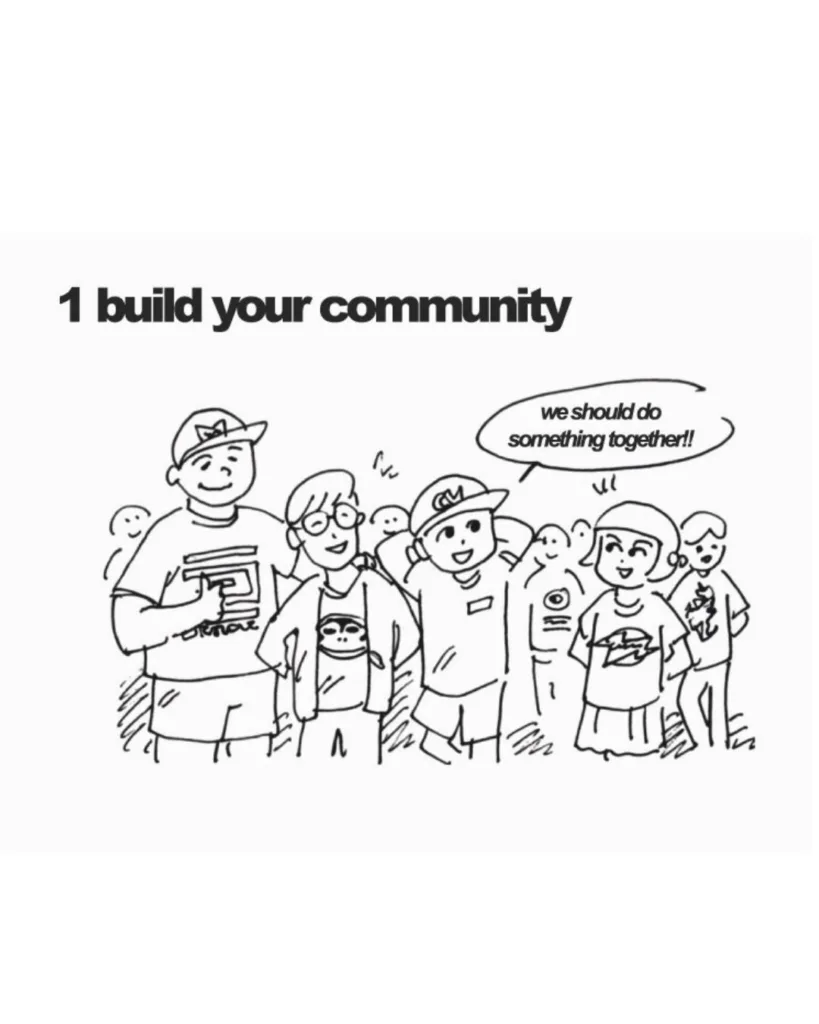
1. Build your community.
The early stages of starting a record label are mainly about connecting with like-minded individuals, people you went to school with or those who live in the same city or area. Share knowledge, exchange ideas, and grow together—some of these people may eventually become collaborators, photographers, graphic designers, or even artists signed to your label. Many of the most famous imprints were born from tight-knit communities rooted in specific places.
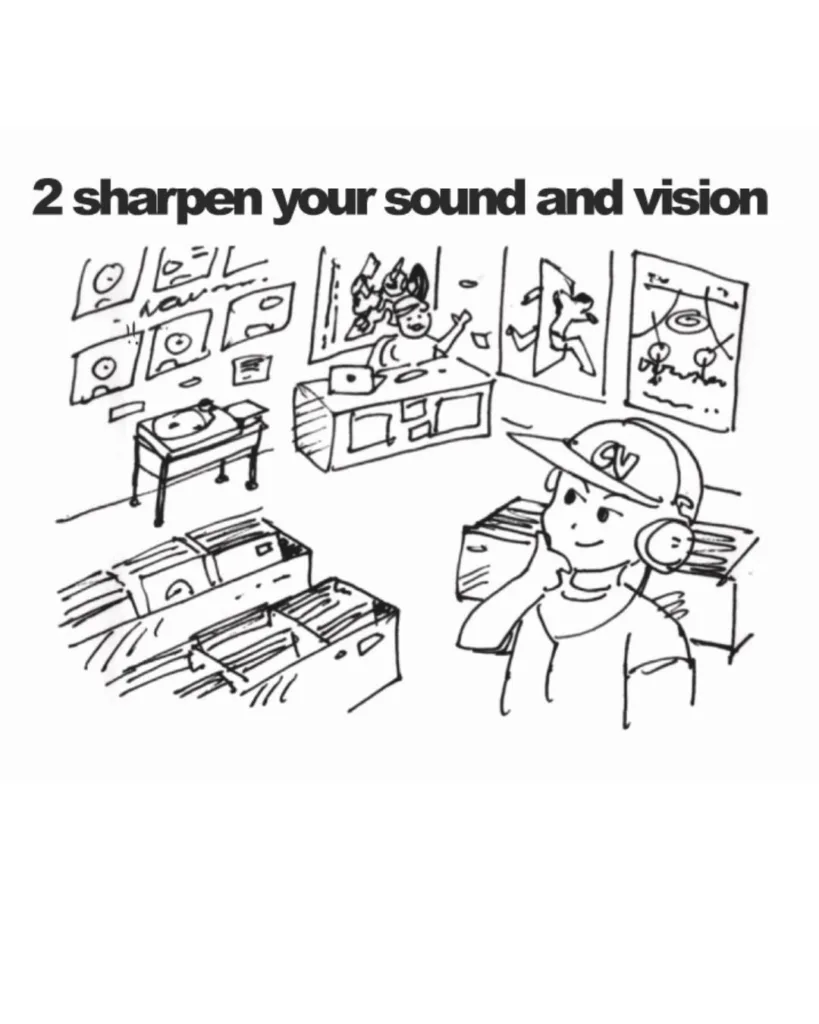
2. Sharpen your sound and vision.
This is where you develop your taste and start to understand the history behind the successful labels that you like. Be inspired, but more importantly, find your own sound. You don’t want it to be just another label. There are many ways to stand out: you might spotlight incredibly talented emerging artists who no one knows about yet, or you could focus on curating an excellent selection of music by established artists. Choose your path and chase the music that speaks to you.
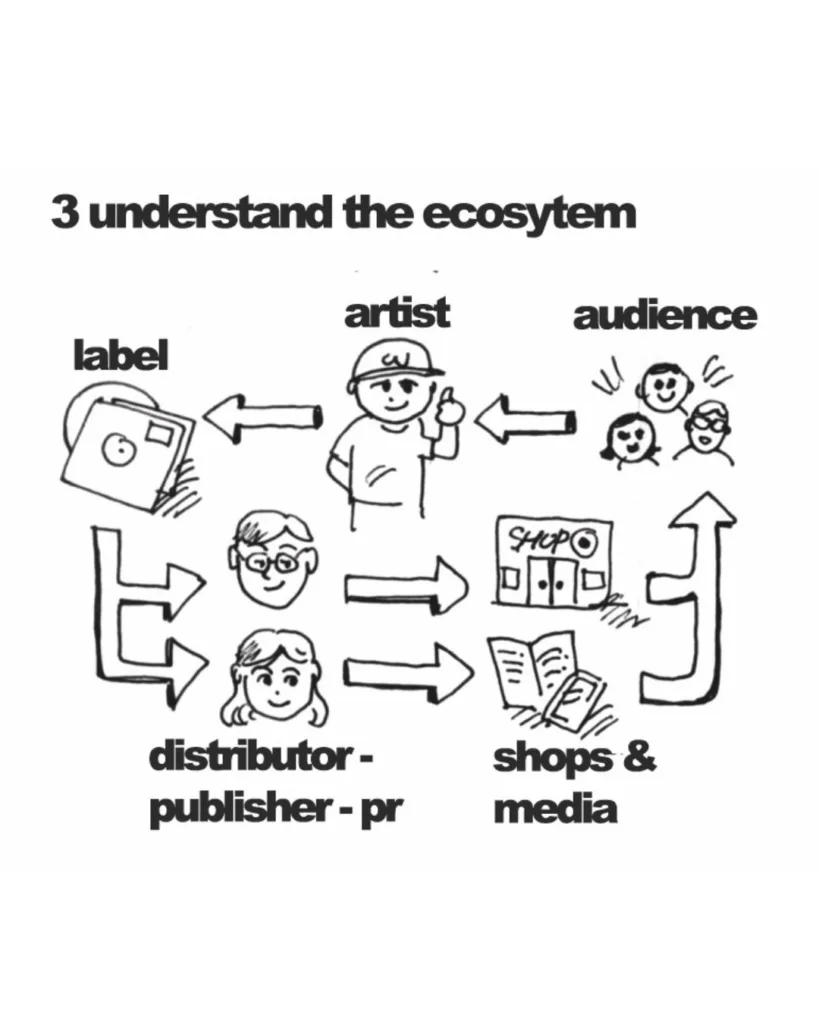
3. Understand the ecosystem.
A lot of people are involved in the release of an EP. Between the artist and the audience, there’s the label of course, but also mastering engineers, distributors, publishers, record shops, online platforms, and more. It’s essential to understand every part of this ecosystem, especially if you want to remain fully independent. You’ll either need to collaborate with each of these players or take on some of their roles yourself.
4. Find a name.
This step is often underrated. Choosing a name brings your project to life, it becomes real. You’re no longer just “working on a label”, you’re building something with a name and identity. It should resonate with you and subtly reflect what you’re trying to create. Don’t overthink it, though. If the music is strong, the name will carry meaning. Let the music lead.

5. Go out and talk about your project.
If you’ve made it this far, it means you’ve found great music to release and gathered a decent amount of money to start things up. It also means that you’re genuinely passionate about the tracks and the artists you want to support. Share that passion. Talk about your project at your local club, record store, or music scene. You might meet someone who becomes an invaluable partner—a distributor, a journalist, a collaborator, or simply a supporter who believes in your vision.

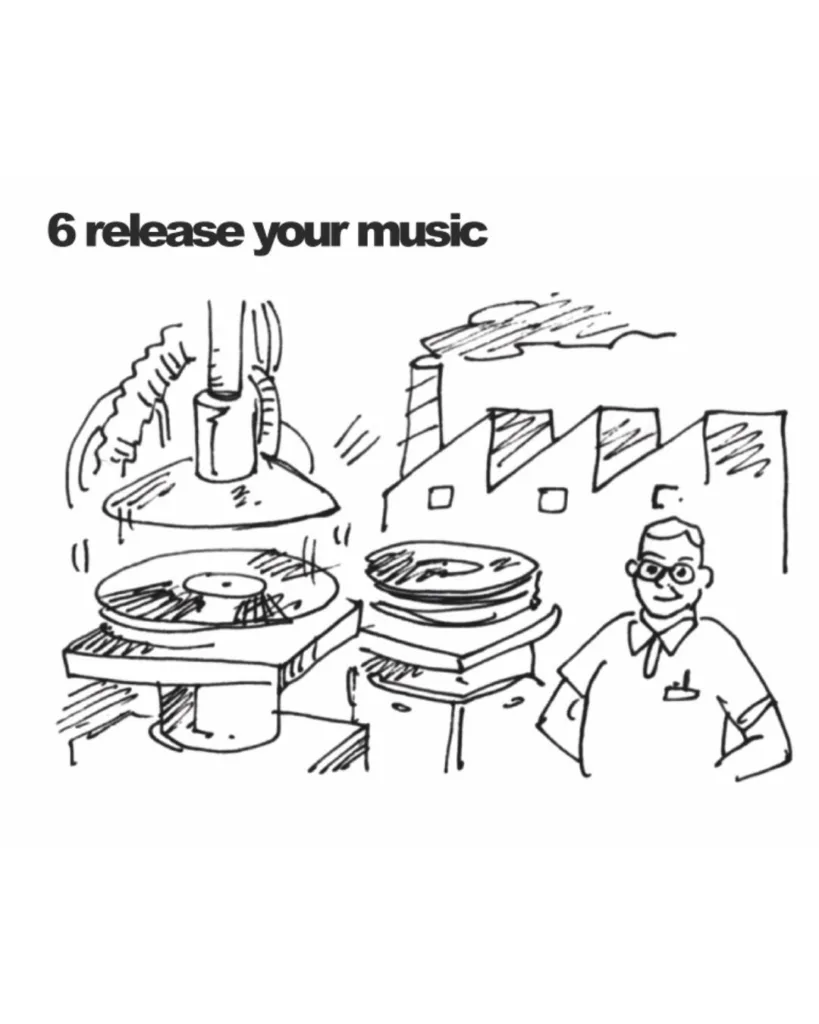
6. Release your music.
You’ve partnered with a distributor (or decided to do it on your own), set up your Bandcamp and Nina Protocol accounts, mastered the tracks, and sent the music off for manufacturing. Now it’s time to set a release date and start building excitement. If you’re releasing vinyl, be prepared to wait for the records to arrive, but don’t let that slow you down. Use that time to prepare your audience, schedule next releases, and get everything lined up for launch day.
7. Promote your records.
Share the story behind the music, why it matters, what inspired it, and who made it. Send promos to great touring DJs, reach out to magazines, and use social media, music blogs, newsletters, and your own network to build anticipation and keep people engaged. Try to be as creative as you can and make your artists stand out. Don’t be afraid to be proud of what you’ve built—this is the moment to let everyone know about the label and that you have something worth listening to.

8. Run it professionally.
Like any other job, being successful in the music industry is mostly about dedication and hard work. Set regular work hours, follow through on commitments, and respect the people you work with. Your artists, collaborators, and audience will notice your consistency and they’ll trust you for it. It’s going to be tough at times, but do not stop and always keep going!
