
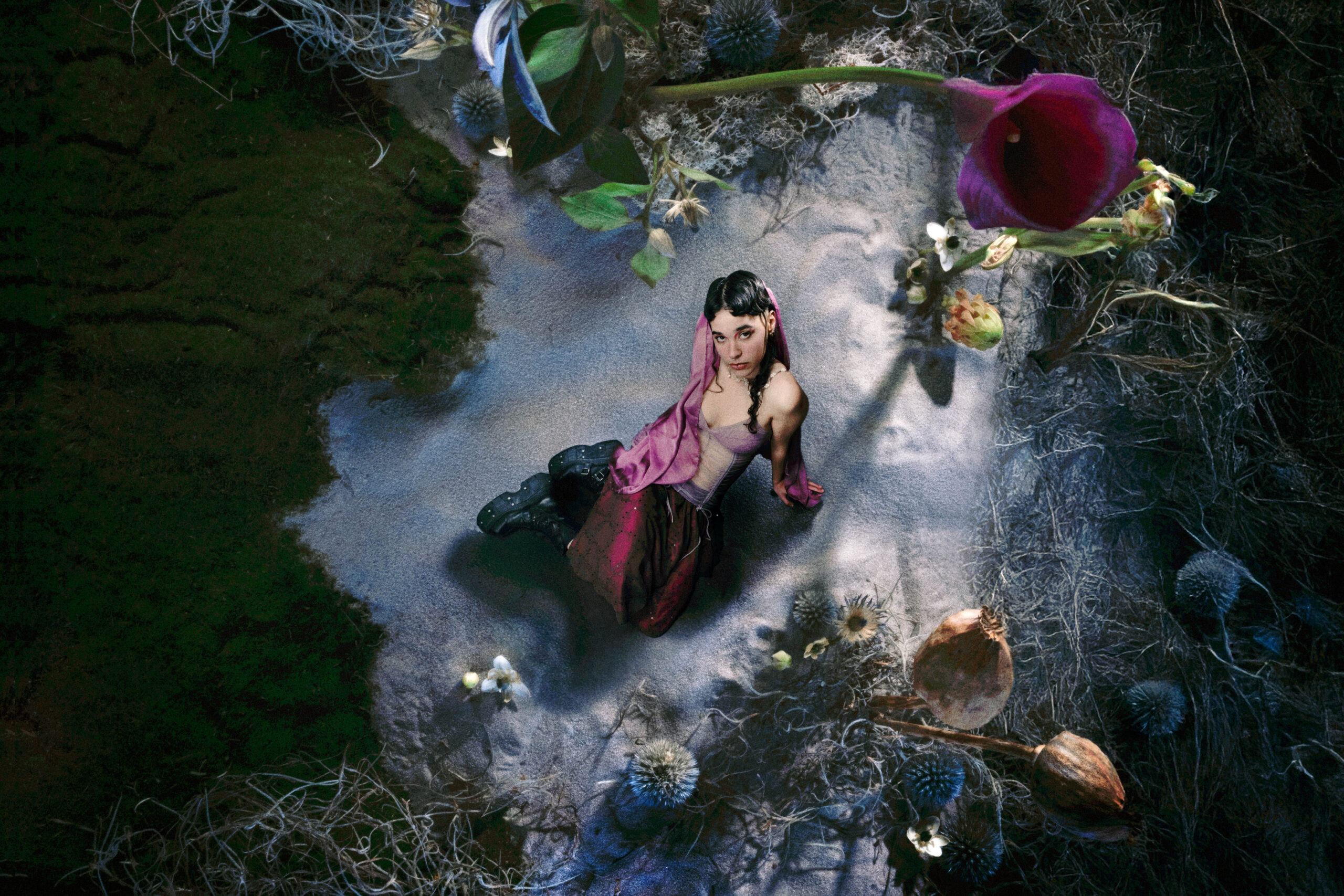
 Photography by Thero Mamani Valles
Posted in
Feature, DazedMENA100
Juno’s The Color Pulp turns the ‘in-between’ into sound
Text Engy Hashem
In Cairo’s alternative music scene, where genre lines blur and artists are constantly negotiating identity, language, and geography, Jannah Emam, known as Juno, has quietly built a sonic world of her own. A singer, songwriter, producer, and visual artist raised in the city, she has shaped one of the more distinctive sonic identities to emerge from Egypt in recent years.
There’s something intentional about her presence, something self-authored. Even before her recent move to Berlin, her music carried a sense of elsewhere: layered synths, spacious arrangements, and a softness in her voice that pulls you in before the production expands around it.
When I stumbled across her new single, Supersonic, the shift felt immediate. The track leans further into electronic textures, abstract and expansive, while lyrically circling themes of distance, dislocation, and the West. It made me wonder whether this evolution was geographic, personal, or something more deliberate.
We began our call, fittingly, by discussing visas, a bureaucratic rite of passage that felt like an unspoken bond between us, before diving into her new EP, The Color Pulp, and the sonic world she’s building next.
You’ve described this EP as music for the in-between. When you first sat down to write it, what did that in-between sound like in your head?
I didn’t go in with the intention of writing for the in-between. I was going through a life-changing experience. It was my first time leaving home and living abroad, so I knew it would be emotionally challenging.
We were laughing earlier about visas, and honestly, that’s part of it too. The paperwork, the logistics, all the little hurdles that make you feel out of place before you’ve even settled in.
I knew I was going to experience a lot emotionally and needed an outlet. Writing an album felt like the right outlet.
I’d wanted to create a body of work for many years, and this felt like the moment. I also knew I wanted to work with Belal Ali. His production was exactly in the direction I wanted to explore.
In the past I was making more instrumental-based music, but with this EP I wanted to push myself sonically and try more electronic textures.
Your first EP leaned towards acoustic and indie. What pulled you toward more electronic textures?
Part of it was intentional because I knew Belal’s style would influence the sound.
But with every track, we surprised ourselves. We were both outside our comfort zones, which made the process exciting.
There was playfulness in the studio. Even though there was pressure because my time in Cairo was limited, we kept things open and experimental.
You co-produced with Belal Ali. How did that collaboration work in practice?
Production took time. It’s been in the works for about two years. A lot of it happened in Cairo.
We tried working remotely but it wasn’t the same. When I was in Berlin I was absorbing the city, the people, the art scene, but it didn’t feel natural to create there.
So I’d take everything I was observing in Berlin and bring it back to Cairo, where I’d sit with Belal and work. We’d repeat that process every few months.
Working in person was important because the flow of ideas is completely different.
When you started working together, how did you approach building the sound palette?
The whole EP was unexpected, but every track had intention.
Before starting each one we’d have listening sessions where everyone played songs they found interesting. We’d ask: what elements do we like here, and how can we mesh them into something new?
After the first track I knew I wanted to keep some familiar elements, the indie singer-songwriter vibe, while also pushing into Belal’s style with harsher, more experimental sounds. Those elements blended together.
“A Taste” is one of the first tracks you worked on for this EP. What do you remember about those early sessions?
Writing “A Taste” was random. It was my first time working with Belal and I didn’t go in with expectations.
I brought a chord progression I had written earlier. It became the starting point. We worked on it right before I left Egypt, so I was under pressure.
The song became an expression of pre-travel anxiety. It holds the excitement of leaving, the fear of it, and the longing to take everyone I love with me.
Belal introduced glitchy, unconventional beats that I didn’t expect to want in the track, but they made sense. My vocals and instrumentation, combined with his textures, created something new for both of us.
To me, “Supersonic” is the most confrontational track on the EP. What were you trying to channel there?
“Supersonic” is the most experimental and the longest track.
I wanted something high energy that makes you dance but also makes you cry. I love songs that shift in energy.
It was also a way to channel my anger about being in Germany during this time.
The moment where the track collapses was intentional. After building tension I wanted a release where you can breathe before moving forward again.
The first half addresses injustice and people who disregard human life. The second half turns inward. It’s about reassuring myself to hold on to my ambitions even when things feel hopeless.
Your lyrics move between direct and abstract. How do you decide when to be sharp or more open?
Sometimes I know exactly what I want to say.
In the first half of Supersonic I’m directly addressing injustice and the people behind it.
Other times the lyrics are more abstract. There’s a line where I sing: “Would you stay if you can? Would you take a breath and listen to the songbird?”
I’m not sure if I was talking to myself or someone else. I like that it can be interpreted in many ways.
There’s often an expectation that music from the region should sound “Arab.” How do you navigate that?
My music doesn’t necessarily sound “Arab” or “Egyptian” in the way people expect.
While I love that other musicians do that, for me it was never about showcasing where I’m from through sound in that way. Being Egyptian and telling my story is enough representation.
If you could stage The Color Pulp as a full audiovisual experience, what would it look like?
I’d go all out.
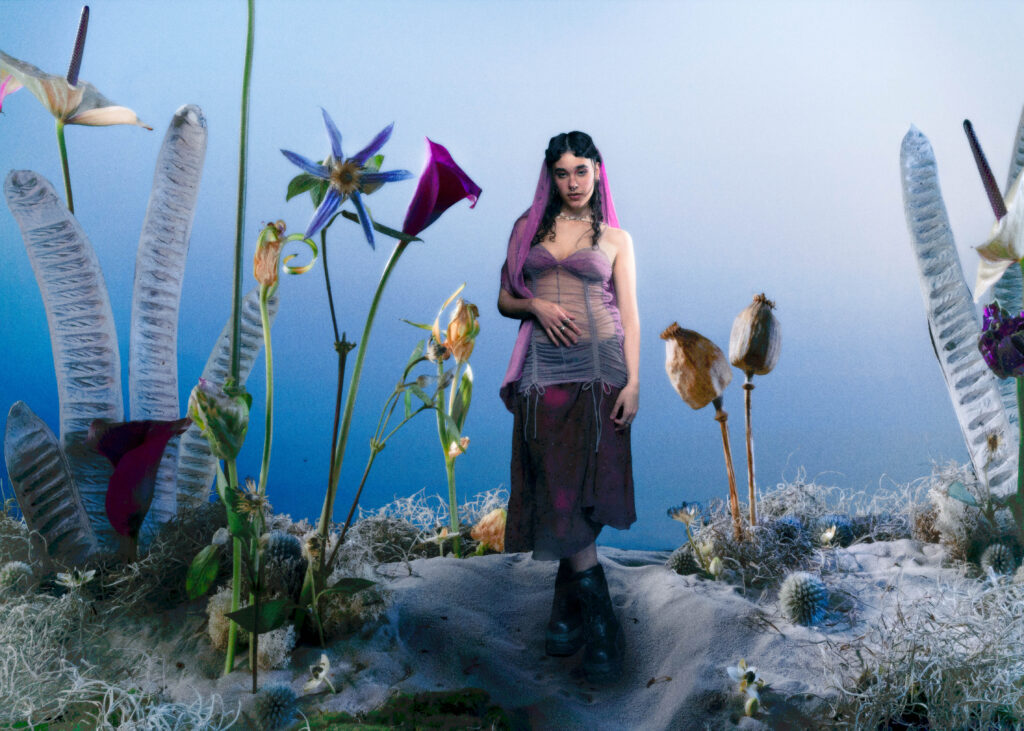
I imagine a live production where the stage looks like a rundown theatre overtaken by vegetation, with nature taking over the space.
I imagine a cinematic storyline between songs, crazy outfits, and transformations where I shed layers and become something lighter.
I’d even play with scent, something floral like lilies mixed with an ashy smell, so the audience is breathing the atmosphere of The Color Pulp.
Do you plan to tour the EP?
I’d love to. It would be a dream to travel and perform, whether on big stages or small ones.
I also hope to do a launch concert around the release. That’s definitely something I want to make happen.