
 Posted in
Tech, Dazed MENA issue 03
Posted in
Tech, Dazed MENA issue 03
Life, Longing, and the Hardcore Denial of Death
Text Raza Tariq
In all of our 300,000 years, every human has carried the physical and spiritual memory of every single generation that came before—millennia are embedded and layered in the crevices of our skin. The future and any artificially intelligent descendant of ours that comes with it, however, may only be decided and trained on the last 25 or so years of internet history.
As AI-generated information saturates the internet, often outpacing human-made content, the very systems that once relied on human data risk cannibalising themselves. This AI-on-AI feedback loop causes extreme degradation of quality and can eventually lead to what’s known as ‘model collapse’. In a study published in Nature last year, researchers described this more accurately as “a degenerative learning process in which models start forgetting improbable events over time, as the model becomes poisoned with its own projection of reality”.
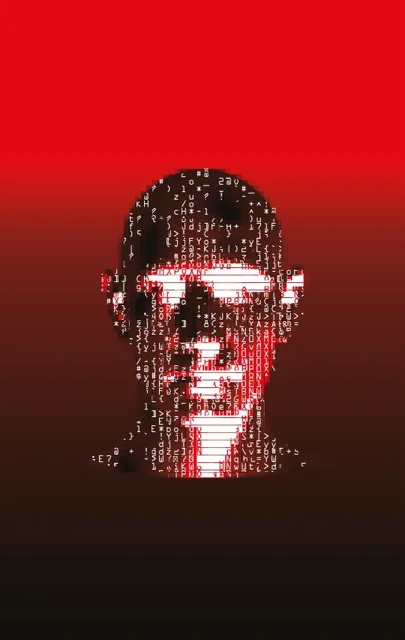
It’s somewhat ironic that a constant look into the past frightens the machine of the future into a never-ending loop stuck in an insane present. Meanwhile, our present appears to be looping back in an infinite regress. Whether it’s timeline trends like Castlecore or security trends like the feudal rainbow of street patrol security vests, the present seems increasingly far from the egalitarian, flying car future we once imagined. If anything, it’s hurtling towards an almost medieval past. With shadowbans in place of banishments, security in place of highwaymen, and quote tweets instead of public floggings, the digital space looks somewhat… familiar.
It’s in this context of an economic system mimicking the feudal periods that we read about so vicariously in textbooks that a new class emerges: Silicon Valley billionaires seeking to transcend the limits of life through transhumanism, a doctrine that believes machine intelligence is not entirely far from surpassing that of humans, extending our lifespans with the ultimate aim of achieving immortality through advanced bio-tech in the process. It has, in effect, forged a new kind of religion.
While the machine constantly evades its own death by denying its future, these men, the machine’s proverbial fathers (or offspring?) chase everlasting life by denying their present. Life, they hope, will become a never-ending 30-second Avicennan dream that seeks, or so they say, to relieve us of the burdening ills of man (or “bugs” as tech entrepreneur and Palantir co-founder Peter Thiel calls them).
Going further, this billionaire tech-weeb class of people attempts to purify us not of ego, but death, disease, thinking, earning, doing, walking, working—the list goes on. In fact, when asked how a life without these things could possibly be conceived, transhumanist pioneers (for some, prophets) and AI merge advocates like Ray Kurzweil insist that most of us, ‘simple’ humans, can’t imagine a life beyond our bodies.
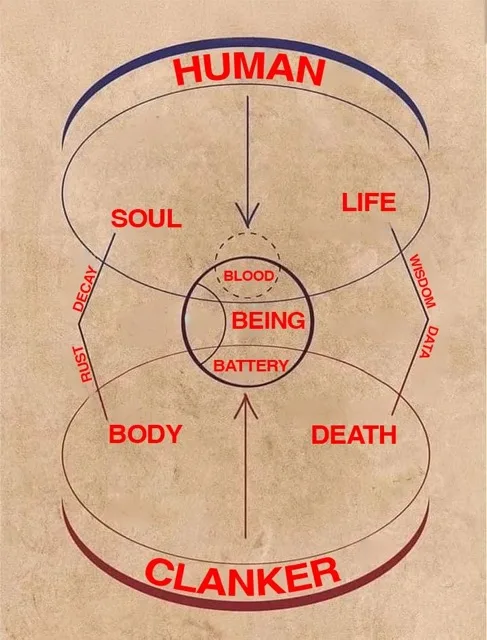
To Kurzweil, the notion of a deathless, shared digital consciousness is just as inconceivable to most of us as flight or medicine would’ve been to our ancestors. We remain in our Neanderthalic confusion, bound by the limits of our bodies and, for him and his disciples, a lack of imagination. The overtly racist eugenicist tones of Darwinism within Kurzweil and co’s tech-utopian arguments are pretty clear: predominantly all-white males calling for human ‘enhancement’ under the guise of rational progress, implicitly gesturing towards the same logic of selective improvement common to classic eugenics arguments. Put differently, transhumanism argues that a bestial rural past cut short by death was bad, and by doing more good, being less wrong, and being more efficient, the future will be better. That what’s next is better, and what’s next is what I will sell you. And what they’re selling is concerning.
Consider Anthony Levandowski, co-founder of secret development facility X Development LLC (parented by Alphabet). Setting up Way of the Future church – the world’s first AI church – in 2015, he has committed to worshipping the set of technologies as an eventual supreme deity of the universe. Or Lincoln Cannon, the Mormon transhumanist who produces nootropic pills to merge us with technology and achieve our higher function.
Even psychedelic-preaching pantheists, like the former Sibmarket Financial CEO Alex Vikoulov, claim: “I see mind uploading as a gradual decades-long process of incremental neuronal replacements, exocortices, interlinking with AGIs and the Global Brain, some presently unseen trials and errors, but overall more or less a non-invasive and seamless process at the end of which we all will morph into ‘substrate-independent’ immortal digital minds living in the cyber-paradise of our own design.” If the religion of the millennial is new atheism, then the come-as-you-are church of Silicon Valley purports to invite all in pursuit of paradise, unfussed about whose God it might belong to or, in any case, whose server it might be on.
Listening to someone like Thiel, Zuckerberg, or any 4IR-preaching world leader, one can’t help but feel that their speech on the matter sounds far less compelling than how they package and sell these ideas to us online. Utopia is, for that matter, a brand. The best consumer motivator in the book is always one revolutionary minimal product away. If the language of this new tech evangelism is efficiency and problem-solving rationalism, then their Utopia must look like every problem ever: solved. In a world designed by coders and mods, the world must look like a series of emergent bugs and fixes, a reduction of problems in place of placid, smiling, minimalist solutions.
While these camera-friendly billionaires parade a product-sized Utopia, their more private cronies explore far darker Utopia-tropic self-prescriptions. For US$250,000 a year, private longevity members’ clubs fly participants out to deregulated zones across the globe to ‘dark clinics’ where they’re fed a menu of experimental gene therapies, stem cell injections, epigenetic interventions, and exosome infusions harvested from young tissue—fuel for the lives of the lifeless. Beyond Bryan Johnson and his infamous attempts to health his way towards infinite life, Kurzweil once admitted to taking 250 life-extending supplements a day, conceding that this is common practice amongst the world’s tech elites. When asked how he’d like to be remembered 400 years from now by our Alien Artificial Superintelligent descendants, he replied instantly, scoffing: “They won’t remember me, I’ll be there.”
For a class of people so obsessed with prolongation, it’s a wonder that every act of theirs seems to eradicate any semblance of an environment that they could hope to live in one day. Sam Altman, founder of OpenAI and notable backer of consciousness uploading startup Nectome, has himself admitted to owning a doomsday ranch on the California coast stocked full of ‘emergency technologies’, furnished and supplied kindly by the IOF. The same genocidal hand attempting to erase an entire people inks the pen that fuels the dreams of those who livestream, then shadowban their extermination. In one scroll: all lowercase tweets from a five-word founder @ on the timeline to AGI, new updates on their platform that are “pretty cool, i guess”. Or a hollowly smiling (de)humanising demo of a new feature alongside their family. All interject our gaze on their platforms between a video of screaming children and starving mothers.
However, geopolitical destabilisation and climate catastrophe threaten not only the homes of the world’s poorest, but also the wealthiest. Whether a four-bedroom mansion or four-petabyte data centre, consciousness lying on a bed or uploaded on a server: if the earth swallows your building, there’s not much a pill or programme is going to do for you. Recent research from Maplecroft reports that rising global temperatures are putting more than half of the world’s leading data centre hubs at risk. As the need for cooling grows, so will demand for water and electricity, driving up costs, straining local resources, and increasing the chance of power outages where infrastructure is weak.
The literal physical home of every meme, website, app, and any would-be AI godhead is spread across these water-cooled data centres worldwide. And yet the water that cools them internally retaliates against them externally, swallowing where they sit. Even if we edit the gene code of our bodies, we cannot edit the gene code of the land we live on. That is part of a much greater, more experienced, and supernatural technology: nature. As the likes of controversial billionaire-whisperer ideologue Curtis Yarvin speculate on niche blogs about alternatives to democracy and crowning a new CEO of Planet Earth, the land they sit on burns around them.
Perhaps God’s greatest creation was humanity, not because of its apex intelligence or perfect function within cycles of life, death, and rebirth amongst the stars and trees, but because of its terminal unawareness of the fact. Quite clearly, for what is a fantasy to those in power is a real biome ravaged, a community fractured, an economy tanked, and many a stomach starved. The myth does not run on endless ‘compute’; it runs on endless trauma, absent from the minimalist room of a plush New York City apartment or co-working space in London.
This denial trickles down to us non-elites (“dwarves, orcs, and zombies” as Yarvin calls us). To some extent, transhumanism’s sentiments are micro-dosed into a wellness industry, with marketing that reads remarkably similar to the doctrines of the, albeit, more extreme transhumanist pseudo-prophets. Invitations into green paradises and journalled gardens that we may run-club through smile at us from billboard to feed.
The afterlife of the transhuman may be a faint dream for the average customer, but maybe they could picture it better if they paid top dollar for a taste? Among a new industry of consumer-facing wellness brands, the egregious Erewhon sells US$21 Vanilla Matcha smoothies to orcs between their morning meditations and journalling sessions. There is a denial of death inherent in our purchases and downloaded into our zombie, green-pigmented bloodstreams. The church of ethnographic consumer research science gleamingly affirms that perhaps today’s matcha could indeed extend our lives by another three hours (at least). And we vampirically snatch for those extra three hours. As Erewhon itself states: “If it’s here, it’s good for you.”
The turning insecurity-economy reel hypnotises—how can you watch your fellow humans achieve Guava Goddess status and not want to follow them into everlasting life? A single purchase further from death. At the end of Rome, cities fell into flurries of ecstasy towards hedonism, prices were jacked, and authorities were corrupted. With the world continuing to burn, those of us privileged not to be on fire are cooled by conditionally air-conditioned live-work spaces between paycheques and small plates, matchas and Pilates, story and feed, experiencing our own disorienting loop of involuntary covert hedonism.
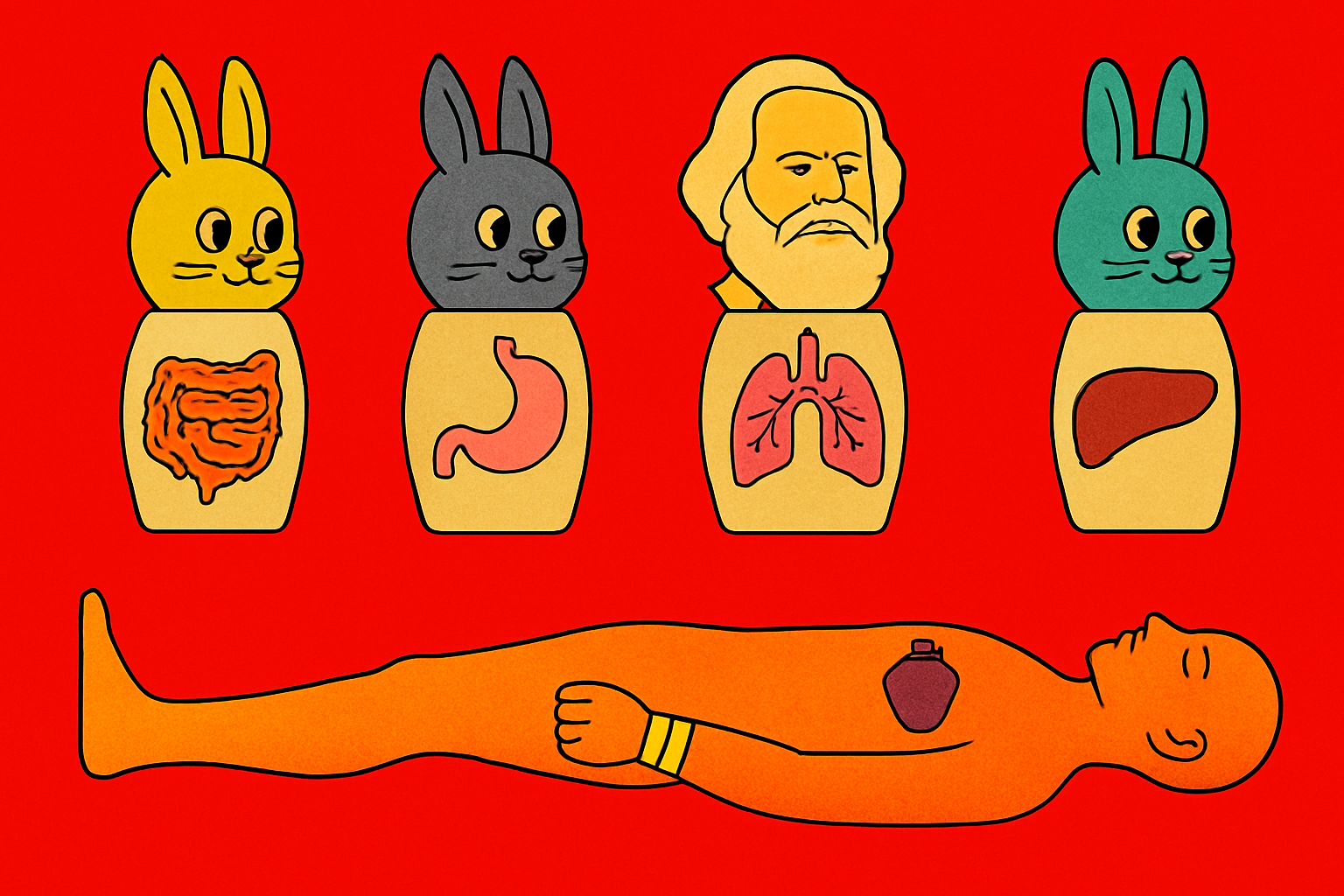
As the computer talks to itself, so do we, aesthetically lobotomised and replacing presence with consumption habit-forming and mindfulness app subscriptions. Dopamine spikes at the delivery of product-shaped Mercy, and crashes in the face of a newer piece of News. The image of a Labubu doll resting at the grave of an already gone Karl Marx affirms the algorithm-induced passing of a torch from one idol to another. Perhaps the sentimental memory of virtuous images absolves us of our apathy towards them and our continuing consumption in spite of them?

On founding his AI church, Levandowski remarked that religious people worship a god because they want favourable treatment from it. I think he’s missed the mark. People worship God because they wish to remember. People, however, worship things because they wish to forget. Amongst this infinity of things lurks this Derridean ‘hauntology’ of various pasts. We have created our own museum of images, scars, and wounds that are then trained, branded, and burned into the consciousness of AI. One might even lament on AI eventually killing us all—it knows that’s what we’ve always expected.
The postponement of death to a future moment and, yet, the impossible-to-ignore reflection of its occurrences in the past blurs its ever-present, ever-possible proximity. Death is not in the future, nor is it several thousand bad health or technology decisions away. It’s one unknown, often unremarkable moment away.