
 Posted in
Life & Culture,
Posted in
Life & Culture,
The glow of the phone screen: ethics in filmmaking
Text Dee Sharma
This conversation begins in the restless glow of a screen, where images arrive faster than they can be held, and disappear just as quickly. It moves through Shaden’s practice, shaped from within that flow; out of fragments, messages, voices that surface briefly before being absorbed back into the endless current. What starts as an impulse to keep, to record, to resist disappearance, gradually opens into something more uncertain: a way of staying with what exceeds us.
Running through her work is a persistent, unsettled question: what does it mean to witness through social media platforms structured for speed and distraction, especially as they carry images of extreme violence, even genocide? When testimony is folded into the logic of the feed, when memory risks becoming just another passing image, the act of looking begins to fracture. To watch, to share, to scroll, each gesture feels both necessary and insufficient.
It is from within these contradictions that the following exchange unfolds: circling questions of spectatorship, distance, and implication; of feeling and the limits of feeling; of how cinema might hold, however briefly, what the present is constantly erasing.
DS: What first compelled you to make a film that interrogates the ethics of witnessing and posting during moments of extreme violence?
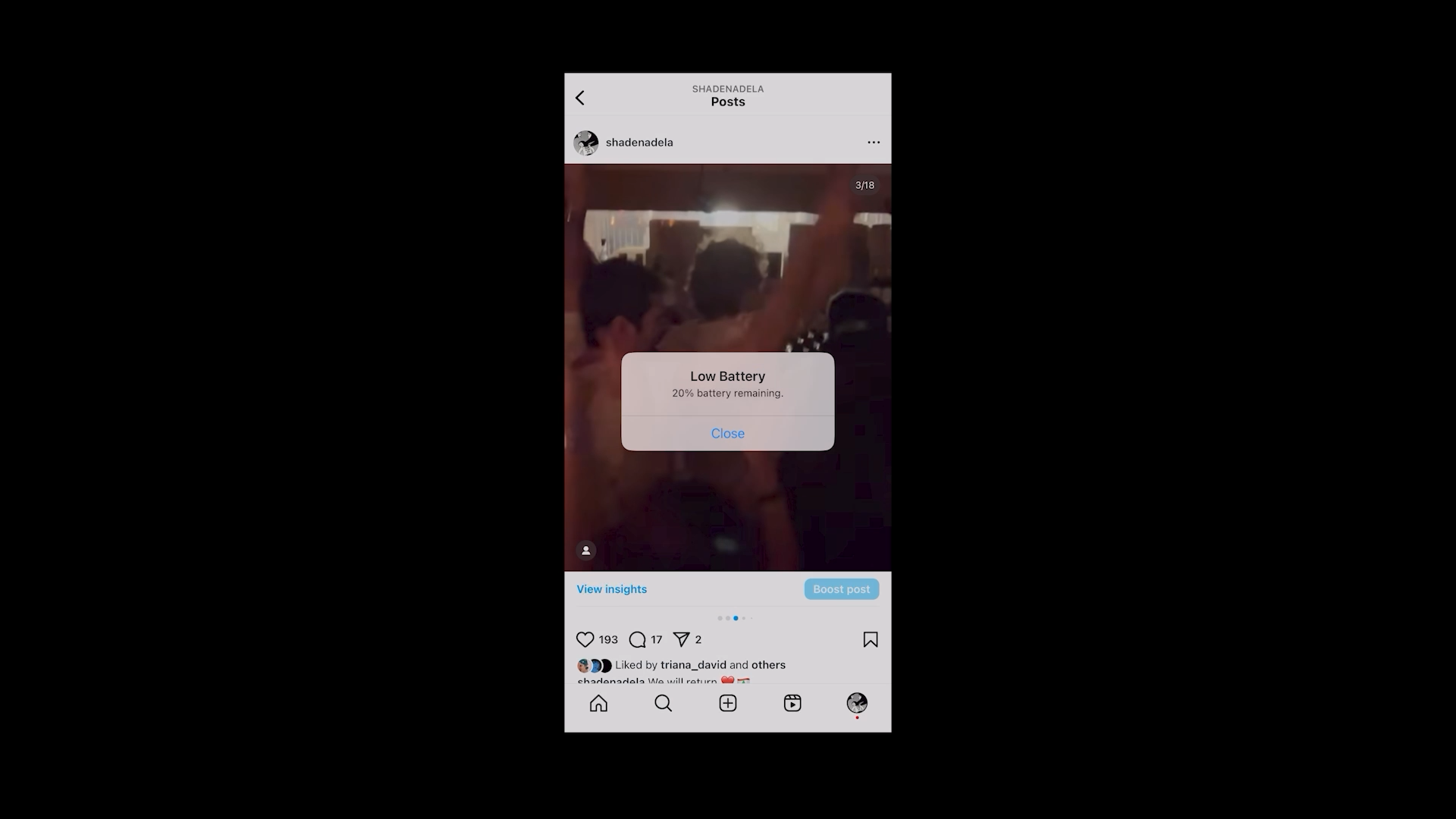
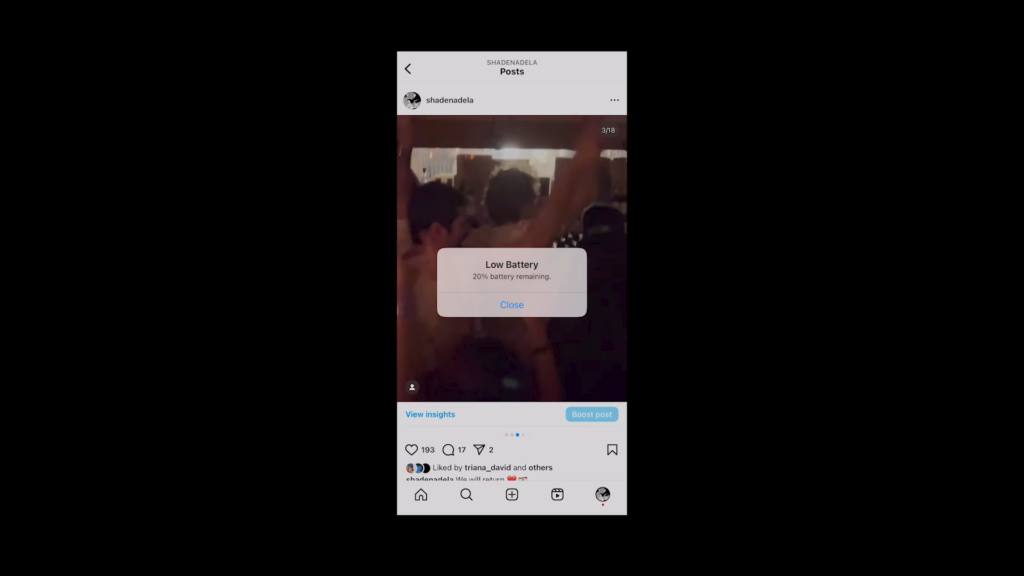
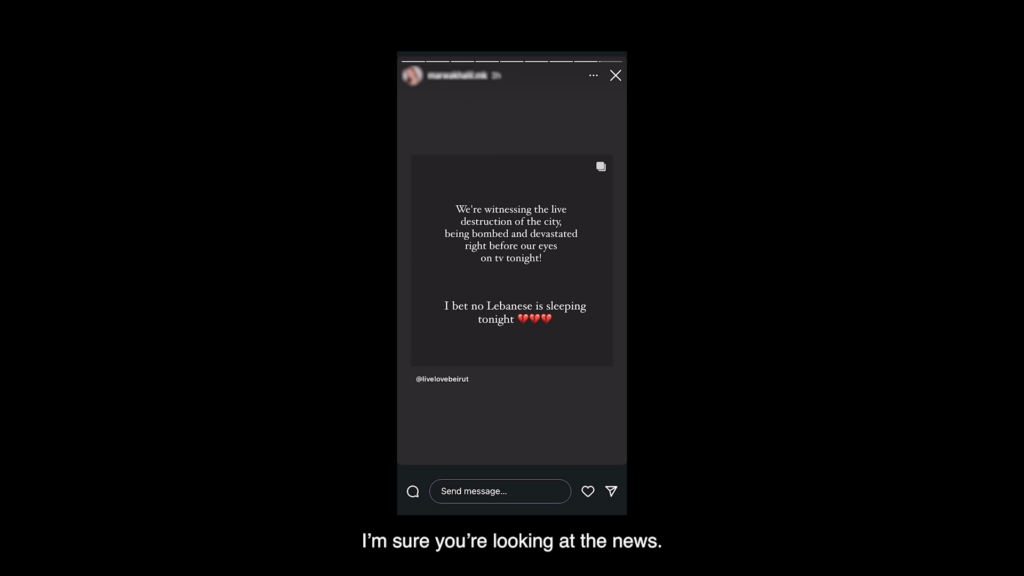
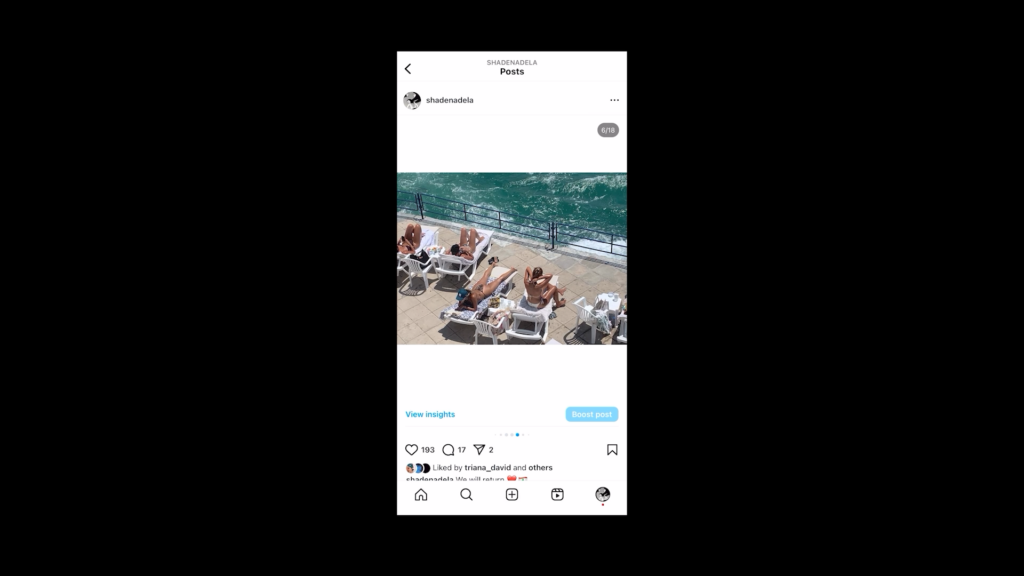
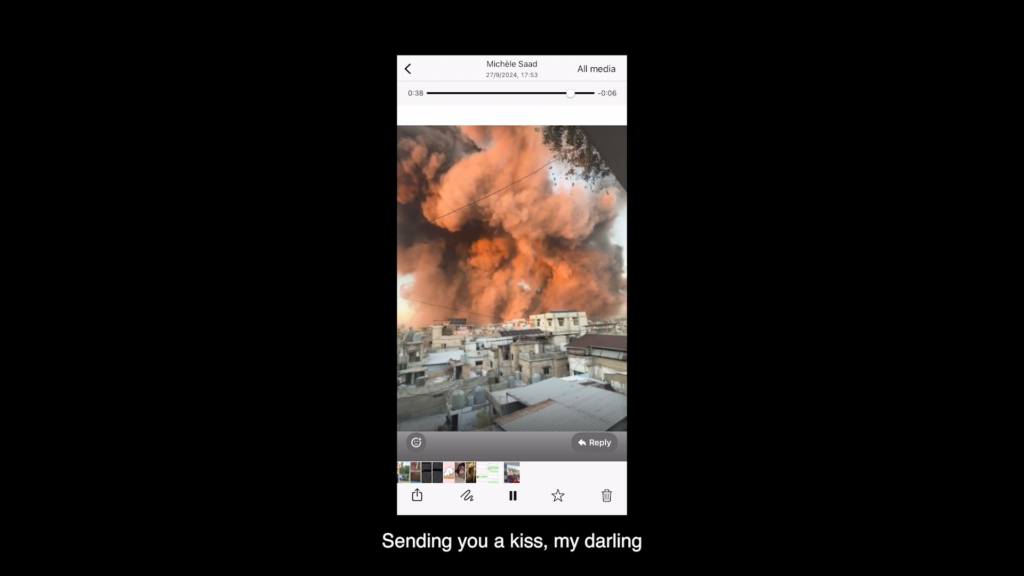
SS: In October 2024, I was in Paris, watching the war in Lebanon through my phone. I felt paralysed and spent most of my time scrolling. At some point, my phone started to feel more real than the world around me, and I almost felt like a fiction I couldn’t relate to.
My friends and family were sending testimonies that would inform me, move me, and then disappear the next day, the next story, the next catastrophe. I kept thinking about how these, which would end up being our collective memory one day, were living on platforms that were designed to distract and make us forget.
So I started recording my screen because I didn’t want to forget. I think it’s important we resist forgetting. The questions about witnessing, point of view, and ethics came later, once the film started to take shape.
DS: Your work engages with the idea of collective numbing. How do you think constant exposure to suffering online is reshaping our emotional and moral responses?
SS: I think we feel more than ever, and we learn to shut those emotions down so they don’t take over our lives. The body reacts, but has nowhere to place what it receives, so it creates distance. You keep scrolling, but something in you is already gone. What interests me is that contradiction: an excess of feeling that produces absence.
DS: In navigating such material, how do you draw the line between bearing witness and contributing to desensitisation?
SS: I don’t think there is a clear line.
The same image can be an act of witnessing and a repetition that empties it of meaning. That’s what makes it difficult to position yourself. But I think that when you take things out of their context, you resist their normalisation and passive consumption.
DS: Do you see your film as a critique of spectatorship, or as a reflection of your own position within these systems of watching and sharing?
SS: It’s not a critique from the outside. I watch, I scroll, I share. I am not exempt from what I am questioning. The film comes from that implication. If there is a critique, it includes me.
DS: Your films feel deeply rooted in personal identity, yet they carry a shared emotional resonance. How does that emerge in your process?
SS: The film is built from very intimate material: my phone, my WhatsApp conversations, my father’s voice before going to sleep, my subjectivity. I stay with what is close, what is precise, without trying to make it reach beyond that. I know my point of view is incomplete, but I don’t try to fill in the gaps. If there’s a shared emotional resonance, I think it comes from that. The more precise you are, the more people can recognize something of themselves in it.
DS: How has your experience of existing between cultures shaped your understanding of belonging, both in life and in your cinematic language?
SS: I understood over time that not fully belonging to a fixed identity can be a strength. Distance, somehow, has always shaped how I see the world. Yet it doesn’t stop me from feeling very deeply.
DS: In a time where the future feels unstable and unresolved, what role do you believe cinema can play while events are still unfolding?
SS: There is a sentence by Jean-Luc Godard that I find very moving, from a letter he sent to Thierry Frémaux. It’s written on one of the walls of Cinéma La Clef, a place that fought for its own existence.
“Ce qui me console, de toutes façons, c’est de savoir qu’il y a toujours quelque part dans le monde, à n’importe quelle heure — quand ça s’arrête à Tokyo, ça recommence à New York, à Moscou, à Paris, à Caracas — il y a toujours, dis-je, un petit bruit monotone mais intransigeant dans sa monotonie, et ce bruit, c’est celui d’un projecteur en train de projeter un film. Notre devoir est que ce bruit ne s’arrête jamais.”
“What consoles me, in any case, is knowing that somewhere in the world, at any hour — when it stops in Tokyo, it starts again in New York, in Moscow, in Paris, in Caracas — there is always this small, monotonous sound, but intransigent in its monotony. And that sound is a projector, projecting a film. Our duty is to make sure that it never stops.”
I think about that a lot. Especially now.
DS: Do you think film, unlike social media, can resist immediacy and create space for slower, more ethical forms of attention?
SS: Cinema can interrupt the flow, introduce silence, and hold an image longer than it is supposed to be held. It can make us look and listen to each other again. It can make us dream in what seems to be a dreamless world, confront our fears, doubt, and create alternate realities that make us question ours.
DS: Are there particular literary voices, texts, or traditions that inform how you think about identity, memory, and witnessing?
SS: So many! I’m really grateful for the works of Mahmoud Darwish, Marguerite Duras, Forough Farrokhzad, Etel Adnan, the writings of Tarvovsky on cinema in “The sculpting in time”….
DS: Ultimately, do you hope your work shifts how audiences engage with images, with crises, and with each other, or is it more about holding space for uncertainty and reflection?
SS: It is definitely more about holding space for uncertainty and reflection, but also about engaging in a conversation that’s complex and nuanced, the types of conversations that seem rare or prohibited today.