
 Posted in
Anniversary Issue, Biji
Posted in
Anniversary Issue, Biji
Issue 01 Revisited: BIJI and Abdulhamid Kircher in conversation
Text Larena Amin
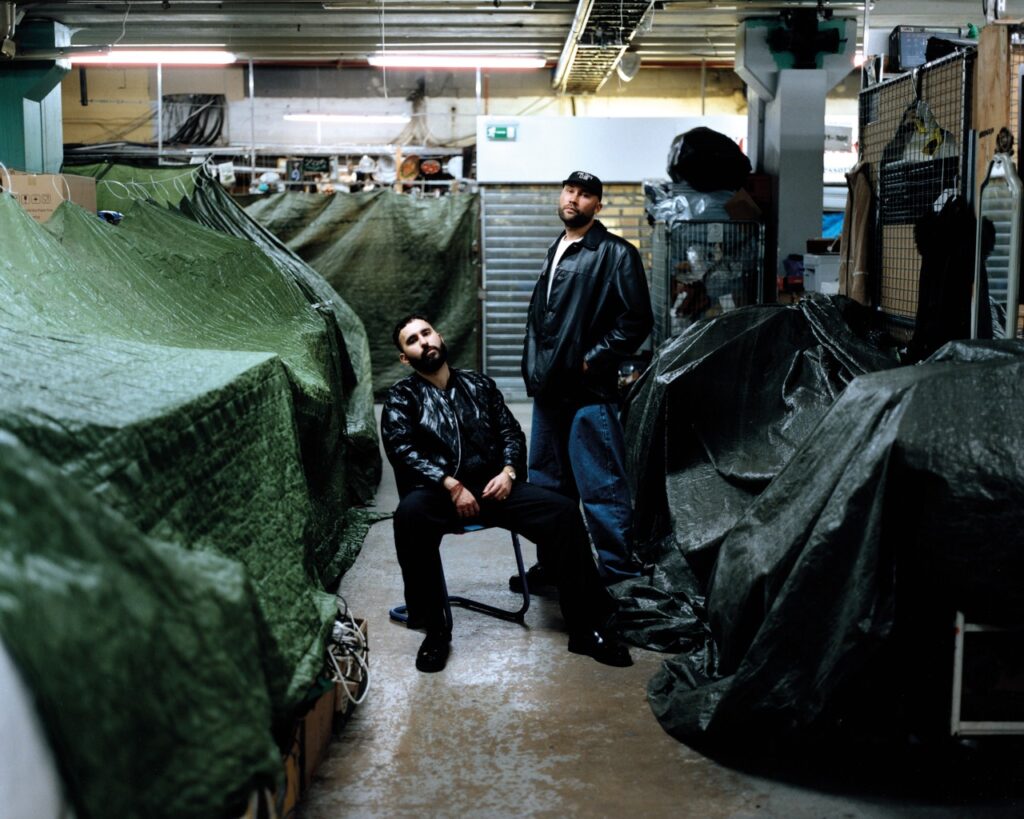
Maceo wears leather jacket his own, cap and T-shirt his own, jeans BEWIDER, boots DR. MARTENS
Maceo wears chapka his own, coat OUR LEGACY, pants CARHARTT
Maceo wears jacket OUR LEGACY, hat his own, T-shirt CARHARTT, trousers
STOCKHOLM SURFBOARD CLUB, shoes NEW BALANCE
shoes DR. MARTENS
Maceo wears chapka his own, coat OUR LEGACY, pants CARHARTT
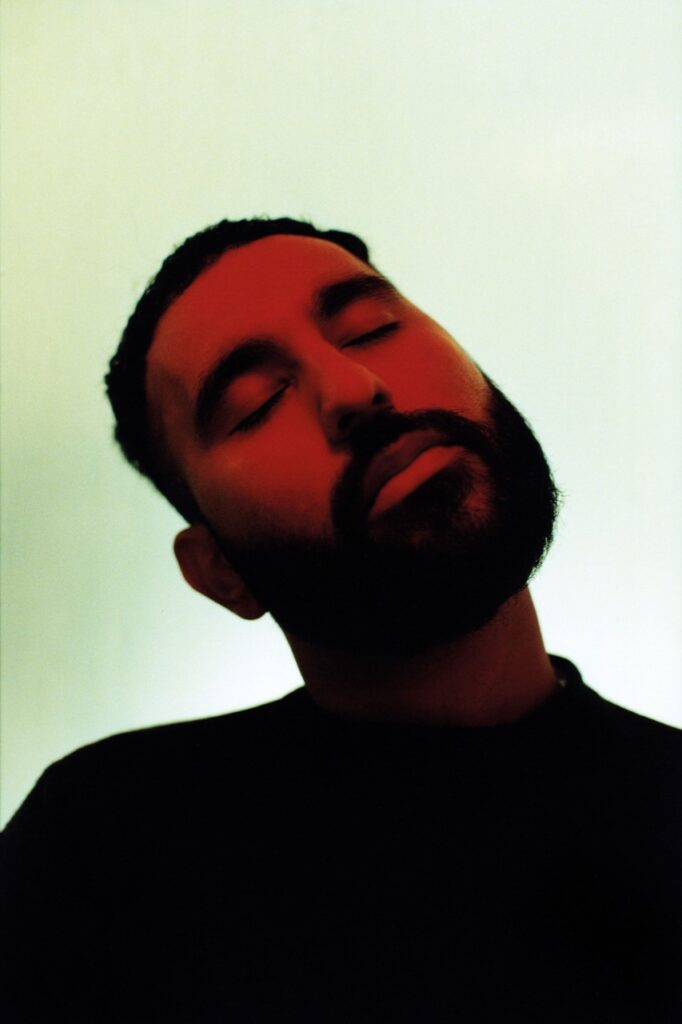
Nearly a year has passed since I first interviewed former cover stars BIJI, peeling the lid off their origins for long-patient and newfound audiences alike. The feature was paired with a lustrous shoot by New York-based photographer Abdulhamid Kircher. A producer known for stirring and understated images, he flew alone to Sweden to meet BIJI and actualise the cover of Issue 01. Common ground rooted a warm friendship among the three artists, as a shared enthusiasm illuminated the winter weekend over which their story was created together.
BIJI, made up of Maceo Frost and Robin Nazari, shone throughout their major cover debut—they attribute this to trusting Kircher’s forthright lens. The pair haven’t stopped collecting stories and sounds since, as they prepare their next body of work for release. Exercising retrospect, yet leaving out the nostalgia, we meet on a call spanning time zones and circumstances (Nazari joins us from the emergency room of a Swedish hospital, for instance). Together, we discuss their shared and further developed experiences since the meeting, individual reflections on their practices, and the omnipresence of familial relations in their art.
Larena Amin (LA): Were there any reactions to your cover that surprised you? The images alternated between documentary and editorial seamlessly. How has this marriage of styles developed in your work over the years, Abdul?
Abdulhamid Kircher (AK): I mean, I’ve done stuff for newspapers, but this was kind of my first time working on a shoot that was a bit more planned out in this way. And it was important for me to stay true to their everyday lives and work around that. Even though we had a stylist, she wasn’t with us on set, and the clothes themselves were very reflective of how Maceo and Robin dress. I just like to photograph people in their element and in their personal spaces. I feel like it kind of worked out perfectly. I went there for a few days, and we hung out and took photos for, I don’t know, two or three days.
Robin Nazari (RN): It felt so weird to see that cover, shot in the suburbs in Sweden—it was beautiful and weird at the same time. A lot of people were really happy about that because the
diasporas in Sweden are very underrepresented in global culture or pop culture, so representation of the Kurdish community was really nice to see.
LA: Ah true, Robin. Snabba Cash was massive on Netflix for some time, but it was one of the very few representations of minorities in Sweden. And it’s recent enough that you actually starred in it.
RN: Exactly. And I died in it [laughs]. So the issue was really something special. It was nice to see a project with Kurdish roots being represented in this kind of media, especially across the Middle East. Like when you [Larena] wrote “Kurdistan 101”, the fact that they even took that on is rare. It’s important that the work keeps going—not just mentioning Kurds once and it’s done.
LA: Did you have any expectations or concerns going into one of your first ever editorial shoots?
AK: Because we got to chat a bunch beforehand, it just felt natural. Robin and I talk about this all the time, how it felt like we were already cousins or something. I think the main worry when doing any of these things is not connecting with who you’re photographing. It’s a really important thing in my practice, and why I mainly make work that feels personal. You can control who to focus on and invest your time in certain people or things.
LA: The BIJI project illuminates a cultural underworld, while Abdul’s work penetrates harsher themes with realism. How did you bridge these contradicting styles and blend a shared vision for making Issue 01 together?
AK: Even though they’re [BIJI] doing this uplifting thing, it’s still rooted in trying to uplift these people that have been oppressed. I’m half German and half Turkish, so I see this notion of being from the Middle East or wherever, and then being displaced into a white European country. I don’t know. Maceo, maybe you can speak on that?
Maceo Frost (MF): Yeah, I hear you. It’s like this in-the-middle identity; my African-American side is not a part of the community here [Sweden]. I’m an outsider. But everyone in our group shares that in some way.
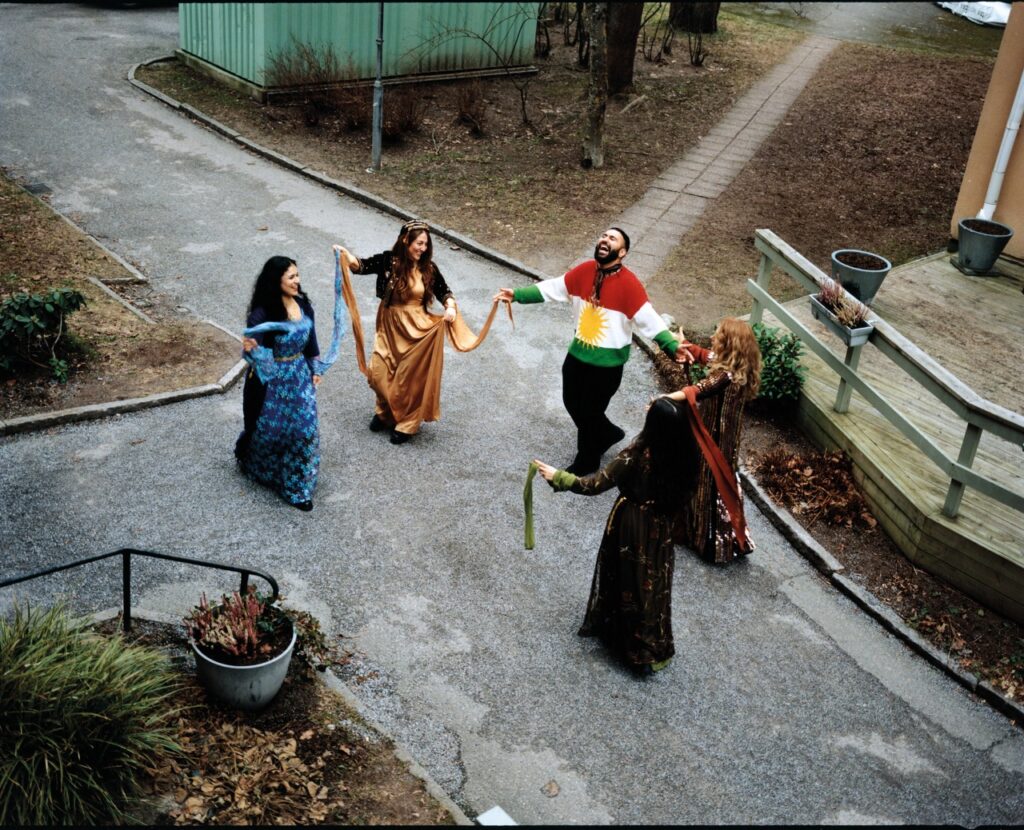
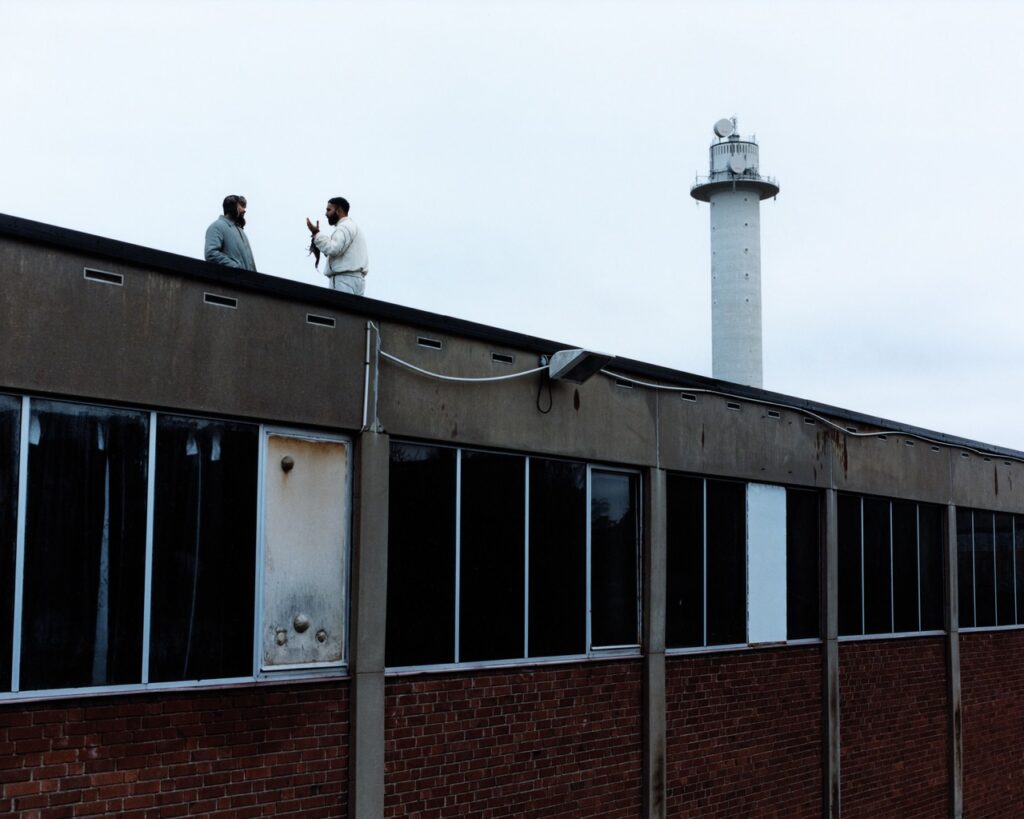
AK: Visually, I know a lot of my work is dark—I don’t know if that’s the right word, but it’s focused on these things that feel darker. And I think with the BIJI images, it worked out that we did it in the winter. If you look at the cover image, there’s this big contrast of them, feeling alive, and the landscape around them feels so bleak.
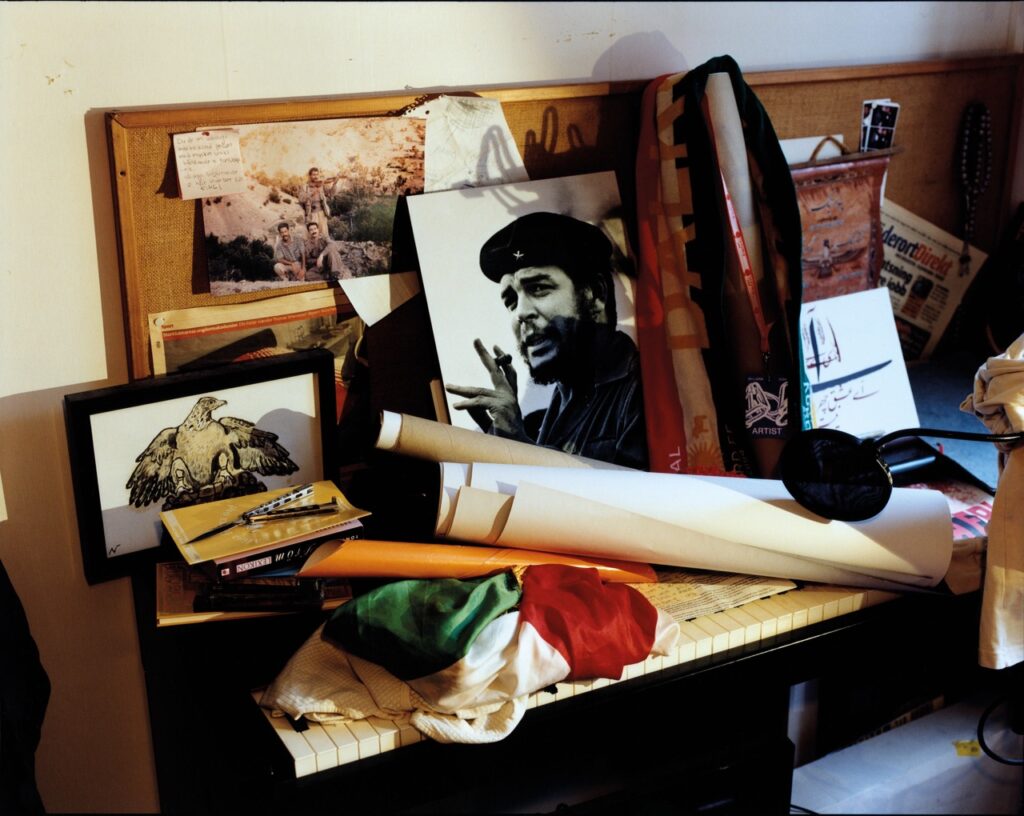
MF: Also, the photos of Robin’s room, the weapons, you see Che Guevara, him in the bathroom—there’s definitely a darker touch mixed with the other part that’s more fun. And I think that’s why we felt really safe to be photographed by you, Abdul, because we knew you would see something that we maybe don’t. And it was really cool to see our world through your eyes. We felt really honoured.
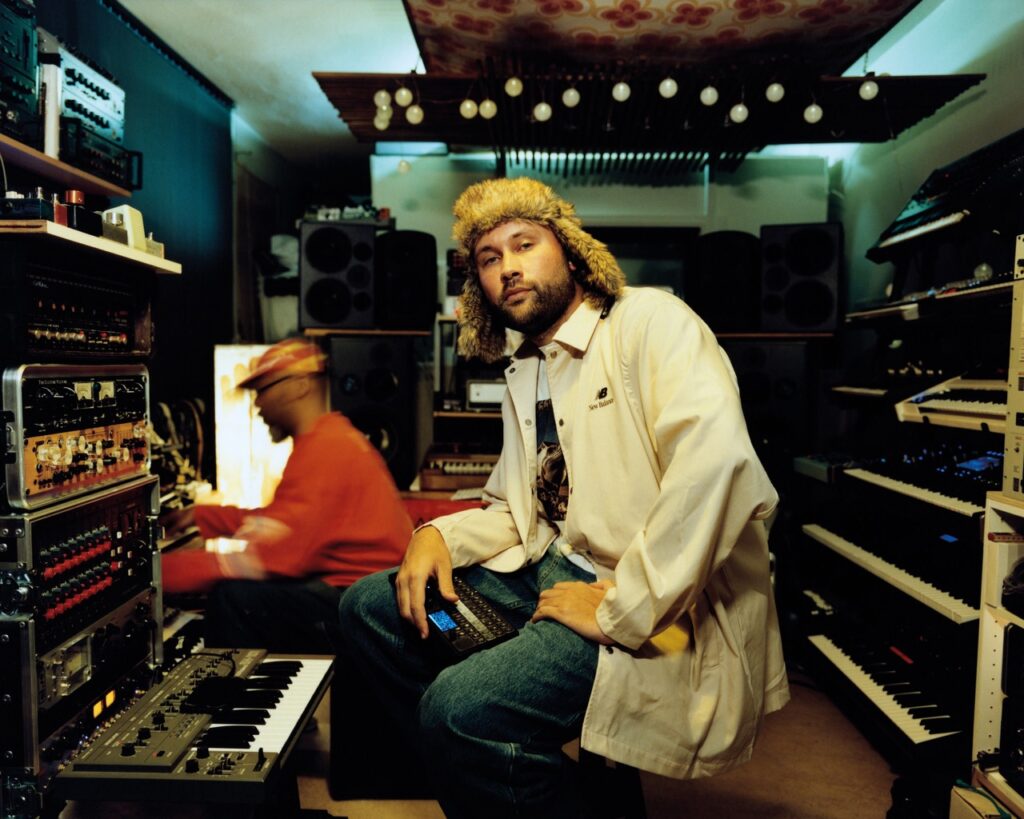
AK: Thank you for trusting me, guys. This can only really happen if there’s some sort of trust between the subject and the person who is capturing them. I think what I loved was how you were able to let go, especially since you’re usually behind the camera or production. I came alone, so I didn’t have an assistant to help, but we were playing around with the lights together. It was beautiful to see how open you were to helping.
MF: I think it’s because we instantly clicked. In this case, it was like zero feelings of wanting to intervene. Because of what we said – the trust – and you have to play your position also. I knew that if you just did your thing, it was going to be good. And if I could help in any way by just holding a lamp, let’s do it. It kicked a part of me that I haven’t really explored. That’s what excites me. It’s better that I just shut up because then I can learn something. I was like, ‘Call me, man, I’ll be an assistant.’
LA: Abdul mentioned the contrast of BIJI in this bleak landscape. The shoot locations stand out vibrantly from the Stockholm landscape. How did you guys decide on where to take him?
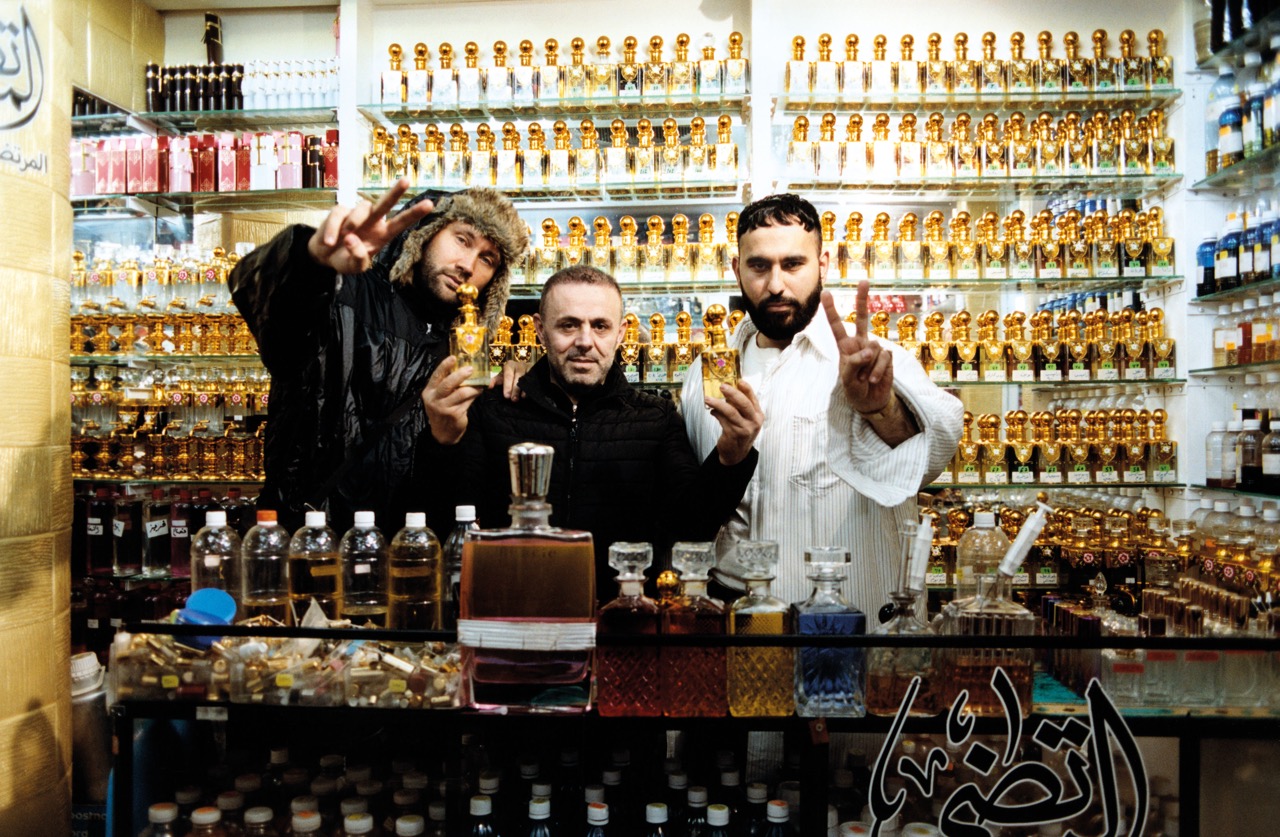
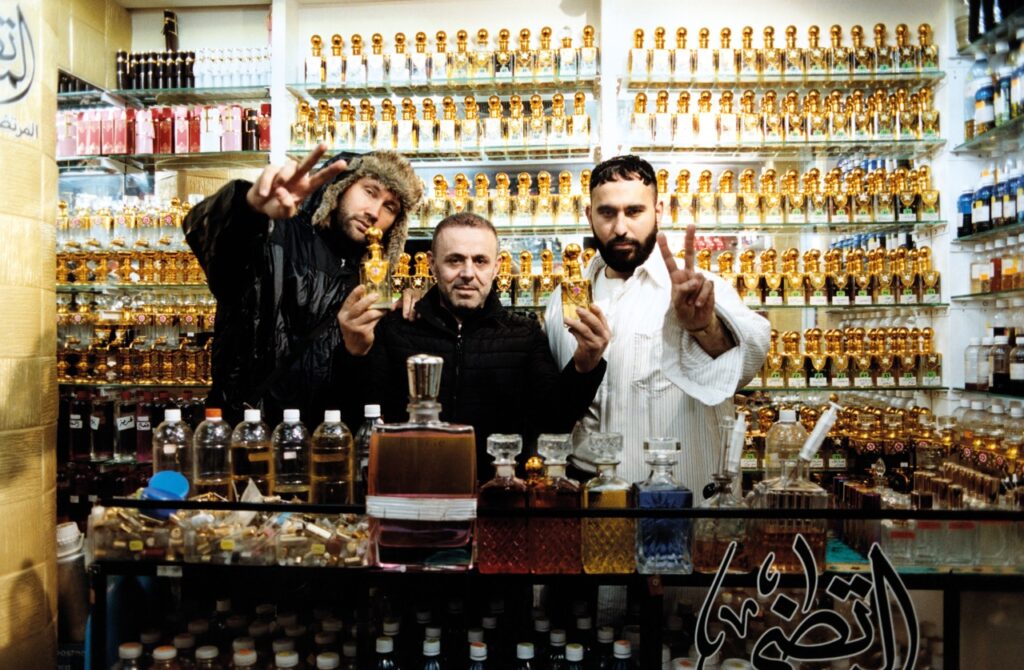
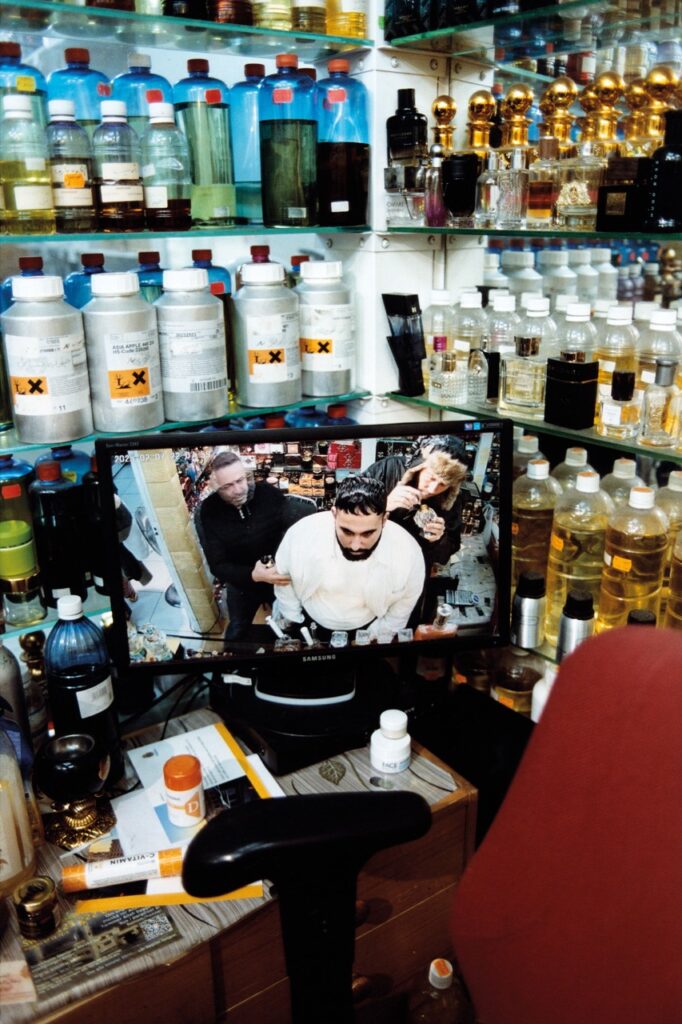
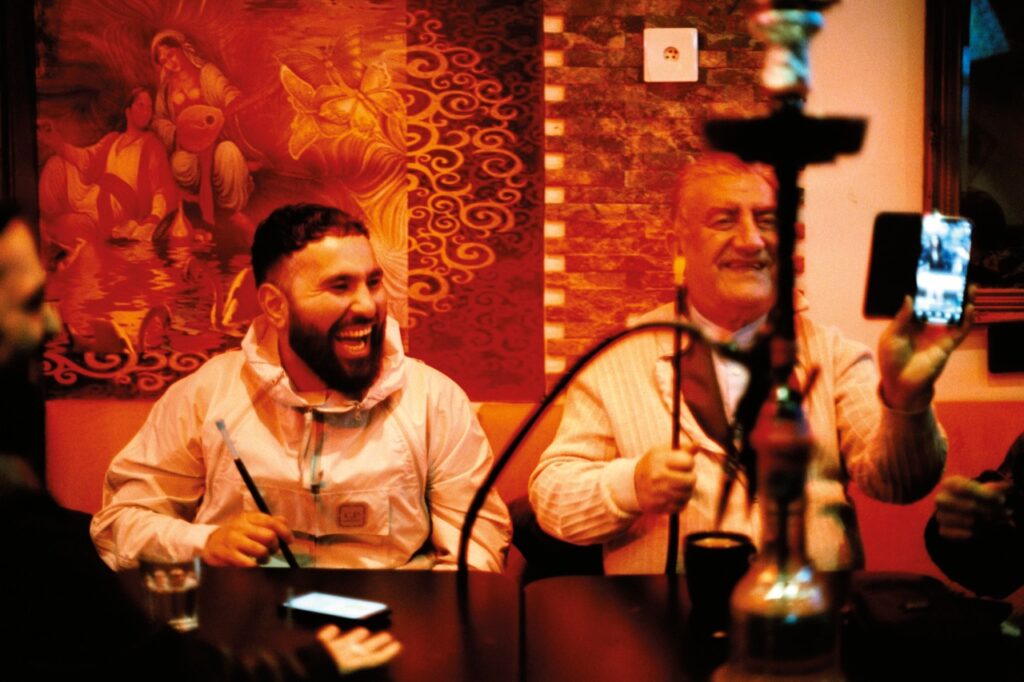
RN: Yeah, these were places both Maceo and I grew up in. It’s little Kurdistan, some of these places. Little Gambia, too. The restaurant we were eating in is a Kurdish restaurant, and the perfume store is run by a Syrian guy. I mean, these are just our daily places, which is why this interview became so special—it’s so authentic to who we are, and no one has captured us in Stockholm like that before.
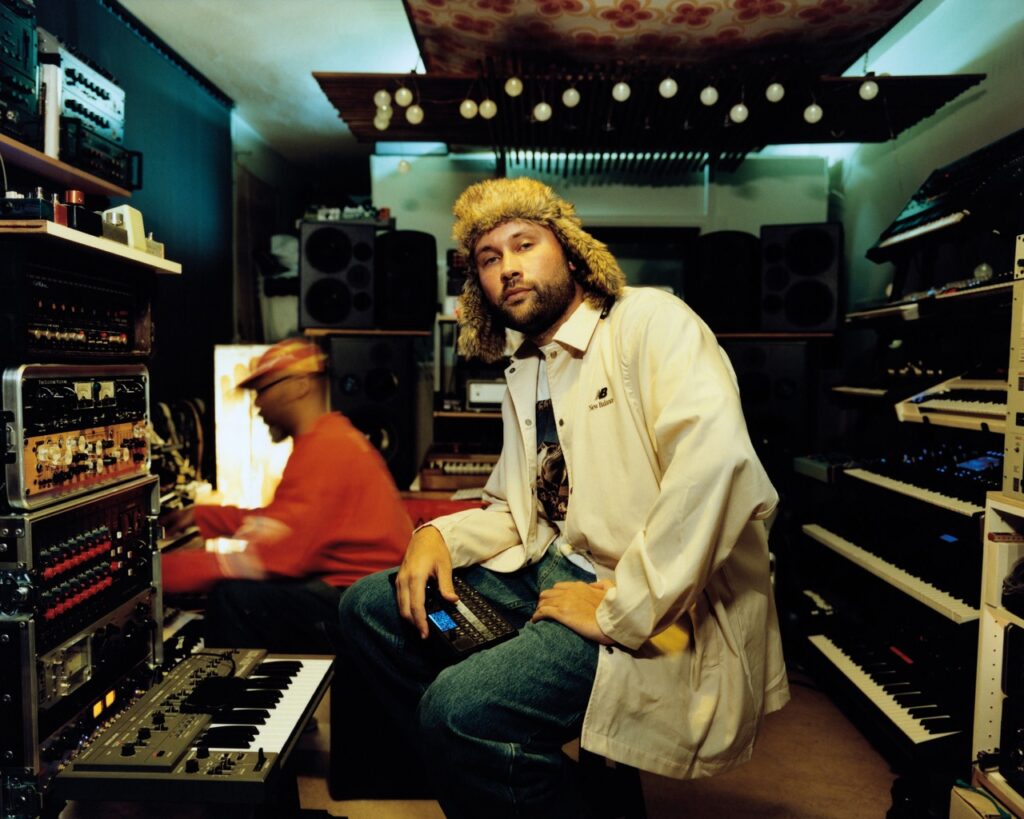
LA: Maceo, we did the interview first, and then you had the shoot. I was really happy to see, who I believe was, your baba in the photos of you in the studio?
MF: Yeah, that was moving. That’s an iconic photo. I’m really happy that one was captured. That’s a special one for me with pops in the studio there.
LA: I wanted to ask if you discussed your respective relationships with father figures, in their absence and presence, as well as their cultural elements in your work?
MF: Well, one of the inspirations behind BIJI is Robin’s dad. Before he passed away, he filmed these amazing VHS tapes of Robin and his sister’s childhoods, and within these tapes were Easter eggs, all the puzzle pieces for a story. We’ve spoken a lot about that, and we’re finishing the documentary that his dad started. It feels like we’re continuing the legacy.
RN: My dad was not only filming stuff, but also recording over some cassettes with my uncle’s song and some others. And when we look back, it became the sample to “Zigidi”. I mean, Maceo, we often go back to your father’s studio, sitting with him late at night. Your dad is the only one awake in the studio, and we go there, show him songs, and listen to his stories. And he gives us feedback. It gives us energy.
MF: It’s all from our families, infused in the project. When I think of my dad, everything he taught me, it’s crazy. He literally is Yoda—you can go to him with any question, and he always has a philosophical answer.
LA: What did you think of his dad, Abdul?
AK: I didn’t know they were having some issues. Maceo and I spoke about how doing this shoot almost forced them to reconnect. I don’t know where you guys are now, but at least in the moment, it was really beautiful to see not just him and his dad, but his brother being there, too. They were playing music at the same time, vibing together, and it was really special to see in that space. It was really small, so we were all on top of each other. There were so many such moments, and it was a really quick way to bond—there was no separation. I think it helped speed up the intimacy of everyone being comfortable.
LA: That question stemmed mainly from your project, Abdul, Rotting From Within, but also knowing a little bit about Robin and Maceo’s family lives from the first interview. Are you keeping your projects personal, Abdul, or are you comfortable exploring other routes? Sometimes it’s just about taking a job for money these days.
AK: I’m figuring it out somehow. I’m in a headspace where I just don’t want to make things that I don’t feel connected to. I don’t want to focus my energy and my time on things that don’t really add anything to the world or the conversations we’re having. And obviously, that’s a dilemma that comes up a lot when you’re trying to make money and survive. Yeah, I haven’t found that balance yet. It’s difficult because the camera, in a way, has become this therapeutic thing in my life. And sometimes it just feels wrong to use it in a capitalistic way of trying to sell some product. I haven’t really found the answer yet, but I’m going with the flow right now.
LA: The way the game is rigged, maybe the balance is not really there to be found.
AK: I think everyone has their own balance, so many of my friends make personal work and make a lot of money doing commercial stuff. I’m just saying I don’t know how to deal with that yet. And hopefully something changes because it’s hard living paycheck to paycheck. I guess that’s how it is when you’re an artist and trying to focus on your craft. The problem with what I want to do is it’s a 1% type of thing, where it’s nearly impossible to get to that point. But I think it’s a matter of lying to yourself, coming up with this idea that it’s somehow possible and that you’re capable of doing it.
LA: Well, we confidently believe you can do it. What’s BIJI working on at the moment?
RN: Just continuing [laughs].
MF: We’re working on the next album now, it’s exciting. We’re crafting the stories surrounding it, the songs, the visuals. There’s always something to do, especially because I’m living a lot of lives with work and BIJI.
LA: We all engage with art across platforms and styles, but what are some forms that you find off-putting?
MF: I feel it when someone is hiding; you can tell if they’re trying to be something they’re not.
RN: Sometimes, you even become what people see you as. I wouldn’t want to shoot anyone down because I’ve been on both sides of it. For example, I used to think it’s clowny to focus on humour, that it’s not prestigious, so I wasn’t doing that in my art before BIJI. But 80% of me loves humour and making jokes, so my whole self wasn’t in it. With BIJI, I know that it’s fully Robin and fully Maceo.
AK: It’s so easy to be swayed by aesthetic choices, but for me, it’s important to stay true to the way I see things. Sometimes I feel like it’s not interesting enough or I’m not pushing a certain boundary enough, but at the end of the day, I try to remind myself that only I can make what I’m making. Robin could definitely speak on this one a lot.
RN: My mother says it best: ‘Whatever comes from the heart goes into the heart.’ So if something didn’t come from the heart, it doesn’t go into your heart. I could write a book on this. For me, that’s the biggest ick—when it doesn’t come from somewhere real.
LA: In terms of authenticity, your work doesn’t seem too concerned with censorship or taboo, Abdul. Is this a reaction or a process?
AK: I try to simply focus on things that come from within me. I don’t try to spend too much time thinking about what I’m trying to say. It feels more like something I need to do. Working with my dad, for instance, trying to cope with trauma and working through it. I try to just stay honest to whatever I’m drawn to naturally, and it’s reflected in the work over time. That’s what makes BIJI special as well—it’s something I feel connected to. I didn’t know about Robin’s dad’s tapes and the sample, but that in itself is the sound that’s so unique to them and their clash of worlds. I saw how unique and honest their collective eye was. In my head, I was like, Ah, we could’ve done this in Kurdistan. That’s not saying the photos would be cooler, but maybe more striking. Still, it worked out the way it did and was more their reality. We created something more rooted in their actual lives.
RN: I would love to do what Abdul did with us. I want BIJI to capture Abdul. I’m interested to see how he lives, a day in his life.
AK: When you come to New York, it’ll definitely happen. Are you guys coming anytime soon?
RN: Insha’Allah.
MF: Not just yet, but let’s do it! I’m excited.