
 Posted in
Art & Photography, photography
Posted in
Art & Photography, photography
Abdulhamid Kircher on his latest book New Genesis and the limits of objectivity
Text Selma Nouri


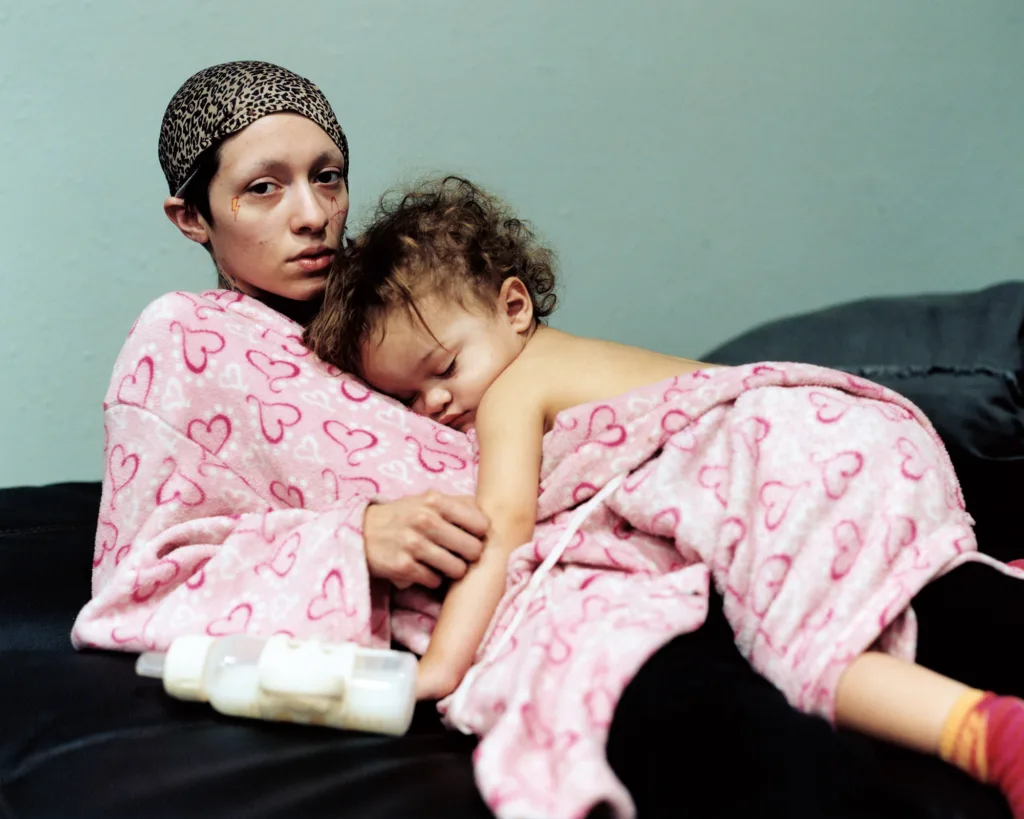

“Objectivity in documentary photography is its own kind of fantasy,” writes American photographer Stacy Kranitz. “How can the photographer demystify stereotypes, represent culture, sum up experience, and interpret memory and history,” she asks, when the medium itself has so often fallen short? It is within this emotionally fraught and ideologically complex terrain that Abdulhamid Kircher found himself while creating his second photography book, New Genesis.
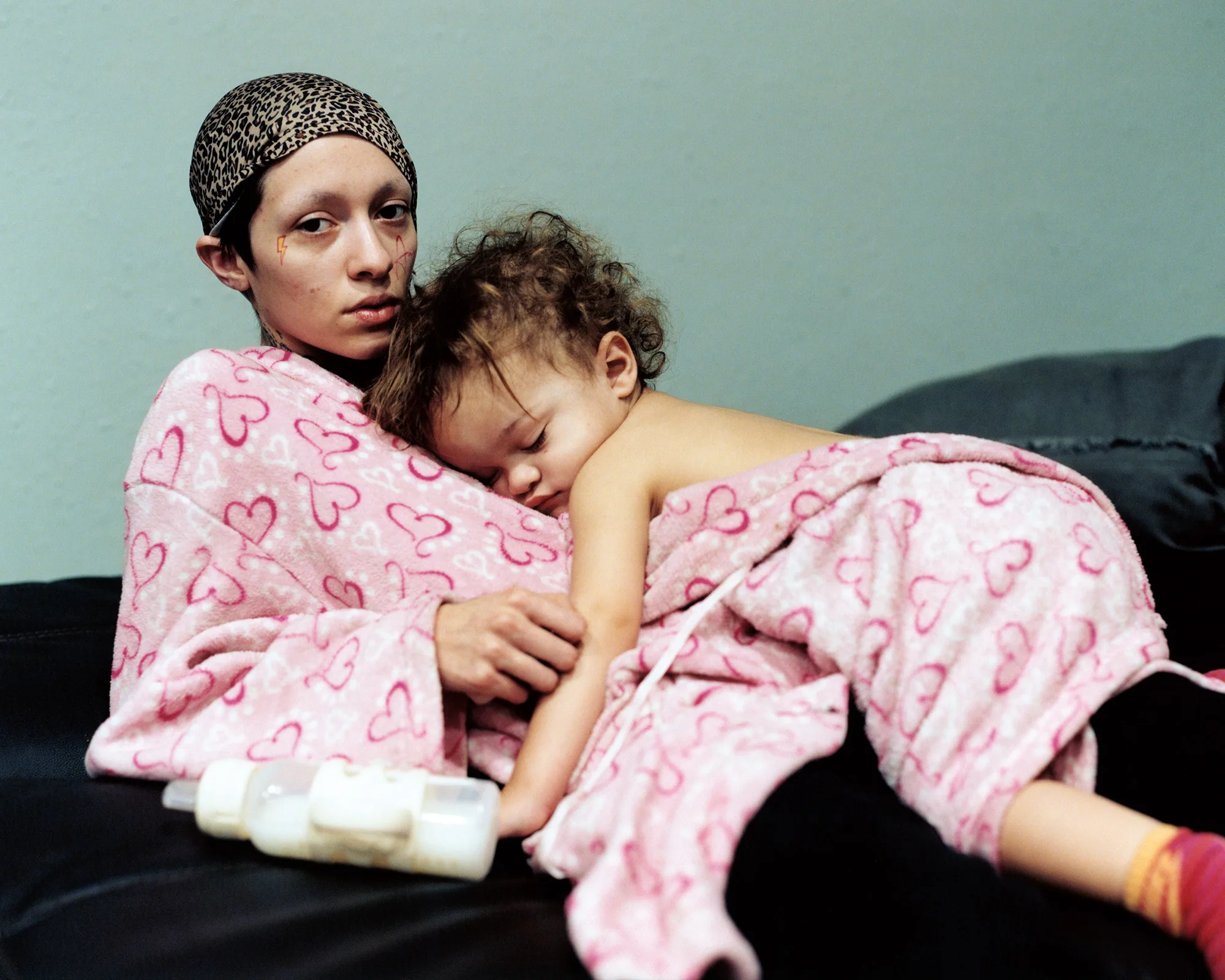
Captured between 2022 and 2025, this body of work turns Kircher’s lens toward his friend Sierra Kiss and her young family of four in Los Angeles, tracing her personal experiences with homelessness, addiction, repeated pregnancies, and domestic abuse. Through both quiet and fraught moments, Kircher renders these realities with profound vulnerability, revealing the psychological and emotional toll of life within broken systems, pervasive powerlessness, and enduring promises of support that remain unfulfilled.
True to his practice, the project maintains a deeply personal exploration of human endurance and hope as they surface through the rhythms of Sierra’s everyday life. Yet, here, these themes are rendered with an unprecedented degree of care and emotional sensitivity—as hope is reflected not only in Sierra herself, but also in the innocence of her children and the new possibilities that emerge through them.
Set for release this week, New Genesis arrives nearly two years after Kircher’s critically acclaimed debut, Rotting From Within, which explored his family’s experiences of intergenerational trauma and abuse. While this new body of work moves beyond his personal story, Kircher’s emotional presence and profound sensitivity to both individual and systemic suffering remain palpable. His deeply empathetic gaze reveals beauty in moments that might otherwise be overlooked or judged, while interwoven texts drawn from Sierra’s Instagram stories offer a “parallel testimony” to the joys and challenges of motherhood amid conditions of societal neglect.
“I met Sierra while I was living in LA,” Kircher explains. “At that point in my life, I was really craving human interaction, both personally and in my photography. I didn’t know anything about her situation or what she was going through, but there was something about her that intrigued me, so I started to make portraits of her.” Eventually, what began as a brief artistic exchange evolved into a deeply personal connection. “From the moment we met, there was this inherent trust,” he says. “She opened up to me, and we grew very close, especially when she became pregnant with her third child. I think she really needed someone to be there, so I would take her kids to school or just spend time talking. I really wanted to be there for her…to be present.”
Beyond his obvious kindness, Kircher recognises that his connection to Sierra’s story is deeply rooted in his own past, particularly his relationship with his mother, who endured abuse and significant hardship during his childhood. “I think that’s why I felt so connected to her,” he explains. “Right before we met, I was in grad school, and for a final project, I had a four-hour conversation with my mom about my father’s abuse. She told me that whenever he hit her, if I was in the room, I wouldn’t react. I would just keep playing with my toys, completely absorbed in my own world.” He pauses, “I think that must have been my way of coping with what was happening, but when she told me that, I felt so guilty. Obviously, I was a child. There was nothing I could have done. Yet, I still felt this overwhelming pain for her, knowing that at fifteen she was being hit by her partner in front of her child, with no one there to support or protect her.”
Therefore, soon after that conversation, when Kircher met Sierra, her story immediately struck a chord. “Her experiences really resonated with me,” he reflects. “Like my mom back then, she had no one, and while I couldn’t change her life dramatically, I wanted to provide some kind of foundation…to be someone she could rely on, even in the smallest ways.” This instinct is what led Kircher to accompany her to ultrasounds and, eventually, to be present for the birth of her child—an intimate moment captured in the book. “Naturally, she asked if I could drive her to the emergency room, and once she went into labour, there was no one else around,” he recalls. “She doesn’t have a family…no mother, no father, and no partner. So it was really intense. It was just the two of us, and this child being born.”
Reflecting on the weight of that experience, he says, “There’s a photo in the book that I really love, where Sierra’s on the hospital bed, looking up. You can feel her sacrifice as a mother, the energy it takes to bring life into the world. Of course, it’s such a personal setting, and I never photograph situations I’m not invited into…but being alongside her in that moment was an immense honour, and taking photos became a natural part of our relationship. I never planned, or even imagined, that they would one day become a book.”
It was only much later, after assembling Sierra’s writings, that the possibility of publishing the photographs began to seem possible. “Honestly, before that, I really struggled with the idea of ever releasing this work,” Kircher says. “I’ve photographed other people before, but this was the first time I’d be publishing something that isn’t directly about my own life or experiences…and that felt troubling.”
For him, the ethical tension resides particularly in the medium itself. “Photography is inherently problematic,” Kircher reflects, “because it’s this thing being pointed at someone, rendering a certain idea of what their life looks like from the photographer’s perspective.” And he is acutely aware of the imbalance this creates.
“At the end of the day, these images are about Sierra and her experiences as a young mother navigating domestic violence and abuse,” he says, “so I didn’t want the work to exist solely from my point of view. That’s why including her writing became so important.” Scattered throughout the book, these fragments of text take on the cadence of an inner monologue, offering an intimate look into Sierra’s thoughts as her life unfolds through Kircher’s lens.
“They’re like sporadic diary entries,” he explains. “She would post them almost every day on her Instagram, and despite being so intimate and vulnerable, you could tell she didn’t care what anyone thought. I found them incredibly moving and felt that having them alongside the photographs added a new layer of depth, one that allows her not just to be seen, but to be truly understood and fully present within the book.”
Referring back to Kranitz, documentary photography will always be entangled with fantasy; it can never be completely objective. As she writes, representation is a “complicated negotiation,” and humanity—or culture, in her terms—“isn’t something that can be gotten right.” To capture the full spectrum of human experience, without slipping into fantasy or reinforcing stereotypes, is an immense challenge, one that no photographer is likely to ever overcome. What remains possible, however, as Kircher demonstrates in New Genesis, is the depiction of truth: a rendering of humanity that exists between “notions of right and wrong,” one that is undeniably human.
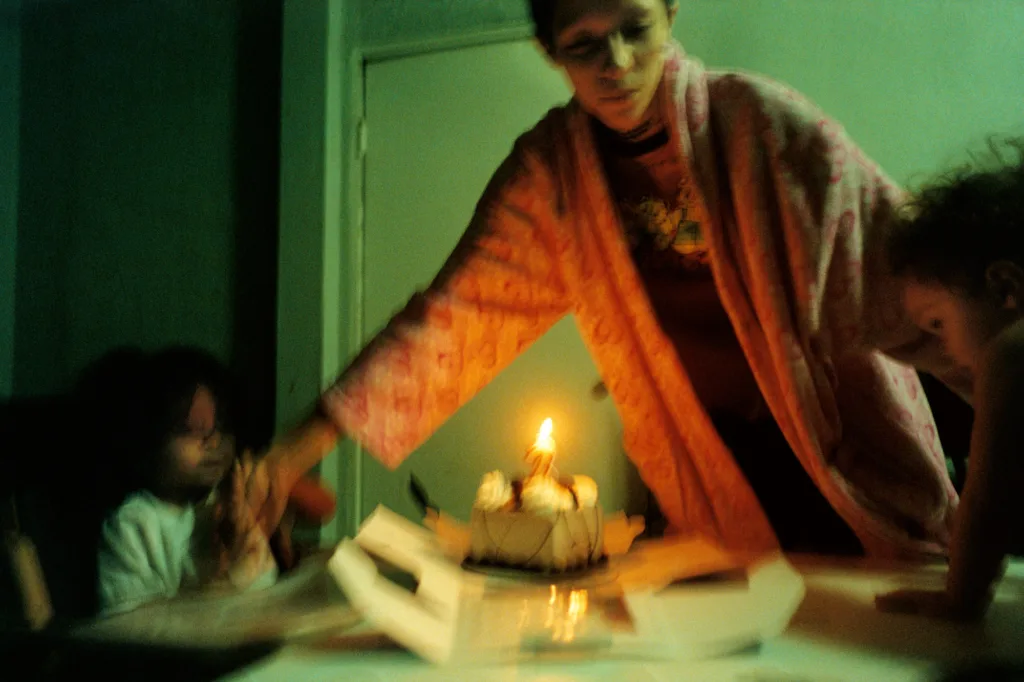
From the very beginning, he draws us into Sierra’s precarious world of care and chaos. He captures her shaving her head, smoking, and tending to her children amid clutter and dirt. Often within that same environment, these stark realities are tempered by moments of tenderness and joy, where she appears celebrating her children’s fourth birthday, attending church, or gently kissing her newborn. It is through these contrasts that Kircher captures the fullness of her experiences—the messy, fragile, and undeniably complex essence of both humanity and motherhood.
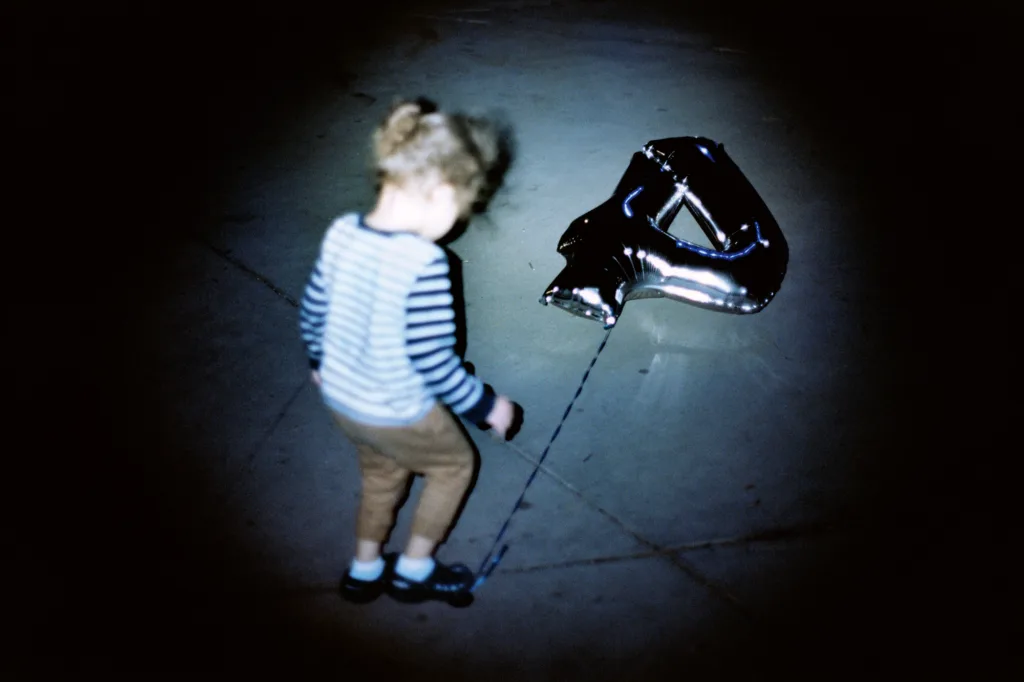
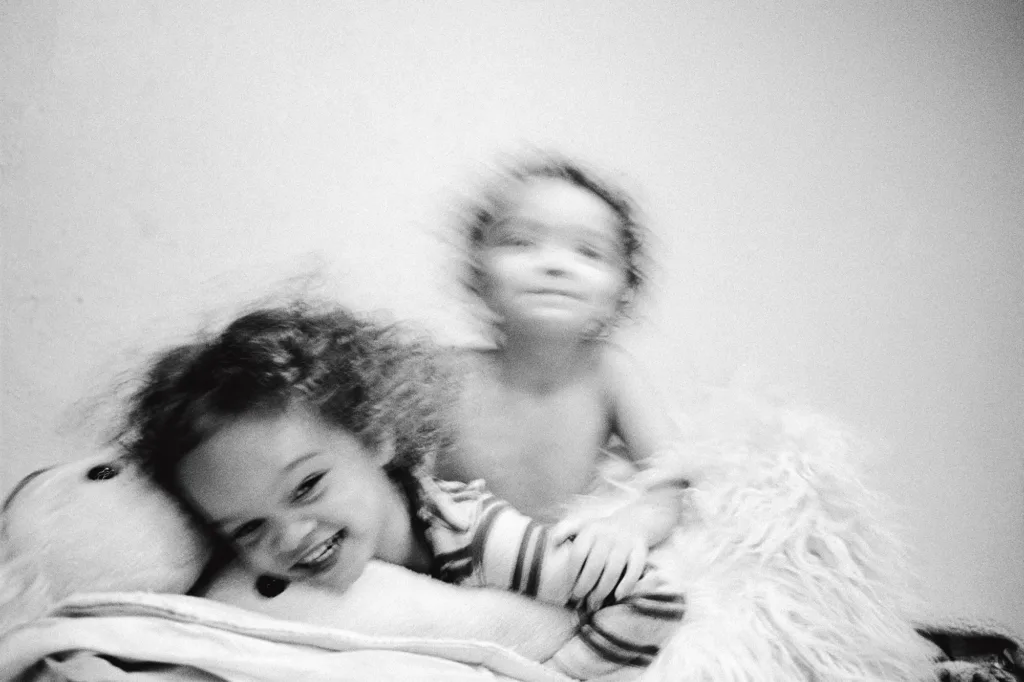
This nuance becomes especially evident in his images of Sierra’s children, whom he approached with particular care during the project. “With the photos of the kids, I really tried to be as playful as possible,” he explains. “I know it’s difficult to see the kids in these unstable settings, but it’s important to remember that this is their reality…it’s all they’ve ever known.” Whether they play with dirt-covered feet, leave footprints in the bathtub, or invent games amid chaos, their innocence and joy still shine through. As the book’s title suggests, “new” possibilities for “genesis” exist in every being, and often, it is what remains unseen that shapes the course of our futures.
“I’ve been thinking about this a lot recently,” says Kircher. “As a documentary photographer, it’s really easy for your work to become a form of photojournalism, to just document a hot topic or what’s relevant in the world right now. But I always strive to be intentional with what I’m making. Through my work, I want to create a new layer of thought beyond mere documentation…because for me, it’s not just about looking. It’s about engaging with what you’re doing in a deliberate way, and understanding how the image you create might inspire a new way of seeing or a different perspective. I want my work to evoke feeling rather than simply existing as visual output.” That ambition, he acknowledges, demands more than the image alone can carry. It calls for the ability to translate observation into broader meaning and to create visuals that inspire deeper reflection or conversation. Perhaps most importantly, it compels his work to push back against one of today’s most pervasive problems—judgment.
“During the editing process, there were a few photographs I considered removing from the final book,” Kircher explains. “One, in particular, shows Sierra smoking while pregnant. That was the hardest image to sit with because, of course, in the public eye, it’s taboo…but I had to remind myself that removing certain images risks creating a false narrative of her reality, and it’s a delicate balance. You want to stay true to what’s happening in her life while also protecting her and her children. But if you start stripping things back, removing the more uncomfortable truths, you end up constructing a kind of fantasy—a version of her life shaped by what people might prefer to see. In the end, I realised the image actually reflects her way of coping with the world and her inner demons. That desire to escape her reality doesn’t make her a bad person, and it certainly doesn’t make her a bad mother. It makes her a human being. That’s what’s so important for people to understand, and it’s ultimately why I chose to keep the image.”
Through New Genesis, I believe, Kircher accomplishes something far more profound than might first appear. The book confronts some of the deepest fractures in our capitalist, conflict-driven system: our diminishing capacity for grace and our continued reliance on difference as a tool for oppression. We judge quickly, often without reflection, sorting people along imagined lines of borders, race, gender, and income—and in doing so, we construct hierarchies that obscure the more fundamental truth of our shared humanity. Kircher openly acknowledges that he is not a perfect person, a perfect photographer, or a completely objective observer. Yet that admission is precisely what makes his work profound. He offers a perspective grounded in honesty, one that feels urgently relevant to the slow work of undoing our contemporary tendency toward difference.
“At the end of the day, the photographs are taken from a male point of view,” he admits. “But I hope people can look beyond that and recognise that all perspectives have value. Historically, and quite rightly, the subjects of motherhood and abuse have always been photographed by women, but it’s also important to see the other side. We need men to take accountability…I am genuinely interested in this subject because it has directly affected my own life.” That personal connection, he argues, is what gives the work its force. “I really think that’s what enables artists to produce great work, when it comes from a deep place of care or trauma.” The result may be “biased or skewed to some degree,” but it is precisely this subjectivity that allows the work to resonate, creating connections that extend beyond the individual to broader truths and social realities.
While Kircher never begins a project with a “specific goal,” what he hopes for is “a kind of openness from viewers,” a willingness to resist immediate judgment and imagine themselves in someone else’s position. “It’s easy to flip through the book and judge Sierra as a mother without considering that what we’re seeing exists within a much wider context,” he says. “For instance, the images don’t show the police ignoring her or failing to hold her abuser accountable. They don’t capture him smashing her windows or spitting in her face. We can’t witness her struggles to access domestic violence shelters or secure enough help to feed her children. And we don’t see how she has been abandoned or ignored by churches and other welfare systems.”
He continues, “If people are willing to truly reflect on what they’re seeing and look beyond their initial judgments, so much about Sierra,” and perhaps the wider state of America, “can be understood…that’s why I believe her story is so important.” Millions of women around the world give tirelessly to their children while quietly resisting systems deliberately stacked against them. By looking beyond the surface and telling stories that reveal dignity beneath the confines of shame, Kircher grants grace to his subjects—and, in turn, extends it to us as viewers. He invites us to question our inherited assumptions and imagine possibilities beyond what we have been taught to accept. Perhaps it is through this shared willingness to feel, reflect, and reconsider that we can begin to bridge contemporary divides and cultivate a more compassionate future for those who come next.
Through Sierra’s story, he plants a seed. The possibility for hope is now ours to nurture.
All photos courtesy of Loose Joints