
 Posted in
Art & Photography,
Posted in
Art & Photography,
Sara Naim and the perspective of language

Text Zein Karam
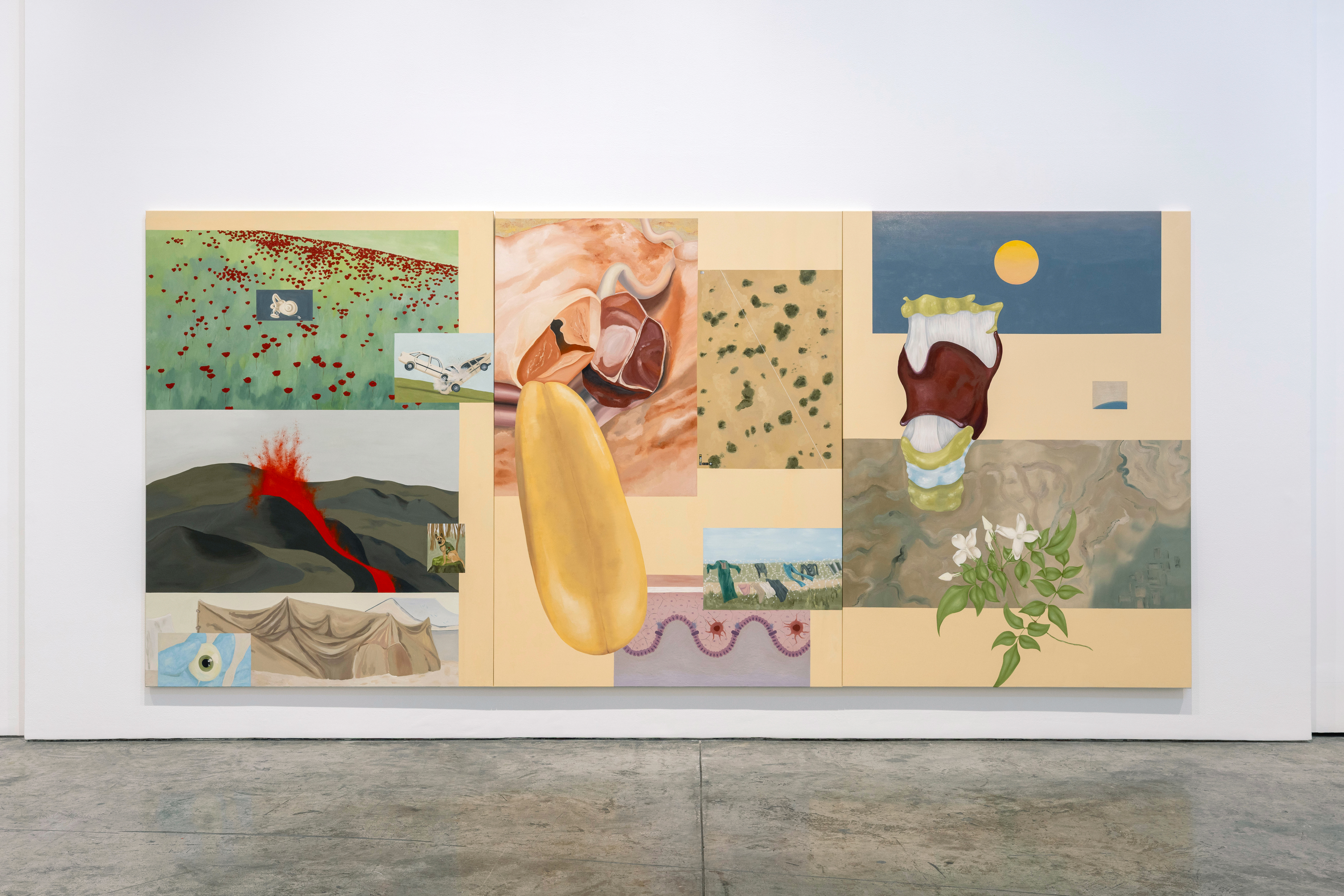
Sara Naim is a multidisciplinary artist who has built a practice around addressing the fragility of the “body”. This could mean the human body, bodies of authority that dictate our borders, or even the body of a computer: all things that appear stable until things like chaos reveal otherwise. Her work sits between an uneasy relationship of surface and collapse. Her latest exhibition, From the Perspective of Language at The Third Line, continues that inquiry with a clinical intimacy that is both fascinating and deeply unsettling.
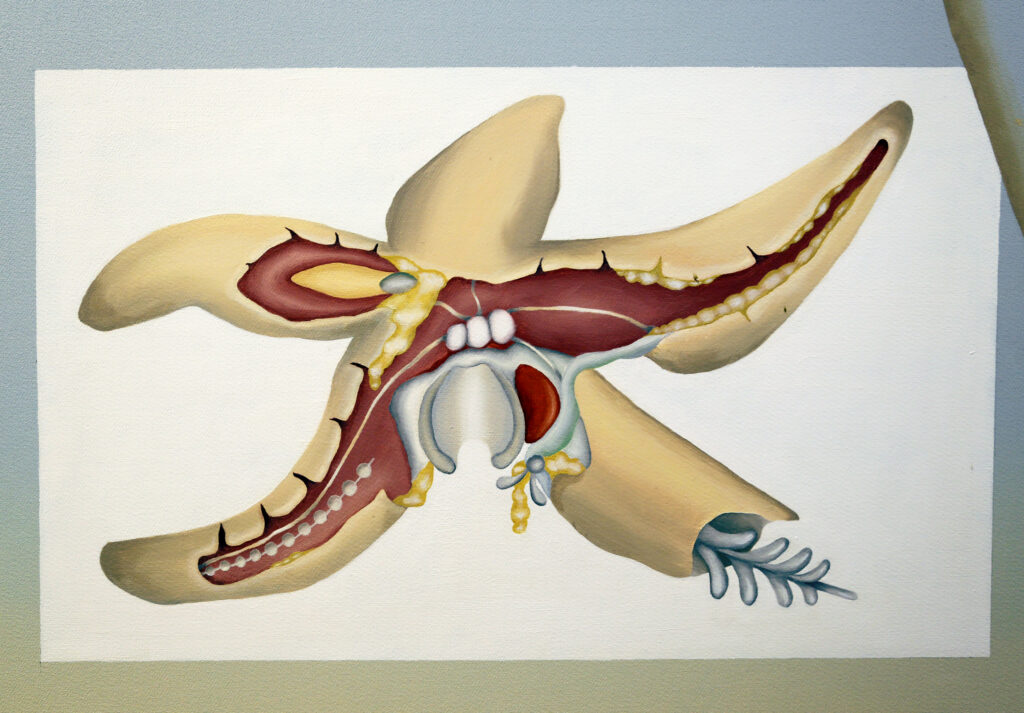
The first work I encountered was a starfish painted with its anatomy exposed. There is an immediate discomfort in seeing what is usually concealed beneath skin, a reminder of how rarely we are confronted with our own interiority except in moments of violence. This tension sits at the centre of Naim’s inquiry. Skin, and what lies beneath it, becomes less a subject than a site of insistence, something she returns to as a confrontation, not a spectacle. This is where my intrigue started to sprout, and my excitement to speak with the artist spiked.
Zein Karam: I wanted to start with the initial spark behind this exhibition, especially because your practice usually moves across photography, video, and microscopy. What made painting feel like the right medium for this body of work?
Sara Naim: My mom was a painter when I was a little kid, so I did oil painting quite young, but then I stopped. I did photography for my undergrad and fine art media for my master’s, but I don’t really see medium as a thing to stop me from exploring. I find them just as tools to deliver intent or meaning.
Painting an image is doing something very different from making an image. Photographing, arguably, is a way of avoiding direct experience where you encounter a limited frame between you and the event. With painting, you’re creating the event.
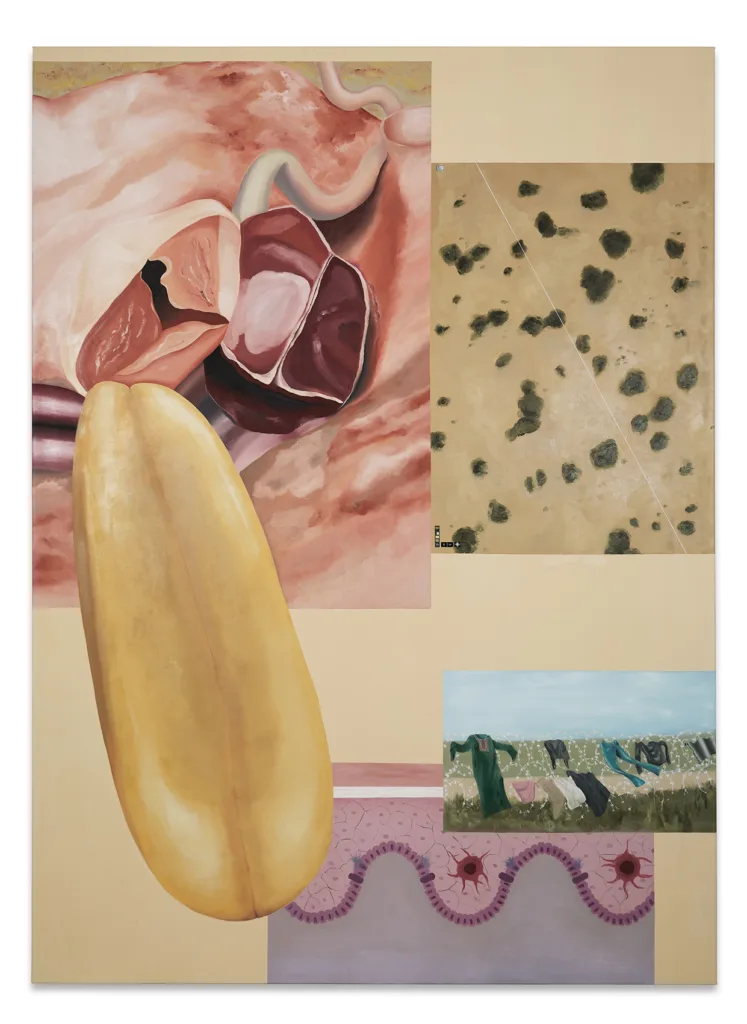
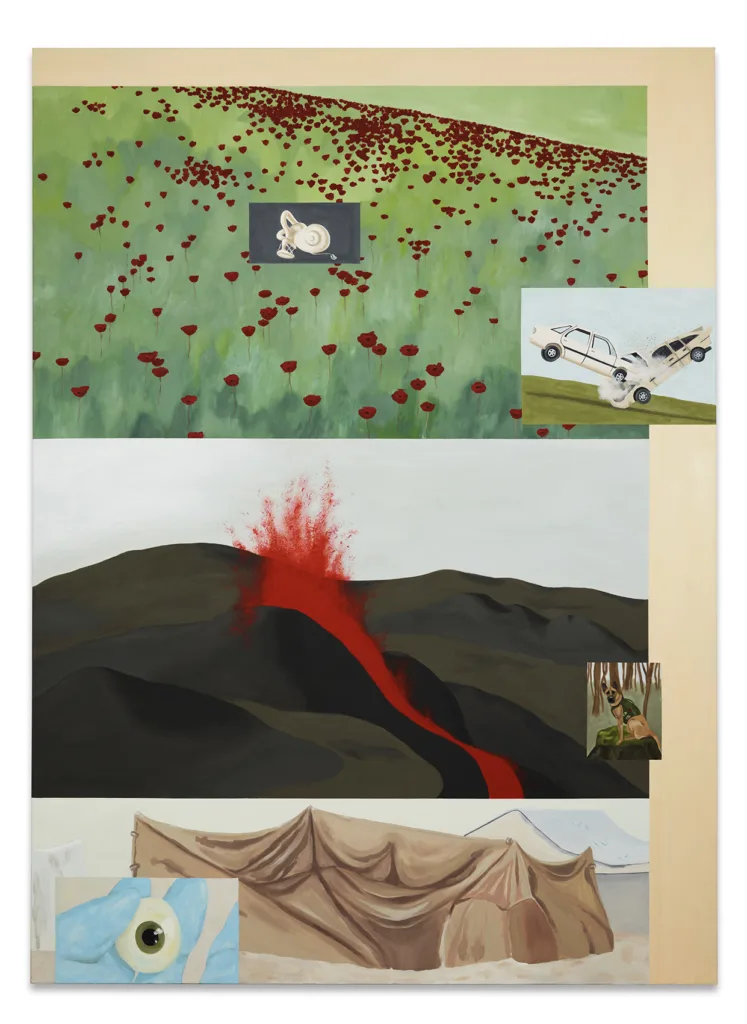
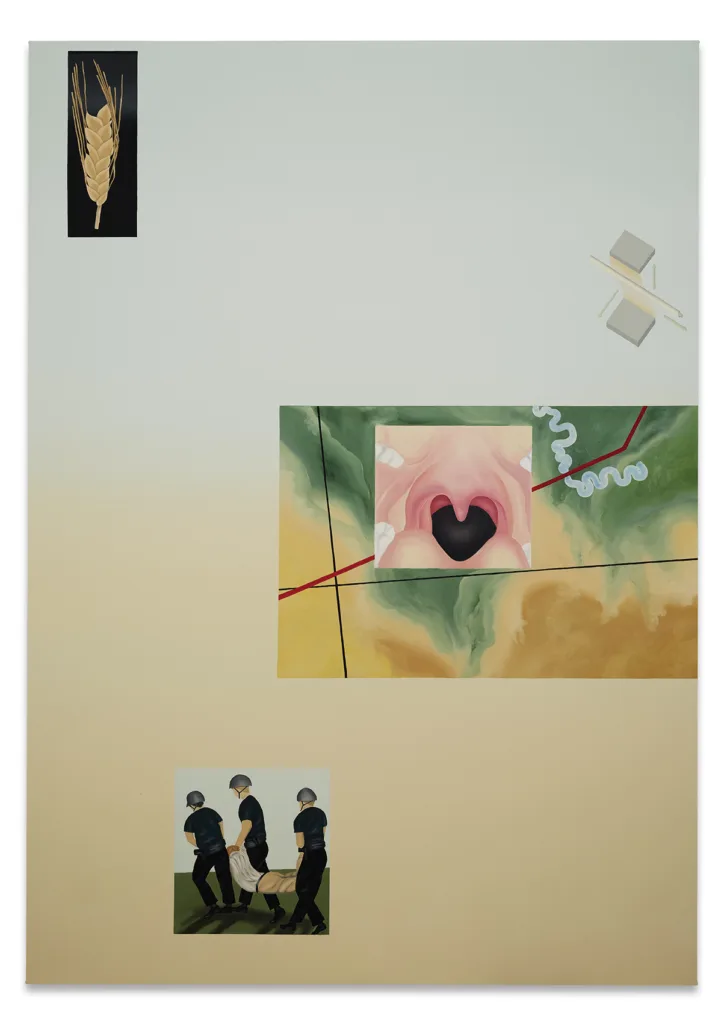
Z.K: A lot of the paintings looked like screen grabs or images pulled from a phone. There’s the Google Maps imagery, for example. Were these references you already had archived somewhere, or did you specifically seek them out while making the work?
S.N: Because I haven’t been back to Damascus for 15 years, I sometimes find myself on Google Maps, just going into the area where our apartment is and seeing what’s changed. So I have a lot of screen grabs from that.
But for this exhibition, I was looking more specifically at the Syria-Lebanon border, because that’s the border we would always cross. Sometimes we would fly into Lebanon and drive into Syria, or vice versa.
And I love the way that on the drive you realise it’s the exact same terrain from Damascus to Beirut, and the only thing separating them is a vector line and a border crossing.
Although I feel very Syrian, I often think about how Lebanon and Syria were once one country until relatively recent history. Yet we define ourselves through these geographical divisions that were constructed.
Z.K: I completely understand that feeling. I always joke that I identify more as “Levantine” than anything else because these borders feel so arbitrary to me. These colonial divisions become so embedded that people stop questioning them.
S.N: Exactly. Boundary is such an embedded construct that we forget that it’s a construct.
And I’m not saying we should walk through walls, but I think things are much more nuanced than we allow them to be. Even scientifically, when you look closely enough, solid objects stop behaving like fixed things. On a microscopic level there isn’t really division in the way we imagine it.
So then how can we be so certain about division on a macro level?
Z.K: Was there a question you were trying to answer while making these works?
S.N: I think I’d rather ask questions than answer them. I’m not saying I know what exists behind the veil or that I understand reality more clearly than anyone else.
But I do know that this isn’t it. What we’re seeing isn’t the full thing.
So I’m more interested in destabilising perception, or questioning the certainty we attach to the things we see.
Z.K: One thing I really appreciated was that the works don’t immediately tell you what to think. You kind of have to sit with them for a while before they begin opening up.
S.N: That’s important to me. My ideal way of viewing an exhibition is walking through it first, then reading the text afterwards, then going back to the work again.
Because context matters, but intuition matters too. If you read the explanation too early, it can impose meaning onto the work before you’ve had your own relationship to it.
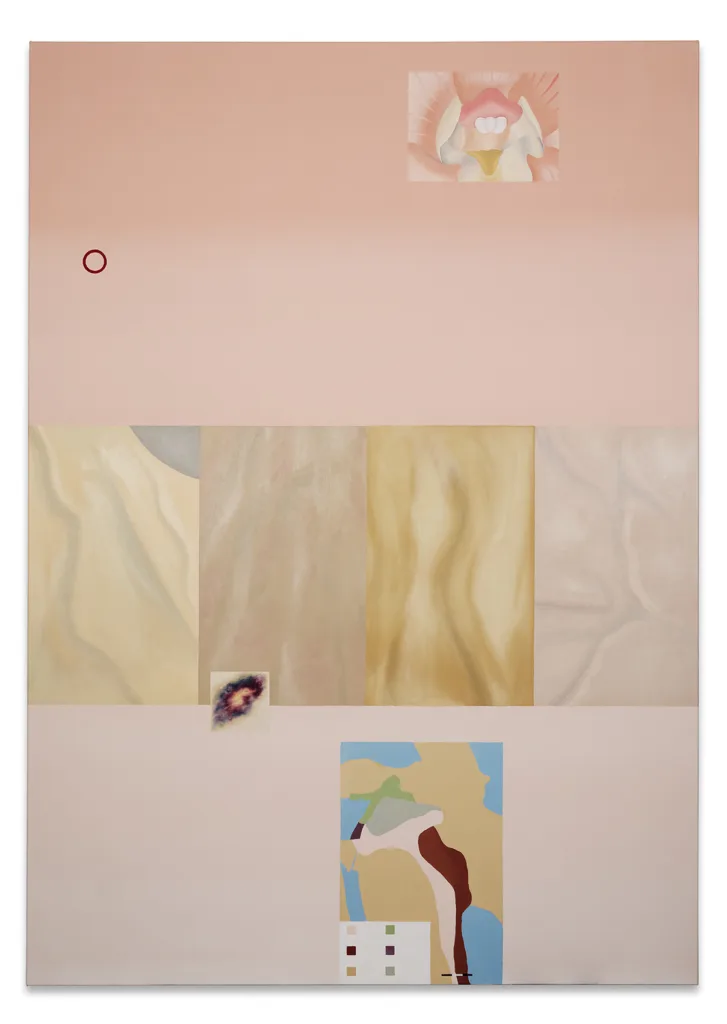
I also want the images to feel random in some way, because that reflects how we experience images now. We’re constantly consuming disconnected visuals all the time.
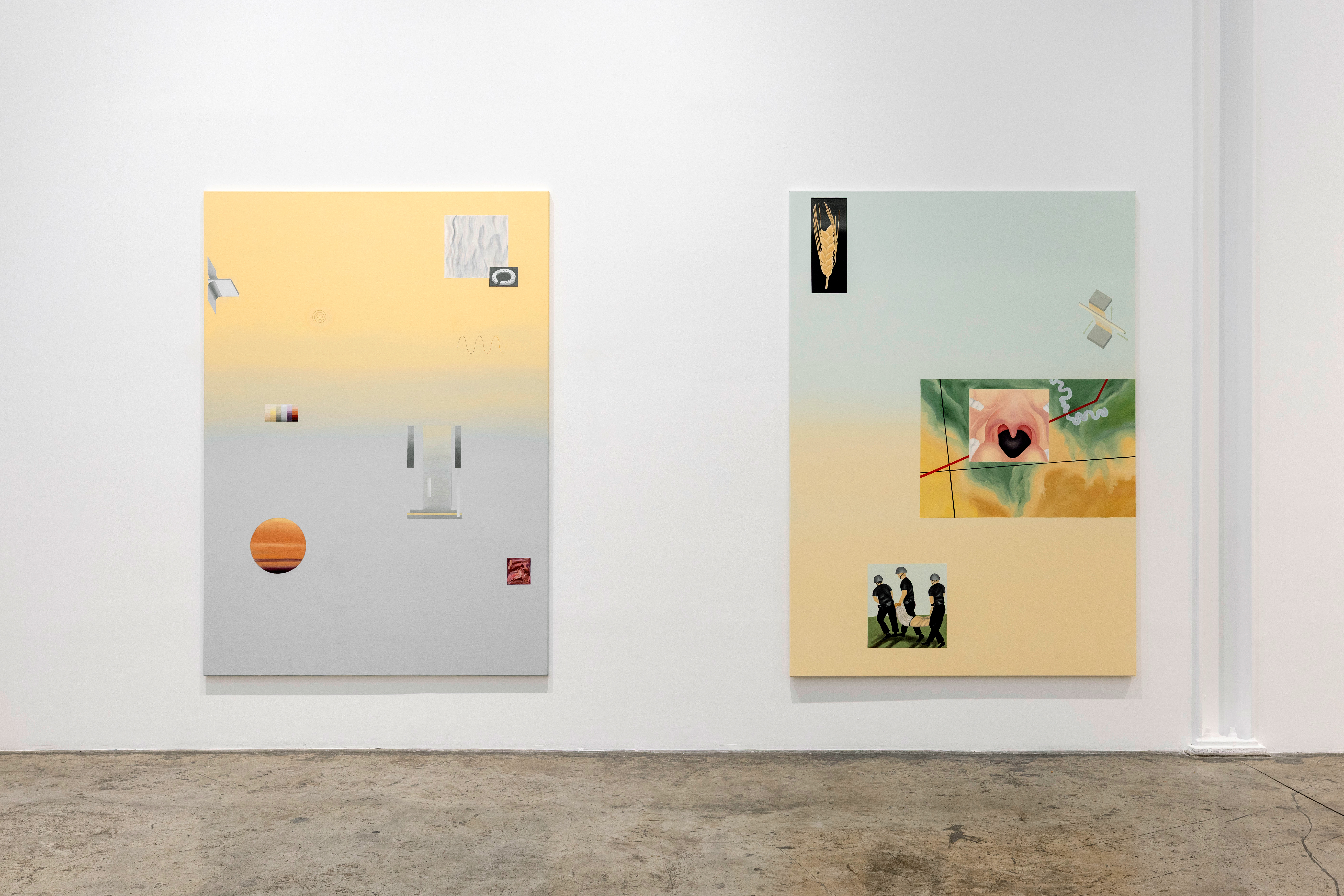
Z.K: You mentioned downstairs that skin plays a huge role throughout the exhibition. What does skin represent for you?
S.N: Skin is interesting because we carry our bodies with us constantly, but we never actually see our internal anatomy.
It becomes this threshold that keeps something in, but it’s not really a fixed line because internal things are constantly externalising themselves. Blushing, sweating, veins poking out when you’re angry, goosebumps, twitching — there’s always communication between inside and outside.
I’ve also been working with scanning electron microscopes and microscopes since around 2009, looking at skin at microscopic scales. And when you look at it that closely, it stops looking like skin entirely. It becomes this galactic or lunar landscape.
So I became really interested in skin as this illusion of separation.
Z.K: I’m also really interested in how science entered your visual language in the first place, because your work has always had this very scientific undertone.
S.N: Honestly, I think it started as a bit of an F-you to my school because I was so bad at science. Then, when I left and studied art, I realised I actually was interested in it; I just hated the way it was taught. So I started going into labs and scientific departments. Back then, it was much easier to access those spaces. But really, it all comes from curiosity. I want to see what it is that we don’t see. The visible spectrum occupies such a tiny fraction of the electromagnetic spectrum. We hardly see anything.
Sight is constantly evolving. We now have microscopes and telescopes and technologies that allow us to perceive things beyond ordinary human sight, and I think that’s incredible.
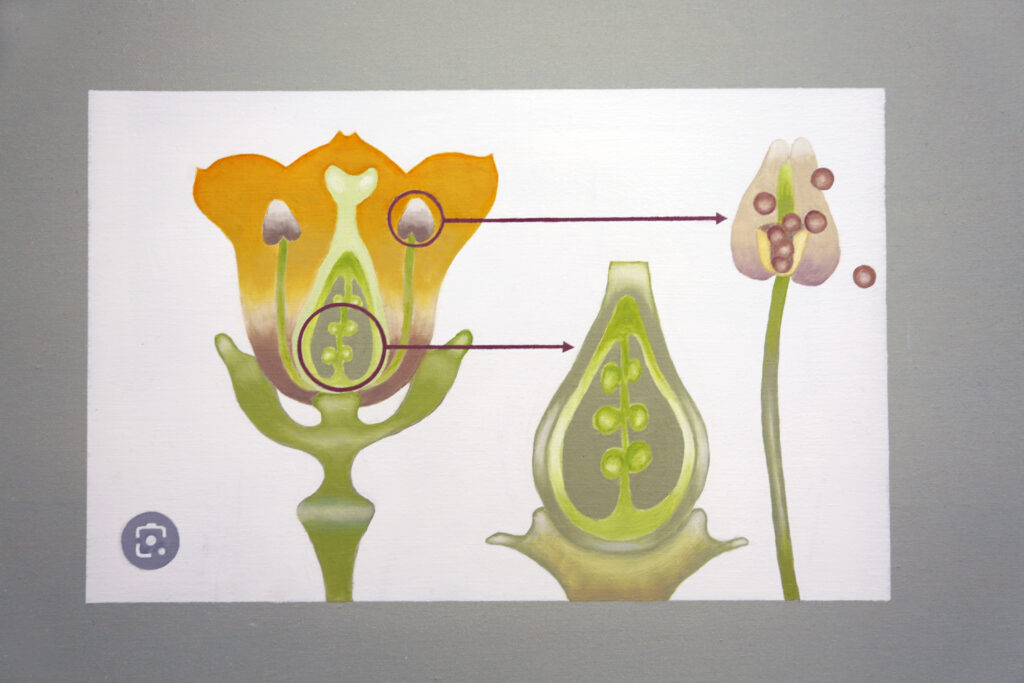
Z.K: Something I found really striking in the paintings was the use of MacBook-like gradients and digital colour scales behind the tattoos and imagery. I kept thinking about this merging between the organic and the digital, how we project ourselves onto our bodies through tattoos and then project ourselves again through screensavers and personalised devices. It almost feels like a kind of accidental transhumanism.
S.N: Yeah, I like the way you said that.
I do think the boundary between identity and self is becoming blurred, especially in terms of presentation and projected identity. And what really triggered this series was reading Donald Hoffman, the neuropsychologist who talks about perception as a kind of user interface. He does these experiments showing that evolution doesn’t actually prioritise seeing reality accurately. It prioritises survival. So he argues that evolution has given us this interface that hides reality and guides behaviour instead.
He compares it to a computer desktop. If we had to understand the entire infrastructure of the computer every time we wanted to send an email, we’d never function. So instead we interact through icons.
That’s what perception is like. What we’re seeing is a simplified representation, not reality itself.
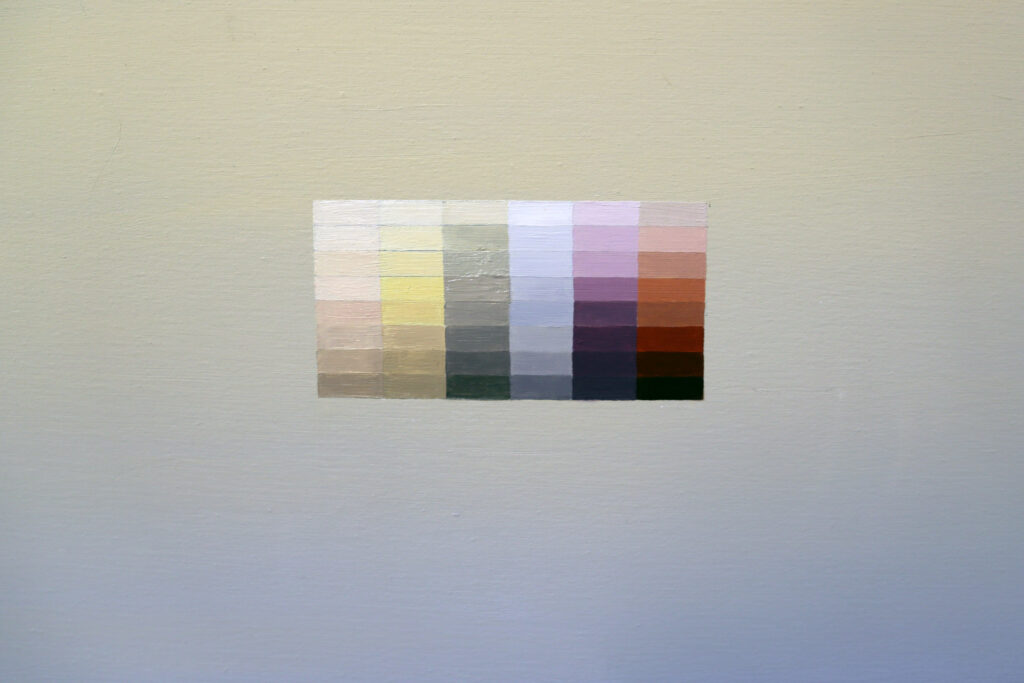
Z.K: That’s also what I found interesting about the tattoos specifically. They feel like ideological markers almost, little symbols that communicate belief systems.
S.N: Exactly. Tattoos become these symbols that indicate someone’s ideologies or values.
Skin also becomes this surface to externalise how we want to be seen, and ultimately how we see.
Z.K: Something else you speak about throughout the exhibition is language breaking down. You mentioned that sometimes language fails to actually communicate what it’s trying to say.
S.N: Yeah. Sometimes there are words in Arabic that I literally don’t understand, so instead I’m piecing together meaning through tone, gesture, mood, and reaction. Language feels like this transparent carrier of meaning, but it actually fails to deliver full intent. There’s always something left behind.
Even with art, trying to fully articulate everything becomes impossible. Some things need to remain unresolved.
Z.K: I really relate to that, especially because so much of your work also touches politics. Even trying to explain something like police brutality to someone who has never experienced or witnessed it feels impossible. Language kind of collapses under the weight of trying to communicate certain realities.
S.N: Exactly. There are experiences that exceed language.
And I think images work similarly. We assume images communicate truth directly, but they also flatten and simplify things.
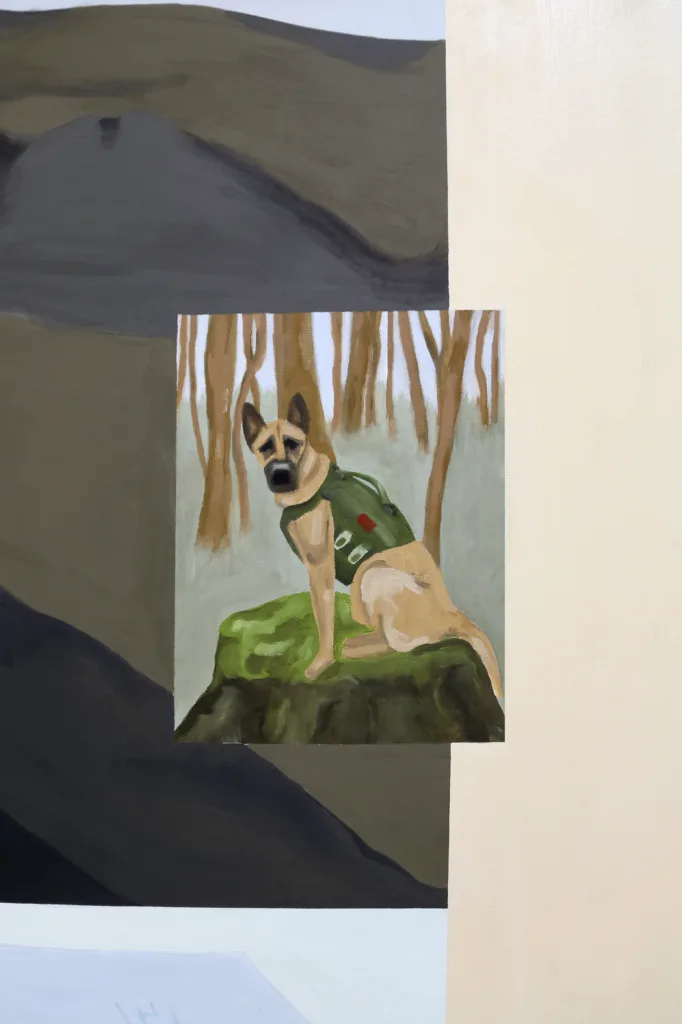
Z.K: I also wanted to ask about how the association plays a part in the exhibition. The images feel connected emotionally, but not always narratively. I think you’ve said in the past that you’d like for people to make their own associations. What can association express that direct storytelling maybe can’t?
S.N: I lean a lot into Kant’s idea that the subject creates the object through projection. Meaning isn’t inherent within the thing itself. We project onto it.
So when people look at the work, they’re weaving associations together based on their own experiences and expectations.
The viewer is responsible for weaving it all together, and that will always be different from person to person.
Z.K: Did you have much involvement in how the exhibition itself was installed? I especially loved how isolated the video felt in the second gallery.
Originally, the video was actually meant to take over the entire wall.
But then the war broke out during installation, and suddenly that scale felt wrong. It started feeling more like Covid times, where everyone was on their phones constantly trying to stay connected to information and to each other.
So I reduced it down to this small screen because it felt more accurate.
The phone became this perfect symbol of repetition and numbness. Information just loops endlessly until eventually it becomes like Susan Sontag’s notion of desensitisation through saturation.
It’s still speaking, but it’s almost saying nothing anymore.
Z.K: Are you interested in hearing people’s interpretations of the work? Or even their misreadings?
S.N: Completely. I’d love to hear what people connect to, what confuses them, what they reject.
Honestly, some of my favourite reactions come from friends or family members who don’t necessarily have a strong connection to the art world. They’ll just say very instinctively what the images make them feel, and I love that.
Because ultimately everyone is projecting their own experiences into the work anyway.