
 Posted in
Art & Photography, Nora Alissa
Posted in
Art & Photography, Nora Alissa
Nora Alissa brought ‘play’ to Paris Photo
Text Liz Bautista
Contemporary art in Saudi Arabia is entering an exhilarating moment. One where confidence in exploring personal histories, cultural memory, and imagined futures is taking root. Where a genuine curiosity and openness is observed. And where artists are boldly experimenting with new systems and storytelling in ways that feel both fundamental and forward-looking. It’s certainly a pivotal period, and Riyadh-based photographer Nora Alissa—who recently made history as the first Saudi artist to be featured at the international photography fair, Paris Photo—is proud and excited to be part of it.
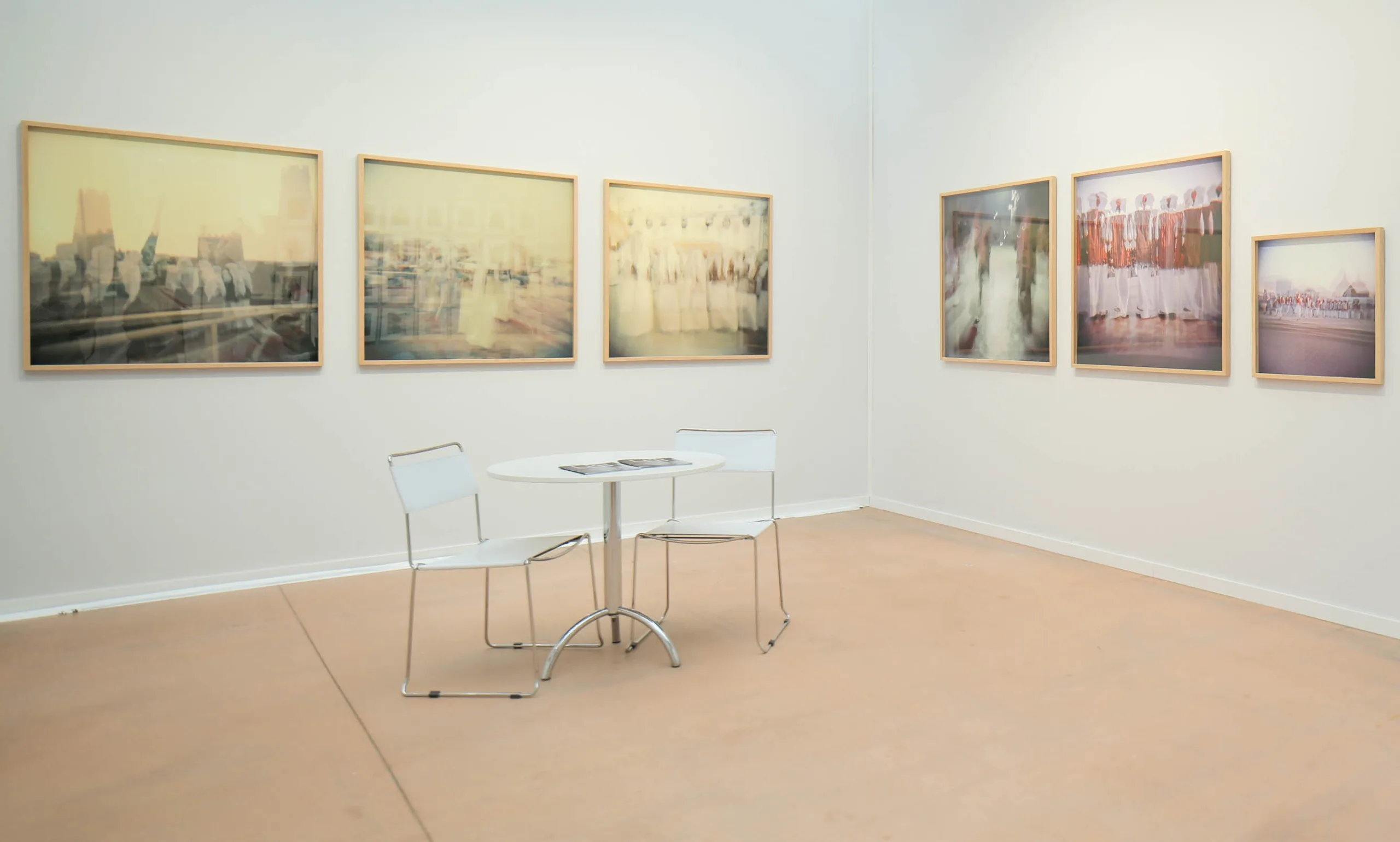
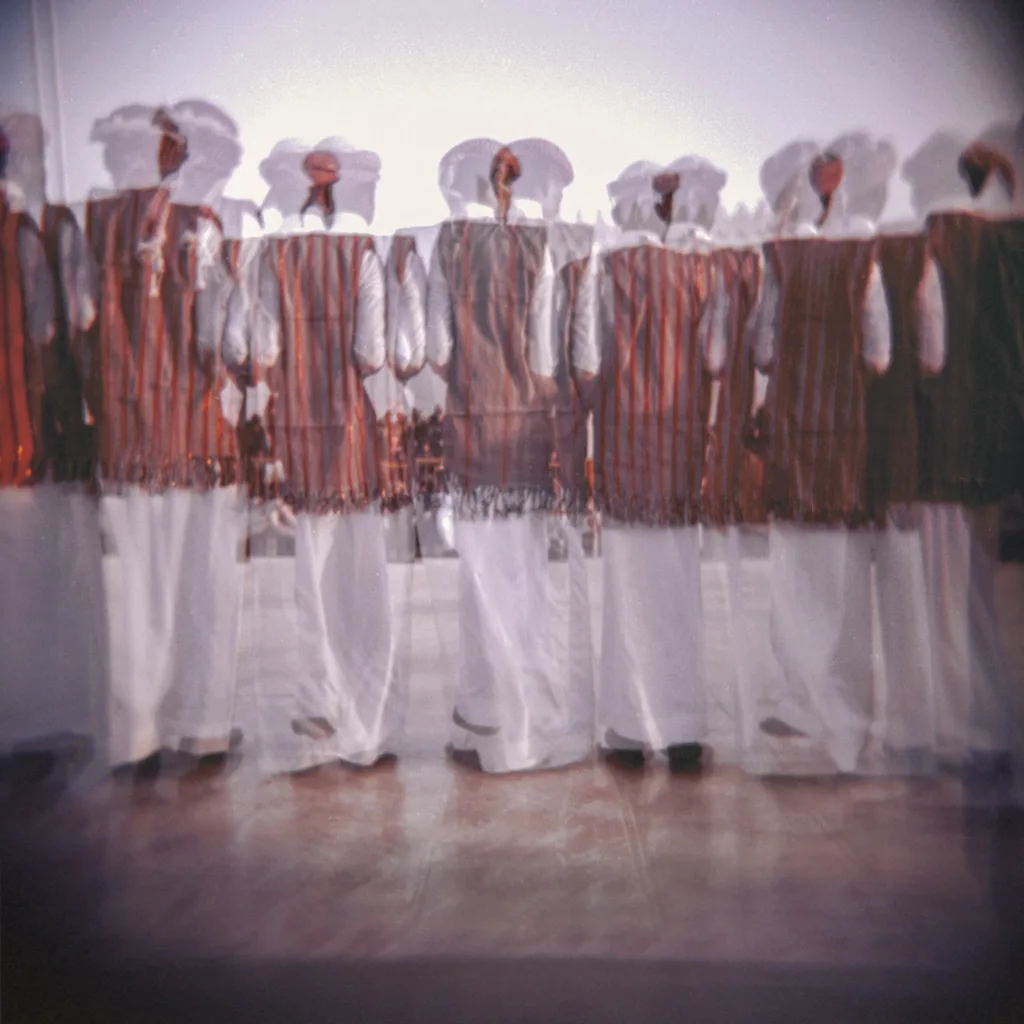
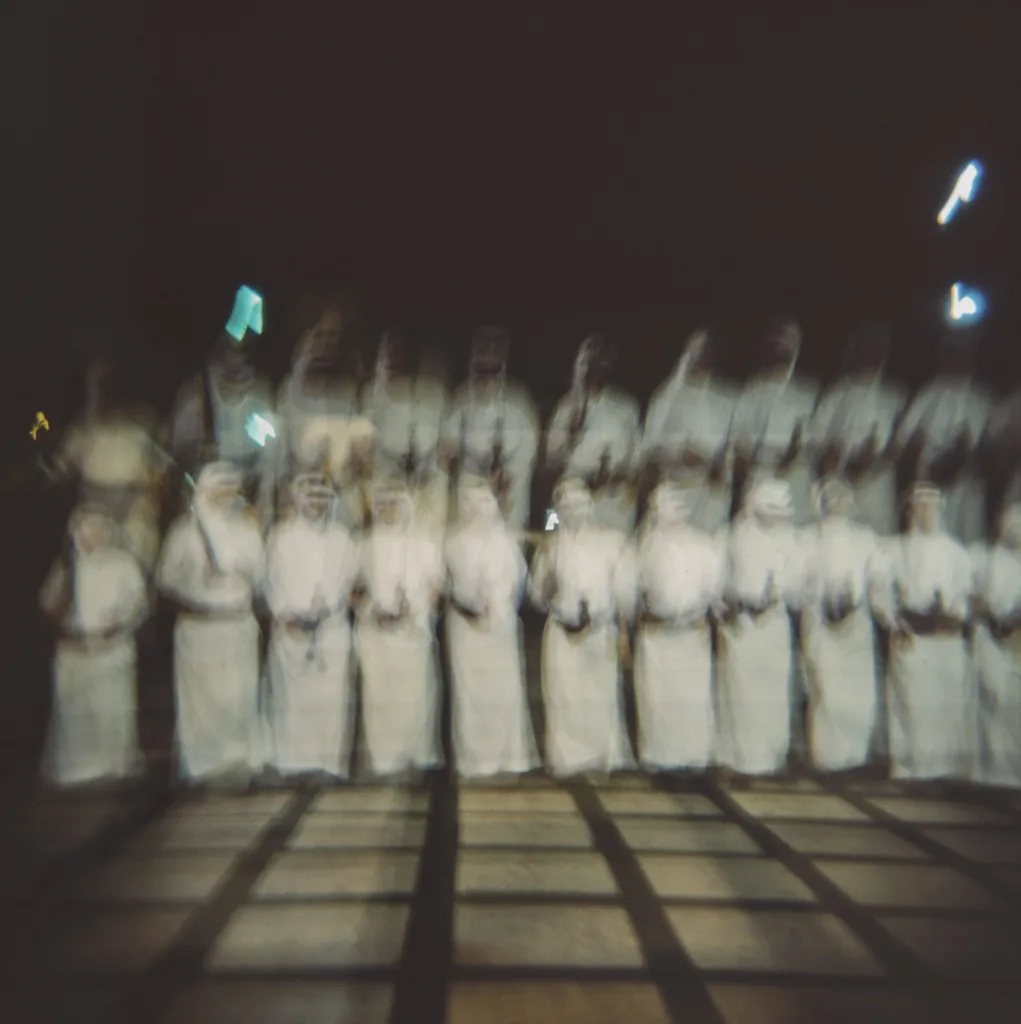
Through Jeddah’s Hafez Gallery (also the first Saudi gallery to exhibit at Paris Photo), Alissa presents her series Li’b (“play”), which steps into the world of Saudi folkloric dance, capturing its energy, traditions, and communal pride into film. Some of these dances are now recognised by UNESCO as intangible heritage, and through her lens, the past, present, and future coalesce into haunting, poetic images that blur, flare, and dissolve into a luminous reflection of culture and identity.
“Nora participated in a group exhibition we organised about ten years ago, and since then we’ve collaborated on and off,” shares Qaswra Hafez, founder of Hafez Gallery, adding, “Her work is delicate and carries a deep sense of spirituality.” Following her appearances at the inaugural Islamic Arts Biennale in Saudi Arabia and now at Paris Photo, Alissa is establishing herself as one of the Kingdom’s most compelling contemporary voices. We recently spoke with her about her work, inspirations, and aspirations.
This is the first time a Saudi artist is featured at Paris Photo—a historic moment. What’s it like to carry a milestone like this for you, both personally and professionally?
It’s an honour, one that feels both intimate and historic at the same time. Personally, it’s a reminder of how far our artistic landscape has come, it’s an opportunity to show the depth and plurality within Saudi visual culture. My presence at Paris Photo is not just about representation but about expanding the global vocabulary around Saudi art moving it beyond expectation, beyond stereotype, and into a space where it can be experienced on its own terms.
Li’b explores Saudi folkloric dance, a theme deeply rooted in movement, rhythm, and memory. What initially drew you to this subject, and what did you hope to uncover through it?
I was drawn to the idea of dance as a form of collective memory, a gesture that has survived across generations. Saudi “play,” or li’b, began as a pre-war ritual meant to energise and unify, and over time it transformed into a symbol of celebration. That evolution fascinated me. Through this work, I wanted to explore how traditions shift meaning while still carrying the emotional charge of their origins. It became a study of inherited gestures, shared rhythms, and the stories that live in the body.

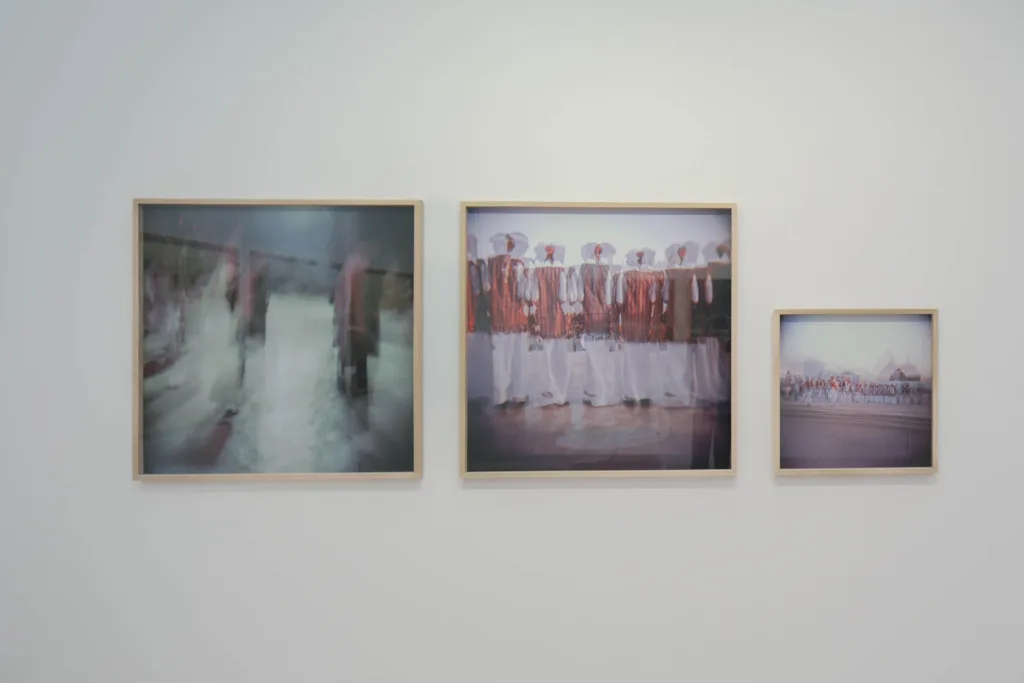

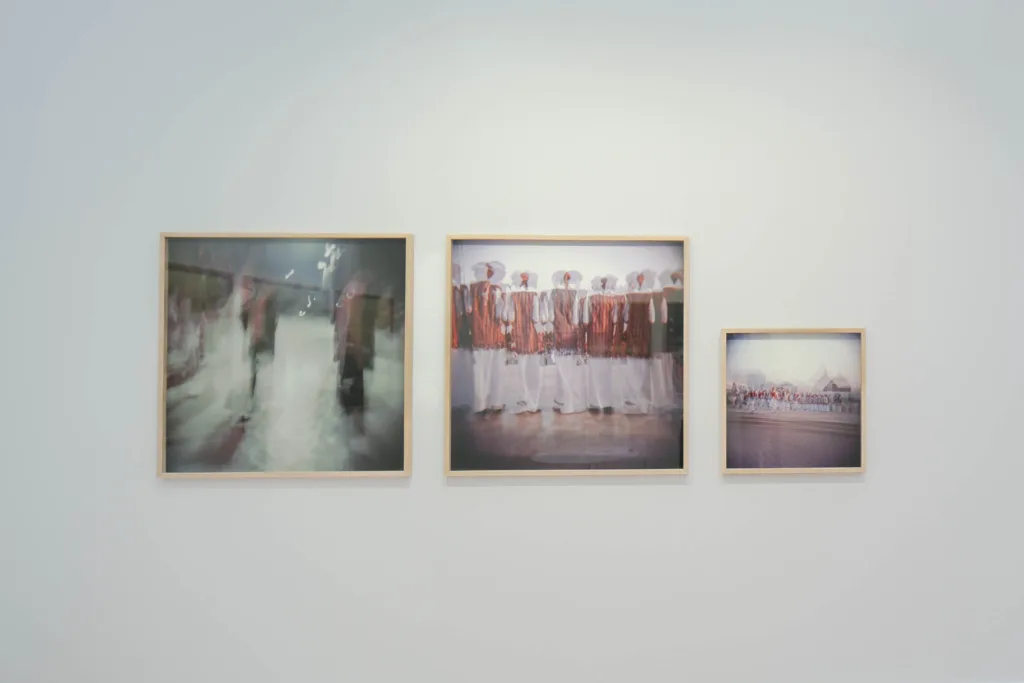


Can you tell us more about the materials or processes behind the creation of Li’b? Were there particular techniques you used to echo the ideas of memory, transmission, or continuity that run through the work?
I approached Li’b with an emphasis on layering both visually and conceptually. I worked with slow shutter techniques and multiple exposures to create a sense of continuity, almost like the echo of a memory replaying itself. Each image is less about capturing a single moment and more about showing a gesture as it travels from one generation to the next.
As a Saudi woman artist working both at home and abroad, how do you deal with questions of representation and cultural translation when showing your work internationally? Is there a gaze or story you feel driven to reclaim or reshape through your practice?
I’m always aware that my work enters spaces where Saudi narratives have often been framed from the outside. Rather than reacting to that gaze, I focus on presenting experiences as I live them, observational, intimate, and grounded in the everyday. My aim isn’t to explain Saudi culture, but to express it in a way that feels honest. In that sense, I’m not reclaiming a narrative as much as expanding it, offering viewers a more nuanced entry point into our contemporary realities.
In your view, what role can photography play in documenting—or even reshaping—narratives around Saudi identity today?
Photography offers a way to slow down and examine the subtleties of who we are. It can document change, of course, but it can also quietly challenge assumptions and bring forward perspectives that have been overlooked. For me, photography becomes a way of shaping narrative from within not by declaring what Saudi identity is, but by showing its multiplicity and its constant evolution.
What kind of emotions or conversations do you hope your work will stir in viewers at Paris Photo?
I hope viewers feel a sense of discovery that they’re encountering something familiar and unfamiliar at once. I’d like the work to spark conversations about how traditions evolve, how memory lives in movement, and how cultural expressions carry histories that are both personal and collective. And I hope it invites viewers to consider the universality of ritual and how every culture has its own form of “li’b”.
Looking ahead, how do you envision your next chapter as an artist? Are there new themes, forms, or ideas you feel drawn to explore after Li’b?
I’m interested in continuing to explore embodied memory. I feel drawn to the idea of landscapes both physical and emotional and how they shape identity. Li’b opened a door for me, and I’m excited to see where that path leads.
And finally, after completing this series, what does the word “play” mean to you now?
“Play” has come to mean continuity, a space where history, joy, resilience, and rhythm converge. It’s no longer just a performance, it’s a living archive. To me, “li’b” represents the ways we inherit movements, emotions, and stories without even realising it and how those inheritances keep us connected across time.