
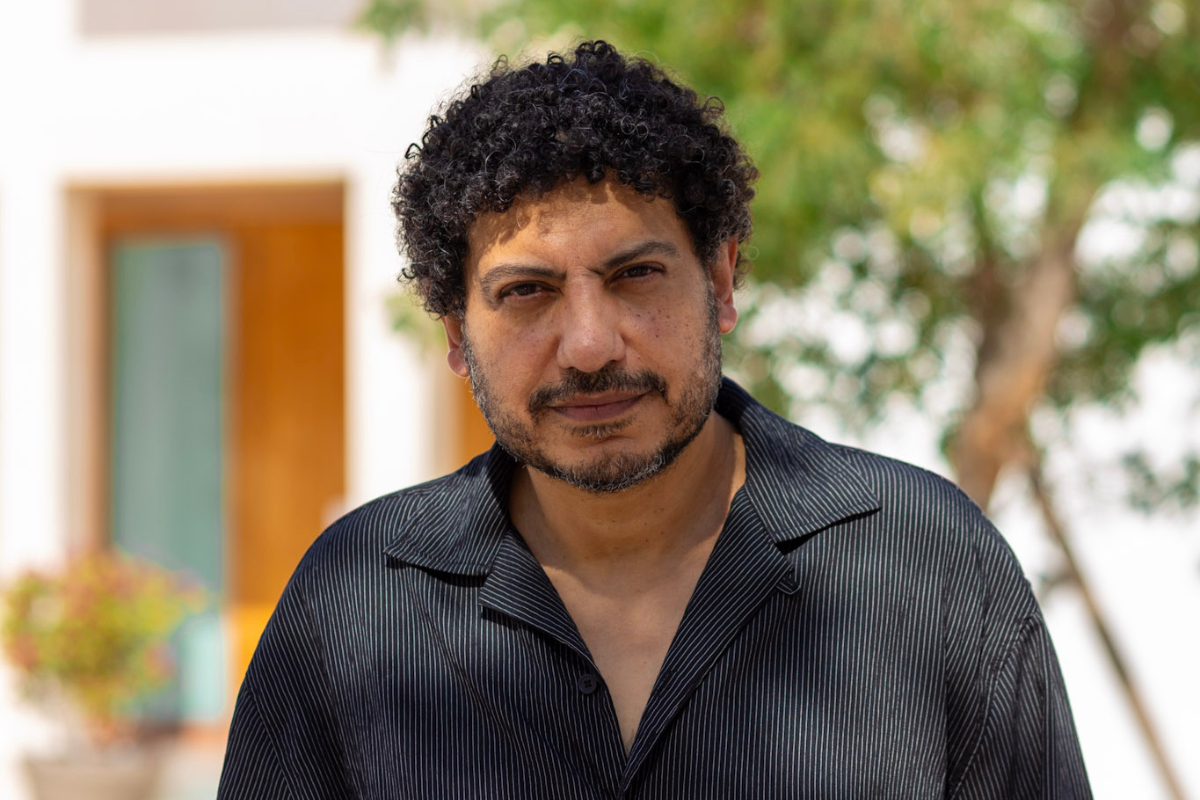
 Portrait of Wael Shawky Courtesy of Art Basel Photo by Jinane Ennasr
Posted in
Art & Photography, Art Basel
Portrait of Wael Shawky Courtesy of Art Basel Photo by Jinane Ennasr
Posted in
Art & Photography, Art Basel
Wael Shawky on directing Art Basel Doha, and rethinking the art fair model
Text Malak Helmy
Art Basel was founded in 1970 and is known as one of–if not the–leading art fair for contemporary and Modern art globally, with chapters in Miami (established in 2002, US market), Hong Kong (established in 2013, Asian market), outside of its home-site in Basel, Switzerland. From February 5-7, 2026, Art Basel opened its new station in Doha, Qatar — its first-ever fair in the MENASA region, which, as its press release stated, marks “a significant new chapter in its global evolution and for the international art market.”
To paint a fuller picture, one has to see this alongside the inauguration of Frieze—an equally leading global art fair based out of London—in Abu Dhabi, in November 2026, and of course, the annual Art Dubai—the locally grown, and till now, leading fair in the region, established in 2007.
What does it mean that the global art market is growing so rapidly in the Arab and SE Asian region? Art markets tend to grow after wars or crisis or revolution—from WWII to the present–museums or collectors—usually located in places outside of wars and upheavel—collect or purchase works under the mandate of protecting culture, documenting major events, and saving potentially lost narratives. On the one hand this builds a picture of archives in safe havens to revel at the past beauty of places and ideas while those places are left to ruin. On the other hand, there is the idea that art markets, made up of people collecting works, need information; and they not only create the appreciation of value, exchange and capital around works, but more historiography and research to be written–on historical art, modern art, artists. Of course there is the question of who benefits from that historiography – who gets to see it, where does it go, and how do we redistribute who gets to benefit from it? This all raises questions about how to read this moment.
What makes the opening of Art Basel Doha most intriguing is that it invited artist, Wael Shawky, to be the artistic director of this edition, to lead the fair, alongside Vincenzo de Bellis, Art Basel’s Chief Artistic Officer and Global Director of Fairs – something that is quite rare, if not a first. Wael Shawky is a widely celebrated artist from Egypt, who has an illustrious career, most recently representing Egypt in the 2024 Venice Biennial, with his work Drama 1882 on the Urabi Revolution, and is famed for his Cabaret Crusades series, an intricate trilogy of films based on the book, The Crusades Through Arab Eyes by author Amin Maalouf. He has had solo exhibitions at most major museums globally and is in most of their collections. His works are detailed acts of storytelling, with an extremely precise use of materials and provenance—or what in pop culture you would say is full of Easter Eggs. That’s to say he thinks a lot about how to make an intriguing work.
We had the opportunity to speak with Wael and asked what it means for an artist to direct a fair at this moment in time. [The interview has been edited for clarity and space].
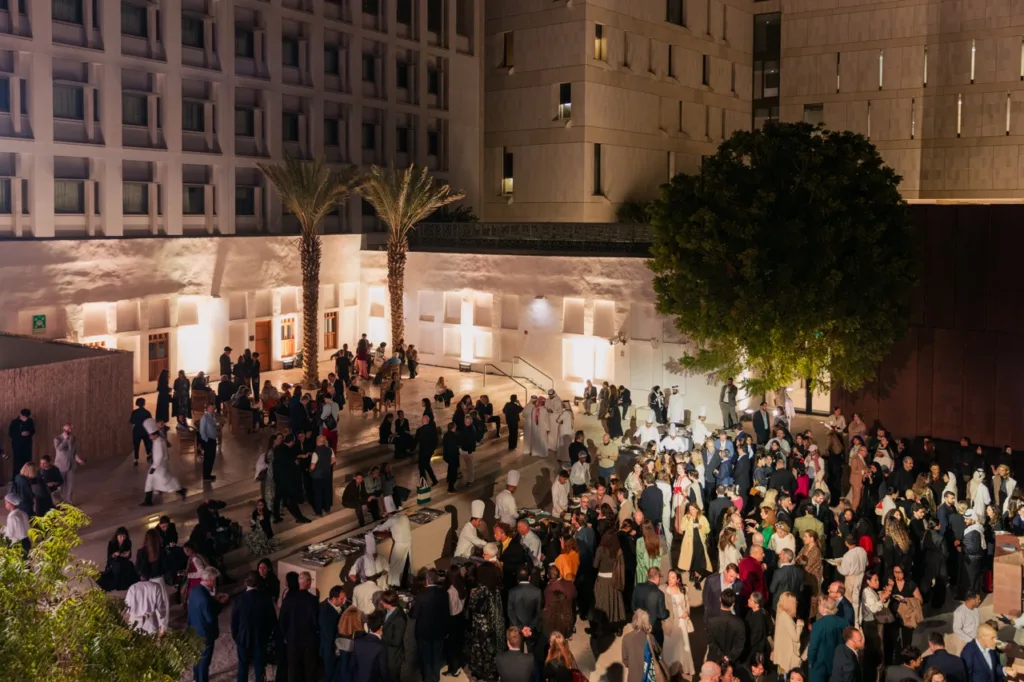
Malak: I wanted to ask you first about the idea of art markets and education. On the Art Basel website, I read a quote that you wanted to think about how an art fair, and education can be thought of together, not as something that is separate. Also, it mentions the studio program you initiated, MASS Alexandria, which ran for many years, and I know that you’ve also recently started directing Fire Station in Doha, for emerging artists from the region. Can you expand on this idea of education and the fair? And the role or responsibility of the artist in building infrastructures and redistributing opportunities.
Wael: This is very important for me as an artist, to try to get out of my own world and my own work and to concentrate on other things. That makes things much healthier, away from the ego a little bit, with other people, which is really important.
I think it’s very important for me to try to help to create a new format of education. It’s something that has to be built. And, of course, it needs some time to think
With all of these different points, I would say when I was approached to become the artistic director of Art Basel, of course, it was not an easy decision. Not only because I’m busy, but also because people in the beginning tried to make me, like, doubt this. As an artist would you… do this… commercial… it doesn’t look nice. Like clichés, and the idea of how you frame and categorise the artist. But the artist cannot know how art should look — they have to create something that doesn’t exist.
In the end of course, I thought it’s a fantastic idea. Let’s set up a new model for the market — but it’s coming from an artist.
So, why is an artist making an art fair? One is to complete this idea of education — that an artist cannot be categorised in one frame at all.
At the same time, with all these global changes that are happening everywhere, how can we establish the region?—and that is really the starting point with this word Becoming [the curatorial theme of the fair].
Okay–we’re making the first edition of Art Basel in the Gulf. But that does not mean that it’s all about sales, or money basically. How can we make this exhibition have quality, be sophisticated and unique. The other thing is, how can we try to break the gaps between the sales and the process of creativity? This is extremely important.
As an artist, galleries can often take our work and detach it from its narration and its context, and just throw it in a booth with no meaning, just for sales. That’s the concept of the market.
How can you, as an artist, enter this system without breaking the system of the market itself–because it still is an art fair. But you to offer a model of how art should be treated, and how the artist should be treated.
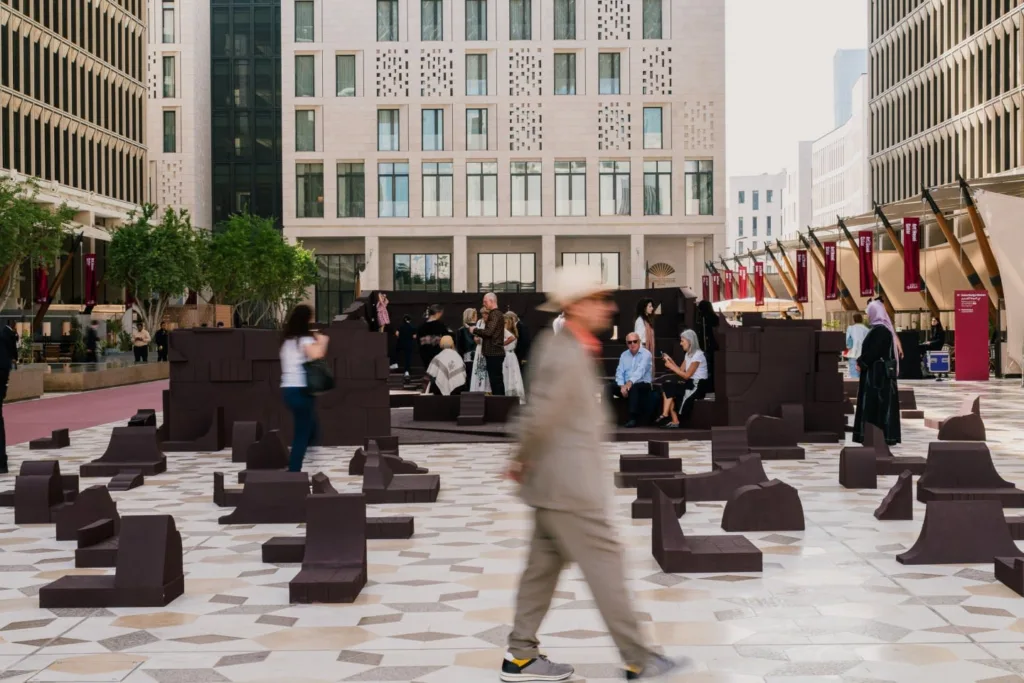
Malak: I’d like to ask more about this — giving the artist the space to show. To also force the audience [or market] to have to learn and study to understand these works and their histories, their particular aesthetic languages, their longer storylines. Can you talk about this more regarding your curation?
Wael: Yes, it is the idea of having a solo show for each artist. And not only solos — it’s also the idea of which booth is in front of which booth – it’s really about creating a space and a platform for intellectual discourse between these different booths.
We accepted 87 galleries, but more than 50% of the artists are coming from the MENASA region; some galleries, of course, have never been to Art Basel before.
As you know, there are really many good artists in the region, but they don’t have galleries that can represent them. That’s also an issue. Some of the galleries that we accepted don’t have big names at all. But the artists that they have…some have really great works of high quality.
So it was like a lot of this discussion.
And …about the title Becoming also, that was very important: how to try to make these different narrations that are coming from everywhere that makes sense together.
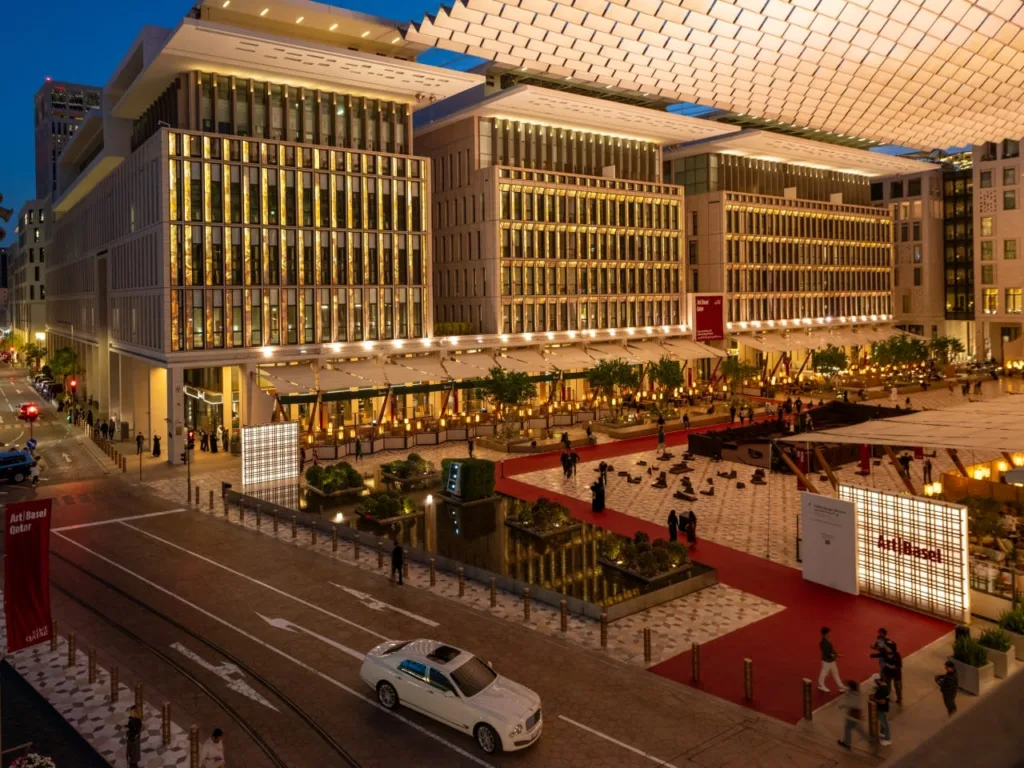
Malak: One can’t think about this moment outside of the geopolitics of the region. Also art markets tend to grow a lot after crisis, but in this moment maybe it’s interesting that it’s an opportunity to set roots in the ground or make an art fair be more integrated. For example, the art fair is not isolated, but rather more in the city.
Wael: Yeah, that came actually, that credit goes to Art Basel, not to me. I’m not the one who chose the place and I think it’s really brilliant. Because, yes, exactly, most art fairs you find in a huge industrial building that has nothing to do with anything outside. This was not the concept they had. They really wanted this to be in the heart of Doha, which is Msheireb.
I like to feel that I’m capable of making not only changes but setting up models. They have a vision, and this vision is allowing me to create and to bring all the voices from everywhere, different voices, different cultures. That’s how I can build. I can work with any system. But what is really important, is that you see real effect.
I feel proud that now in the Gulf, it’s the idea of how to involve more voices…from Uzbekistan, India, Pakistan and that’s happening all the time. It’s happening in the school program now at Fire Station… it’s the pilot program.
Out of 1000 application, we only accepted 20 students. Three Qataris and 16 from different countries, Nepal, Vietnam, China, UK, Egypt, Bahrain, Sudan, you know, and I think this is the way we should work. This is the way we should think, even, to build our structures. If the system after that wants to use its success, it’s something else.