
 Posted in
Art & Photography,
Posted in
Art & Photography,
Rays, Ripples, and Residue: Celebrating 421 and the power of contemporary art in Abu Dhabi
Text Selma Nouri
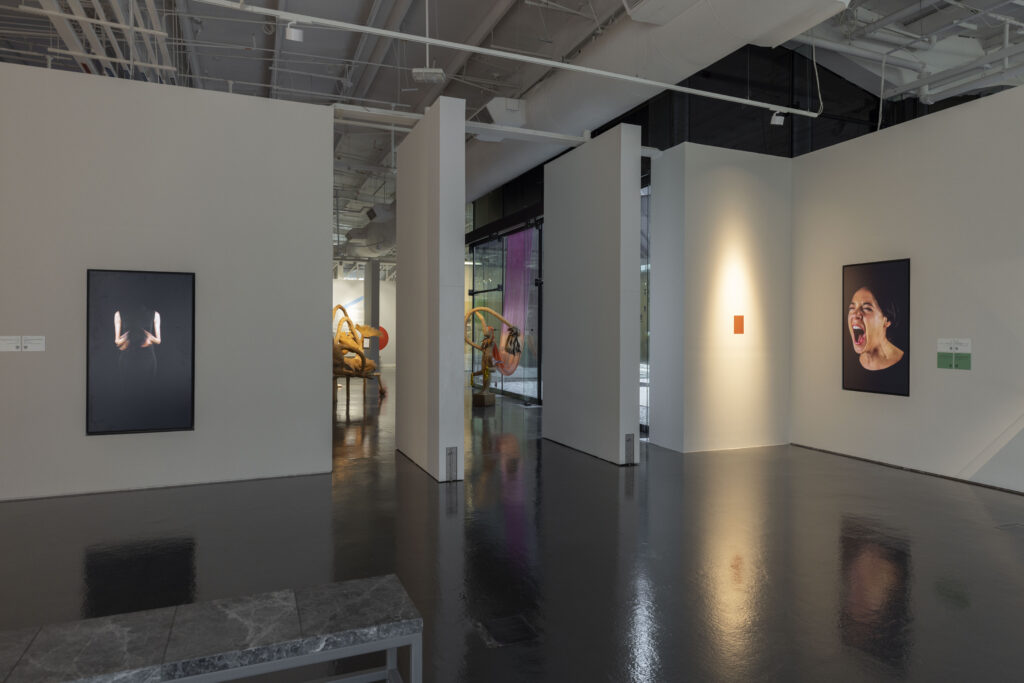
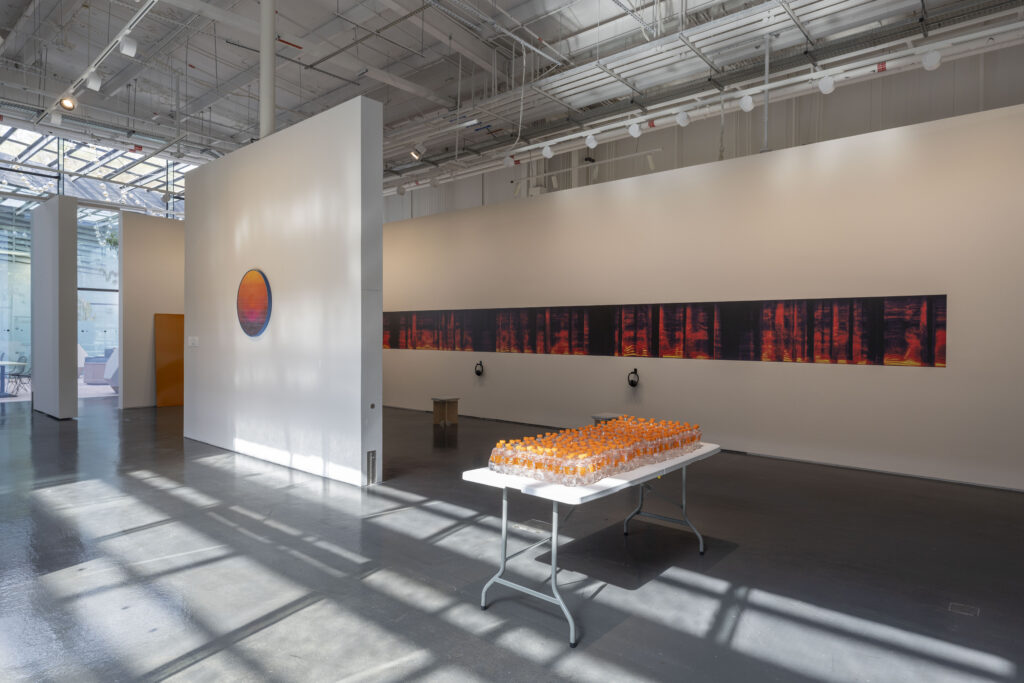
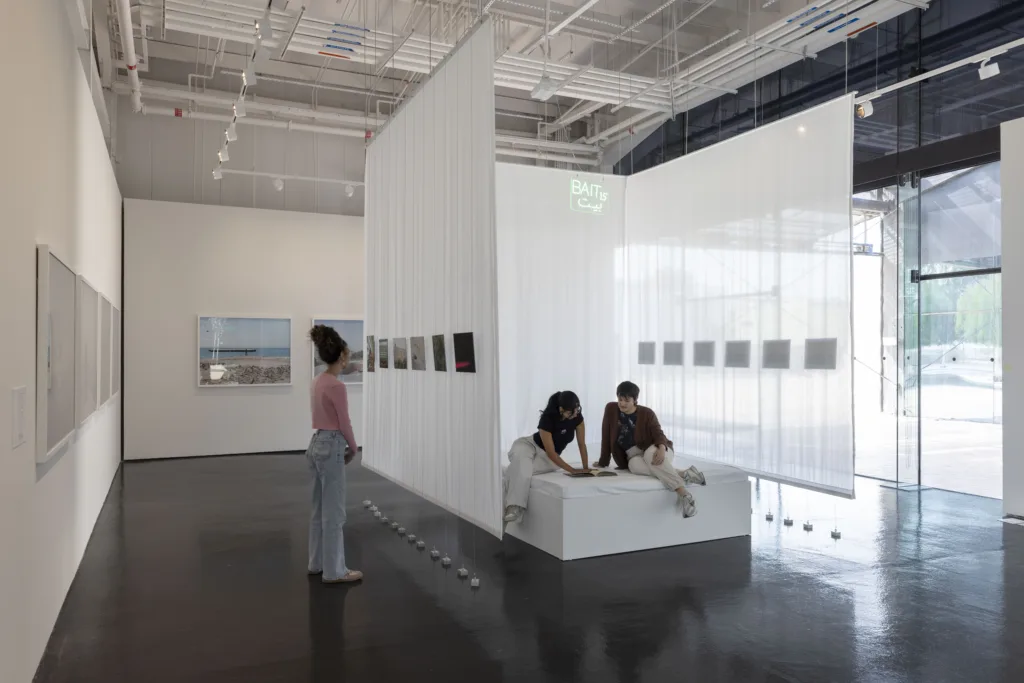
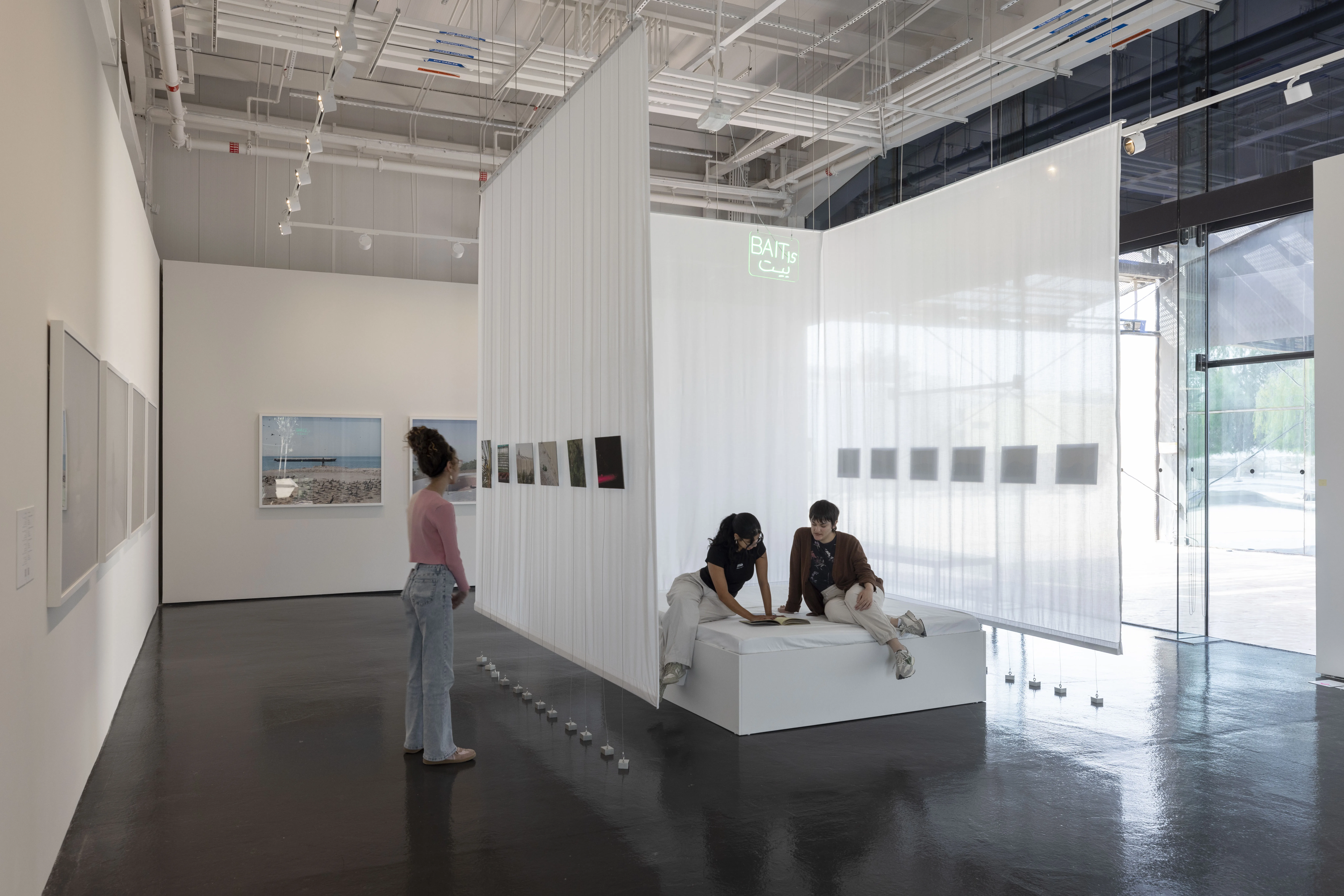
For its final weekend, the group exhibition Rays, Ripples, and Residue marks the 10th anniversary of the 421 Art Campus in Abu Dhabi. Reflecting on burgeoning artistic practices in the UAE, the exhibition serves as a reminder, amid regional hardship and political unrest, of the cultural power and solidarity that can emerge through art.
Since 2015, the local art scene has evolved into what is best described as a “dynamic ecosystem,” fueled by stronger institutional support and growing international visibility through biennales and major fairs such as Art Basel. More significantly, however, this evolution has been driven by a surge in artist-led initiatives and a deepening engagement with questions of selfhood—encompassing regional histories, decolonial narratives, and the cultural forces that have profoundly shaped communities across the region, including many who now call Abu Dhabi home.
Faisal Al Hasan, Director of the 421 Campus, affirms this idea, stating, “I think the UAE’s art scene has changed in ways that feel both rapid and deeply layered. We’ve seen the arrival of major institutions alongside the steady growth of locally rooted, artist-led initiatives. What’s shifted most noticeably, for me, is confidence: a move away from simply hosting global conversations towards producing our own and on our own terms.”
Featuring video, performance, installation, and multimedia works, Rays, Ripples, and Residue—curated by three of the UAE’s most prominent critics and curators, Munira Al Sayegh, Nadine Khalil, and Murtaza Vali—traces the evolution of this growing confidence, with time as its central thread. Moving through past reverberations, post-moment hauntings, and enduring critiques of the future, the exhibition opens up conversations about what it means to produce art in the UAE today. It does so through the subtleties of selfhood and the often-overlooked gestures that, over time, have accumulated to shape a scene increasingly driven by its own practitioners.
Having curated the section Leading to the Middle, which explores the expansion of the UAE’s art scene through a ripple effect, Al Sayegh frames curating as an act of narrative agency. “For me, curating has always been a means of storytelling,” she says. “It’s been a means of sharing and extending the contemporary culture that’s happening here in the UAE to the wider region and to the wider world…be it through exhibitions that take place here, or those that present artists from the region elsewhere. I think it’s extremely important that exhibition-making practices stay alive. As you know, there’s so much discussion about the region and what it is, usually from an outside perspective. So, for me, I really do see this space of curating as a space of reclamation. We’re reclaiming the narrative. We’re enhancing it, and we’re telling people what’s actually going on, currently on the ground, through the lens of contemporary art.”
As the anniversary exhibition makes clear, this sense of reclamation has always been central to 421’s mission. “I used to work at 421,” explains Al Sayegh. “I curated my first exhibition there, and I still feel at home every time I walk in. I know I’m not alone in that. It’s a feeling many people share.” This enduring sense of belonging became the foundation of her curatorial approach in Leading to the Middle. “I chose to work from an autobiographical perspective,” she says, “tracing the moments, exhibitions, people, places, and publications that have sustained me and many other creatives over the past decade, creating a kind of ripple effect.” The exhibition, in her view, is less a retrospective than a living network of influence. “It highlights the people and spaces, like 421, that have enabled extension, expression, and the safety to experiment when many others outside the region refused to believe in us.”
She also situates this history within a shifting global context. “For me, the new presence of international brand names here reflects that they’re witnessing something genuinely exciting,” she notes. “Many arrive with their own cultural frameworks, often assuming there’s no culture here, which I hear often and find quite amusing. But spaces like 421 stand as proof that we’ve long existed…they act as anchors, affirming that we are here and have been for decades, since at least the early 1970s.” In this way, Rays, Ripples, and Residue pushes back against the persistent narrative that the region’s cultural landscape is new, underdeveloped, or in need of Western validation. Instead, it foregrounds a scene taking shape from within, driven by communities who gather, create, and define their own terms of engagement.
As Al Hasan adds, “We’re living through a moment where pressure is constant; emotionally, politically, psychologically. In the region, especially, people are carrying a lot: grief, anger, exhaustion, uncertainty. Much of that can’t be easily articulated. Art becomes vital precisely because it operates in that in-between space, where things can be felt, held, and expressed without being flattened into statements or slogans…I think art matters right now because it allows complexity to exist without resolution. It resists the demand to simplify, or to move on too quickly. For artists in the region, making work can be a way of processing lived realities that are ongoing, unresolved, and deeply personal. It creates room for ambiguity, for contradiction, for emotional truth. Our role is to protect that space.”
In the long term, Al Hasan hopes 421 will continue to build on and strengthen the legacy it has developed over the past ten years. “I hope 421 continues to be a place where artists feel they can be honest; about their work, their questions, their uncertainties. When I see artists who came through our programs go on to build strong international trajectories and still return, even informally, it reminds me that spaces like this leave a mark. They become reference points, not just institutions.”
This weekend may be your last chance to see Rays, Ripples, and Residue, but it marks only the beginning for 421, and for the wider art scene that Abu Dhabi continues to cultivate for the next generation of creatives in the Gulf.