
 Posted in
Art & Photography,
Posted in
Art & Photography,
Ruwan Teodros on finding belonging, and herself
Text Zein Karam
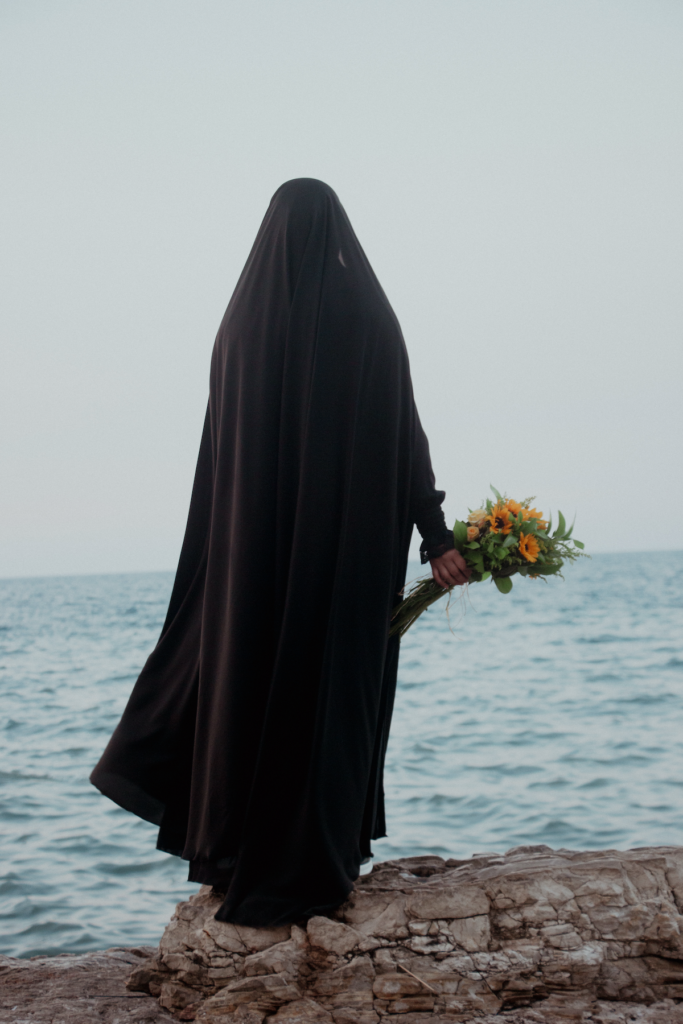
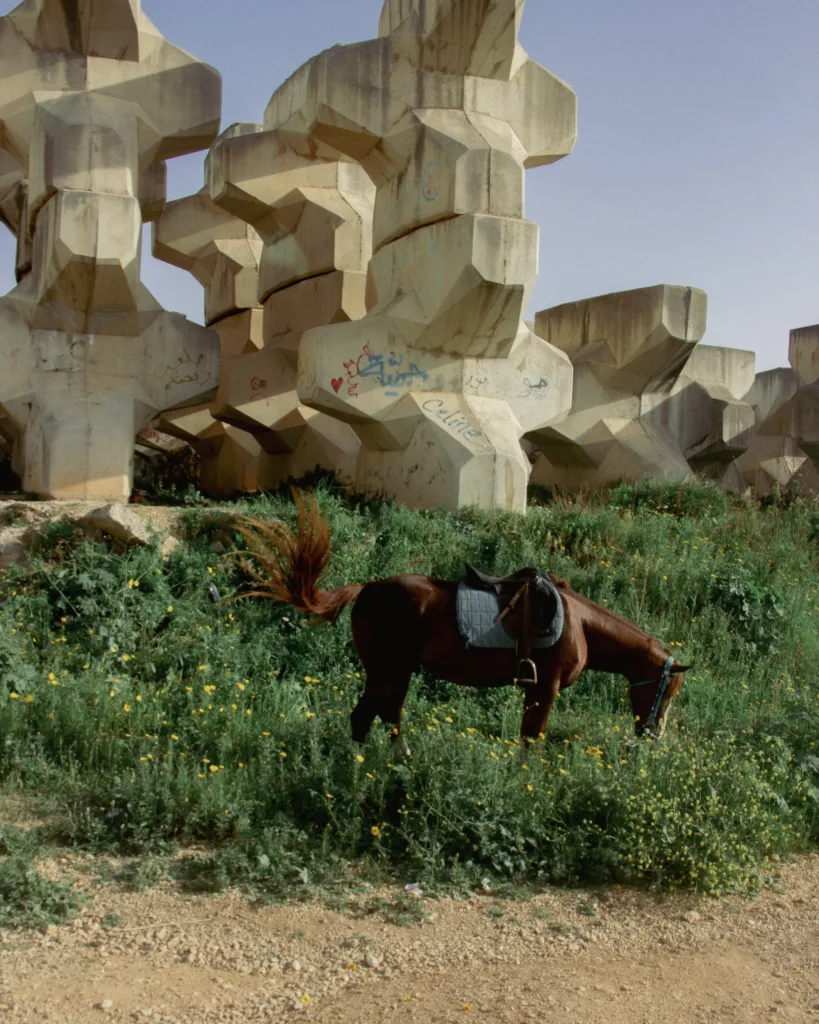
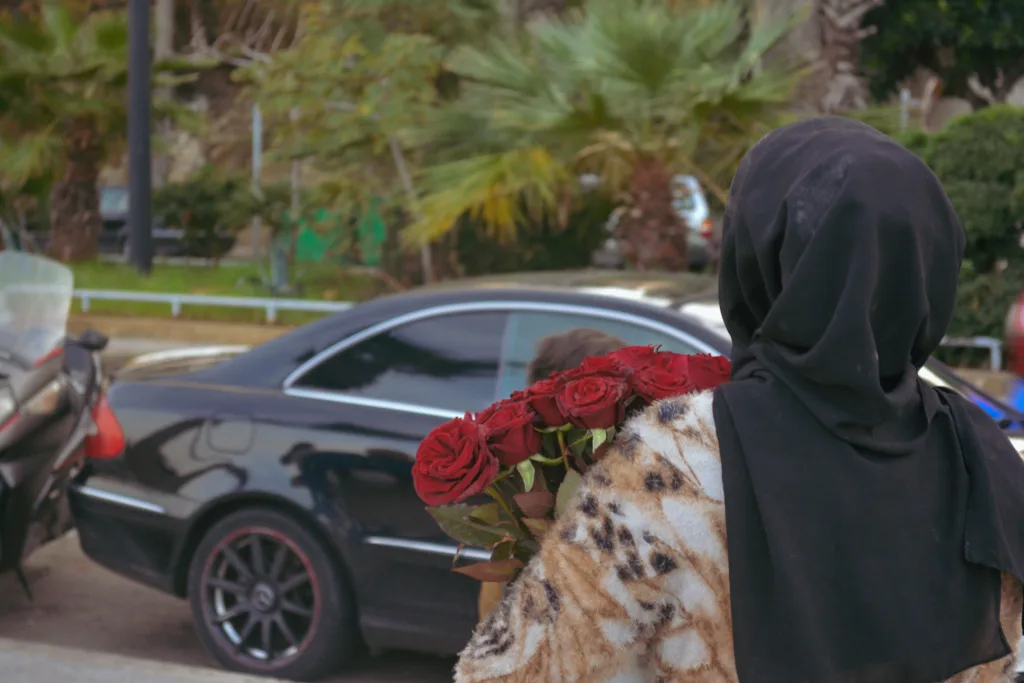

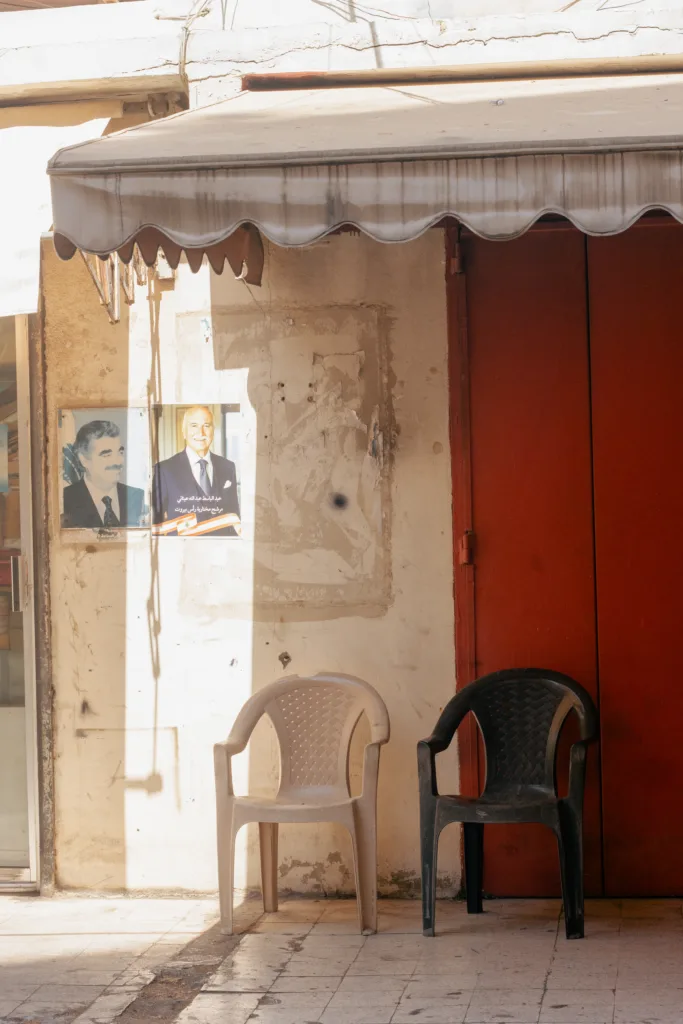
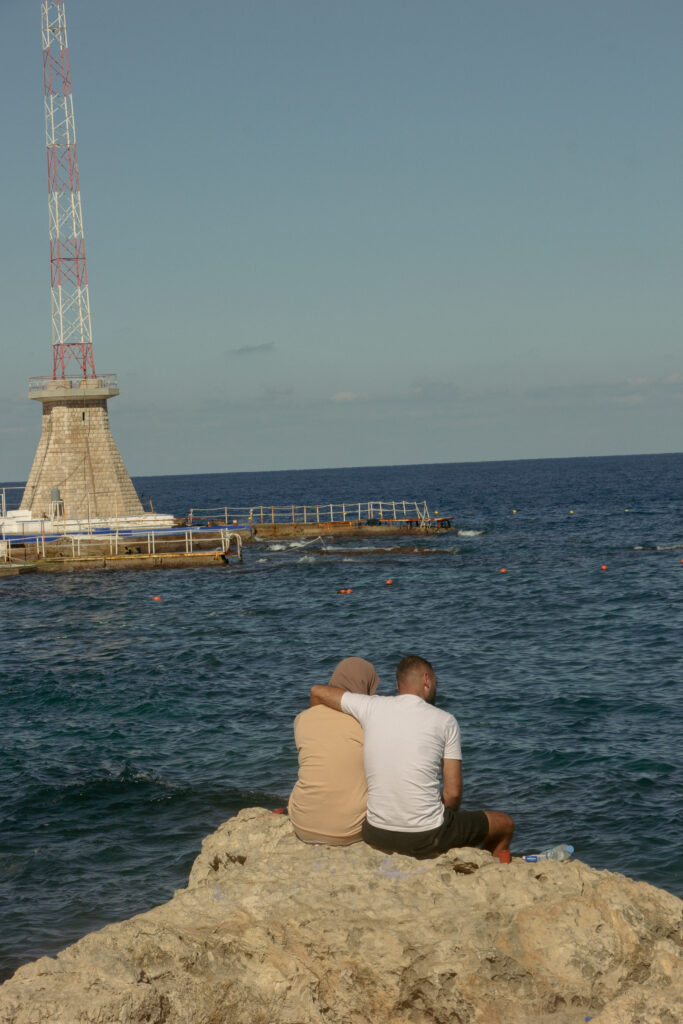
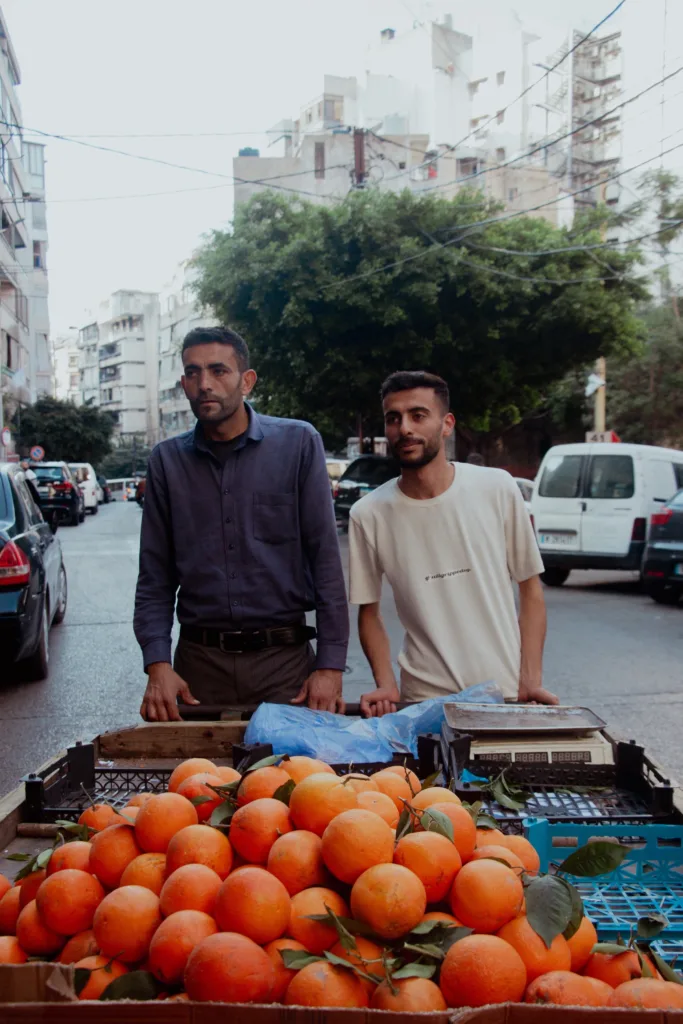
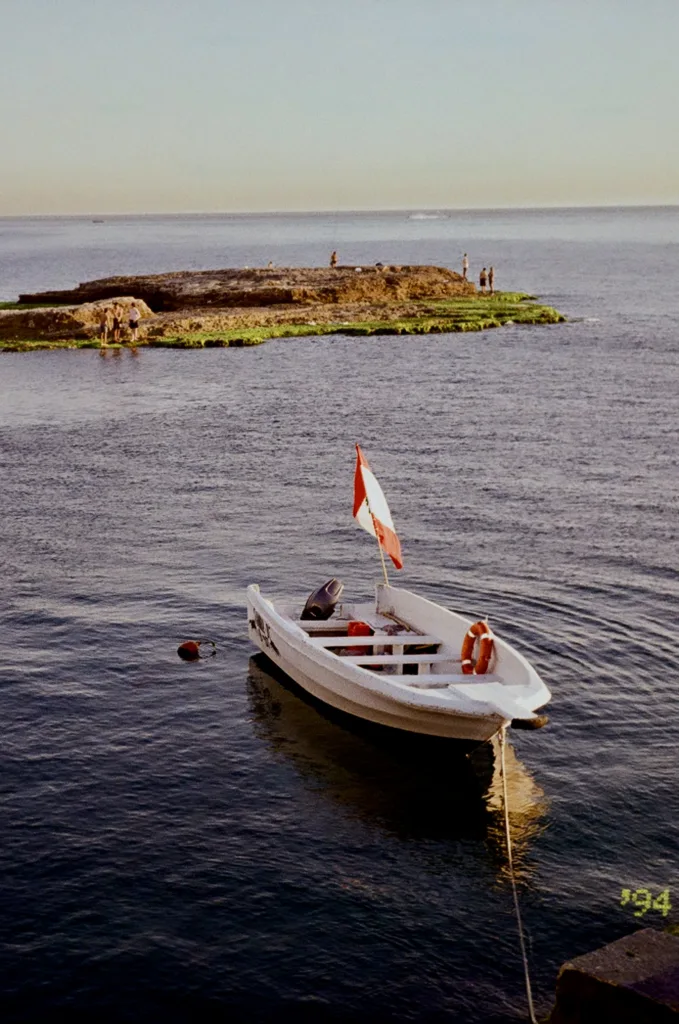
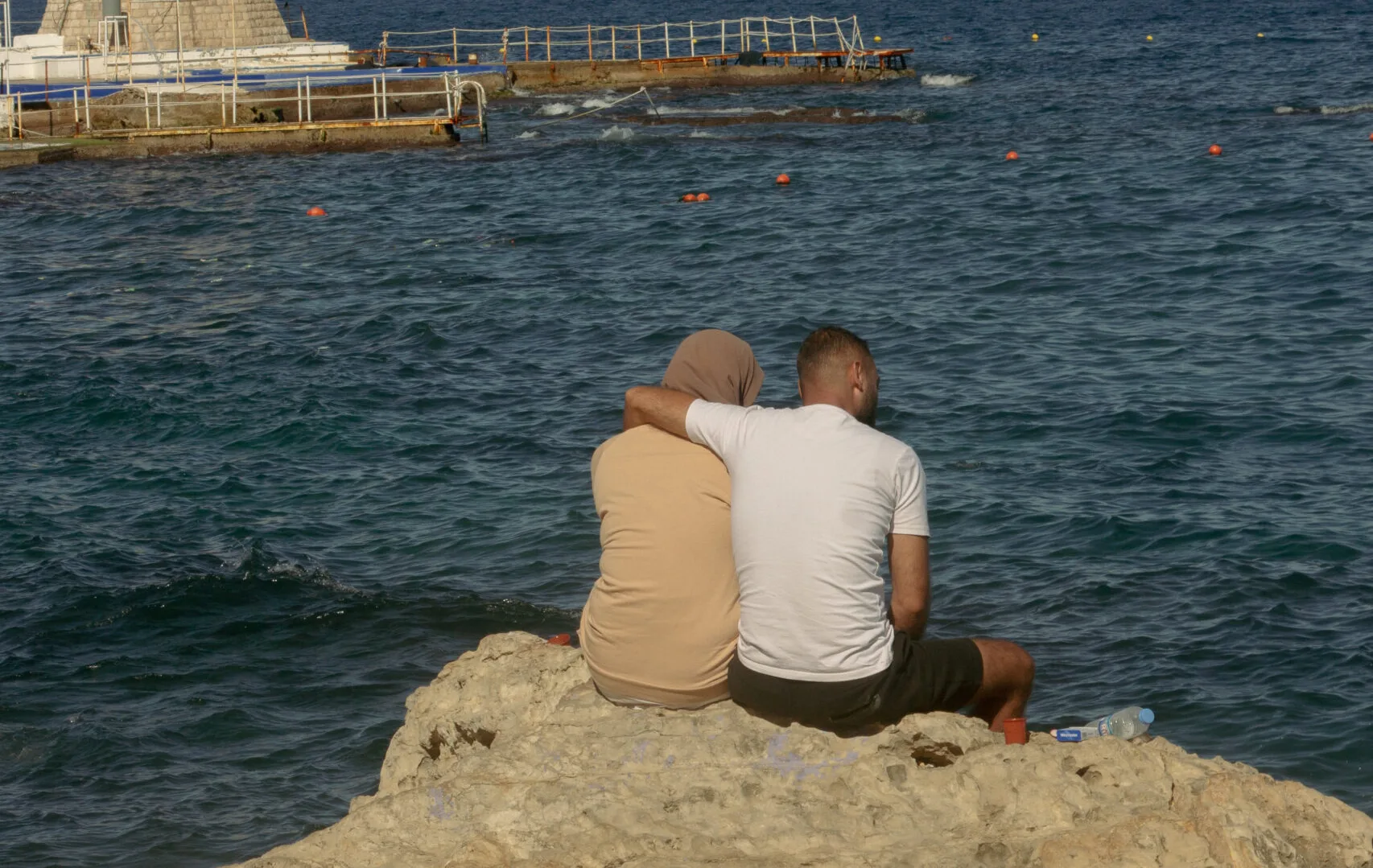
Ruwan Teodros came to photography the way many people come to prayer, through crisis. During COVID, when Beirut emptied, and fear filled the silence, she walked the streets of Hamra with her camera, photographing the orange blossoms that seemed to bloom more fiercely in the absence of traffic and noise. Then came the port explosion in August 2020, and the walks became something else entirely: a way to witness what had been done to her city, to hold the wreckage in frame before it could be swept away. A pile of shattered glass sat outside her home for three years.
Teodros is Lebanese-Ethiopian, raised between worlds and rarely fully claimed by either. Growing up biracial in Beirut meant being “othered” constantly and told she wasn’t truly Lebanese because her mother couldn’t legally pass citizenship to her. She spent years making herself smaller. Photography became a way of reversing that erasure, not just of herself, but of the people Beirut tends to overlook.
ZK: Can you tell us how you first discovered photography and what drew you to it as a medium?
RT: The first time I truly considered photography as my storytelling medium was during COVID. Walking through an emptied Hamra became the only thing that quieted the fear and isolation. With fewer cars and people, the trees in the city seemed to bloom more intensely than I’d seen before. I photographed the vivid orange flowers that line Hamra near Dunkin Doughnuts. I wait for them every year. I can’t remember what they’re called. I’ll have to research them more when they arrive this spring.
The second turning point was after the Beirut port explosion. I couldn’t sleep the morning after, so I walked through my neighbourhood and photographed the damage. Hamra certainly wasn’t the hardest-hit area, but the impact of the blast had left telltale signs, huge piles of shattered glass, and the dented shutters of storefronts stayed with me. One massive heap of glass on my street remained for three years. To me, it became a symbol of what had been done to the city and its people.
ZK: Your work often explores identity and presence. How does your Ethiopian heritage influence the stories you choose to tell through your lens?
RT: Growing up Ethiopian-Lebanese in Beirut was difficult. I was constantly “othered.” There were times as a teenager that I wished that I were fully Lebanese, just so that people would accept me. Because I don’t have Lebanese citizenship, my mother is Lebanese and cannot pass her citizenship to me, I was told repeatedly that I wasn’t Lebanese. I internalised that. Photographing Lebanon became, in some ways, an attempt to claim belonging, perhaps even to earn it. A silly notion, perhaps. I now realise I don’t have to earn the right to be considered Lebanese.
Also, as I grew up and started to appreciate and understand my Ethiopian heritage, I think it shaped my abilities as a storyteller and an empath. So much of my photography is in cherishing the people of Beirut, and my empathy guides me in seeing the people who might be less appreciated than others, those who move through the city and make it special, the vegetable sellers, the bookstall owner, the wife hanging her children’s laundry. They are the people I want to honour.
ZK: Growing up as an Afro-Arab in Lebanon, how has your lived experience shaped your perspective as an artist?
RT: I used to be ashamed of being biracial. I spent years trying to make myself smaller, straightening my hair, shapeshifting to avoid standing out. I was bullied for being Ethiopian, made fun of for looking like people’s domestic workers. I never understood why people disparage and degrade people of colour who come to Lebanon to earn an honest living. It comes down to racism, which was an ugly beast to confront at such a young age.
It hurt deeply. But surviving that made me fiercer and unwilling to compromise who I am.
ZK: You’ve mentioned using photography to preserve memory, particularly after moments like the Beirut port explosion. How did that experience influence the way you make work?
RT: I think it made me realise just how fragile life is in Lebanon, that we are all living under the illusion that we are ‘safe’, but we are not safe. Our government isn’t protecting us.
I prefer to specify and label the various wars “escalations” because Israel’s war on Lebanon has been ongoing since October 2023. My friend Farrah Berrou wrote about this, and it stayed with me. The south of Lebanon has been bombarded every day since then, with or without ‘ceasefires’. During the 2024 latest escalation, I documented obsessively — my Teta’s home, my neighbourhood, the light cast on my balcony from hanging laundry. I was terrified it would all be taken away. I wanted to wrap my arms around Lebanon and never let go. That fear of losing everything made me create more desperately.
In the 2025 escalation, I was actually feeling more paralysed creatively than last time. My mind went blank. It was shocking to find ourselves yet again being submerged in violence. I worked more with video and actually only took two videos that I particularly liked – 1 with a Quran on the dashboard of a car with the sound of Israeli war planes overhead, and the other a video of a boy wearing a sweatshirt with the word ‘Freedom’ on the back, sitting on a chair and absentmindedly swinging his legs.
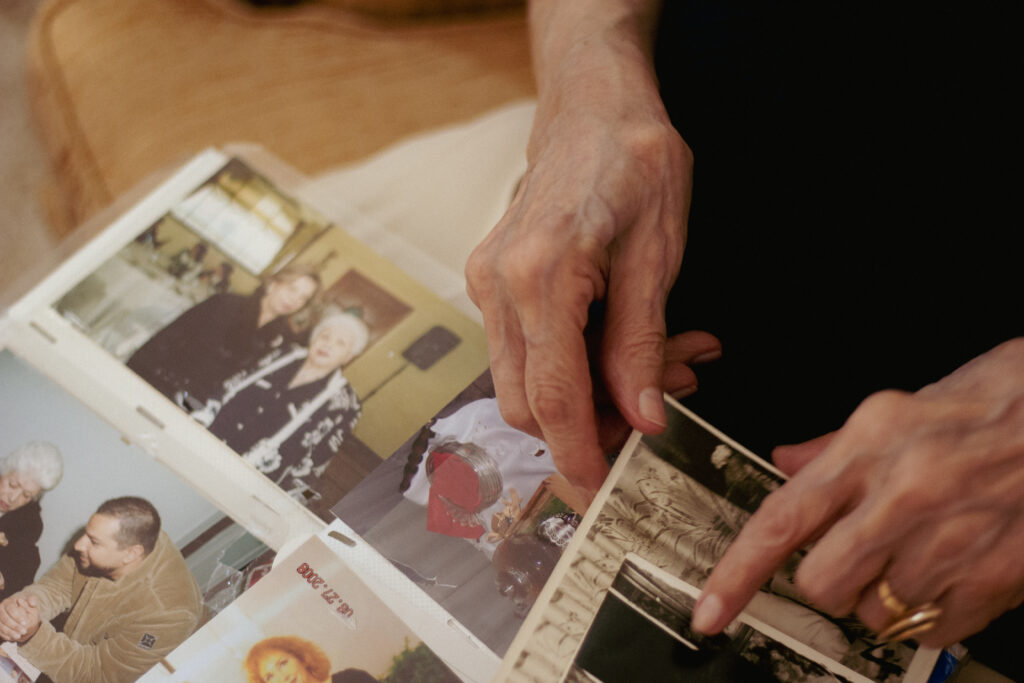
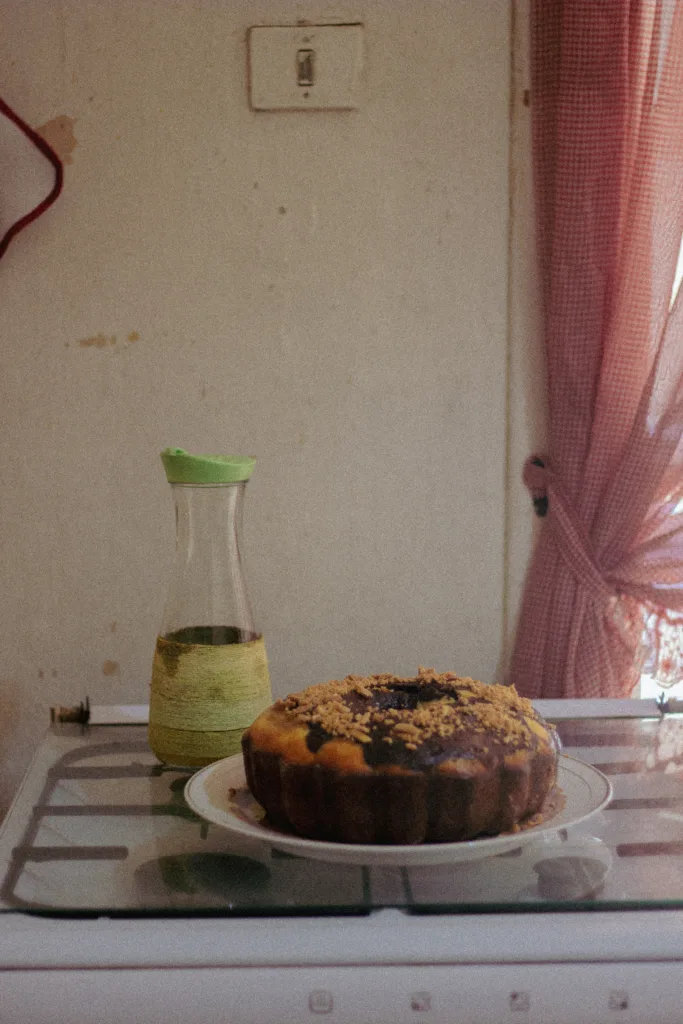
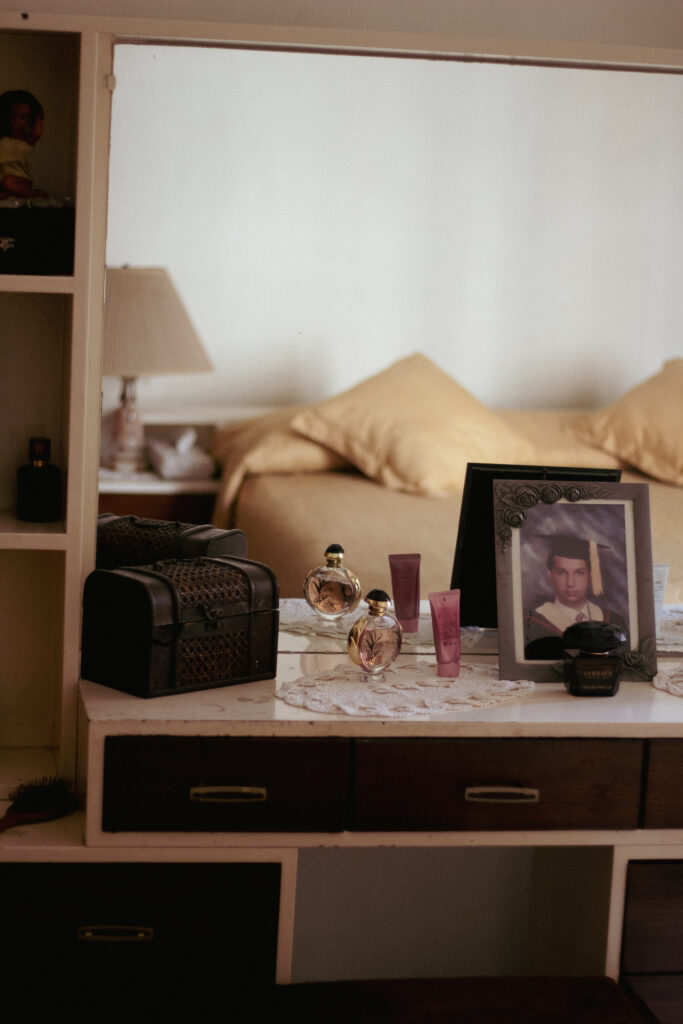
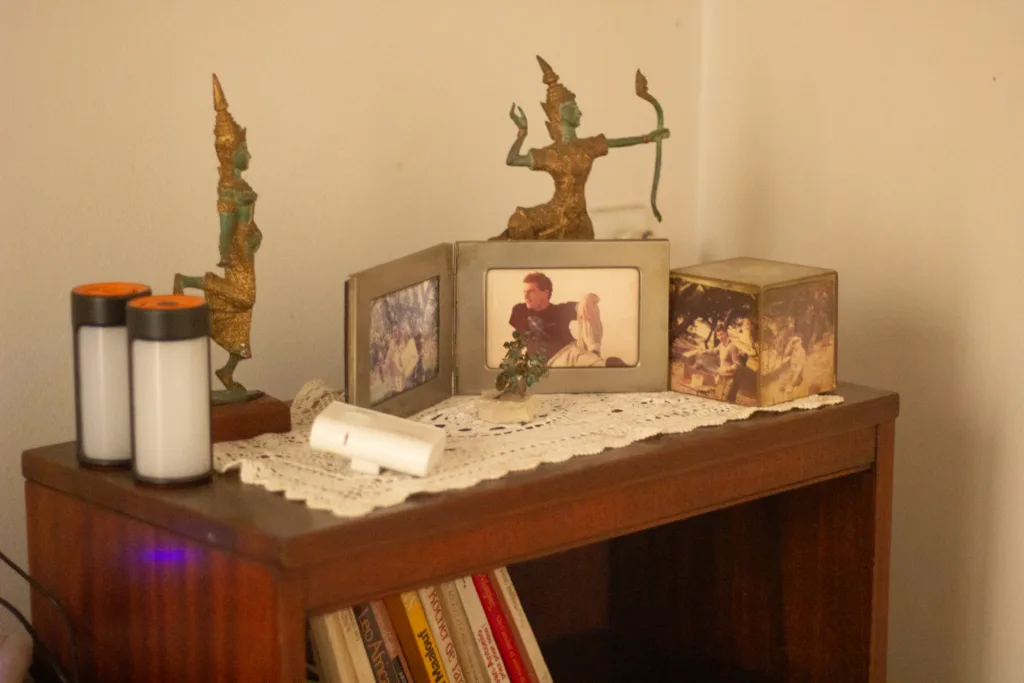
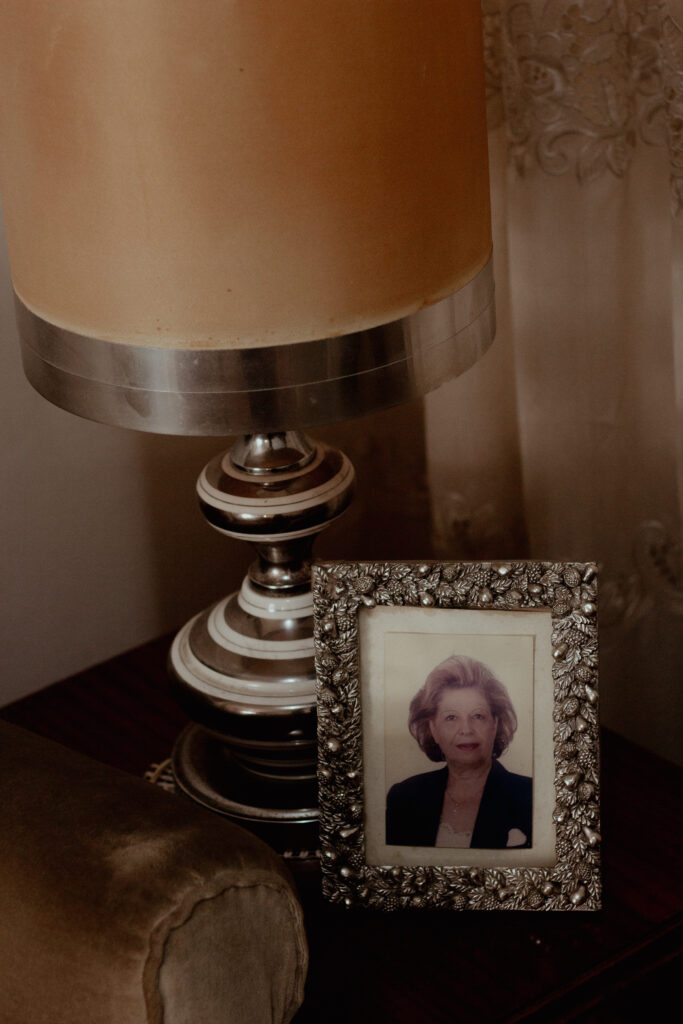
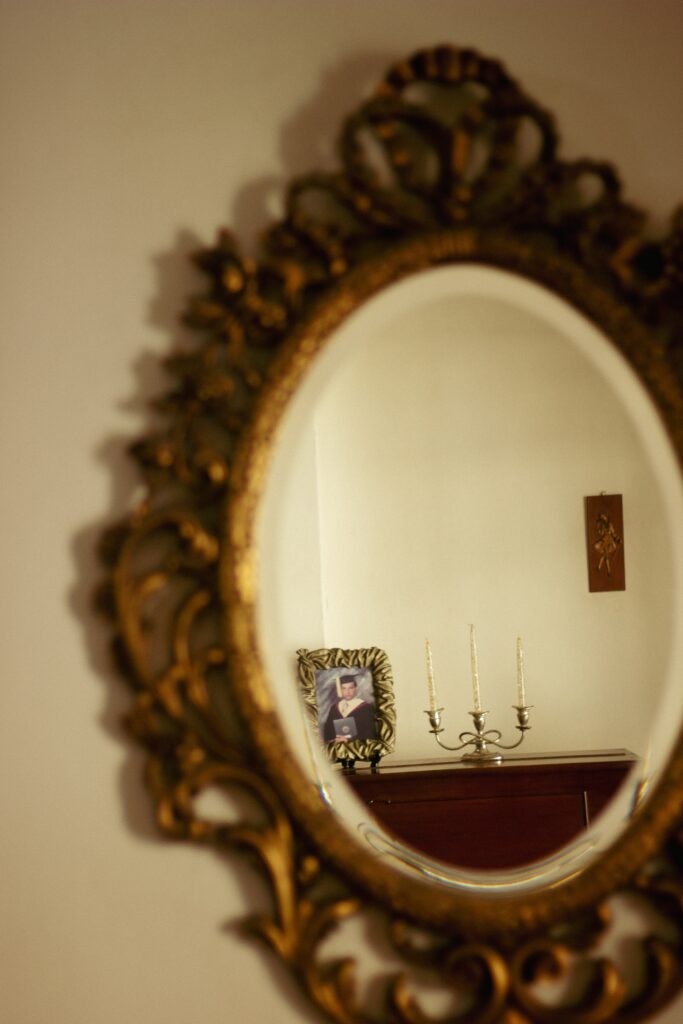

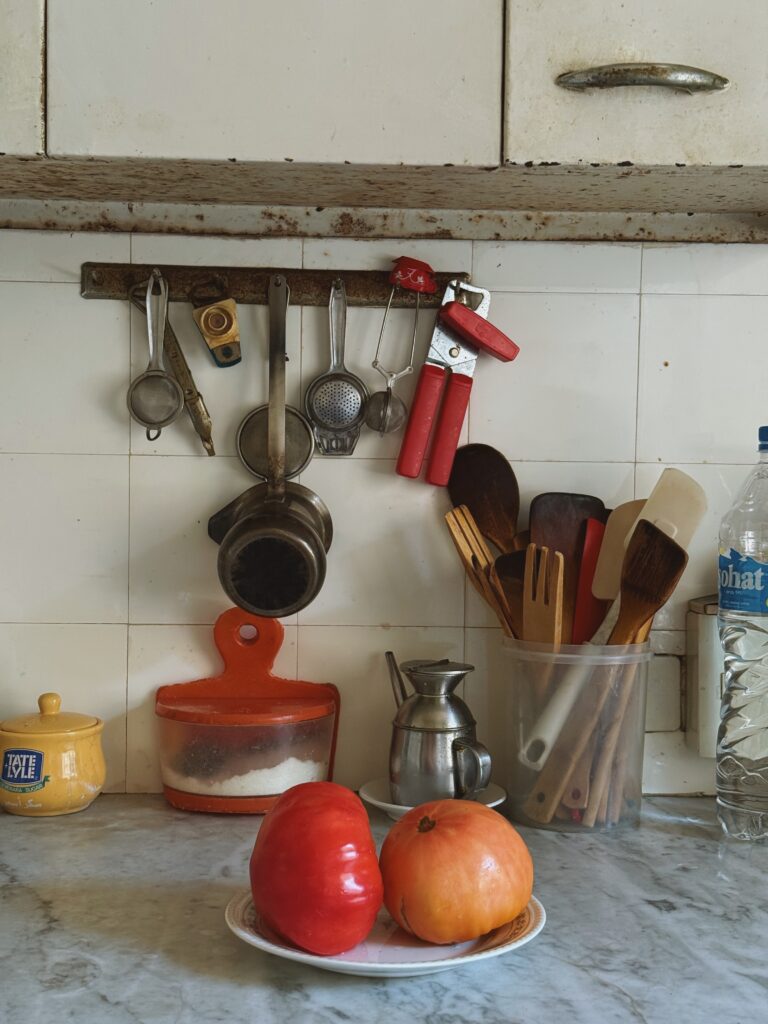
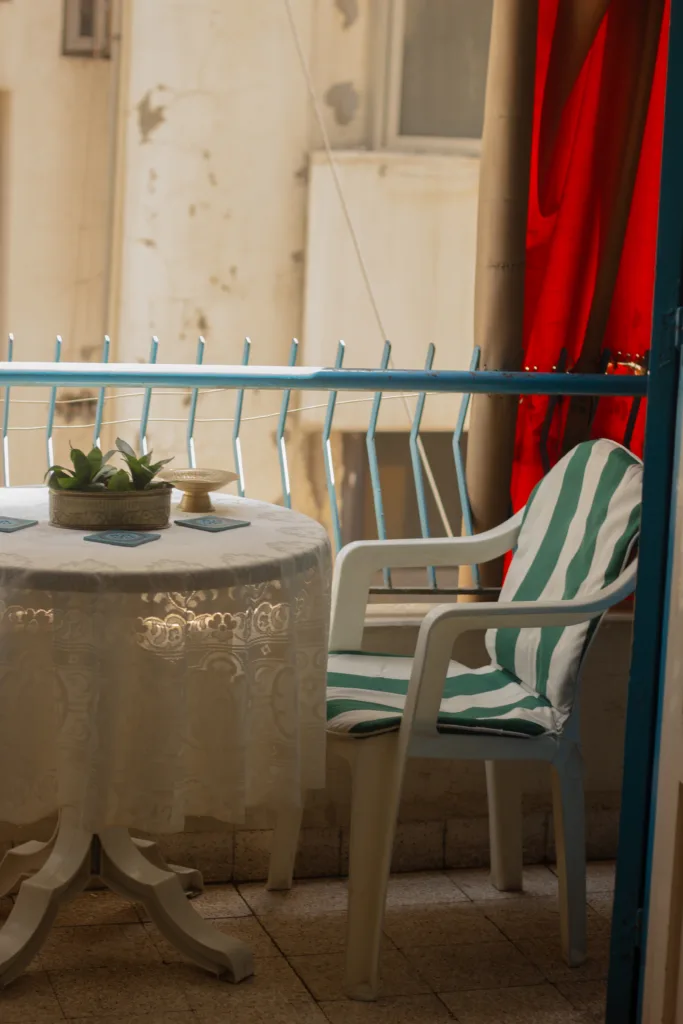
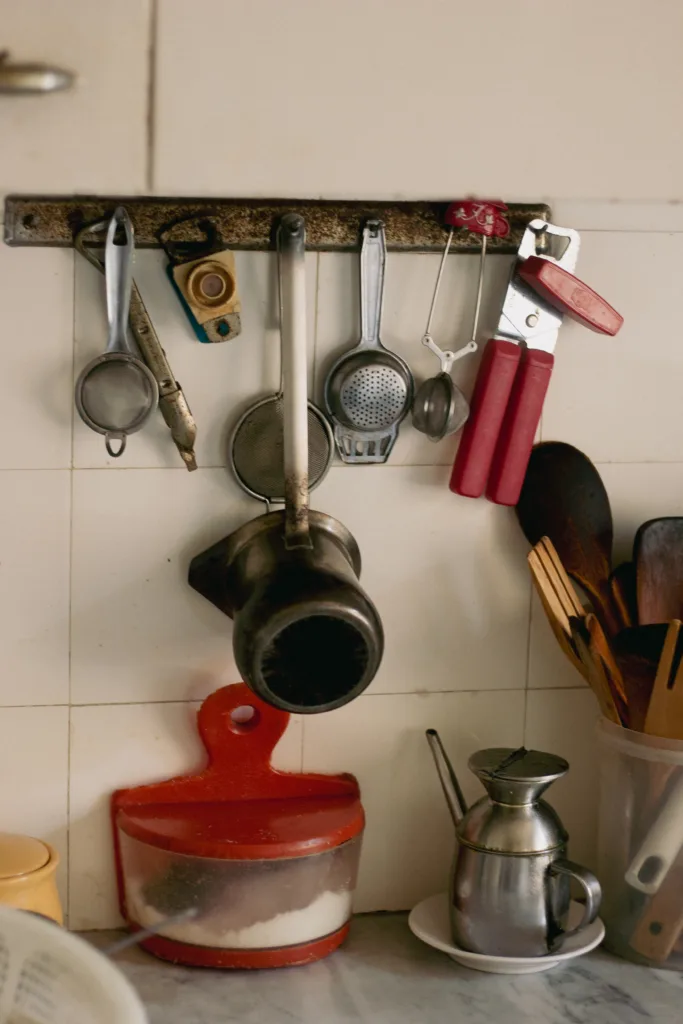
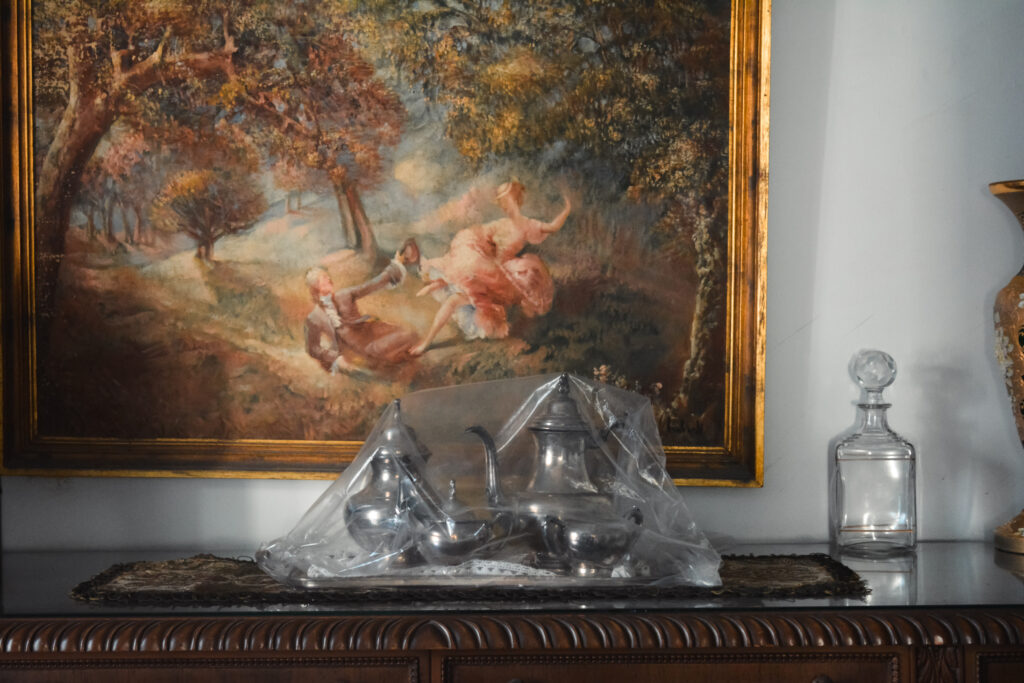
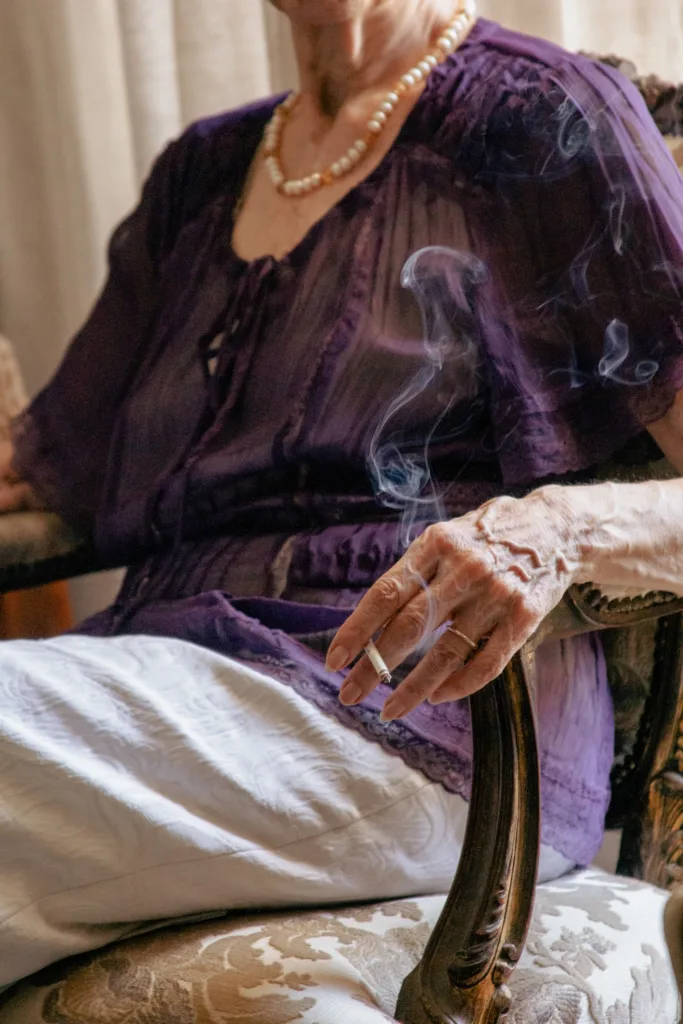
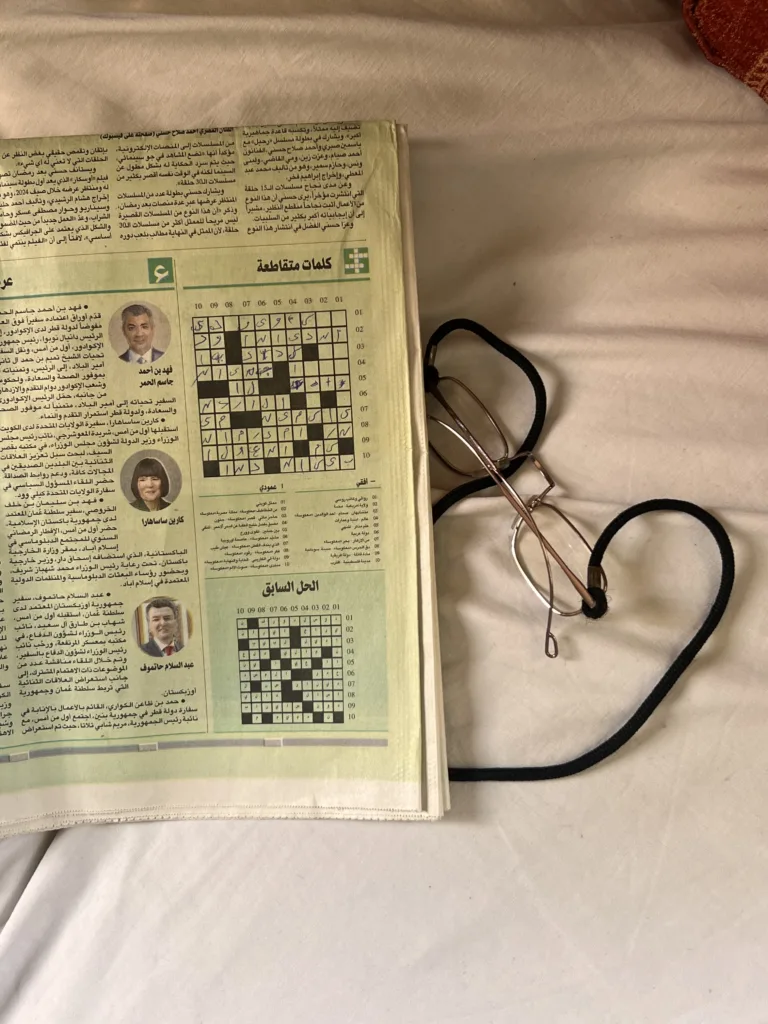
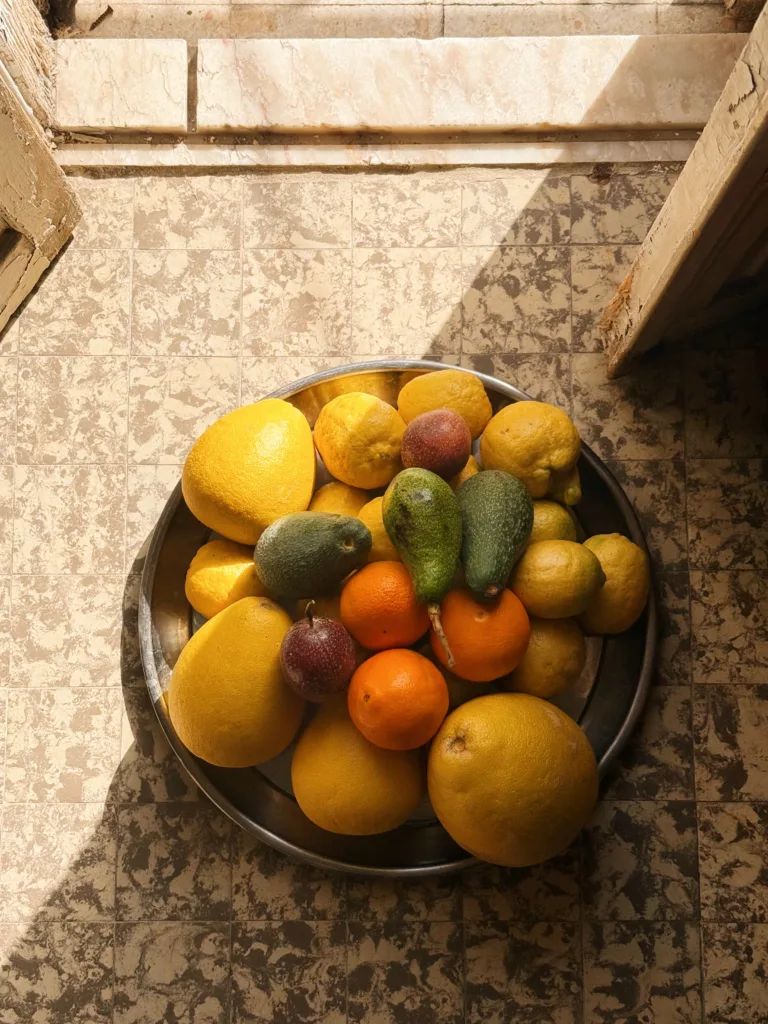
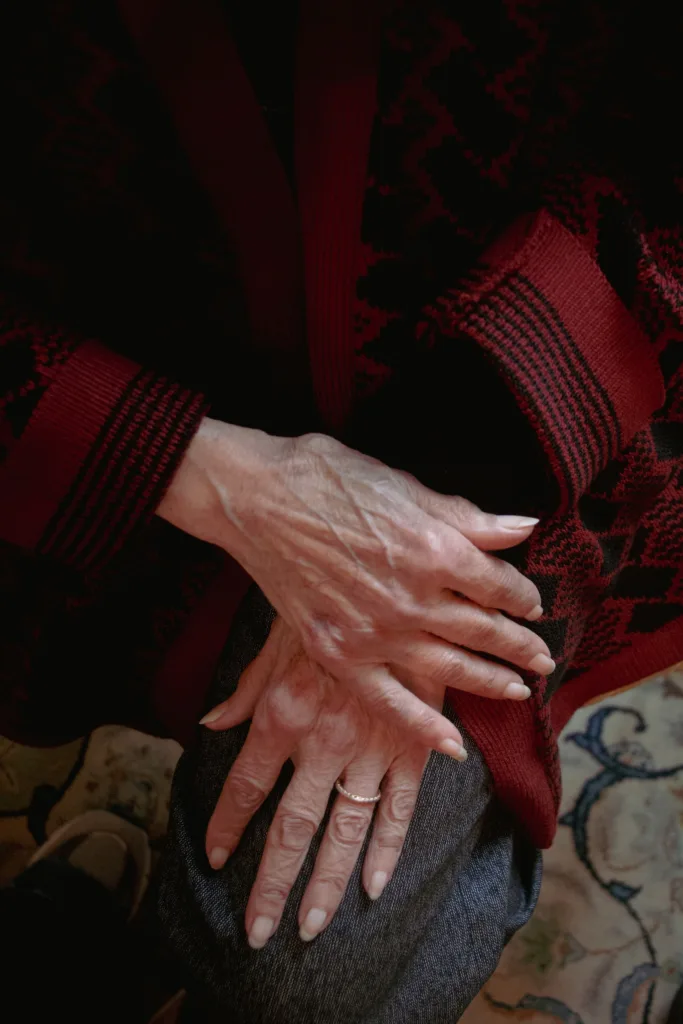
ZK: Your grandmother appears in your imagery and narrative. How do personal history, family, memory, and intimacy influence the emotional core of your photos?
RT: When I moved from the U.S. to Lebanon, my grandmother’s home became the centre of my world. We live in the apartment below hers, so she cooked for me after school, helped me with my homework, while my mother was busy working. I spent so much time poring through her photo albums, and listening to her stories about her and my grandfather’s life before the civil war, during the civil war, etc. Sometimes it feels like I lived them myself. Not in a nostalgic way, more so that grandparents, and people like them all across Lebanon, make me so proud of my Lebanese heritage.
It’s no wonder that I was later drawn to photograph the homes of her peers and the families of my friends across Lebanon. Naturally, I found striking similarities. These interiors, preserved for decades, are filled with photo albums, relics, and objects that quietly archive lives shaped by war, loss, and separation.
Many of these women have outlived their husbands and watched their children leave the country, yet their homes remain steadfast, carefully maintained, and deeply lived-in. They are the last generation of women living in apartments designed and decorated decades ago, where the interiors and routines still reflect the mid-century moment they were built in. This is an ongoing documentary photography project I’m working on.