
 Posted in
Film & TV,
Posted in
Film & TV,
Censorship in cinema and its impact on filmmakers in Iran
Text Zahra Onsori
Evin Prison, Tehran. It has long been a hub for human rights abuse, earning the nickname ‘Evin University’ for the steady intake of intellectuals, students and political prisoners that have passed through its doors.
It was here that Navid Mihandoust was held in solitary confinement, denied contact with the outside world without reason, and witnessed to an inmate who died due to a lack of access to medical care.
His crime? Filmmaking.
Specifically, an unreleased documentary about Iranian-Canadian activist Masih Alinejad, who faced multiple assassination attempts after openly criticising the regime. Mihandoust knew that making this documentary would draw attention. But he didn’t expect to be arrested almost a decade later in 2019, charged with “co-operating with groups opposing the regime” and sentenced to three years in prison.
“The temptation to make a documentary in the political atmosphere of those years in Iran was stronger for me than the consequences it would bring,” says Mihandoust. “Why should the government be allowed to interfere in the smallest details of our private lives, our films and our artistic work?”
After serving one year, Mihandoust received a pardon in March 2025, following pressure from the Iranian Ministry of Culture and Cinema House, but emphasises that he did not apply for clemency, as “doing so would mean accepting I had committed a crime, which I never have, and never will.”
Mihandoust’s story is one of a long history of censorship in Iran, which implicates more than just filmmakers. Iran has been ranked as one of the most repressive countries in the world, ranking 176 out of 180 countries in the World Press Freedom Index.
Tensions escalated following the killing of Mahsa Amini by morality police in 2022 for allegedly wearing an improper hijab, sparking the Woman, Life, Freedom movement. Now, thousands have taken to the streets of Iran in protest of the Islamic Regime imposed on the country, with more than 2,000 reported dead during these demonstrations, according to the US-based Human Rights Activists News Agency (HRANA).
Human rights lawyer and Nobel Peace Prize winner, Dr Shirin Ebadi, recalls the challenge of the legal system. “Not only does censorship exist, but the censorship doesn’t even keep within the law.” As Iran’s first female high court judge, Ebadi was dismissed in 1979 after the Islamic regime barred women from serving as judges. She later built a career defending journalists, writers and political prisoners before leaving Iran in 2009. “Anything that is not in line with the official ideology of the regime is censored, and it’s not systematic or consistent. It even applies to poetry books from centuries ago that have nothing to do with the regime.”
In recent years, the official charge of propaganda against the regime has become a legal catch-all, used by authorities to censor people under the guise of national security. “It’s very common now in Iran to charge anyone with that if they try to say anything about the system which is not the truth, as the regime sees it,” says Ebadi.
Iranian directors like Mohammad Rasoulof and Jafar Panahi, who’ve risen to international acclaim, have also faced prison due to their filmmaking. Panahi, who was subject to a 15-year travel ban in 2009, left the country for the first time in 14 years for the premiere of his latest film, It Was Just an Accident (2025), which was shot illegally in Iran. Despite winning a string of international awards, including the Palme d’Or award in May 2025, Panahi was recently hit with a one year prison charge and a two-year travel ban.
For some, the constant threat of surveillance and imprisonment has become the driving force to act freely despite the consequences. “The fear no longer exists,” says Mariam Afshari, an actress in Panahi’s latest award-winning film. “Ever since the Woman, Life, Freedom movement and the killing of Mahsa Amini, we’ve fought so much in the streets and argued so much with state forces, that it’s become normal.”
She continues: “When restrictions are imposed – especially in creative fields like art – the artist will always instinctively look for a way out because the essence of being human is about seeking freedom and liberation.”
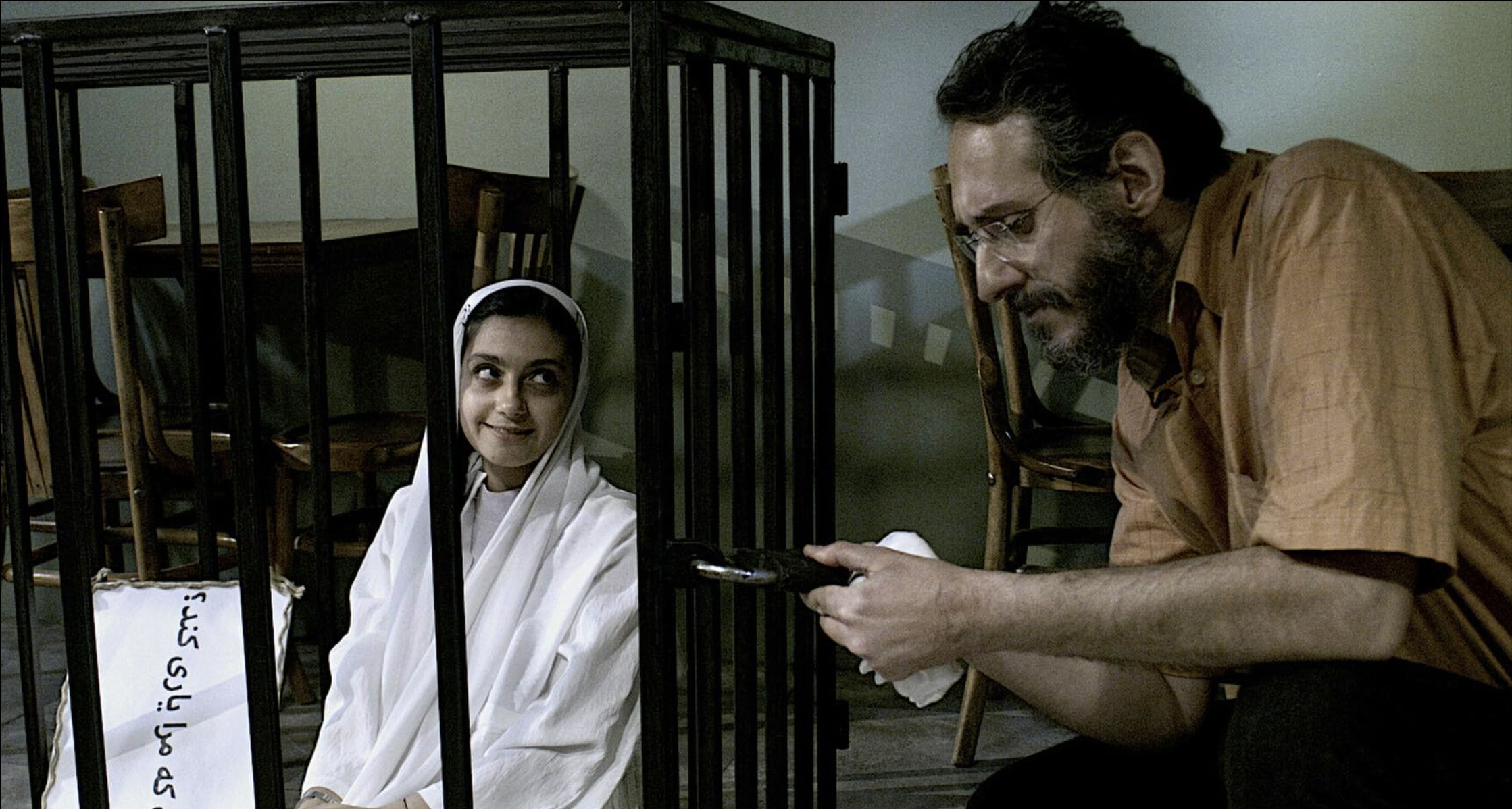
Under rule of the Islamic Republic of Iran, you must apply for a permit from the Iranian Ministry of Culture before filming. Mihandoust – like many others – was working within the same boundaries of the permit until he decided he no longer wanted to make films under the Islamic Republic’s guidelines in 2019. Whilst awaiting a prison sentence for his unreleased documentary, he directed another film, Cafe (2023), completely in secret.
“Many filmmakers like myself no longer apply for permits,” reveals Mihandoust. “In fact, making a film without a permit has become a form of protest against the state’s restrictive policies.” When filming in secret, it can be difficult to obtain funding and handle the logistical needs of filming. We’re often forced to bend the rules,” reveals Mihandoust. “For instance, when filming outdoor scenes, we might use permits obtained under the pretence of shooting a commercial or a teaser. That’s what I did for my film.”
For well-known filmmakers, it can be even more difficult to evade the authorities when filming. It was reported that Mohammad Rasoulof directed Seed of the Sacred Fig (2024) from a distance as his notoriety with the authorities meant that appearing on set would draw unwanted police attention.
Mihandoust says that finding actors and producers who are willing to put themselves at risk can be a challenge. It explains why we see the same faces across Iranian cinema. Setarah Maleki, who was cast in Mihandoust’s film Cafe, also starred in Rasoulof’s Oscar-nominated Seed of the Sacred Fig, which went on to win multiple awards, including the Special Jury prize at Cannes Film Festival. Maleki, along with most of the cast of Seed of the Sacred Fig, were forced to flee Iran after they were targeted by Iranian authorities for filming without the hijab, another required mandate of the state.
The difficulties don’t just stop at filming or a potential prison sentence; there’s great paranoia of being followed, family members being targeted or phones being tapped. “We’re always under surveillance and control,” says Mihandoust. “But personally, it doesn’t matter much to me. I’d rather spend this one life I have making films I truly believe in – not the kind that the government wants me to make.”
For many filmmakers in Iran, the end goal isn’t to leave their country. “I don’t think any of the Iranian filmmakers who left did so voluntarily,” says Mihandoust. “I will only leave Iran if I absolutely have no other choice.”