
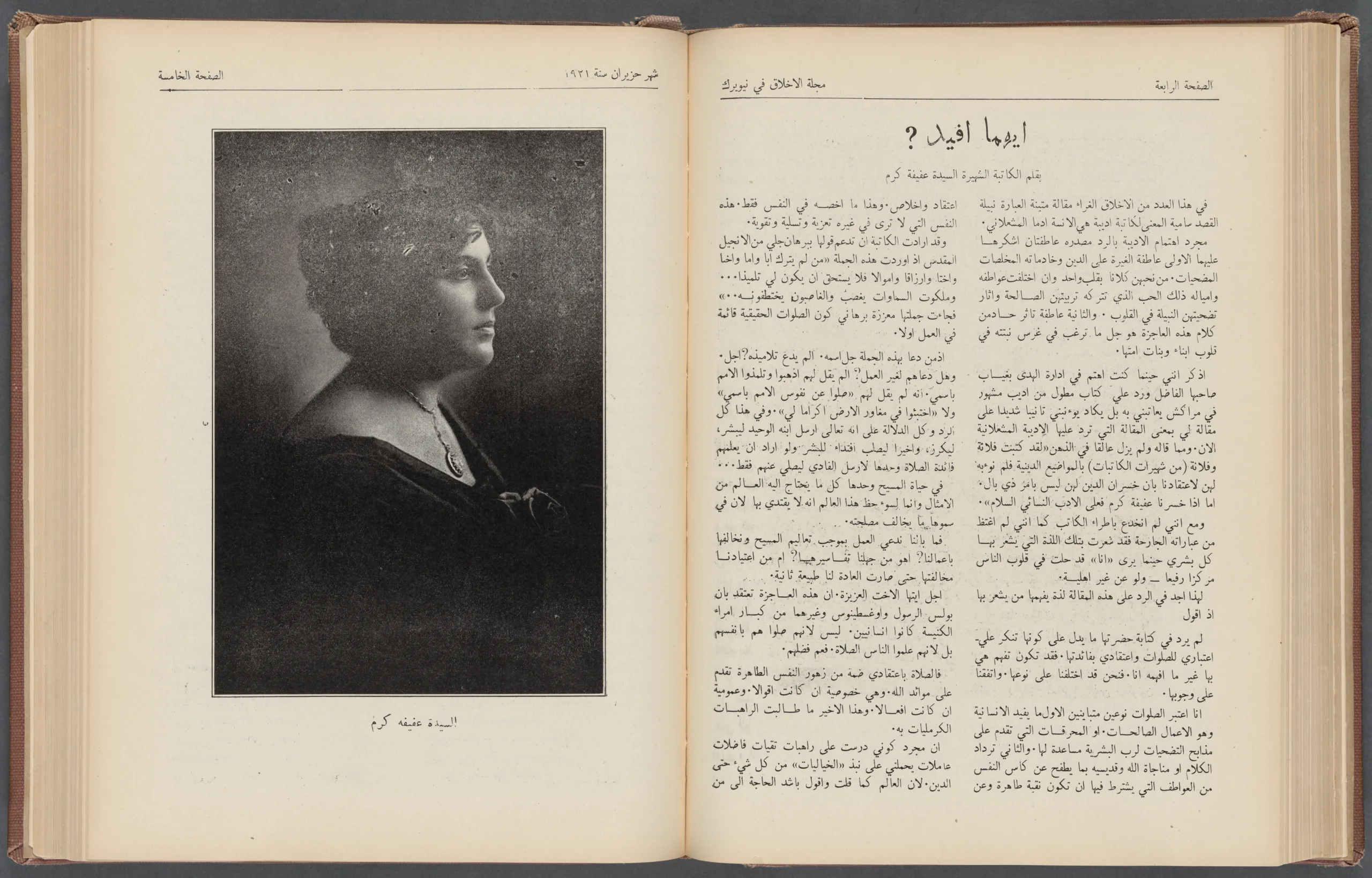
 Women played a crucial role in shaping the Arabic literary landscape in New York as well as in the Middle East. ‘Afīfa Karam, the first Lebanese American female journalist, was also a prolific novelist and translator. Her work boldly addressed women's rights and social issues in the community, establishing her as one of the most progressive voices of her era. She contributed regularly Arabic serial publications including al-Akhlāq (Character), an illustrated Arabic magazine of literature and history edited by Lebanese-born Jacob Raphael (Ya‘qūb Rūfā’īl), who actively promoted the writings of female authors. Courtesy of The New York Public Library
Posted in
Feature, Hiba Abid
Women played a crucial role in shaping the Arabic literary landscape in New York as well as in the Middle East. ‘Afīfa Karam, the first Lebanese American female journalist, was also a prolific novelist and translator. Her work boldly addressed women's rights and social issues in the community, establishing her as one of the most progressive voices of her era. She contributed regularly Arabic serial publications including al-Akhlāq (Character), an illustrated Arabic magazine of literature and history edited by Lebanese-born Jacob Raphael (Ya‘qūb Rūfā’īl), who actively promoted the writings of female authors. Courtesy of The New York Public Library
Posted in
Feature, Hiba Abid
Niyū Yūrk: Hiba Abid interprets the traces of MENA lives in New York City
Text Fatima AlJarman
Quoting Antonio Gramsci’s Prison Notebooks, the Palestinian-American intellectual Edward Said remarks that “[h]istory has left in us an infinity of traces.” With that observation, “the task is to compile an inventory of the traces that history has left in us.” To Said, this interpretative task, of compiling and interpreting the traces left by us and within us as time moves forward, is the most interesting human task of all, one that enables and deepens cross-cultural understandings. Said’s words repeat softly through a set of headphones, looping over a video in the corner of a gallery hall, reverberating the very interpretative efforts of the exhibit the recording sits within.
Niyū Yūrk: Middle Eastern and North African Lives in the City, presented at the Stephen A. Schwarzman Building of The New York Public Library, is a complex tapestry of self-expression, assimilation, and resistance woven together by the vibrant lives of Southwest Asian and North African individuals who had immigrated to New York City from the 1850s onwards. From print culture and performance to activism and business acumen, the exhibition uncovers the complexities and histories behind the written, visual, and auditory materials on display at the show as well as their positionalities as objects within the library’s collections, highlighting the relationship between a public institution and a growing community of immigrants within its public.
The exhibition’s curator, Hiba Abid, is guided by an urgency to serve people as much as she can during her tenure as the first Curator of Middle Eastern and North African (MENA) Studies at The New York Public Library. Her work at the library—a multifaceted dance of outreach, conservation, and research—culminated in the October 2025 opening of Niyū Yūrk.
Though the exhibition begins by situating us in the 1850s, its four sections—Roads to New York, Life in the City, Impressions, In Our Own Skins—guide us slowly through a chronology of immigration, meaning-making, and community-building that lead us to the present moment: post-9/11 and simultaneous to ICE raids in Minneapolis and restrictive immigration policies. Archival materials are placed in conjunction with contemporary interventions and practices of Arab New Yorkers, allowing for resonances to take place across temporal and formal boundaries, ones that I felt viscerally with each visit to the exhibit. From Alexander Maloof’s fervent campaign to make his song “Amerika Ya-Hilwa” the United States’ national anthem to the sheer expanse of Middle Eastern presses and journals, I found myself nestled amidst a long and continuous passage of Arab people moving to and building a life in the city, of determined and organized efforts to make sense of our place here through art, literature, and community.
How do you weave together such a complex inventory of multicultural histories, of an infinity of traces? In our conversation, Abid reflects on the process of crafting an exhibition narrative despite inaccurate or incomplete archival collections. She also considers the gaps and ghosts of the archive—the photographs inaccurately labelled, the music recordings lost, the women scarcely represented—and the exhibition’s efforts to both recognise and resist these gaps through collaboration, dialogue, and interpretation.
Most crucially, Abid reaffirms the library’s role in the public sphere as the people’s palace, welcoming you in—in your search for knowledge, for belonging, and for a deeper understanding of yourself and others. After all, that is the most interesting human task of all.
I want to start by referencing a profile that you did in 2024 with Passerby Magazine, where you likened the study of books to an archaeological excavation. Did this exhibition and its development process feel the same, or would you use different language to describe them?
This exhibit was a bit out of my comfort zone, which is really the study of manuscripts. [Manuscripts have been] my career’s research focus the past fifteen years. This is very different. However, I did pay specific attention to the afterlives and itineraries of books, and in that sense the archaeology of these books, because they hold traces of their history and how they came into NYPL’s holdings. The exhibition is not just about Middle Eastern immigration to New York, but it’s also looking at the history of collecting these voices and these experiences by a public library and in New York City. Because of that, I was paying special attention to library stamps, or notes and autographs by the authors of these books to also show how they made their way into our collection.
When were the seeds for the exhibition first planted?
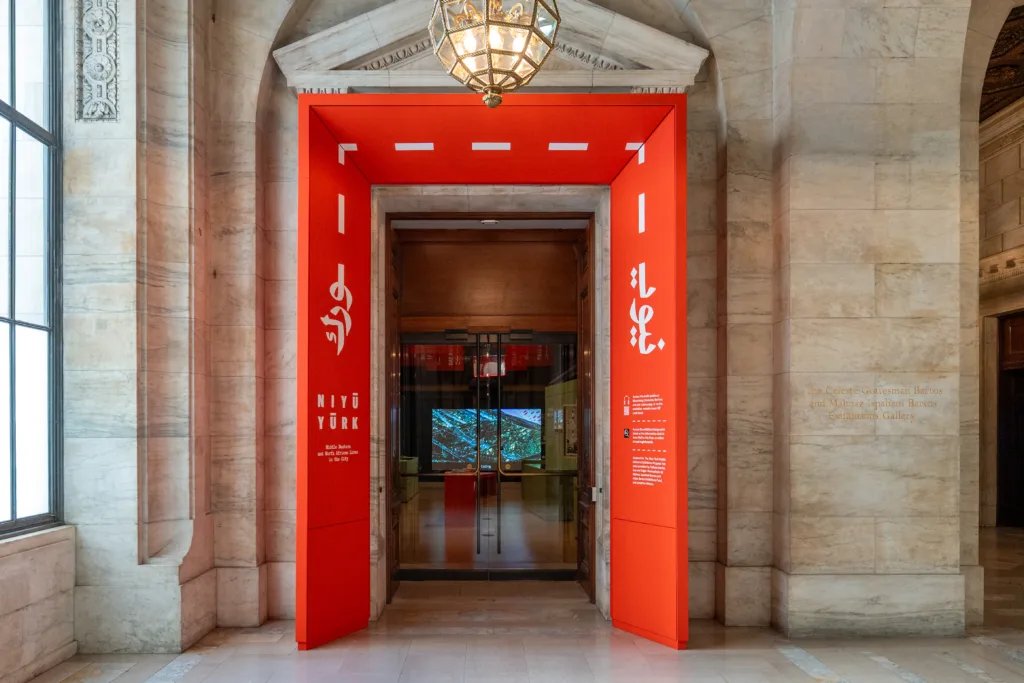
When I started my job in 2022, we received a gift from a private donor who has Syrian roots to digitise, expand, and preserve NYPL’s Arab diasporic collections produced in New York. The materials in our collections were not described very accurately or thoroughly, therefore they weren’t easily discoverable by our patrons. Even by librarians at times! I started working on identifying these materials in our collections, as well as keeping an eye out on the book market or potential family archives to acquire and expand those collections, a project that continues today. The exhibition felt like a natural continuation of this project.
Although I was mostly working on early 20th-century diasporas, we rerouted the exhibition’s focus and the timeline. It became clear that to tell only that early story would leave too many voices out.
MENA immigration in this city is long, diverse, and ongoing. It includes Syrians from Greater Syria (many of them Christian) but it also includes Muslims, Armenian refugees, Syrian Jews, Iranians, and countless others whose lives have shaped New York. To narrow the focus to the early 20th-century would have risked repeating the silences that have too often followed these histories. Instead, Niyū Yūrk was meant to be a celebration: a chance to honour the richness, complexity, and resilience of these communities, particularly at a time when they still face racism, Islamophobia, and exclusion.
As you’ve noted, you’re working with materials across a wide range in history, but also so many different cultures. Can you tell us a little bit about the curatorial decisions within the exhibit itself?
What I quickly understood about developing an exhibition is that it’s made up of compromises, which is unfortunate but also a great challenge; they push you to define the concept and narrative of the exhibition more intentionally and with greater depth. At first I thought, Oh, I don’t want to follow a didactic chronological timeline here. But then, it became obvious that a chronology was important, because [the exhibition does] not only speak to visitors who are familiar with the history of MENA presence in New York, but also those who don’t know anything about it. It was important to plant anchors in people’s understanding of how long the history of MENA people has been in New York, and it begins in the 19th century. In fact, the exhibition opens on the book The Sultan and His People, published in 1857 by Chistopher Oscanyan.
Each section establishes a dialogue between historic materials and contemporary pieces to highlight the continuity of certain threads: publishing threads, literary threads, and threads of solidarity. For example, the citizenship guidebooks [in the Roads to New York section], one [citizen guidebook is] from 1913 and another from 1989; these books continue to be produced today, demonstrating how these communities support one another by creating and publishing resources to help others navigate the [immigration] system.
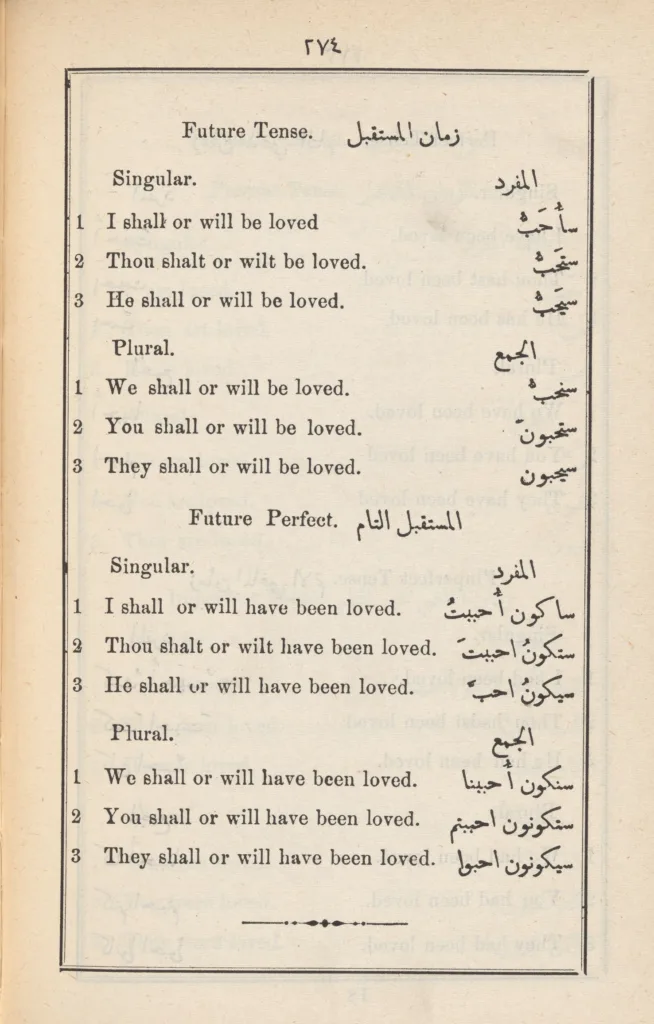
Abraham Joseph Arbeely (Ibrāhīm Yūsuf ʾArbīlī) was a member of one of the earliest Syrian families to immigrate to the United States, and the founding editor, in 1892, of Kawkab Amrika (Star of America), America’s first Arabic-language newspaper. In 1896 he compiled America’s first English-Arabic dictionary and phrasebook. Designed to teach English to Arabic speakers and Arabic to English speakers, the book also guided newcomers adapting to American life with practical phrases, social courtesies, and everyday customs. The release of second and third editions in 1911 and 1924 reflect its popularity among Arabic-speaking immigrants in New York. Arbeely inscribed this copy to the Scottish-American industrialist and philanthropist Andrew Carnegie (1835–1919) on March 22, 1901—the same month Carnegie pledged $5.2 million to build branch libraries across New York City. Courtesy of The New York Public Library
Similar threads are woven between different sections. In Roads to New York, a photo of The Syrian Ladies Aid Society (1908) is facing the zine produced by Malikah (2023) on the opposite wall. Malikah and The Syrian Ladies Aid Society are both grassroot collectives founded by women, helping newcomers, mostly women, not only with learning the language, but also with finding housing and developing skills to open their own business, a century apart. I really wanted to emphasize this long lineage of community care within the diaspora.
The exhibition is divided into four parts; where did these sub-sections come from?
The [show begins with] Roads to New York, just to give a sense of the beginnings, right? And of [public] perception, how people were perceived as a monolithic group, which shaped much of their experience later. But [the section also shows] the agency of the community in producing all these resources and guides to help one another. Finding jobs, learning the language, assimilating, opening their own businesses, and pursuing higher education, like the Syrian Educational Guide shows.
Life in the City is about the establishment of a life in New York, starting in the Lower West Side of Manhattan before its expansion to Brooklyn and other boroughs There are many unexpected materials that you would not necessarily include in a traditional narrative on MENA immigration, [including] entertainment—circus performers, acrobats, opera singers and nightclubs. Those materials emerged as a significant collecting area at NYPL’s Library for the Performing Arts. This, in turn, allowed me to explore American attitudes towards Middle Eastern culture and the way in which performers strategically negotiated their identities to cater to American fantasies of the “Orient.”
The third section, Impressions, is about listening to MENA voices and how they experienced life in New York and imagined the city. [This includes] descriptions about the immigrant experience by members of The Pen League, but also those who were more bitter and critical of New York, like Niqula Al-Haddad, a Syrian poet, scholar, and socialist who briefly lived in New York from 1906 to 1909.
The last section, In Our Own Skin, examines themes of race, representation, and the community’s ongoing efforts to reclaim their own narratives. It looks at more recent histories, from activism after 9/11 to groundbreaking art and music that assert new identities and futures.
You had mentioned working with materials that were not very accurately or thoroughly described. This makes me think of the photographs by Augustus Sherman or Lewis Hine in the Roads to New York section, which don’t accurately label the early 20th-century immigrants they’d photographed. Could you tell us a little bit more about your efforts working with inaccurate or incomplete archival materials?
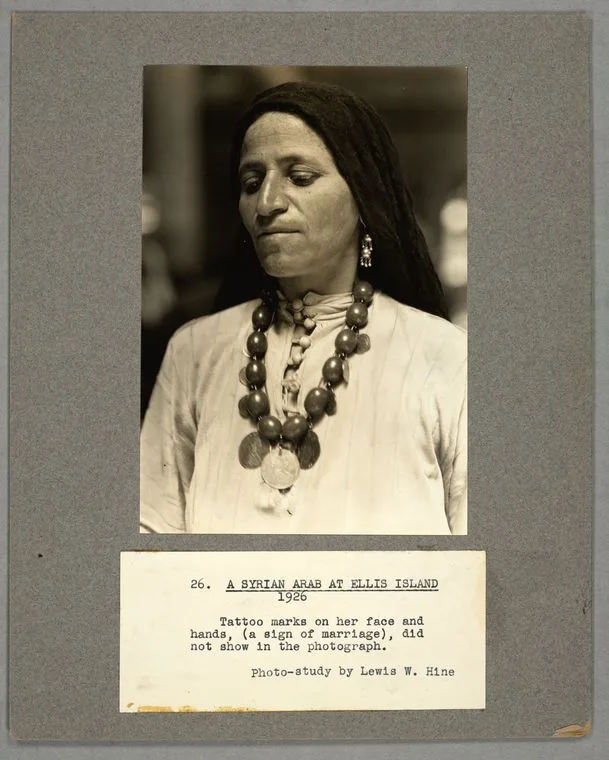
It’s challenging to try to give an identity back to these figures, whose identities are anonymised by Lewis Hine and Augustus Sherman. These photographs are quite ethnographic, right? But at the same time, I thought: what if I could reverse the photographers’ intentions, by looking critically at Hine’s and Sherman’s approach, while attempting to re-identify these individuals, to imagine their experiences in the absence of records?
Aside from research, I also spoke with local historians, like Linda Jacobs, author of Strangers in the West and Captivating Strangers, and with librarian Louis Takács, who runs an incredible website called Let Me Get There where he reconstructs the lives of many of those early arrivals photographed at Ellis Island. And even if I couldn’t identify a person specifically, I could at least try to recreate the context, the environment, and space in which they lived.
The French historian Patrick Boucheron writes about the intuition of the historian. Sometimes you have to allow yourself to activate your intuition and not only rely strictly on material evidence.
A meaningful recognition the exhibition makes is the scarce presence of women in surviving archives. How did you work with or against the gender-based gaps?
This is something that scholars and historians of Arab-American history have noted in many of the resources that I read. Historian Elizabeth Saylor talks about the very few traces of women left in libraries’ surviving records, despite their significant contributions to the literary world and the nahda, the Arabic cultural renaissance. It’s not NYPL specifically; even in the scholarly work that was produced until a few years ago, women are very poorly represented and their contributions rarely covered.
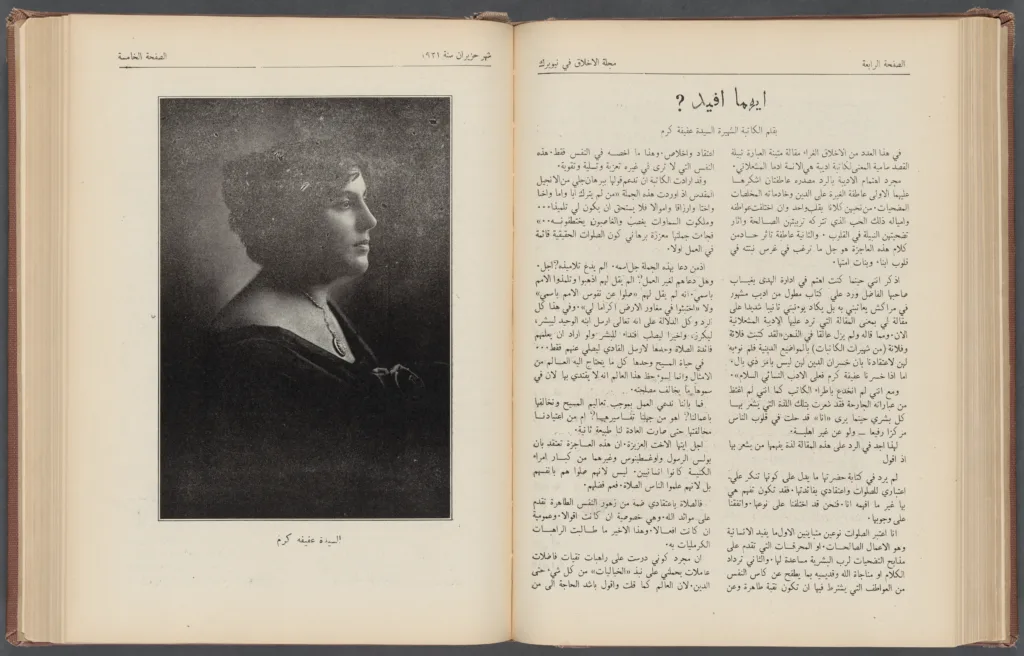
It was an additional effort to find traces of women in the archive. [I became aware of] the photo of Afifa Karam, for example, through Zaina Ujayli, a brilliant PhD student at the University of South California who researches female writers and activists of the 20-century Syrian American diaspora. Her work is absolutely fascinating. She had a fellowship last year at NYPL, and she brought this periodical, Al-Akhlaq, to my attention. She said, here is a photo of feminist journalist and writer Afifa Karam.
Thankfully, we have a lot of periodicals and newspapers from that period. Karam’s text was also read [in the exhibit’s audio guide] by Sudanese poet Mayada Ibrahim to give multiple sensorial entry points to these women, allowing their voices to resonate in the room.
Talking about the sensorial aspects of the show, the listening station included [music by] the Armenian-Turkish singer Mary Vartania, where she sings of her longing for her village in Turkey, which she cannot go to anymore, post-Armenian genocide. I tried to rebalance things by having different media—not just printed matter, but photographs and voices to make [women’s] presence vibrate in the room. In Impressions, I included artwork by women, you’ll learn about the wonderful Rhea Karam, and in In Our Own Skin, activists like Rana Abdelhamid and her mother, Ms. Mona, who are also interviewed in the audio guide.
I tried to shake the archives a bit more and find different entry points to make women more visible in the show.

I love the image of shaking the archive. Throughout our interview, a word you’re using is really interesting to me—the word ‘trace’. And it’s, of course, reminding me of the interview of the Palestinian-American intellectual Edward Said in the Life in the City portion of the exhibit where he reflects on Antonio Gramsci’s Prison Notebooks.
This pivotal task of the interpreter of traces felt very much like your role in the space, where the exhibit itself is a compilation of this inventory of traces. Why that excerpt of Said and how does it relate to the efforts of the exhibit?
You’re exactly right to connect that excerpt to the exhibition’s approach. Said’s quotation of Gramsci felt somehow aligned with what the exhibition is trying to do. The show does not claim to present a totalizing narrative of Middle Eastern life in New York. Rather, it gathers fragments and imprints, that on their own may appear marginal or disconnected, and places them in relation to one another.
The idea of the “trace” is crucial here. A trace is not a complete story. The exhibition could be seen as operating an inventory of such traces, in archives, in performing arts ephemera, in community records, in unexpected cultural spaces. In that sense, the goal was to recognize, assemble, and interpret the traces MENA history in NYC has left behind.
Including Said was both conceptual and personal. From the outset, I was thinking about where and how to situate one of the most influential Palestinian intellectuals in New York within the narrative arc of the exhibition. I spent days and days in the Rare Books division at Columbia’s Butler Library, going through Edward Said’s papers with the intention of borrowing materials for the exhibition. But very quickly it became clear that this was an overwhelming task within the framework of the show. Said archived absolutely everything, including notes from his super (!).
Ultimately, I [ended up finding] this video, a DVD, in the General Research division of the NYPL, an interview in which he reflects on Orientalism and cites Gramsci. Rather than presenting Said through documents in a vitrine, the exhibition could allow visitors to encounter his voice and face directly.
I wanted those who already know Said to feel moved by hearing him speak, and those encountering him for the first time to grasp the breadth of his intellectual project. He was not only a Palestinian intellectual; he reshaped entire fields of thought and influenced generations of scholars. His theoretical framework extends far beyond any single community, it offers tools for thinking about culture, power, representation, and history more broadly.
His presence in the exhibition is also dialogic. On the wall above the screen are images of Orientalist nightclubs in New York, materials I approached critically, yet they are part of our collections. The question became: how do you display these images without reproducing their fantasies? How do you acknowledge them as traces of a cultural history while also equipping visitors with the critical tools to read them? Placing Said in conversation with those materials allows the exhibition to do precisely that. His words provide a framework through which those images can be examined and interpreted, rather than simply be looked at.
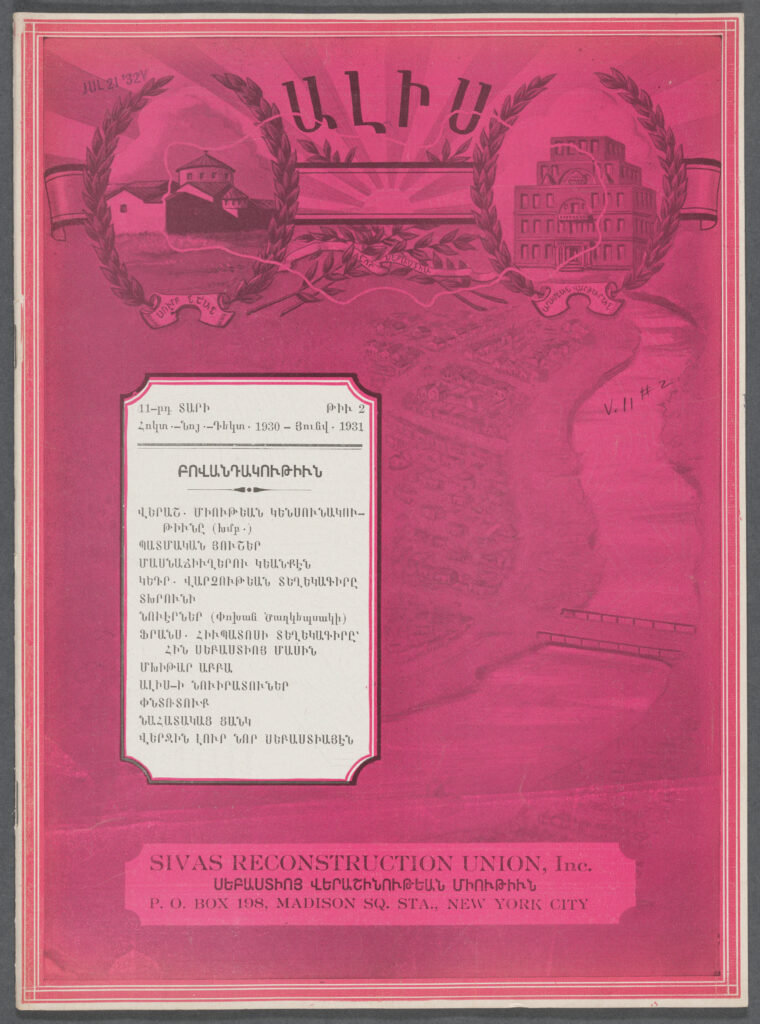
Armenians began arriving in the United States in greater numbers during the late 19th century, fleeing Ottoman persecution and, later, the Armenian Genocide of 1915. As they established roots in New York, they published daily, weekly, and monthly publications. These addressed the needs of displaced communities, advocated for reform of the Ottoman Empire or independence from it, and nurtured long-distance nationalism. Alis was one such periodical, founded in New York by survivors of the genocide from the Sepastia region (present-day Sivas, Turkey). Active from 1920 to 1935, it documented their resettlement efforts and promoted the idea of rebuilding a “New Sepastia” in Soviet Armenia. Courtesy of The New York Public Library
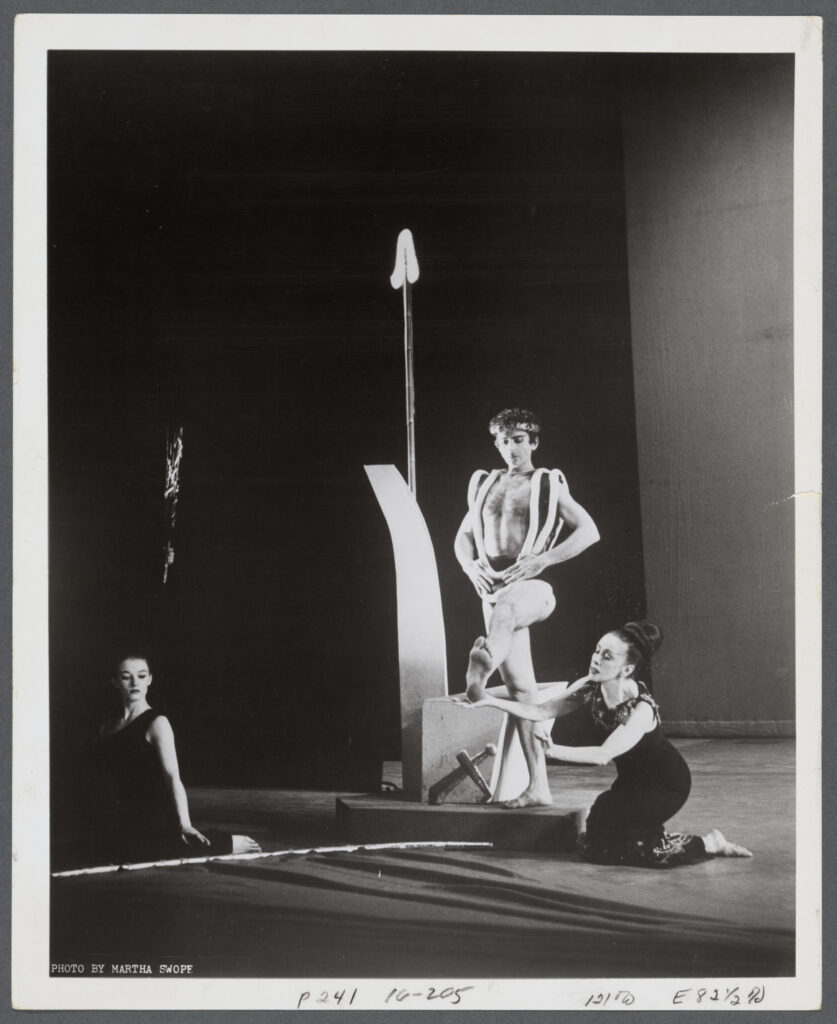
The Egyptian-born composer, ethnomusicologist, and educator Halim El-Dabh is recognized as one of the pioneers of electronic music and a foundational figure of the Arab avant-garde. In the 1940s, while working as an agricultural engineer in Cairo, he began experimenting with recorded sound, manipulating incantations from a zār adorcism ritual using a magnetic wire recorder. This piece is now seen as a precursor to musique concrète, predating Pierre Schaeffer’s work using natural sounds in recordings, and challenging Eurocentric narratives of electronic music’s origins.
El-Dabh immigrated to the United States in the 1950s, becoming a central figure in New York’s experimental music scene. The city’s pluralistic environment offered fertile ground for his practice of linking traditional musical research, emerging technologies, and composition. He collaborated with figures such as Otto Luening, a pioneer in using magnetic tape to record music, and took part in early experiments at the Columbia-Princeton Electronic Music Center. His work caught the attention of the legendary choreographer Martha Graham, creator of a distinctive American modern dance style, who commissioned him to score her 1958 ballet Clytemnestra, staged by the Japanese American artist Isamu Noguchi. During this period, El-Dabh was also affiliated with The New York Public Library, which supported at least one of his early concerts.
Throughout his career, El-Dabh found lasting inspiration in non-Western and ancient Egyptian musical traditions—not as exotic ornament, but as creative foundation. Like many postcolonial artists of his time, his practice questioned the colonial and neocolonial politics of collecting and archiving sound in the West. In doing so, El-Dabh challenged dominant modes of music production, insisting on a more expansive, hybrid, and decolonial sonic world. Courtesy of The New York Public Library
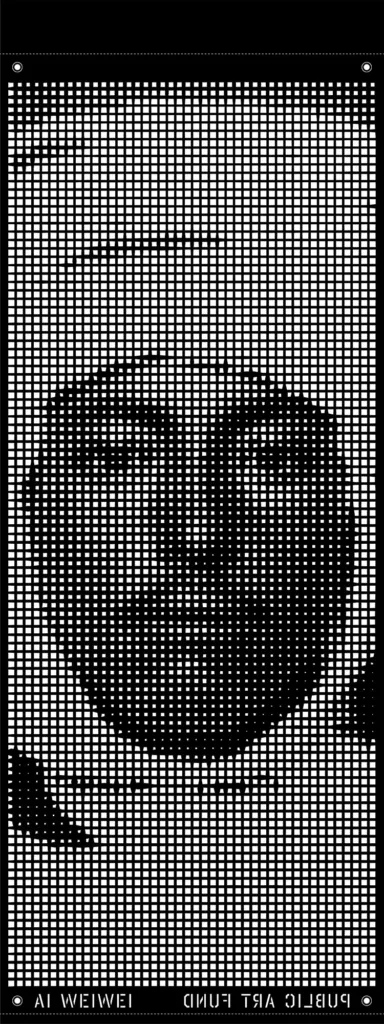
Good Fences Make Good Neighbors was a citywide exhibition of 300 artworks, sculptures, installations, and lamppost banners, displayed across New York City’s five boroughs. It drew attention to the global refugee crisis and the rise of anti-immigrant nationalism in the U.S. and Europe. The series of banners that Ai WeiWei made as part of the 2017-18 exhibition feature images of contemporary refugees alongside historical figures who experienced displacement or were denied entry to the U.S., such as Augustus Sherman’s famous photo Algerian Man. Ai Weiwei, himself once a refugee and a former New Yorker, saw the city’s immigrant communities as central to the project. By taking over public space, the exhibition invited viewers to reflect on the need for boundaries and asked, in the artist’s words, how a “global society [might] emerge from fear, isolation, and self-interest.” Courtesy of The New York Public Library
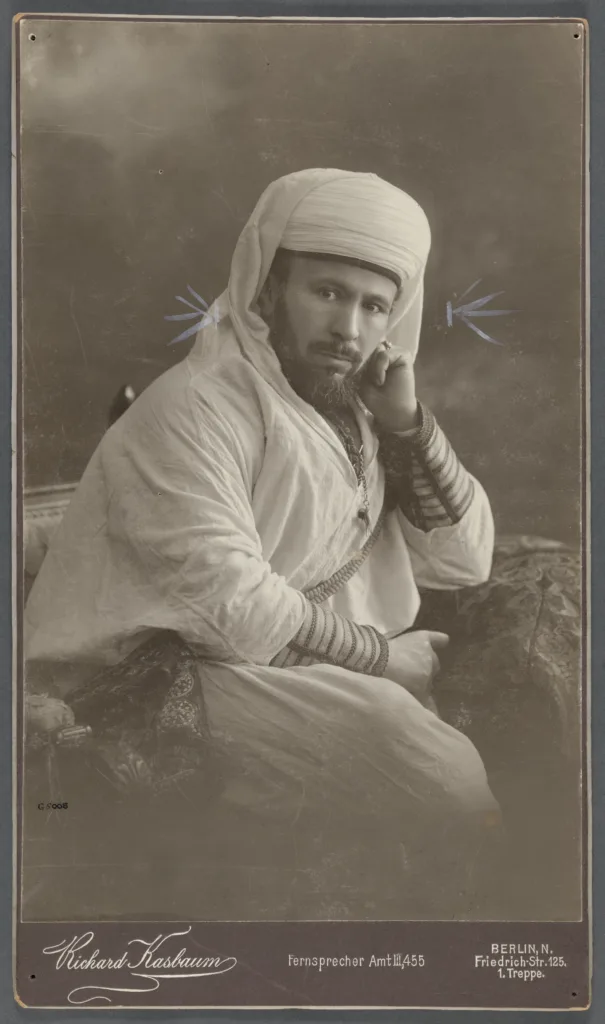
Among the more distinctive professions taken up by Middle Eastern and North African immigrants in the U.S. was that of the acrobat. From the 1850s onward, performers from the region appeared in tent shows and vaudeville theaters, capitalizing on their exoticized imagery popularized by world’s fairs. North Africans stood out in particular, with Hassan Ben Ali, an impresario from the outskirts of Marrakech, Morocco, emerging as a leading figure. Active by the 1880s, he toured nationally but gained particular recognition in New York with his troupe of Moroccan acrobats, dancers, musicians, and actors called the Hassan Ben Ali Arabs Co. They performed at the Coney Island venues of Luna Park and Dreamland, and various theaters across the city. This long tradition of Moroccan performance in New York continued into the 20th century through artists like Hassan Ouakrim and Samuel Avital, who performed at La MaMa Experimental Theatre Club and off-Broadway productions across the city. Their work extended the lineage of Moroccan performance in the United States. Courtesy of The New York Public Library
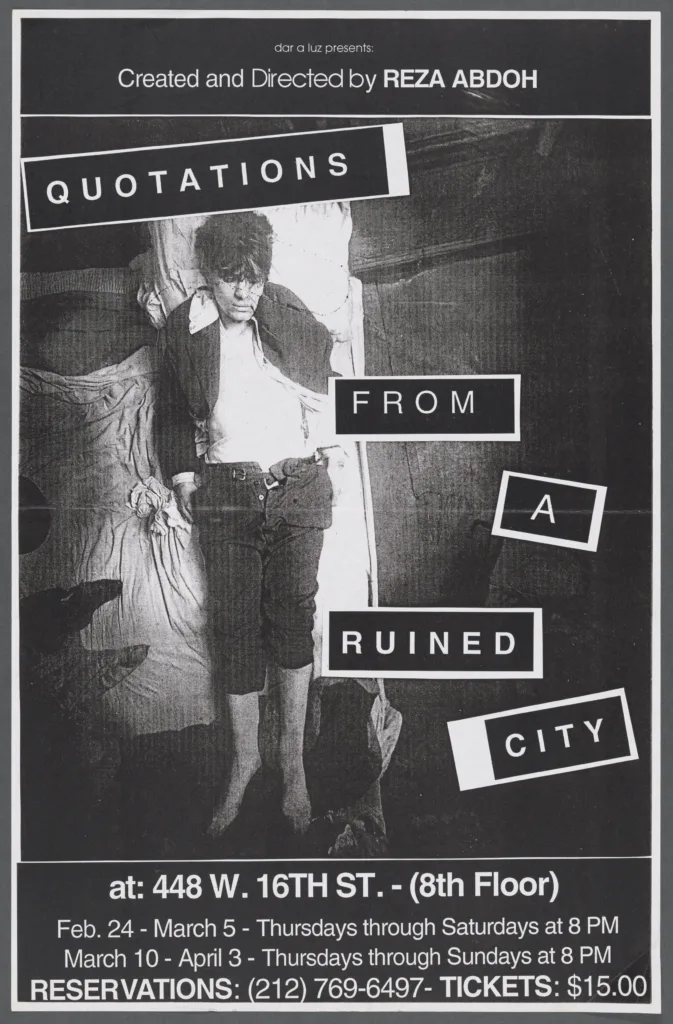
The Iranian-born American playwright and director Reza Abdoh produced an extraordinary body of work that reshaped experimental theatre, despite a life cut short by an AIDS-related illness. After several years in Los Angeles, he made his New York debut in 1990, quickly becoming known for taking theatre beyond traditional spaces into lofts, storefronts, the abandoned Hotel Diplomat ballroom, and even the streets.
With his company, Dar A Luz (founded in 1991), Abdoh created large-scale, provocative productions—meticulously rehearsed and marked by technical precision and a sense of aesthetic—that blurred the boundaries between theatre and performance art. Deeply influenced by the French artist Antonin Artaud, his immersive, sensory-overload spectacles plunged audiences into vivid, disturbing, and overwhelming environments.
Abdoh saw theatre as a transformative force—both material and metaphysical— pushing spectators to confront the political atrocities of their time, including government indifference to the AIDS crisis (The Law of Remains), America’s entrenched racism and homophobia
(Tight Right White), and global xenophobia and genocide (Quotations from a Ruined City). In an interview, Abdoh was asked why violence played a dominant role in his final productions; he answered: “it is no more brutal than the Vietnam War. Or killing a lot of people in Iraq.” Courtesy of The New York Public Library
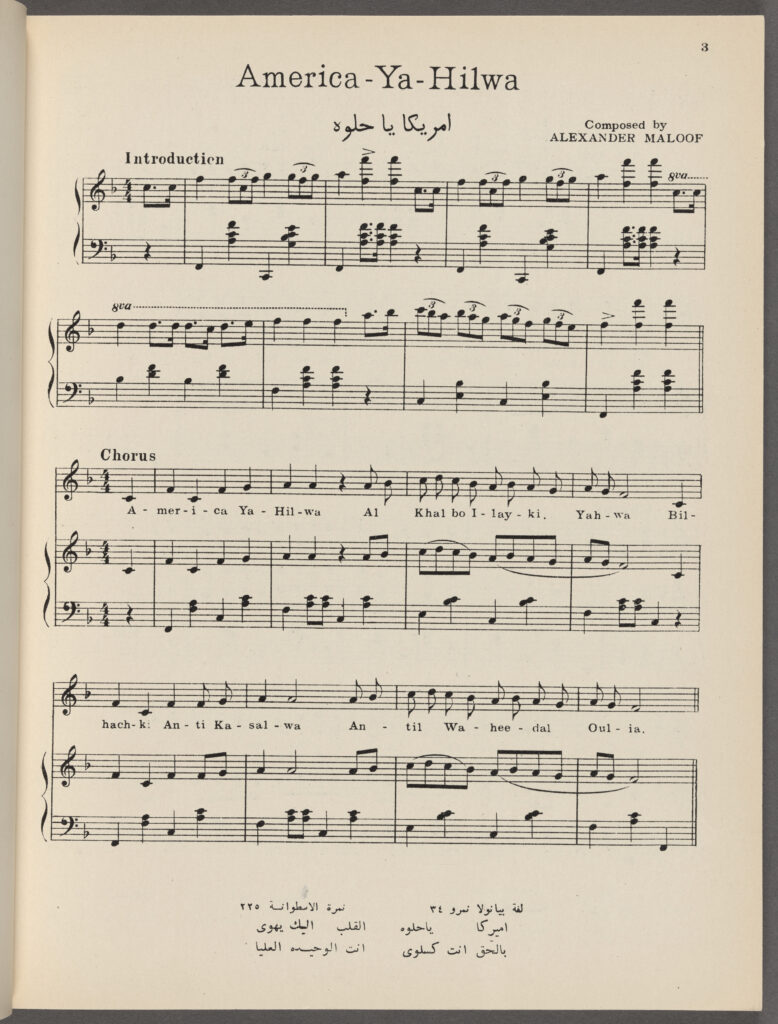
Born in present-day northern Lebanon, Alexander Maloof (Iskandar Maʿlūf) immigrated with his family to New York City, where he became a composer, arranger, pianist, label owner, and conductor.
Maloof engaged both Arab American audiences through Arabic-language piano songbooks, and broader American audiences by composing “Orientalist” music tailored to local tastes. He also composed music for silent films and Broadway, patriotic hymns, and even dances for Adolph Bolm’s Ballet Intime. In 1912, he wrote For Thee, America (Amerika-Ya-Hilwa) and spent years campaigning for it to become the U.S. national anthem. More broadly, the song reflects his enduring efforts to belong to his new homeland. Though never adopted, he advocated for it to be sung in New York schools. Courtesy of The New York Public Library
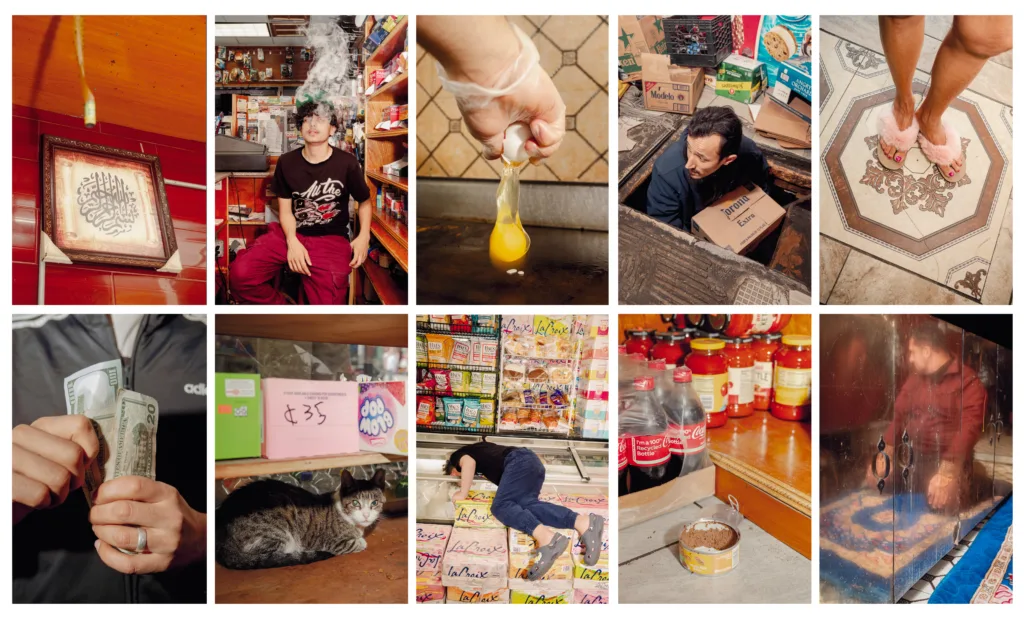
In recent decades, many Brooklyn bodegas have come to be operated by Yemeni men, succeeding earlier waves of Latin American, Italian, Greek, and Jewish owners. Often open 24/7 and family-run, these stores are essential to their neighborhoods, especially in food deserts—areas with insufficient access to healthy and nutritious food at an affordable price. In 2017, over a thousand bodegas went on a flash strike protesting President Donald Trump’s “Muslim ban,” to highlight their vital role for New Yorkers.
Through her lens, and drawing on her own experience of immigrating to New York, Mahka Eslami traces the quiet resilience and daily work of Yemeni bodega owners in Brooklyn. Her photographs reflect the saturated colors and joyful rhythms of bodega life, capturing how these spaces of labor also nurture connection and community. Courtesy of The New York Public Library
Women played a crucial role in shaping the Arabic literary landscape in New York as well as in the Middle East. ‘Afīfa Karam, the first Lebanese American female journalist, was also a prolific novelist and translator. Her work boldly addressed women’s rights and social issues in the community, establishing her as one of the most progressive voices of her era. She contributed regularly Arabic serial publications including al-Akhlāq (Character), an illustrated Arabic magazine of literature and history edited by Lebanese-born Jacob Raphael (Ya‘qūb Rūfā’īl), who actively promoted the writings of female authors. Courtesy of The New York Public Library
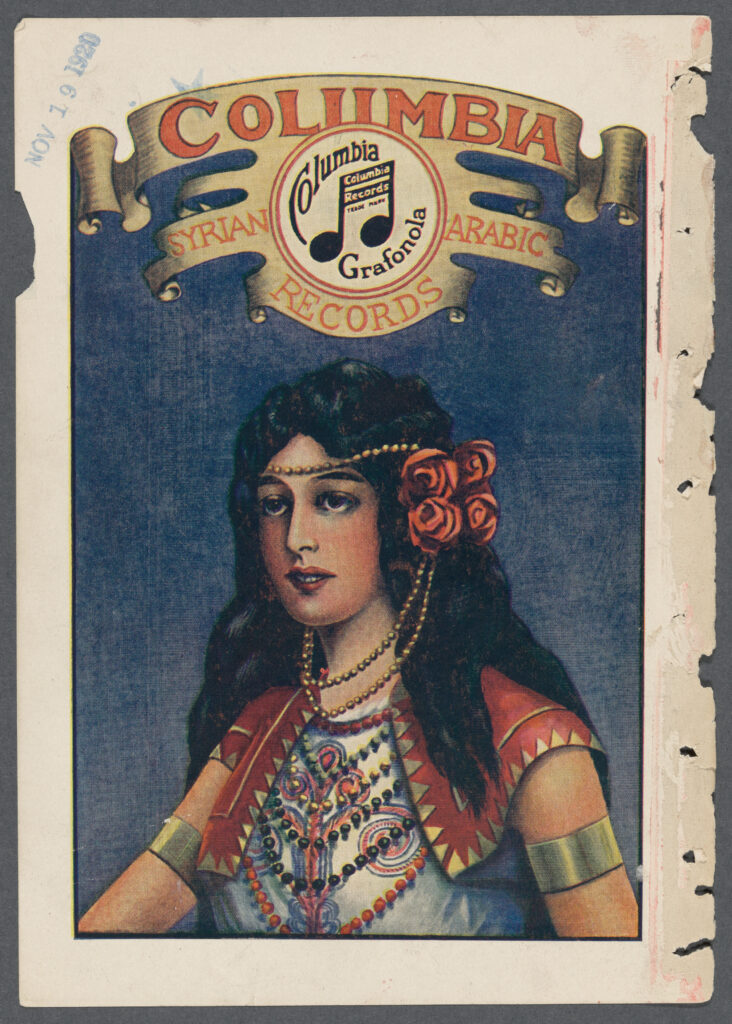
As Middle Eastern American communities grew, so did their desire to recreate the sounds and feelings of home, especially through music. Men and women from present-day Lebanon, Syria, Jordan, Palestine, and Turkey, hailing from Christian, Muslim, and Jewish backgrounds, recorded songs and poems that expressed romantic and familial love, faith in God, and longing for homeland. This longing was particularly acute for survivors of the Armenian genocide of 1915.
From the early 20th century, major American record labels such as Victor and Columbia recognized the commercial potential of ethnic music markets in the United States. They signed artists from the Middle East and its diasporas in New York, producing and releasing recordings for immigrant audiences as well as American listeners drawn to these “exotic” sounds. Much of this music featured takht ensembles, small chamber groups built around instruments including the oud, qanun, violin, and nay that fit the 78 RPM record format, unlike longer classical Arabic songs.
By the 1920s, Arab American record labels emerged, including Alexander J. Maloof’s Maloof Phonograph Company and A.J. Macksoud’s Macksoud Phonograph Company. These labels offered a platform for lesser-known artists to experiment and create new music in New York. Courtesy of The New York Public Library
Some of the earliest visual documentation of MENA immigrants in New York City was made at Ellis Island in the early 20th century by Augustus Sherman, chief clerk at Ellis Island and avid photographer, and Lewis Hine, a pioneering photojournalist. While they sought to portray the diversity of newcomers, the images were often staged, with names left unrecorded and descriptions frequently inaccurate. The woman pictured here reflects a generation of Syrian women who, though initially a minority within the predominantly male Syrian colony, soon grew in number and influence. Women’s labor was crucial to the community’s survival. Many defied traditional gender roles to support their families, working as peddlers and in factories, and running businesses. Courtesy of The New York Public Library
Absolutely, our most meaningful tool is our tool for interpretation. The thread of interpretation that you were able to weave between all of these traces is really striking and very moving. His words felt like an echo of your efforts in a lot of ways.
Moving on to a more logistical question, how does The New York Public Library collect materials?
For our General Collections, we rely on vendors based in the Middle East and North Africa, in the US, and in Europe. These vendors automatically ship newly published and relevant books based on a tailored profile of subject, publisher, and format requirements for NYPL, to keep our collections up to date. They visit fairs, such as the Cairo Book Fair, the Tunis Book Fair, and they buy books for libraries, including NYPL, based on that profile.
Another aspect of my work consists in acquiring Special Collections. This means keeping an eye on archives that emerge, speaking with community members who may hold family papers that need to be preserved.
I also buy rare books, manuscripts, photographs, archives, music sheets, maps, anything that I think can either expand existing strengths or create new fields in our collections, further making NYPL an institution where scholars can find what they’re looking for.
I’m also interested in your larger work at the New York Public Library; is it largely managing these collections and acquisitions?
We do a lot as Global Studies curators and more than format-based curators; we deal with everything that has to do with our geographic and cultural areas. For me, [that would be] the Middle East, North Africa, South Asia and Muslim collections in the region, and their diasporas. I oversee general collections, those published every year, including newspapers, periodicals, as well as special collections. I expand those, but I also am in charge of interpreting those collections. I share my expertise with colleagues and serve as a spokesperson for the collections.
I also host class visits and work with the Center for Educators and Schools and Young Adult Programs as well. For instance, we just hosted 6 teens who joined a program called the Teen Curators Program; we received over 180 applications from teenagers, mostly with a MENA background, to be part of a week program, all paid and supported by the Library to make their own work [based] on the exhibition and additional collections we pulled out for them, in order for them to produce their own online exhibition and physical companion to the show, maybe a zine. They will showcase their final work at the Library by the end of the month.
I am also in charge of fellowships. Now we have one, and with the new grant [from Lilly Endowment Inc.] for Islamic collections, we will be able to expand and offer additional fellowships. That is what allows us to activate these collections that were not known for so long. All these modes of engagement, from outreach and scholarly talks, to public programs and fellowships, are ways of unlocking the collections and making them accessible in a variety of ways to researchers, creatives, and communities.
[This work] is urgent to me. As long as I’m here and during my tenure, I want to get things done. Sometimes I get very emotional when I think about it. I want to serve our people as much as I can in an institution that is public, serving people without anything in return.
Your relationship and sense of urgency with the public spans efforts outside of the walls of the library. You were recently appointed to Zohran Mamdani’s Transition Committee on Arts and Culture, and had also delivered The Qur’an used in his inauguration from the collections of the Schomburg Center for Research in Black Culture. Can you tell us more about your appointment, about that delivery?
Thank you! My appointment to Zohran Mamdani’s Transition Committee for Arts and Culture was really exciting because it allowed me to speak to the importance of public libraries for New Yorkers and for the culture and arts sector in our city. Libraries are an essential infrastructure to New Yorkers: they provide every community member opportunities for free and equitable access to education, information, technology, and community space, services that become even more critical during periods of economic uncertainty and social strain. Without sustained funding, New Yorkers can expect longer wait times for books, unexpected branch closures, and fewer public programs. These reductions disproportionately affect the most vulnerable communities, including children, immigrants, and non-English speakers, who rely deeply on after-school programs, language classes, and other essential services that libraries provide. Being part of the committee allowed me to underscore how central libraries are not only to literacy, but to cultural equity and democratic life in our city.
As for the Qur’an used at the inauguration, it was a really special moment. I had the privilege of selecting the manuscript from the collections at the Schomburg Center for Research in Black Culture and personally delivering it for the ceremony. For me, that moment embodied how libraries and archives are not just repositories of objects, but living resources that connect people to history, identity, and civic life. Being able to see that manuscript enter such a significant public moment, bridging scholarship, culture, and community, was very special to me especially as an academic who has long questioned how historic artifacts can be mobilized beyond closed academic circles and participate in public life.
How can members of the public continue to engage with the collections now that the exhibition has drawn to a close?
The exhibition brings together for the first time, materials that are dispersed across divisions and across research centers, from the Library for the Performing Arts, Lincoln Center, and the Photography Collection. I want the exhibition to be an invitation to people—not only scholars and students, but anyone—to come and use NYPL’s general collections and rare materials. It’s a public institution. This is the most accessible and most used library in New York and so my hope is that people come and use the resources.
I also want our visitors to think about the layered history of Middle Eastern and North African New Yorkers, to be empowered and feel they have a place here. They have a long lineage of people who opened the way for us from 1857 to today. That’s important to keep in mind, [particularly] to those who still think of MENA individuals and Muslims as foreigners who don’t belong to this place, this country, this city.
I hope that our communities will think again of archives and consider the diversity of materials that are in this show. The library collects zines and ephemera that make their way to an exhibition gallery, materials that are not commonly perceived as “museum pieces.” I also want to tell visitors that if they have things that they don’t perceive as archival, as valuable historical evidence or materials, that they too can have a place on the shelves of a library.