
 Posted in
News,
Posted in
News,
Inside Ithra’s Khoos Initiative, which pushes a traditional Saudi craft into the spotlight

Text Gayathri Pullare
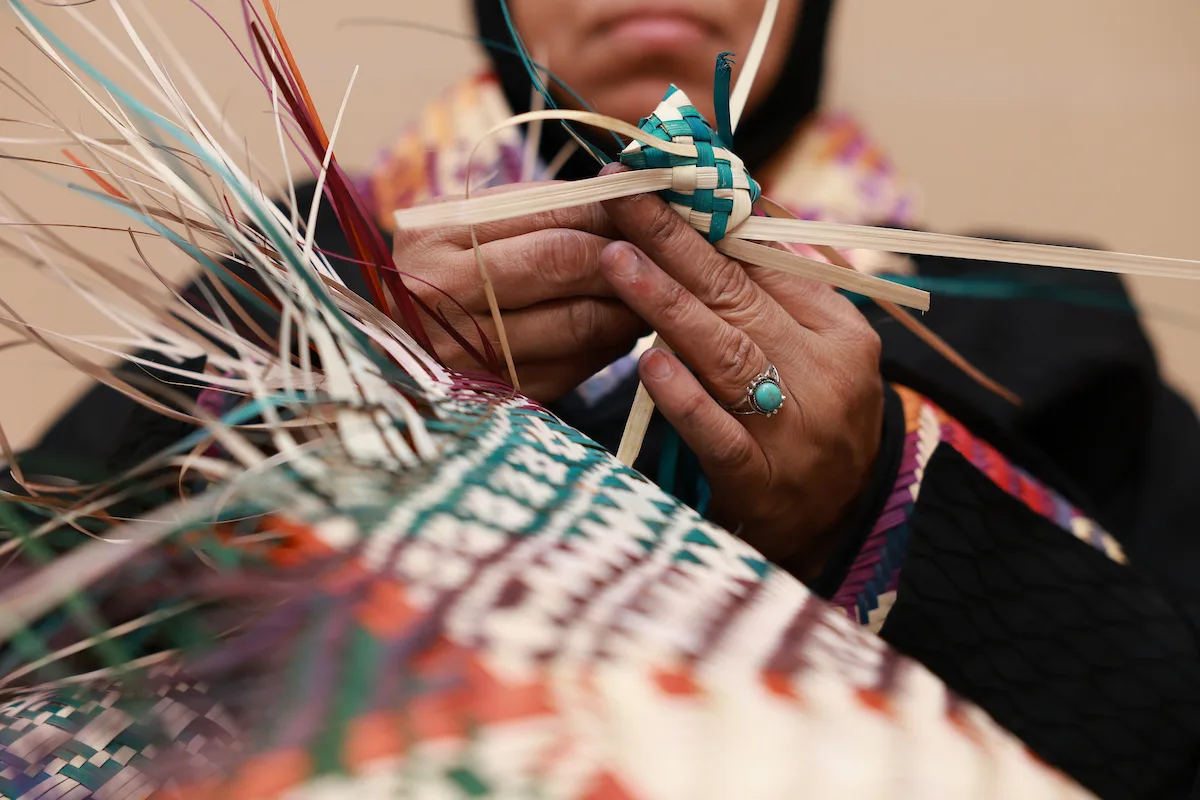
If you’ve recently returned from a relatively long trip abroad, you might relate to the feeling of homecoming that just hits when you see the date palm trees that line the roads leading you away from the airport. It might just be a quick glimpse from the corner of your eye, but you immediately recognise its shape, because that’s how ingrained the date palm is in Arabian Gulf culture. So it makes sense that one of Saudi Arabia’s latest deep dives into cultural heritage starts with the familiar tree and the people who know how to transform its fronds into meaningful objects.
The Khoos Initiative, run by the King Abdulaziz Center for World Culture (Ithra), invites both local and foreign artists to explore how a centuries-old craft can evolve without losing the identity of where it comes from.
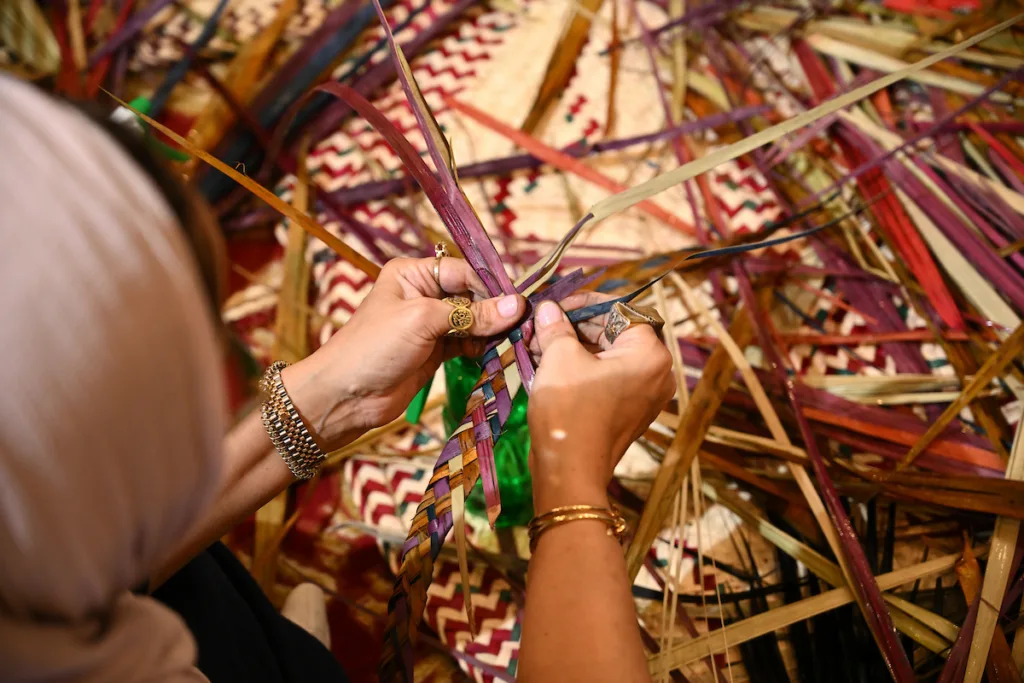
Palm leaf — or khoos — weaving has deep roots in Saudi heritage, especially in communities of the Eastern Province. For generations, the fronds have been transformed into mats, baskets, screens, bags and other everyday objects. Similar practices appear across the world, from North Africa to Southeast Asia. It makes the handicraft a perfect meeting point for cultural exchange, which is exactly what the 2025 Khoos Residency was designed to support, along with cultivating contemporary practices, promoting innovative interpretations in the craft, and strengthening the presence of the art locally and internationally.
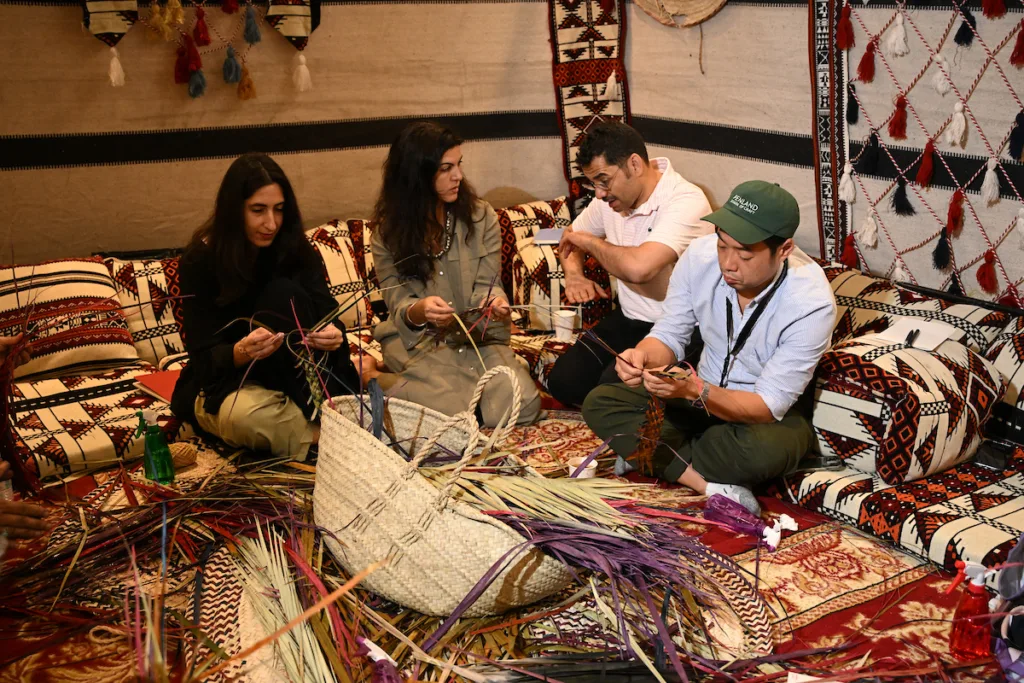
Running from October 3 to October 14, the residency was facilitated by Palestinian Jordanian architect and designer Abeer Seikaly. The programme unfolded across Ithra and the Al-Ahsa Oasis, combining research, material testing, and collaborative creation. Participants spent 12 days exploring how palm-based materials might evolve across multiple creative disciplines, whether in architecture, fashion, or contemporary art. This year’s cohort gathered Saudi voices — Bashaer Hawsawi from Jeddah, Jana Malaikah from Khobar, Fatimah Al Nemr from Qatif, Maisa Shaldan, and Zainab Abo Hussain from Riyadh — and paired them with international participants like Heechan Kim from South Korea, Chilean designer Isabelle Infante, Azza Alqubaisi from the UAE, and Bahraini artists Sara Kanoo and Mariam Alnoaimi.
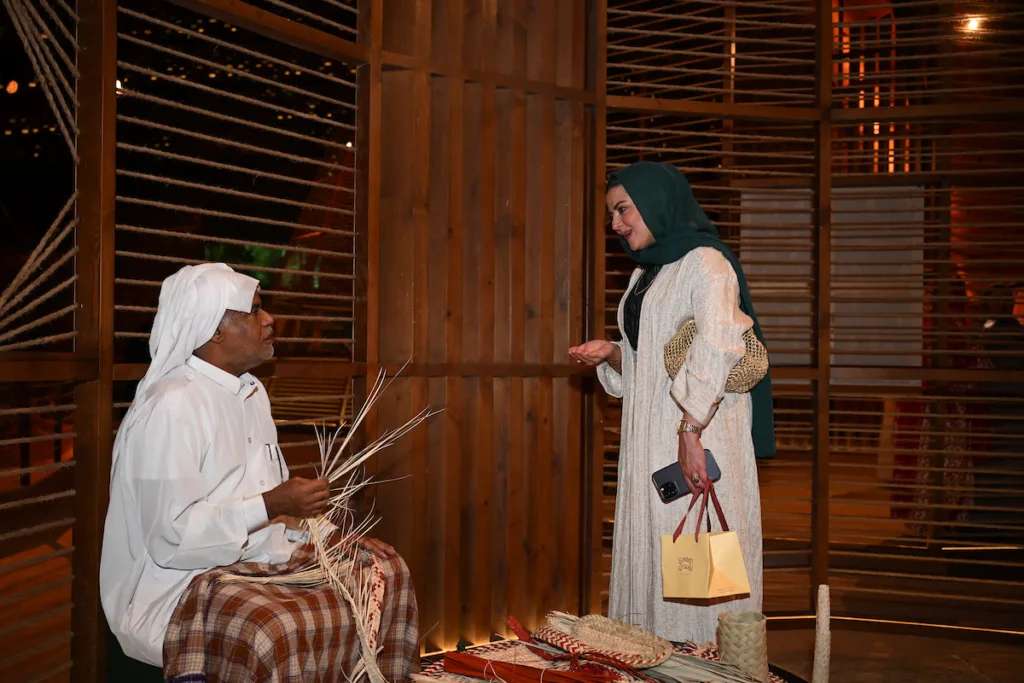
But the residency wasn’t a standalone moment. It was followed by Baseqat: The Palm Tree Exhibition, held at Ithra’s Great Hall. The exhibition looks at the tree as both a cultural symbol and a practical resource. The palm family spans more than 2,500 species across over 180 genera, tying communities around the world through shared materials and traditions. Baseqat highlights the significance of the date palm in Saudi culture specifically, while also acknowledging its place in a broader ecological and cultural network.
The artists featured in the exhibition interpret the palm in strikingly different ways. Fatimah Al Nemer’s multimedia works reflect on cultural memory and women’s narratives. Egyptian architect Shahira Fahmy blurs contemporary design with heritage. Mexican designer Daniel Valero draws from rural craft traditions to create immersive installations. Others, like Sumaya Shelbi and Tunisian artist Mohamed Amine Hamouda, approach the palm as a link between material, family history, and environmental concerns. Their works show how every part of the tree, from its roots and trunk to its fibres and fronds, can serve as an outlet for new creative possibilities.
Complementing the exhibition is a series of art commissions by designers Nada Debs, Cristián Mohaded and Shahad Alazzaz, to be debuting soon at Ithra. These pieces reimagine khoos weaving techniques within architecture and product design, demonstrating how traditional craft can adapt to contemporary aesthetics. The initiative also extends into cinema through Sa’fa, a documentary by Lebanese director Mahmoud Kaabour. Shot in Al-Ahsa, the film offers a contemplative glimpse into the inner world of palm weavers.
All of this aligns with the Saudi Ministry of Culture’s 2025 Year of Handicrafts, which is an effort to spotlight the cultural value of traditional artistry. Through the Khoos Initiative, Ithra turns palm weaving into a shared creative language, showcasing that heritage belongs in the hands of the next generation, rather than sitting behind glass to gather dust.