
 Posted in
Anniversary Issue,
Posted in
Anniversary Issue,
What is a Magazine?
Text Amun Chaudhary
Magazines today exist in constellations ranging from traditionally mercantile to new, radical forms, spoonfeeding aspiration and inviting consumers to find dreams of refined selfhood on glossy pages. On the other hand, existing in self-published corners of the grassroots internet, they are vehicles for art to find its audience, reckoning with the magazine’s longheld revolutionary spirit.
Pliable in format, the medium refuses to be a relic. Be it the digital substack or resurged analogue, it is an active space to fill, making it all the more potent in its demand for contribution. In the age of overconsumption, increasing censorship, and blatant shadow banning, the magazine’s work must be to ostensibly inherit its radical ancestry.
As we celebrate our anniversary issue, it only felt right to turn back to those who made this year what it was, asking: What is a magazine? Their responses remind us of what a magazine really is, should be, and for whom.
POSTPOSTPOST – meme account & publication
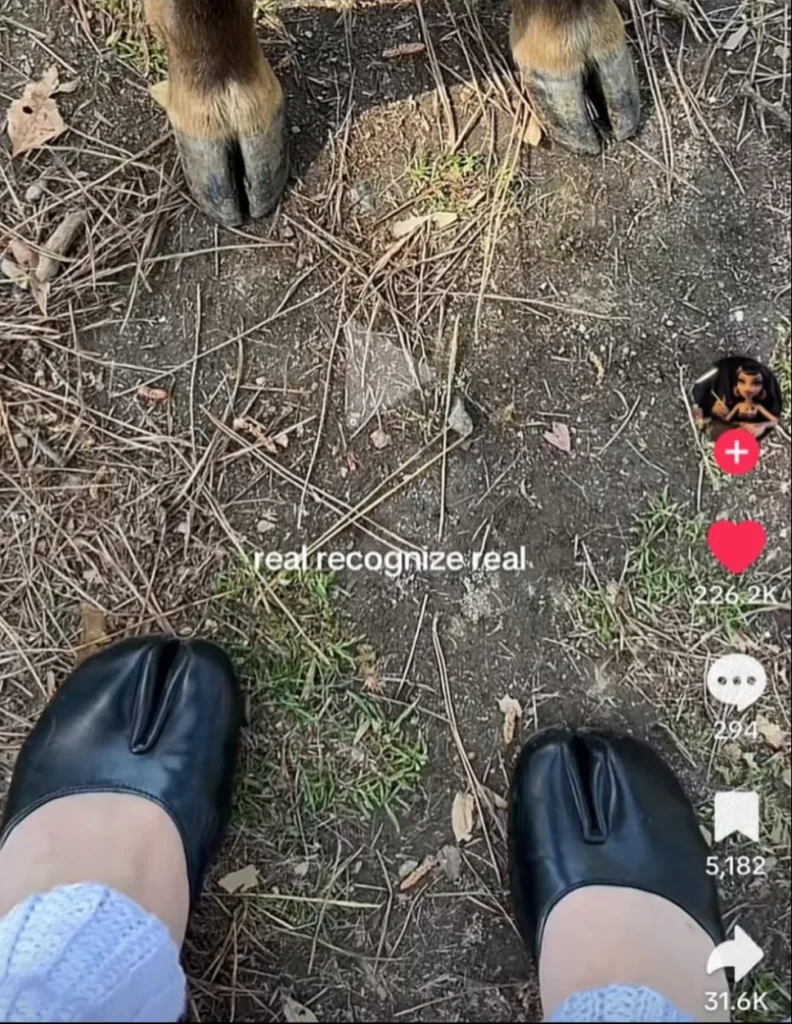
A magazine is the most important, self-indulgent, emancipatory, irrelevant, and essential type of media today. Also a good coffee table enhancer.
Yasmina Hilal – visual artist
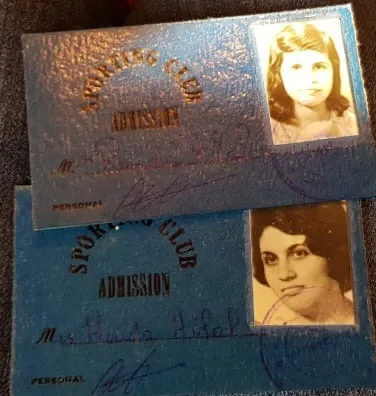
For me, it’s always been about family. Working on the Gucci project with Dazed MENA was more than a professional experience; it was about finding a chosen family, people who shared the same passion, drive, and creative energy. It taught me what community really means: the beauty of collaboration, trust, and mutual growth.
After the shoot, my father sent me a photo of my grandmother’s Sporting Club entrance pass and, in that moment, everything came full circle. It felt like generations quietly connecting; my grandmother’s memories intertwined with my own creative path. It reminded me that everything I do is rooted in where I come from and the people who have shaped me.

Maen Hammad – photographer & writer
A handful of bound paper with the audacity to tear you from your seat and drop you into the world as it should be—even if only for a moment.
Hadi Afif – writer & photographer
I wanted to give a very cerebral answer – and I’ll get to that – but my mind first drifted to my mother. My fascination with magazines began when I stumbled upon a stash of hers as a kid. It was a mix of سيّدتي and الشبكة, both of which propagated the wave of Arabic pop culture that swept through Lebanon in the 1990s and 2000s. The latter produced some of my favourite covers ever, including the same ‘Arabic Y2K’ aesthetic now endlessly referenced by every youth-oriented regional brand with an Instagram page.
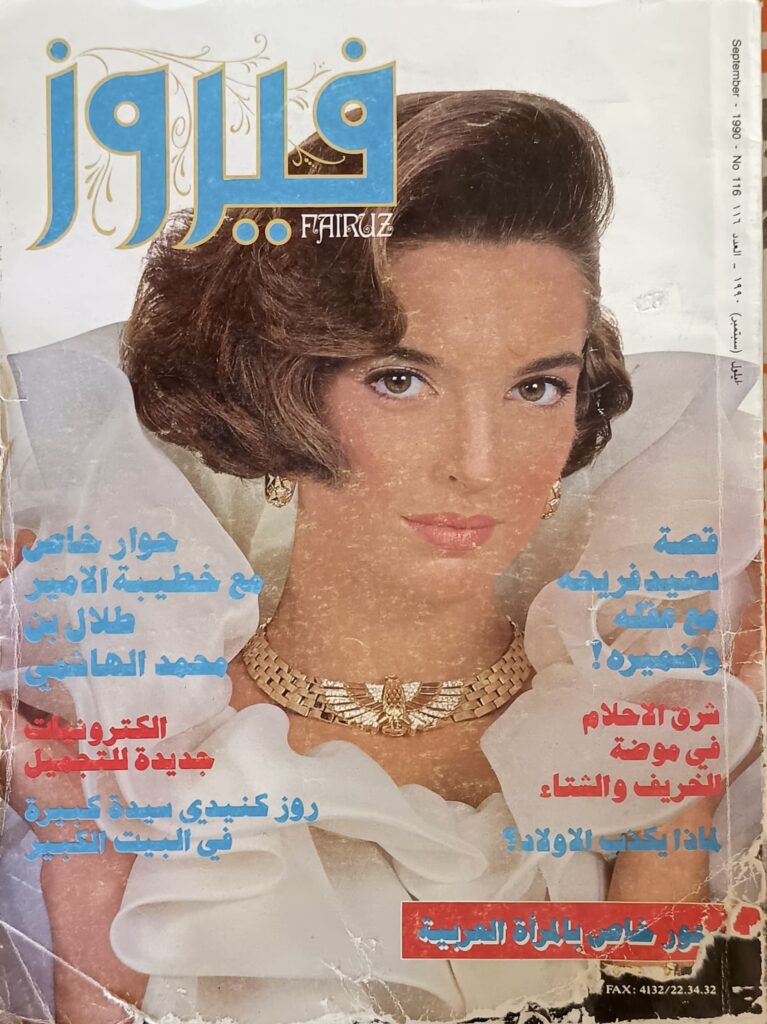
Among the pile, I discovered something she had completely forgotten: her own feature in the September 1990 issue of فيروز, a women’s lifestyle magazine published by دار الصيّاد (the same publishing house behind الشبكة and other Lebanese staples that shut down in 2018). The article was on child-rearing and “why children lie”. Her face was in there, but her name was misspelled, which I realised after I asked her for pictures of the spread. The cover featured a white woman surrounded by peak 90s headlines on beauty trends and big boss ladies of the west—a true product of its time.
In my pre-teens, I remember my older sister and cousins collecting Teen World, a bygone Lebanese teen magazine from the early 2000s with comically cluttered, hypercolorful covers. It often featured interviews with mega stars like Mariah Carey and other big American popstars. In hindsight, it feels oddly ahead of its time, both for Lebanon and that era.
There is no local equivalent to Teen World today (at least to my knowledge). And that’s probably why I keep returning to these magazines in my head. Their traces online have almost disappeared, and they remain quite rare in print. They are locally produced archives of their respective moments, capturing cultural shifts and, in many ways, how ‘connected’ Lebanon once felt to the wider world. For better or worse.

Omar Sha3 – artist
It is a fun time capsule that documents the present with care and love.
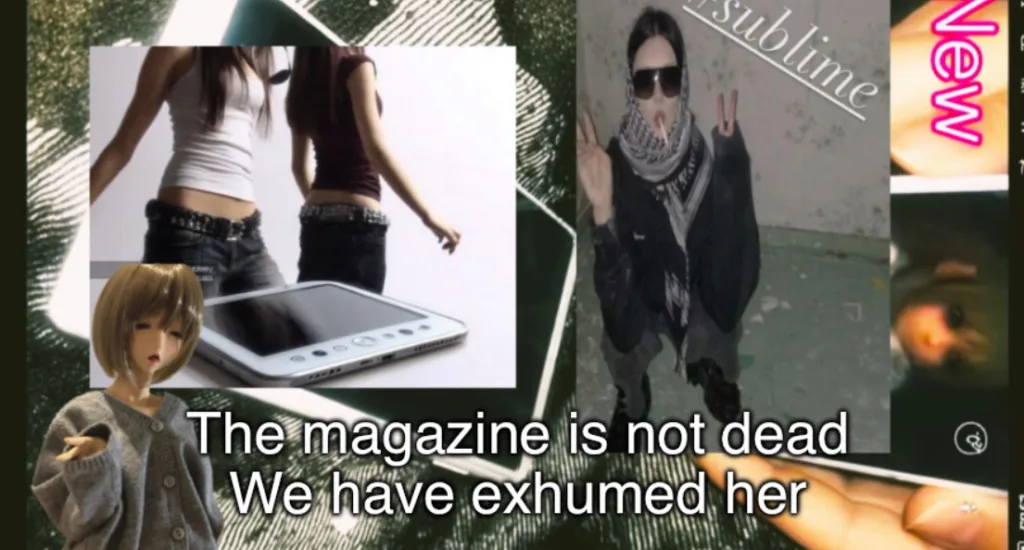
Dana Dawud – artist, writer, curator, and SoundCloud prophet
Though its death has been declared repeatedly, the magazine endures within the fragmented pulse of attention, the endless scroll, the culture update. It has become the material trace of online ephemera—where art, fashion, and culture are archived, erased, and archived again in perpetual motion.
I made the attached image from a collage of AI-generated images and found images, and added: “The magazine is not dead; we have exhumed her.”

Jess Canje – art director
A magazine is a place to discover. It’s for curious minds to dive deep into niches, passions, and interests they may have had or never had before. While it’s a place of discovery, it’s also a memory and a collectible. A lot of my favourite artists started collecting magazines from a young age, which led them down a path that ended up shaping their lives. My first job was at a magazine, Dazed, so to me, it is a beginning and an end like the stories they tell. I think a magazine is a threshold for new beginnings.
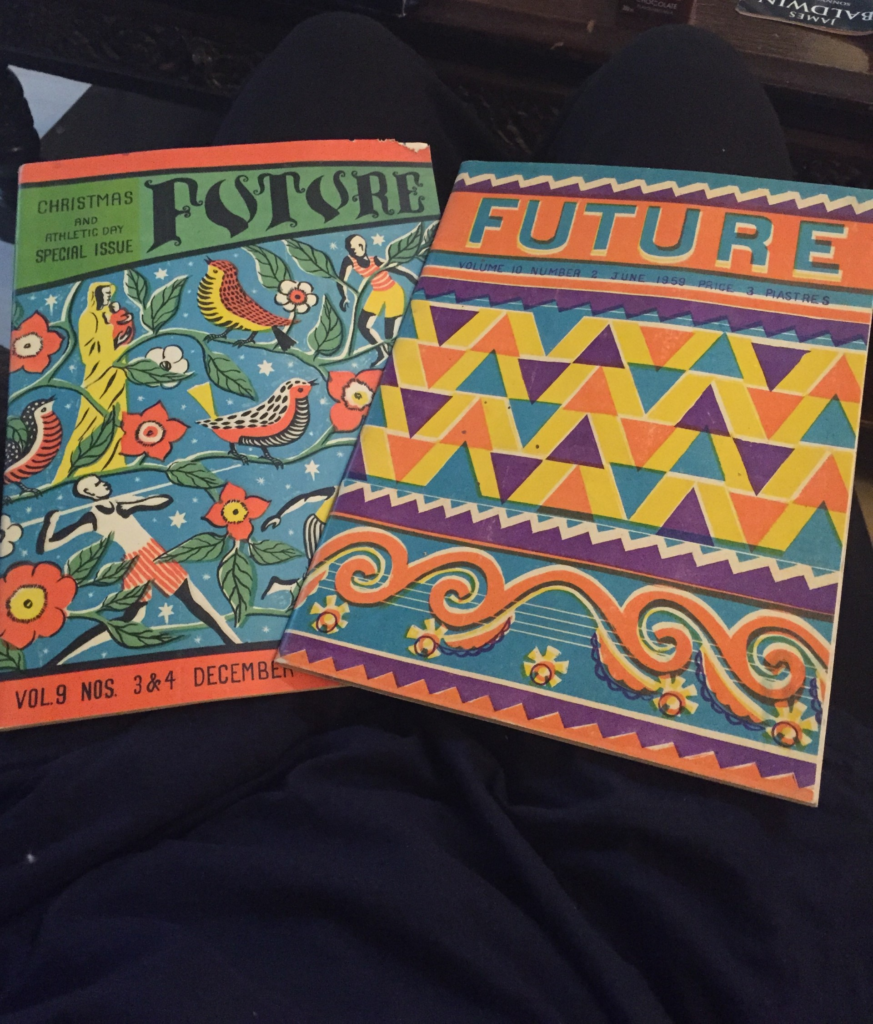
Azza Yousif – fashion & creative consultant
The word ‘magazine’ comes from the Arabic makhazin, or storehouses. By 1731, with the launch of The Gentleman’s Magazine in England, it evolved to mean a “storehouse of information”, a periodical gathering words and ideas. And in the 1800s, the word colloquially meant “a case in which a supply of cartridges is carried”.
Though often reduced today to a tool of persuasion (feeding our desires in Bernaysian fashion), a magazine at best is a sanctuary offering a collection of words and thoughts with the power to heal and influence us for the better, and bring us together as a community.
I still believe that’s what a magazine should be—a shelter for our collective hopes and dreams, stocking words as ammunition for courage and change. (Pictured: Future, a 1950s Sudanese magazine championing equality, freedom, and autonomy. The same struggles persist. The work continues.)

Michelle Pan – photographer
It’s the trace we’ll leave behind, made of shiny appearances and honest depth. Pages and pages that mark our passing. References on a moodboard.

Taous Dahmani – curator, writer, & editor
A magazine is perhaps the ultimate zeitgeist medium—a living, breathing form that captures the spirit of its time. It can reveal intellectual disputes, mirror the cultural climate, and amplify voices of dissent. At its best, a magazine is made by communities and for communities: a space of collective imagination and resistance.
Polareyes embodied exactly that spirit in London back in 1987. Subtitled “A journal by and about Black women working in photography,” it was a radical and singular publication in Britain’s visual culture landscape. It emerged from a double exclusion: Black photography collectives were largely male-dominated, while white women photographers struggled to think inclusively. Out of this gap, Polareyes was born not only as a corrective, but also an affirmation of presence and authorship.
The magazine form itself offered the perfect vehicle. Flexible, accessible, and collaborative, it could hold the multiplicity of its vision—essays, interviews, and photographs that together mapped an alternative way of seeing. Though it was a “one-shot magazine” produced only once due to lack of funding, its single issue remains a landmark. It reminds us that magazines are not just publications; they are gestures of collectivity, archives of urgency, and blueprints for other possible worlds.

Zaineb Abelque – photographer
When you open up a magazine, it’s always about finding that surprise, a gem—a story or photo series that feels like its only place to exist was within those pages. Magazines, for me, have always been interesting because each feels like a visual diary of the time.
It’s curated, and its essence has always been playful. It’s a space that feels aspirational but also allows many a chance to see art or expression in the physical. As a teen, I collected magazines. And as an adult, when you can’t buy your favourite artists’ pieces, you get excited to see a feature about them in an issue.
Print has always been an entry point, so it feels like freedom.

Fatima Mourad – creative producer
A visual gallery and collection of memories held together by words.
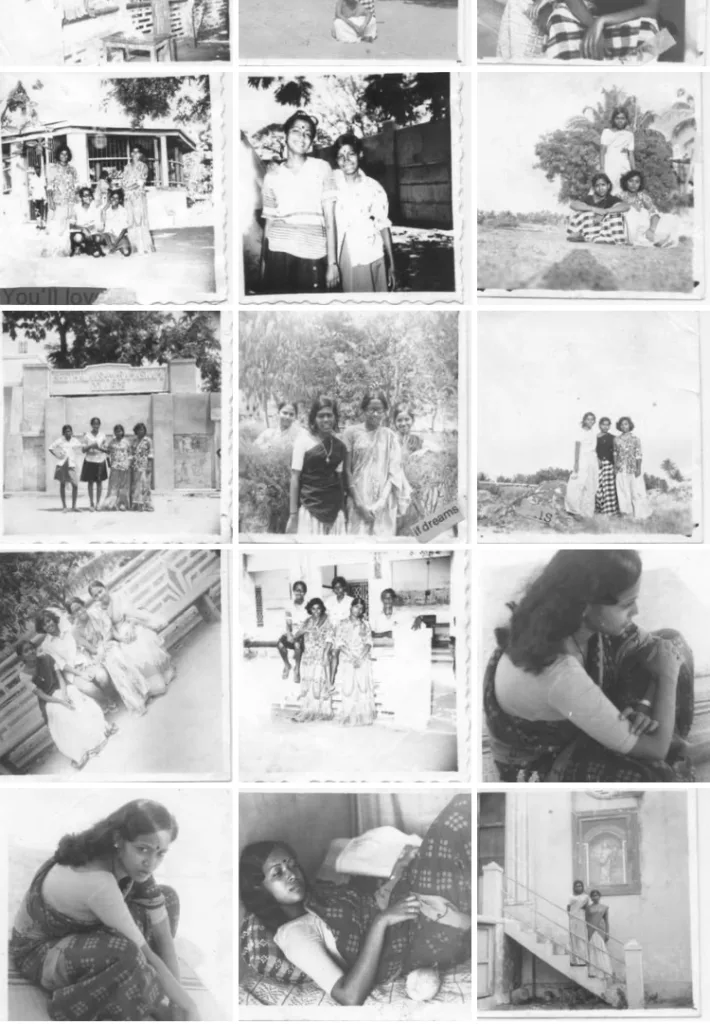
Prinita Thevarajah – writer, producer, & artist
A magazine is a shield against the fire.
My mother’s Facebook album is a magazine. She archives a moment of freedom in 1980s India, consciously building a record against the void. This impulse is deeply rooted; we are the people who witnessed the burning of Jaffna Public Library, who understand the price of disappeared print. In the shadow of that loss, every magazine clipping, every saved image, every printed word becomes our way of saying, “You cannot burn us all.”
Samaa Khullar – investigative journalist & writer
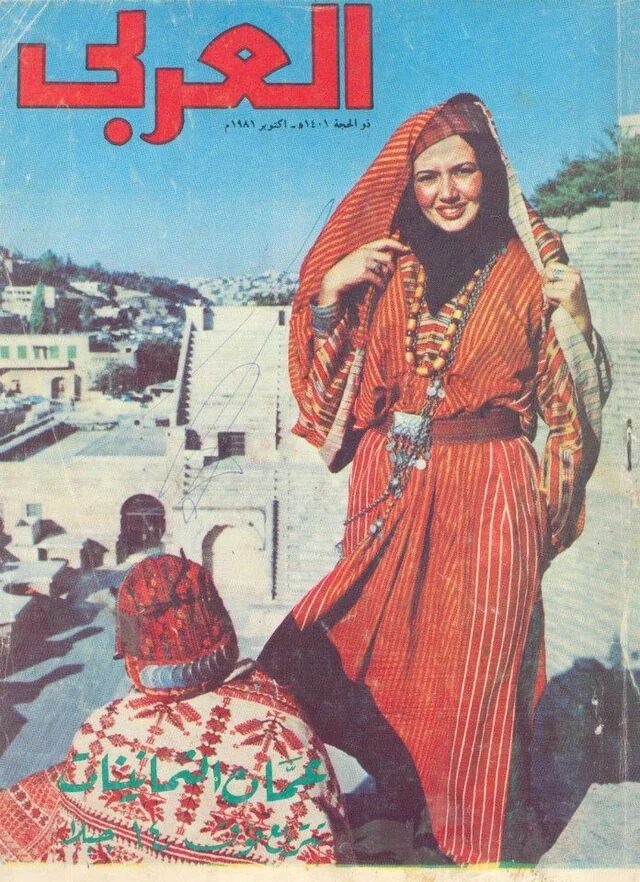
Magazines are an archive of memory and culture. They are time capsules, existing through moments of tragedy and triumph. I know the magazine covers that defined my generation, from flags flying at Tahrir Square to profile shots of journalists standing tall in Gaza. They have an uncanny ability to bring you back to the moment you first felt moved by something.
They can also exist as a form of escapism, too. I looked back to the magazines that dominated the newsstands in my mother’s generation. Her eyes lit up when I showed her vintage covers of Al-Arabi magazine. Suddenly, she was a teenage girl in Kuwait again. People were photographed on their land, captured with dignity, in full colour. It doesn’t sound revolutionary, but it still feels rare somehow.
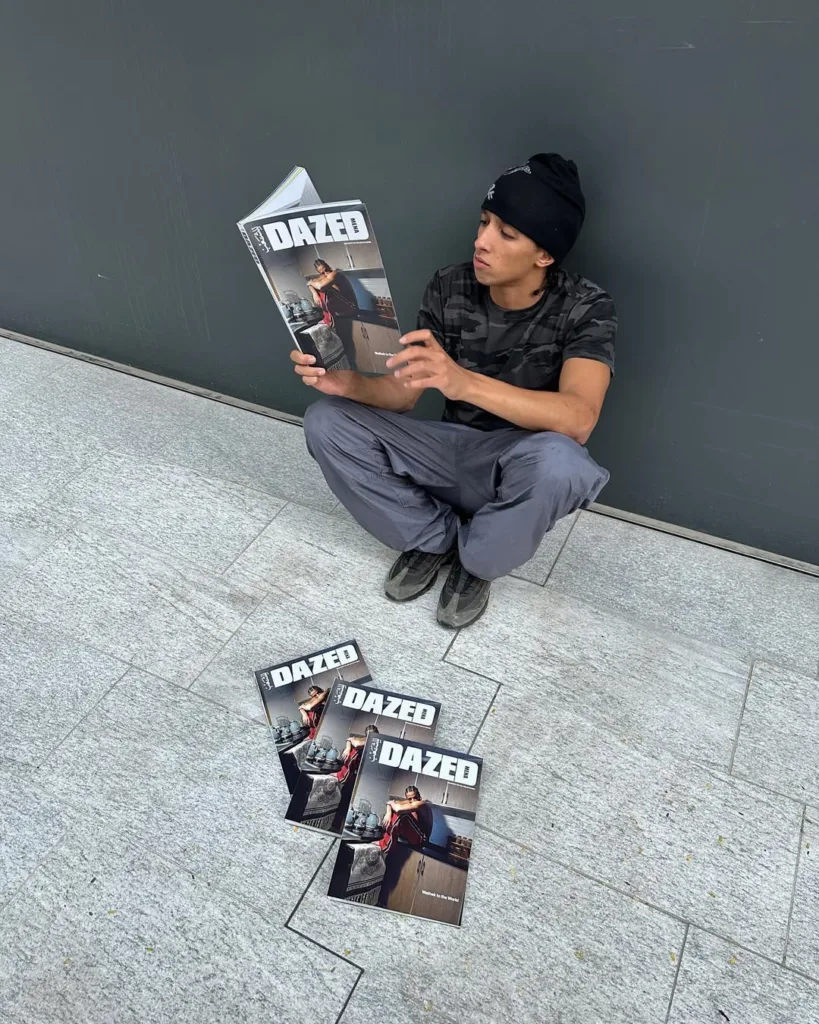
Wathek Allal – designer & skater
A magazine is an exhibition space, a meet-up spot for individuals and their taste in art and music, and a place to receive raw unfiltered news.
Listen to “Love Yourself” by Worldpeace DMT.

Isha Dipika Walia – art director
When my family first moved to NYC from India, my dad worked an odd job delivering magazines to bodegas across Manhattan, with my mother and I accompanying him from time to time.
I would sit in his cargo van on a kids’ plastic stool in the middle. I felt so small surrounded by stacks and stacks of these foreign new worlds. Magazines, quite literally, became a point of entry and a catalyst for assimilation for my family. Of course, this is just one way that magazines provide discovery.
We open magazines up with blind faith and a brief twinkle of curiosity that reveals a whole constellation of mini data points about our own personal worldviews. The medium, to me, becomes similar to stargazing. Perhaps the grand narrative is the magazines we collected along the way?

Dee Sharma – writer
A magazine is a labyrinth of interesting texts, images, and information. It’s always fun to trace a single thread across an issue and find easter eggs along the way.

Caroline Issa – chief executive & fashion director of Tank
A magazine is a repository of ideas to spark other ideas, collecting momentum and acting as a resource to test, learn, and reference other ideas.

Daoud Tabibzada – art director
A magazine is storytelling personified.

Günseli Yalcinkaya – writer & researcher
A magazine is a community.
A magazine is a connection.
A magazine is a zeitgeist.
A magazine is a brand.
A magazine is a window.
A magazine is a mood.
A magazine is a moment.
A magazine is a signal.
A magazine is a vibe.
A magazine is human.
A magazine is material.
A magazine is content.
A magazine is form.
A magazine is memory.
Sami Abd Elbaki – writer & editor
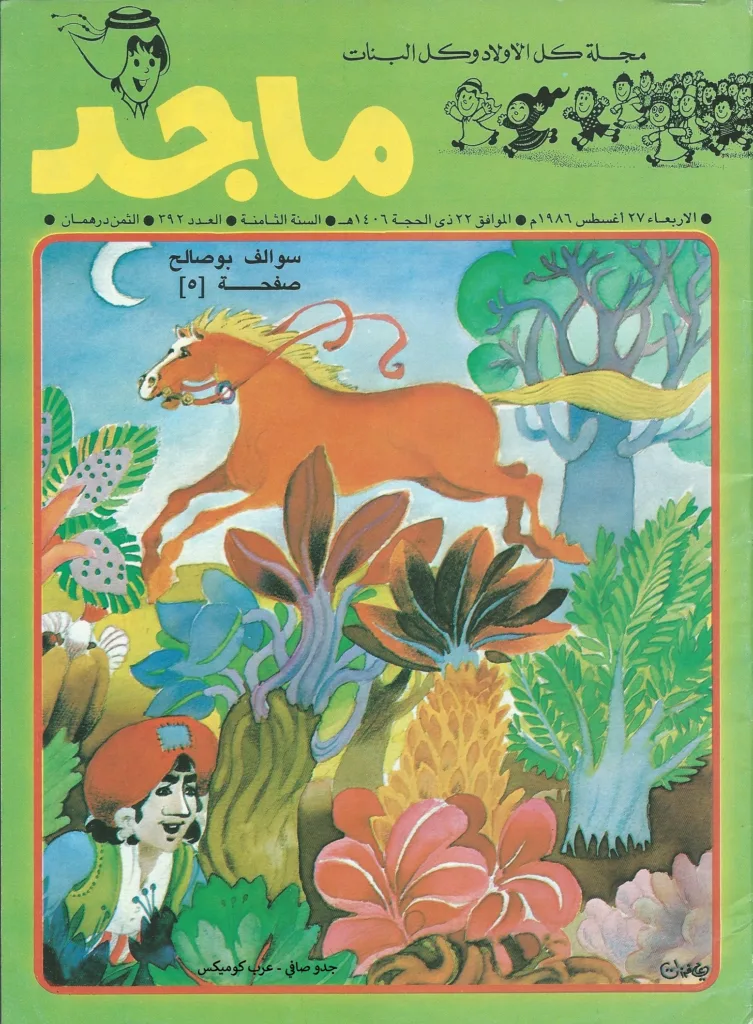
A magazine is where a lifelong hunger for stories begins. Mine started with Majid. A copy was set aside for me each week by the bookseller, then delivered home by my father, devoured by me in a single sitting, and reread until the next issue arrived. Now, nearly two decades later, working as a magazine editor feels like a full-circle return to that early hunger. Also, fittingly, Majid takes its name from the Arab navigator Ahmed Ibn Majid, an explorer of knowledge and the world. A magazine does exactly that.

Marne Schwartz – managing director & publisher of Dazed MENA
SWANA’s culturally literate audience lives between cities and cultures, yet their media diet rarely offers a sophisticated, regionally led vehicle that treats Arab creativity with the same editorial care given to global stars. A magazine is not pages so much as a field, a place where time and taste treat culture as an object of record. The scroll slows into sequence, turning moments into evidence. Turning a page is a spatial act, a decision to proceed. It holds contradiction without needing to resolve it; luxury beside austerity, experiment beside tradition, the mundane beside the mythic. In that held tension, a magazine becomes a labratory for identity, where a region rehearses futures in print before they harden into policy or cliché. Read front or back or opened at random, it trains the eye to recognize patterns of power, absence and possibility within its own landscape.