
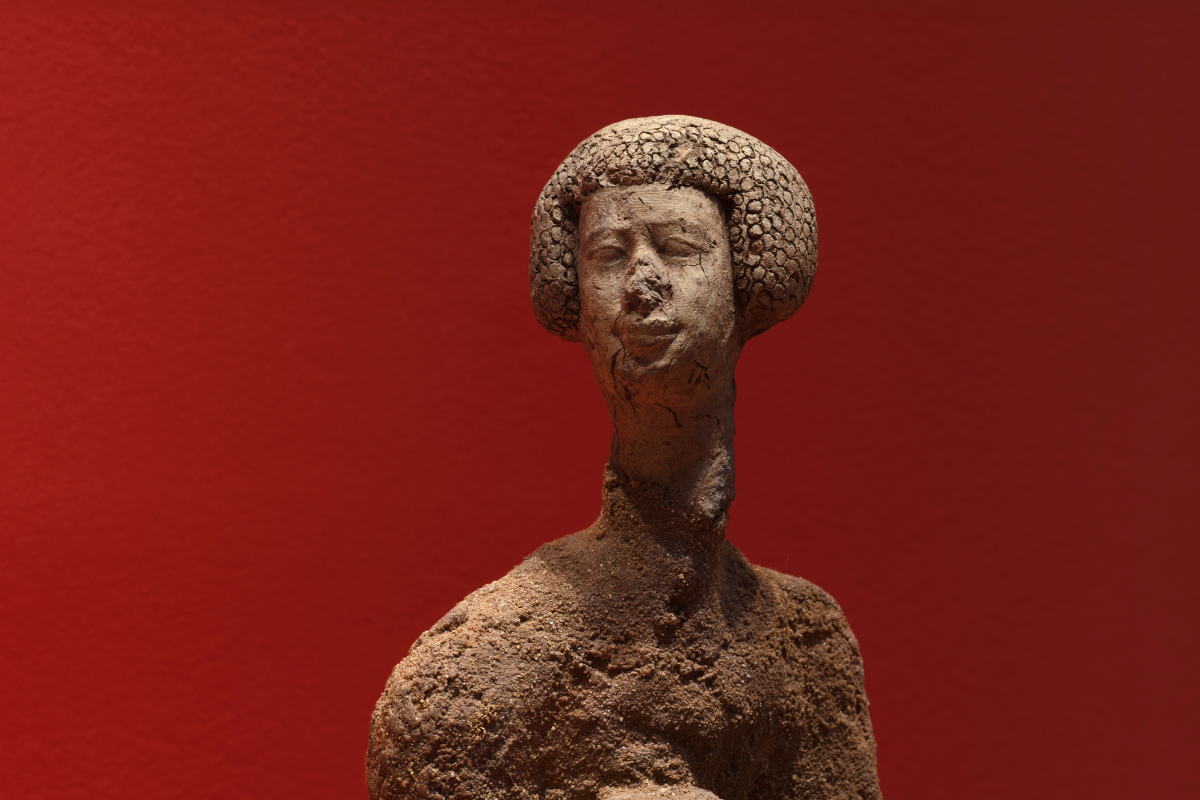
 La Grande Dame (detail), 2023, Ali Cherri. View of the Twenty-Four Ghosts Per Second exhibition at Bourse de Commerce – Pinault Collection. Paris, 2025. Courtesy of Aurélien Mole / Pinault Collection.
Posted in
Magazine, Dazed MENA Issue 05
A letter from our Editor-in-Chief: They desire locusts, we demand joy
Text Ahmad Swaid
As I write this, ballistic missiles continue to fly overhead. It’s been 27 days since the start of illegal and unprovoked attacks on Iran by the United States and Israel, plunging the entire region into an incumbent state of paralysis. To date, an estimated 3.2 million people are displaced in Iran alone. More than 1,400 civilians have been killed, over 100 of whom were school children struck by a US missile in Minab on the first day of the war. The youngest victim of the ongoing strikes was an eight-month-old girl.
Lebanon, where I am from, has had 1.2 million of its population displaced as a result of Israel’s ground and air attacks—this places it alongside its neighbours, Palestine and Syria, as countries with the world’s highest displacement. Over 1,000 of us have been killed in 20 days, as neighbourhoods across the country have been struck relentlessly. In the town of Aramoun, where I spent part of my childhood with my paternal grandmother, three people have been killed. Bombs have struck Jnah, where I also grew up, mere kilometres from Rafic Hariri Airport in Beirut. These are scenes of violence reminiscent of the 2006 war and Israel’s occupation of South Lebanon during the early 1990s, when waves of displaced families arrived at our doorsteps seeking refuge. My grandfather opened his home to them while we were sent to stay with my uncle. I was less than five years old at the time. That memory has always lingered. And 30 years later, the condition persists.
The Jnoub – the very place where my parents, their parents, and generations before them were born, lived, and laid to rest – is a thing of sacred beauty. She continues to suffer as an eternal battlefield for expansionists, her body savaged as desperate plumes crowd the sky, leaving her and the rest of us breathless and in rage. It reinforces a myth long projected onto the entire region: that our lives are preordained to be lived like this, in a constant state of violence and interruption, forcing us to migrate against our will. I refuse this notion. Yet, it remains a condition we seem unable to escape.
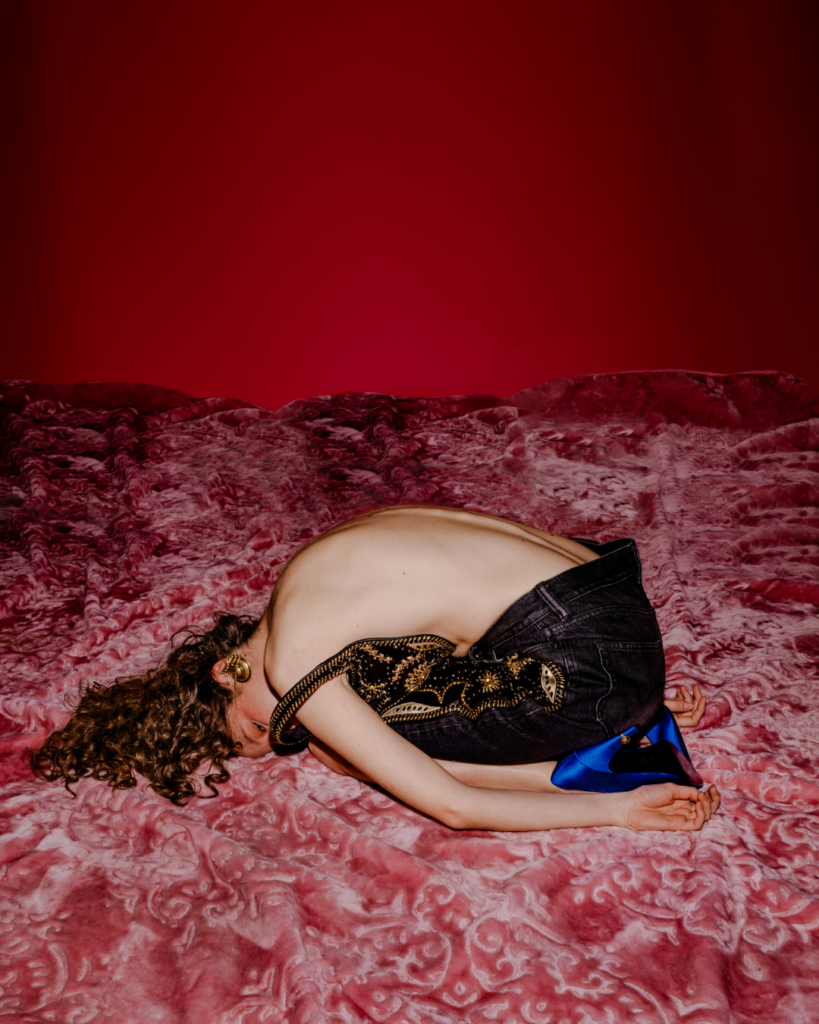
This was the conversation I was meant to have with Myriam Boulos, who lays herself bare as she graces one of our seven covers. The photographer is often described as a “post-war artist”, a label she rejects but is continually asked to confront. Her trajectory is now at a sharp cusp, having gained international recognition for her work with Harry Styles and winning the 19th Foam Paul Huf Award. What makes her body of work vital, however, is not its global reach but its intimacy—those flash-in-the-pan moments of bodies caught in the act, tenderness within a landscape repeatedly fractured by war. Myriam’s observations glide like a needle, precise and unforgiving, her viewpoint razor-sharp as she witnesses a Lebanon that forever has to audition, one where we all belong despite its histories of division.
Revisiting Myriam’s pictures now, all carry more hardness of a weight than what we initially intended. I am struck by how fleeting those moments of joy and vulnerability were. Images of friends gathered in the streets of Beirut and even Myriam’s self-shot cover photo are now arrested with fragility, stained by the suffering of the past 20 days. For years, I would tease her that I’d love to have her on the cover of a magazine and, hesitantly, she finally agreed. “It is important for me that my images don’t end up feeding the war machine,” she tells me over email. This was not the moment we wanted for Myriam, or anyone else who took part in this project, but this is where we are, unfortunately.
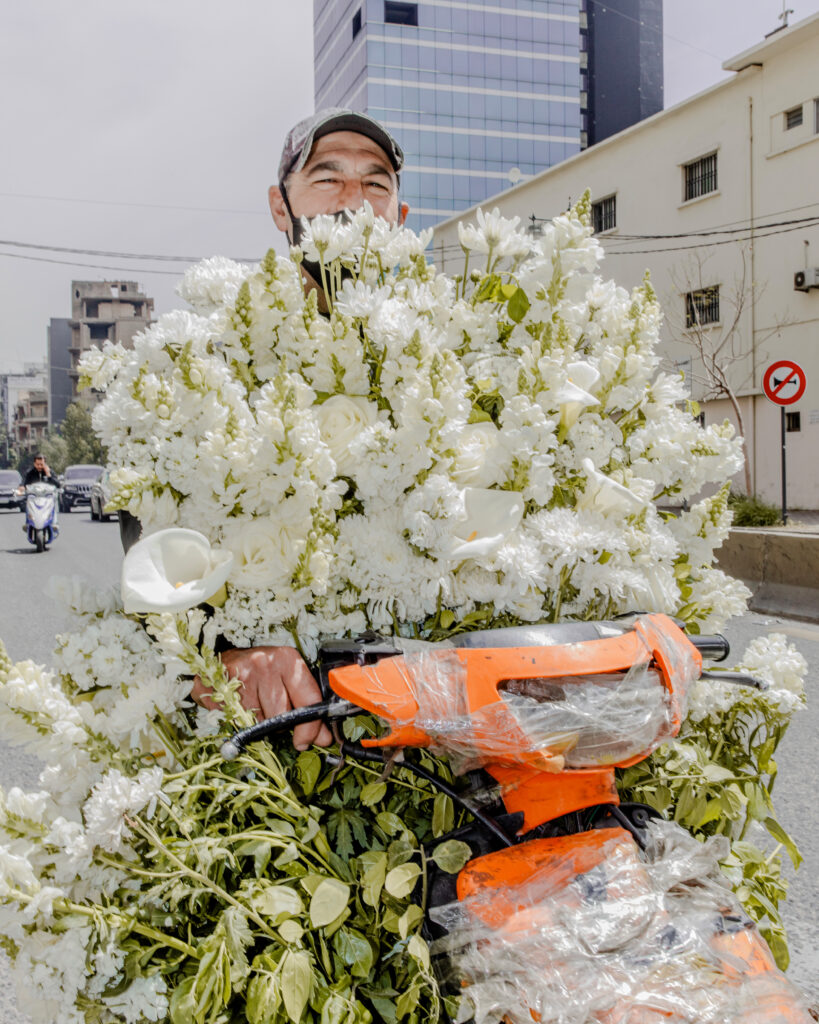
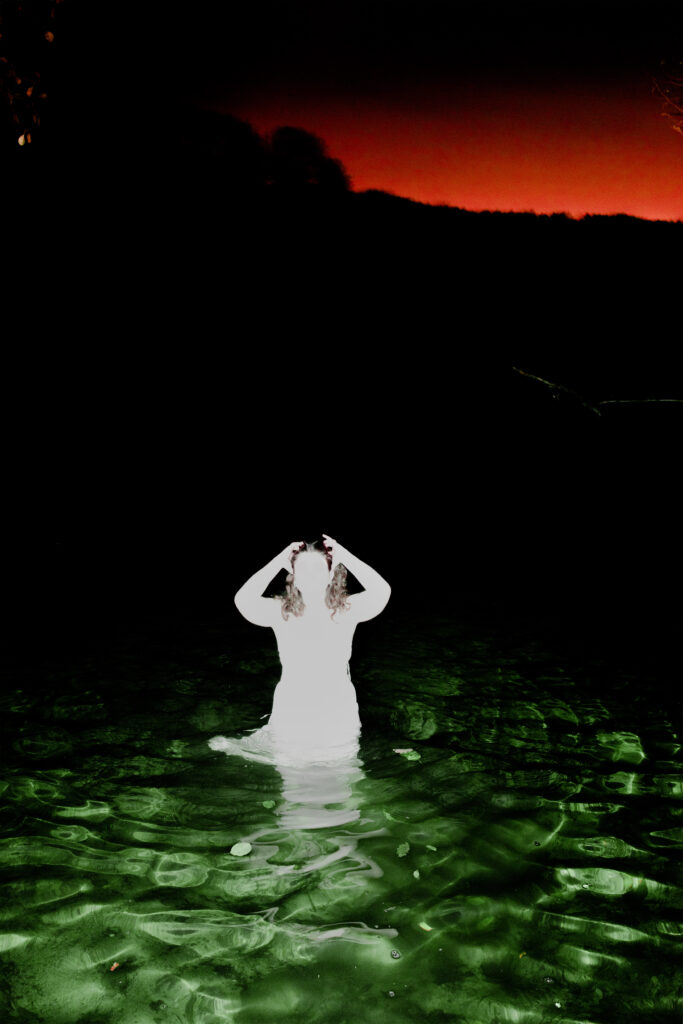
This paralysis is not accidental. It is sustained by a violent political imagination shaped by both America’s Manifest Destiny expansionist and eschatological beliefs as well as visions of a “Greater Israel”. These are not abstract forces we’re up against; they are structures designed to explicitly fracture our stability. As they desire locusts, they demand that we attempt to survive as they encroach subterraneously through our everyday lives, dropping leaflets of propaganda that ask citizens to question their future. Why should we remain resilient in the face of conditions that should never have been normalised? How do we imagine a future when we cannot locate any logic of the present?
History, we’re taught, moves like an arrow tending towards a future of betterment. Reality, however, has proven otherwise. Here, history moves like a boomerang, slick and unyielding in its mechanics, punching us, whiplashing whatever we’ve attempted to leave behind. Forever looping, constricting, repositing us into a restless state of inertia and déjà vu. It just does not stop. Recent years have exposed these systems, but what would it take for them to be dismantled?
My reputation begets me. Let me make it very clear: I do not like having to tell stories of war and spotlighting our collective trauma. We want nothing more than to be able to call it a day and go to the beach… but what happens when the beach becomes a metaphor for Albert Camus’ The Stranger? And what was meant to be a paradise is littered with the reverberations of “Killing an Arab” by The Cure? The desire for the beach is what keeps me going and, in this moment of suspension, the ghost that remains in the shell above all is that glint of desire. The soul that sits within, that yearns with imagination against the desensitisation machine, their attempt to rip away anything that remains human.
What is required is restoration and staying power.
Take, for example, Tinariwen. Photographed by documentarian Fethi Sahraoui in the Saharan landscapes of Mali, the Tuareg band spans generations, having formed in the 1970s amidst political unrest. The rebels-turned-rockstars are a case in point, living heirlooms preserving their Tuareg culture and the Tamasheq language. Like the members of this acclaimed collective, each artist we’ve profiled stands for a transference of knowledge, of image, of possibility. And with that transference, they become an apparatus to understand the current time capsule of how this world exists, illuminating what it means to everlast. Some remain inside the system, navigating its fractures yet carving out space for their vision, persisting on their own terms. Their work is a spark—proof that even under pressure, creativity, meaning, and presence can survive.
Cover star Ferg is another expression of staying power, taking up the mantle of visual artist as he remains a forebearer of rhythms and the ultimate collaborator in recent years. Recent link-ups have found him working with everyone from Telfar and Timberland to Free The Youth. On our cover, he’s dressed in SN3 Studio, the quintessential Sudanese design house and streetwear brand. This is Ferg, with the centre of his world always revolving around the support of creative communities, near and far.
“Black power is everything. So much history has been taken away from us, so understanding where we came from is so important,” he tells Kimberly Drew in Harlem Interlude, referencing a recent expedition to Ghana. Ferg – like Langston Hughes, Afeni Shakur, Teyana Taylor, and James Baldwin – is a celebrated inheritor of Harlem, an enclave that has managed to forge its own destiny in the heart of the empire. The district reverberates with an energy of its own, reaching beyond the ceiling of what’s placed on top of it. Harlem stands as the ultimate metaphor for prevailing.
Also defying historical limitations is Imane Khelif, who emerges within our pages as a force to be reckoned with. When she won Olympic gold, her victory should’ve stood simply as a triumph of athletic achievement. Instead, it triggered a familiar and troubling response: public speculation about her femininity, which begs the question: why do powerful women still provoke such anxiety? Interestingly, these were cries that came predominantly from the west. Throughout the rest of the world, however, she remains an eternal encouragement. Strength, resilience, endurance—these are not qualities that belong to one gender alone.
Imane’s story is only just beginning. I recall meeting her for the first time over Zoom. She has one of those rare smiles so infectious that it can penetrate your heart—when she smiles, we all follow in unison. But what struck me the most was Imane’s calm in describing the horrors that international media has subjected her to. “As an Arab and African woman, I have experienced pressures and discrimination that made me go through some of the hardest moments of my life,” she expressed to Algerian-Palestinian filmmaker Lina Soualem in Forever Muse. “There is definitely a difference in how the world treats an Arab African woman compared to a western woman.”
Our other cover star, Imaan Hammam, shares more than a North African connection with Imane—their names, though spelt differently, both translate to ‘faith’. From incommensurable experiences, the thread between them is the unremitting depth of desire that propels them forward; in the ring, on the runway, and along the larger paths that each woman travels. In her first Dazed MENA cover story, the face of beauty enters a character study with fashion photographer Davit Giorgadze. Imaan’s staying power lies in her omnipresence. Between this cover’s production and its release, for example, Imaan has had several others released worldwide. But her reality is something else entirely: a figure building her own legacy through slowness.
In A Mirror to Arab Streets, we revisit one of our inaugural D100 nominees, the movement sweeping across the region and beyond: Rap Shar3. Spearheaded by the anonymous and cloaked Alexandrian Black B and co-founder Khaled Shaker, the rap platform has evaded the ivory media institutions that continue to keep a blind eye to the sprawling talent across Cairo, Riyadh, Khartoum, and more. Grassroots. Freestyle. RapShar3 is a lesson in not just evading the system entirely, but creating your own one and without permission, too. “We only have our voice, and we don’t want to sing our lungs out in a vacuum to those who wouldn’t bat an eye at the death of our people,” Black B tells writer Khaled A.
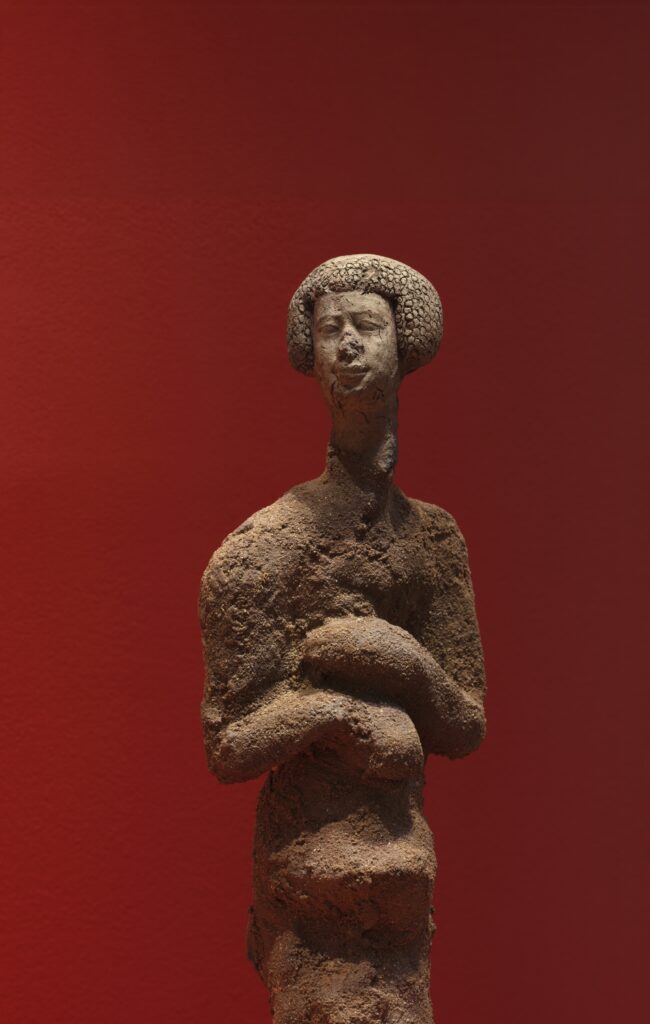
Finally, there’s Ali Cherri, a Lebanese multidisciplinary artist whose body of work inspired the editorial framework – Desire! Desire! Desire! – that encapsulates this edition. It was kismet. Born in 1976, a year into the Lebanese Civil War, Ali distinctively challenges our world shaped and thrusted by media, power and historical violence. Having been lauded with exhibitions in prominent institutions such as Tate Modern and the Centre Pompidou, he interrogates those very systems, his work confronting us all with the remnants and legacies of stories told through artefacts that have been rendered useless, mirroring the fate of our own futures. “A crisis is an unresolved relation with the past,” he tells Hadi Afifi in Exorcising the Ghosts of the Region. Cherri quietly demands us to keep pushing towards that dream, reminding us of what endures. One of his sculptures, La Grande Dame (2023), is one I think of often. On my first encounter, it evoked the form of a pregnant woman, a symbol of temporal patience. It made me accept the very notion that, despite the modern world’s instant and insane desires, the laws of nature remain unhurried. Spring always follows winter. And there lies evidence, no matter what, that justice does somewhere prevail.