
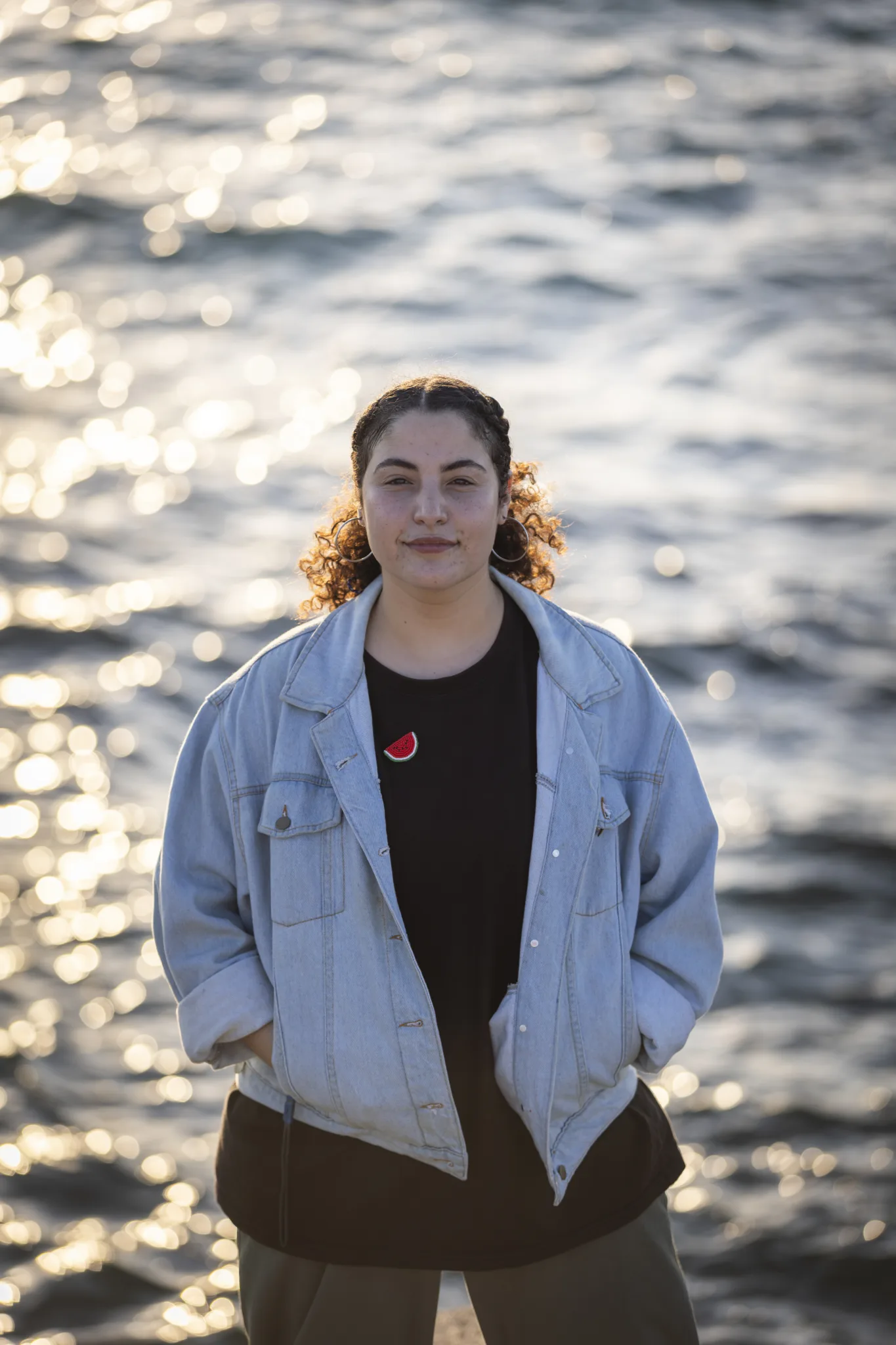

Text Sarra Alayyan
Sometimes, amidst the endless noise of media cycles, a single line cuts through and endures, entering collective memory not because it is sanctioned or placated, but because it distils the unbearable urgency of a moment. Bisan Owda’s “I am still alive” is one of them.

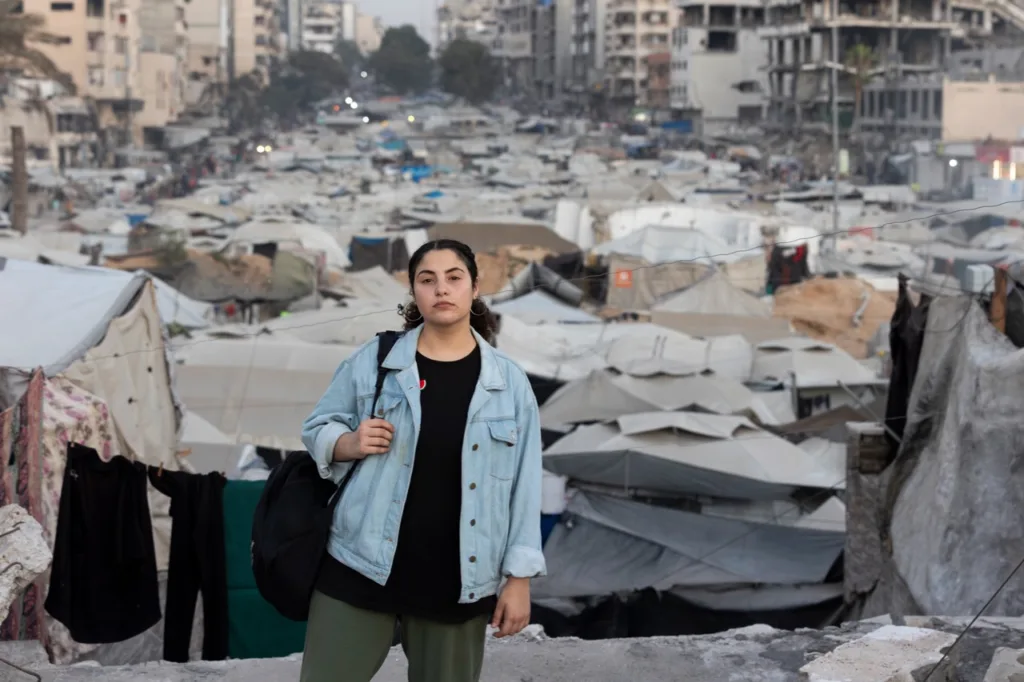
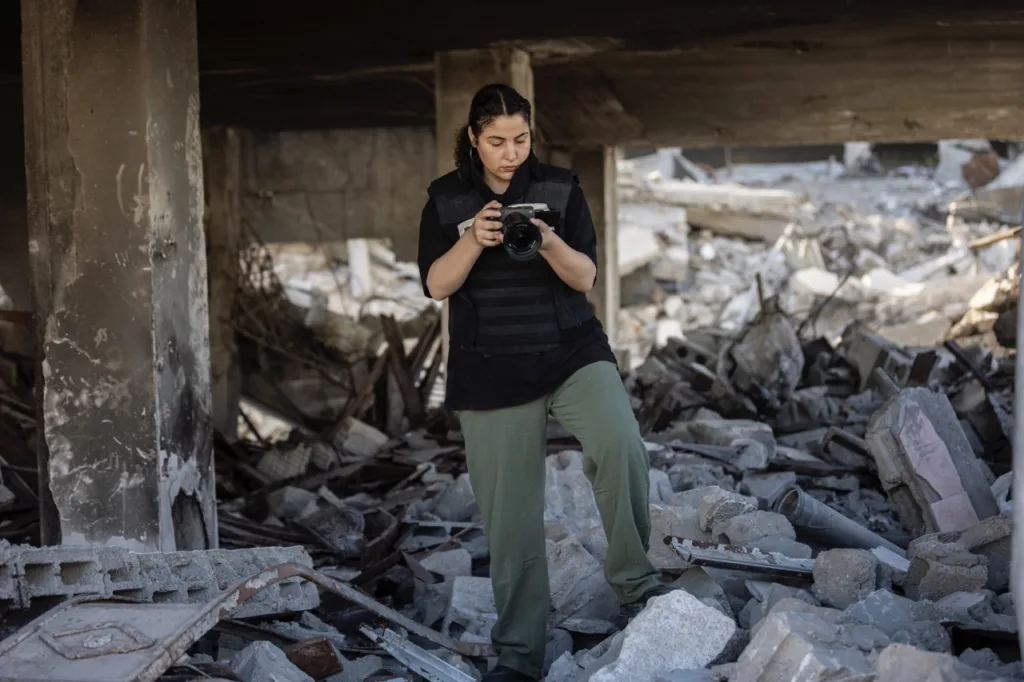
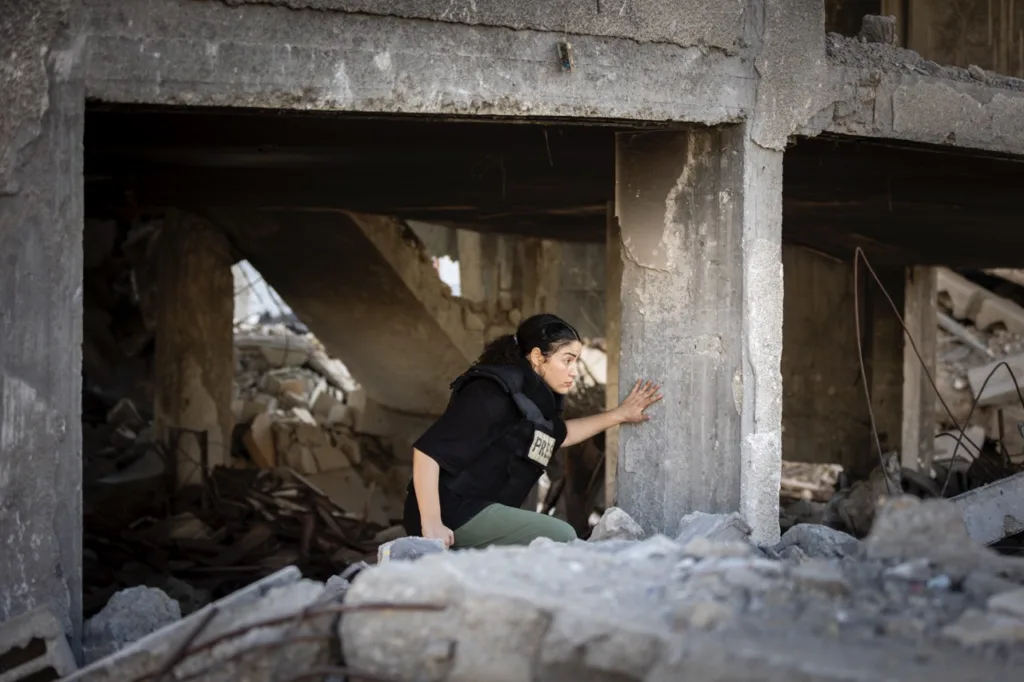

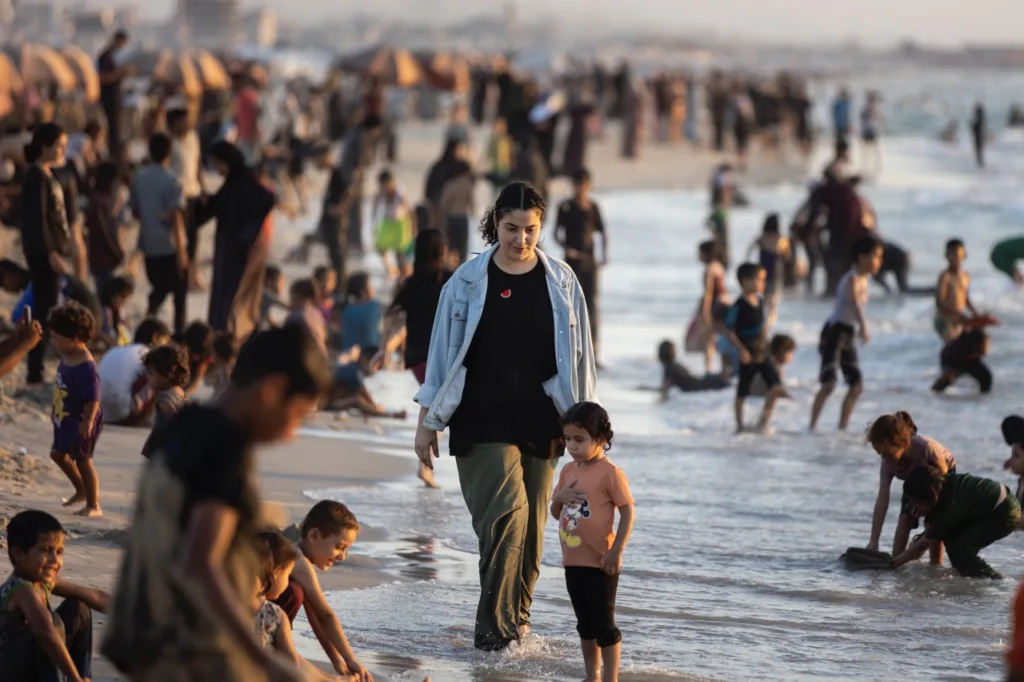
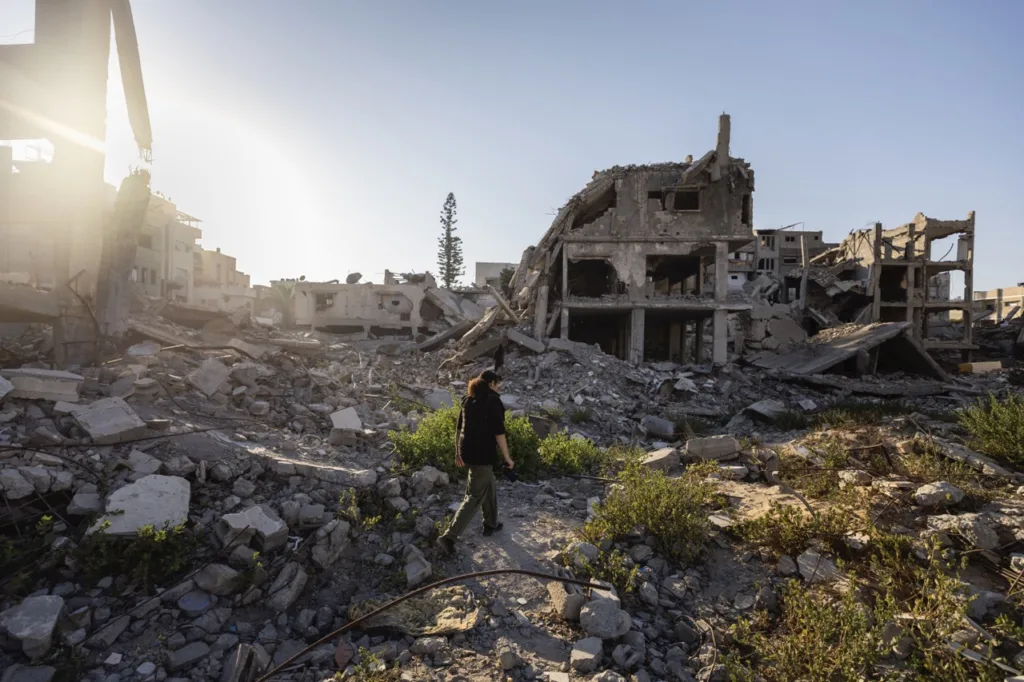
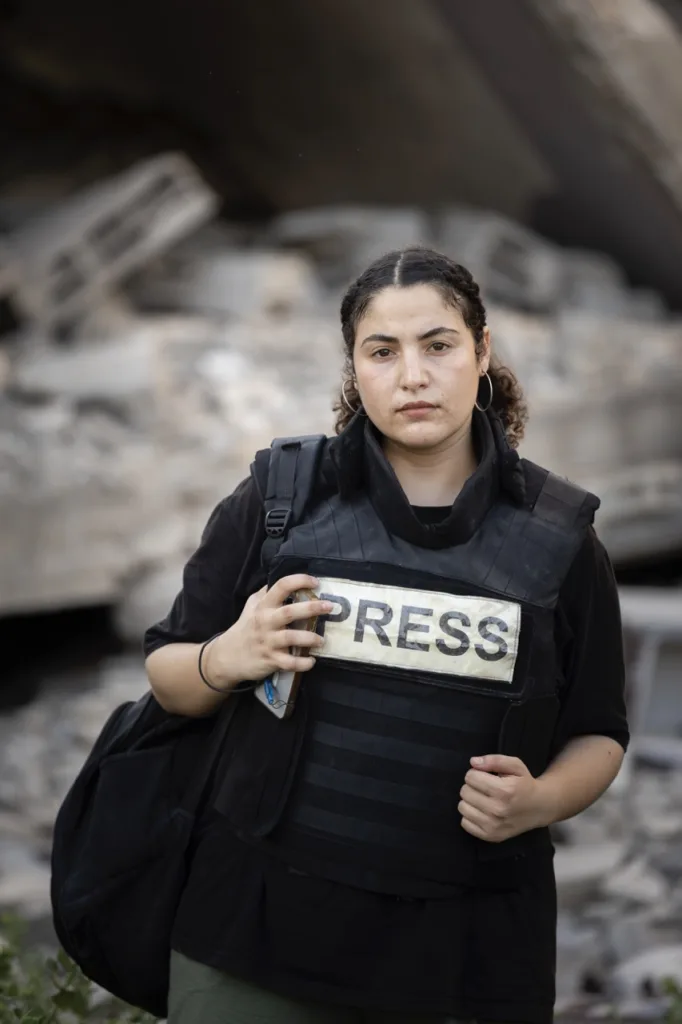
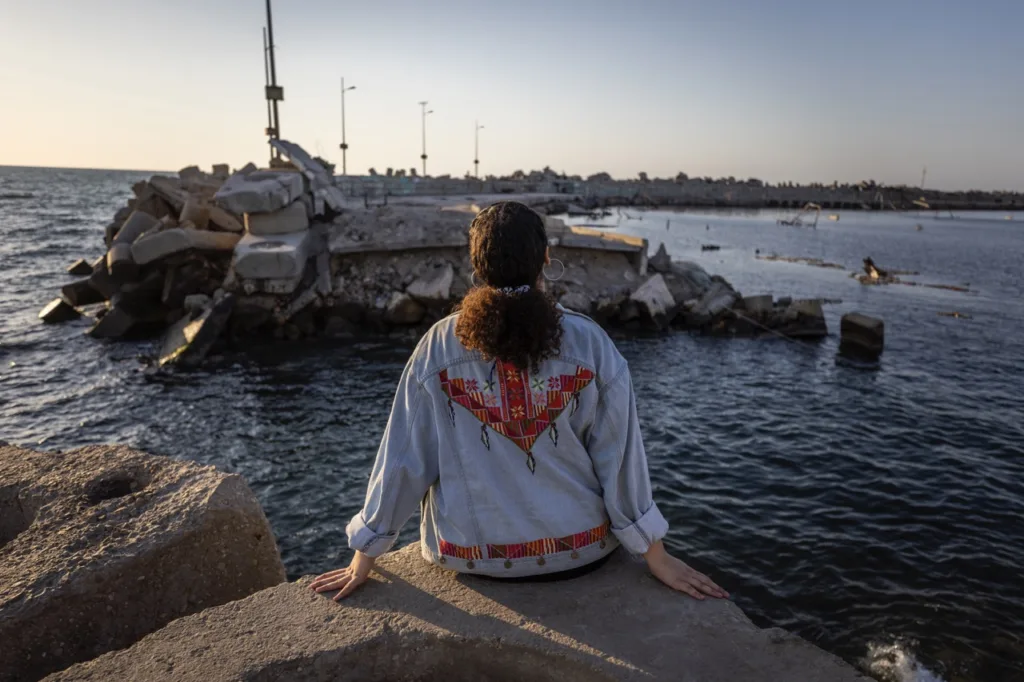

At just 27 years old, Bisan has become one of the most necessary voices of our time, a journalist and storyteller who refuses to let silence, caricature, or complicity dictate how her people are seen or heard, documenting Gaza’s annihilation with a level of clarity that mainstream media has neither the capacity nor the will to match.
Born and raised in Beit Hanoun, Gaza, Bisan has always resisted being limited to the title of journalist. From the beginning, she has thought of herself as something broader—a hakawati, a storyteller in the oldest, truest sense. Always driven towards finding meaning in the quotidian, in 2018, she founded Tellers, a Facebook page where she gathered everyday anecdotes from street vendors, students, and ordinary people.
“We are all stories. We are stories walking on the earth,” she recalls. What drew her in was not the mechanics of journalism but the intimacy of human narratives and telling them in their complexity, allowing space for everything from failures and successes to humour and heartbreak. “Everyone of us has failures that must be spoken, and successes that must be spoken,” she says. “At certain times, each of us deserves to step into the light, take the microphone, and have people listen to our stories with respect and gratitude.”
In 2021, her project Hakawatieh (Storytellers) brought this conviction into Gaza’s streets. Carrying a chair, a bag, and a borrowed camera, she sat in public spaces and filmed herself asking questions – about markets, landmarks, hands, stories – that people may have wondered but never addressed aloud. “I had no budget, no time, no energy, no camera, just conviction. But I knew I was archiving Gaza’s memory, its nature, food, history, and heritage. I was proving Gaza is on the map as one of the oldest cities on Earth, even if the world refuses to give it that place.”
With Hakawatieh gaining traction almost immediately, Owda’s audience multiplied within weeks. But what began as a commitment to sharing ordinary lives has, under genocide, become something else: an unrelenting act of witness, exposing Israel’s machinic annihilation while fiercely recording Gaza’s survival. “How has the genocide changed my role?” she reflects before pausing, then returning with unshakable resolve. “Only the stories have changed. My mission, my responsibility to my people, my country, and my land remains the same: to tell its stories, all of them without exception. We do not choose which truths to tell; we carry them all.”
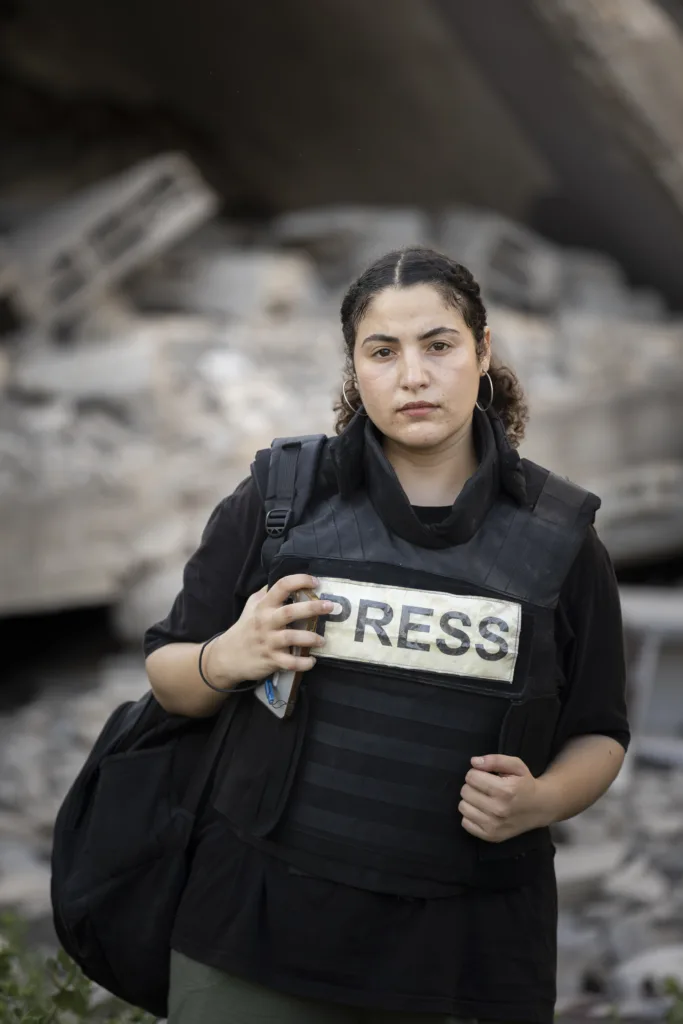
When Israel began bombing the Gaza Strip in October 2023, Owda’s role as a Hakawatieh became not just a calling, but an acute obligation to her people. It is a responsibility she bears daily to this day, even as she is displaced time and again, mourning loved ones along the way. She is living the genocide even as she documents it, a reality that international media outlets so often ignore—or reduce to silence through their habitual apathy. “Gaza has given us so much, so endlessly,” she insists. “It is our duty to carry its message and voice, whether it stands tall or is brought to its knees, whether it flourishes or bleeds, whether it is free or bound under occupation.”
For her, this is the core of constant reporting from Gaza: a moral imperative, not a choice. It frightens those who love her, she admits, but there is no alternative. “I know it scares some of my friends and family. I know it’s dangerous.” Yet, the risks she takes daily also sharpen her sense of what journalism should be and how catastrophically it has failed.

She is unflinching about the costs of this collapse. Owda denounces how western journalists use ‘neutrality’ as a shield for evasion, how professional codes have been twisted into excuses for cowardice. Their refusal to name Israel’s responsibility, to overtly declare who kills and who is killed, has gutted the very possibility of journalism. “They humiliate themselves. They are beneath this moment. They are not fit to call themselves media, not fit to carry a message,” she asserts.
The consequences of this betrayal extend beyond Gaza. “The world has become chaotic,” she warns. “What kind of world is it when a genocide is being committed and nobody can stop the killer? Where famine spreads and nobody can bring bread to little children? Where a child’s body is torn into pieces, and the family gathers the fragments, saying: ‘This is Hussein’s leg, this is Hussein’s leg, this is his sister’s hand.’ We are in a dystopia. We are in a world we never imagined could be real.”
Owda’s words echo those of countless Palestinian journalists who, over the past two years, have confronted not only displacement and grief, but also the targeted killing of their peers. More than 270 Palestinian media workers have been killed since October 2023, a staggering figure that makes up the majority of journalists murdered worldwide. With each passing month, more of her colleagues have been killed—from Anas al-Sharif, who was assassinated, to photojournalist Mariam Riyad Abu Dagga, murdered in a targeted strike on Nasser Hospital.
The facts speak for themselves, and the truth is painfully evident. Alongside destroying Gaza’s infrastructure, Israel is intentionally targeting journalists, truth-tellers, and those exposing the devastation in a blatant attempt to remove its genocide of the Palestinian people from public record and psyche.
This knowledge shadows every hour of Owda’s life. Reporting from Gaza today means carrying an insurmountable fear: that any live update, any video, could be her last. She speaks about it with piercing candour. “I’ve been feeling for weeks that something is going to happen to me… everything tells me I won’t last much longer,” she admits. The awareness of death is constant, gnawing at her as she films, posts, and narrates.
Still, she persists, as do all the other remaining journalists and storytellers in Gaza. This is the duty that Owda carries forward, and the void she refuses to let swallow her people. She is not a symbol for others to consume, but a storyteller in her own right, one who refuses to disappear into abstraction. And this is what unsettles western institutions most: that she does not wait for validation, nor ask permission to narrate.
In a collapsing media landscape where neutrality has become complicity, it is journalists like Bisan Owda who remind us that the profession’s essence – to tell the truth, to carry memory, to preserve dignity – has not disappeared. It has simply been abandoned by those too cowardly to shoulder it.