
 Posted in
Feature, Dazed MENA issue 03
Posted in
Feature, Dazed MENA issue 03
The eyes of truth
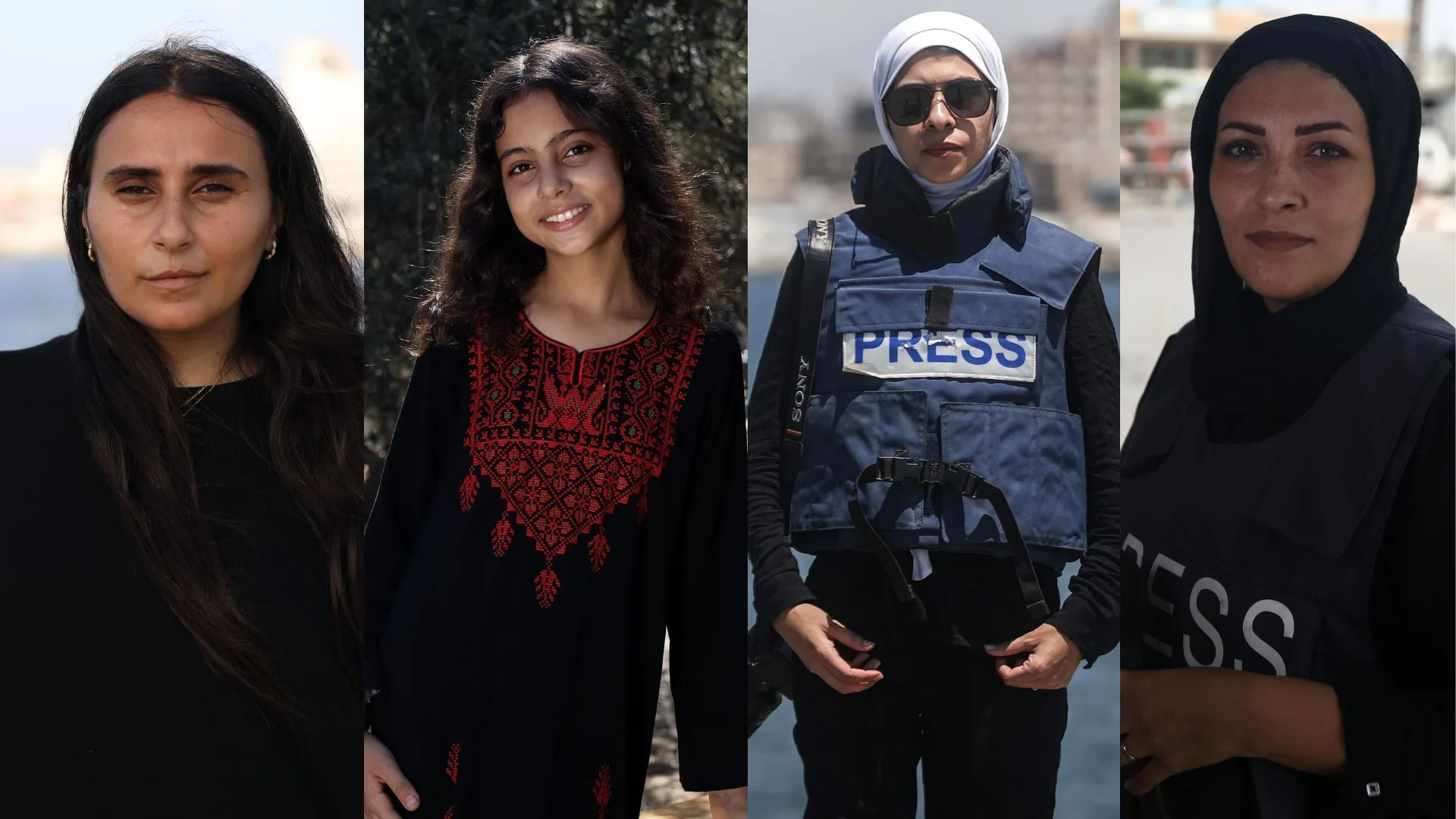
Text Mariam Barghouti | Photography Ahmed Younes & Ali Jadallah
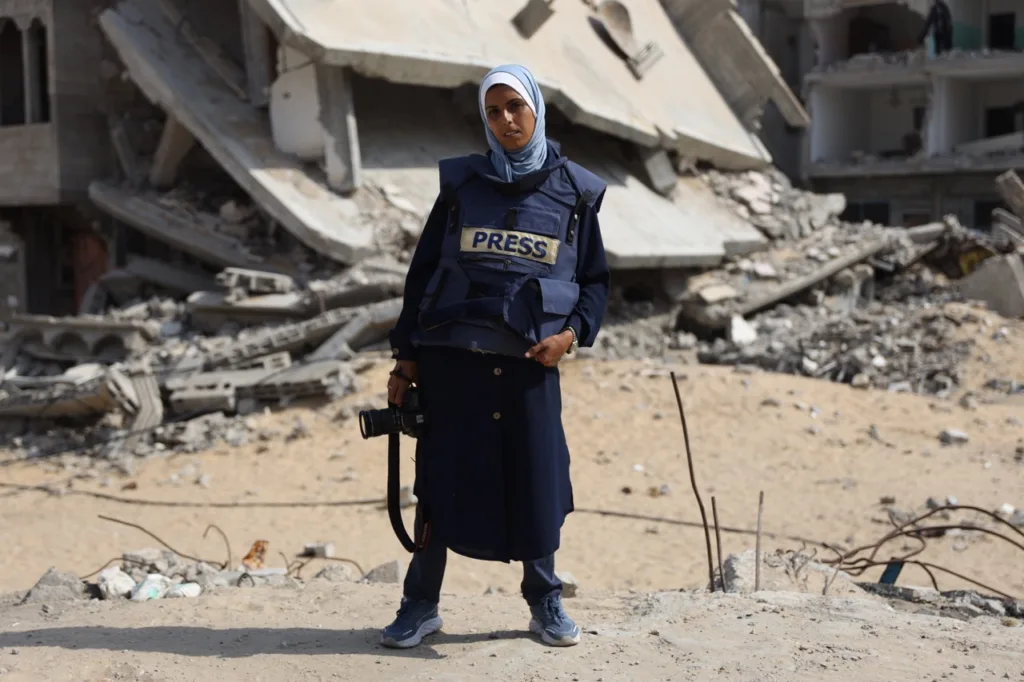
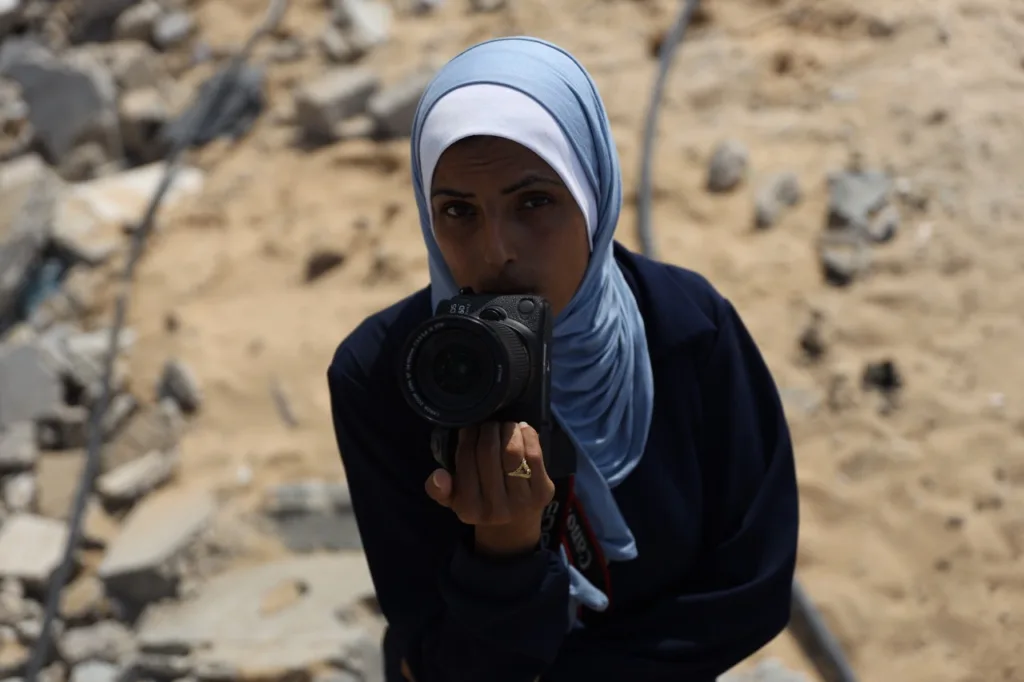
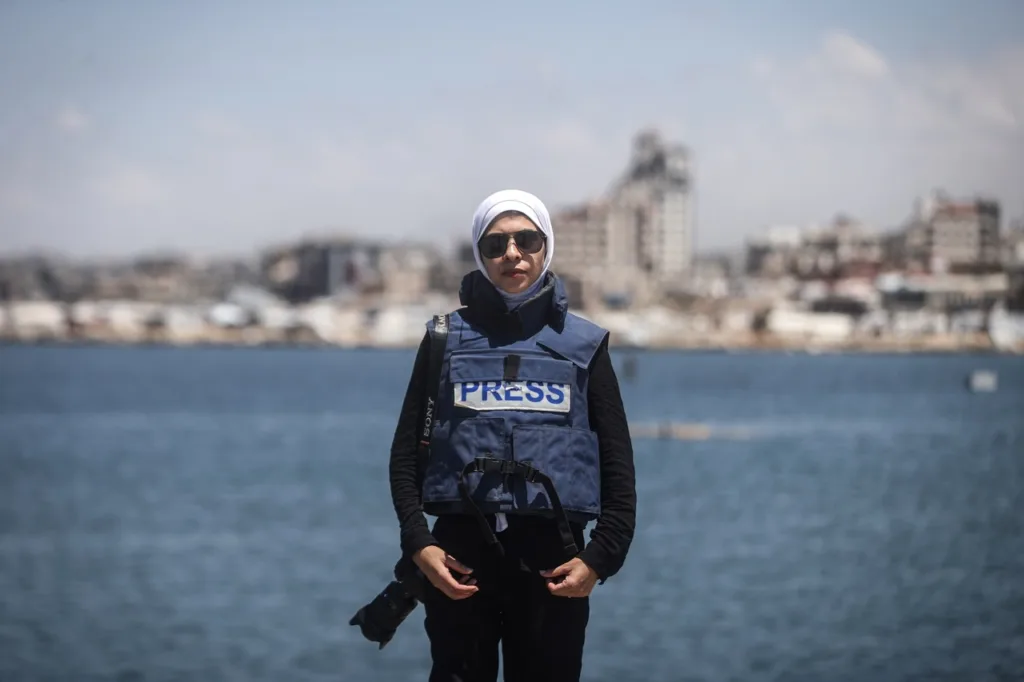
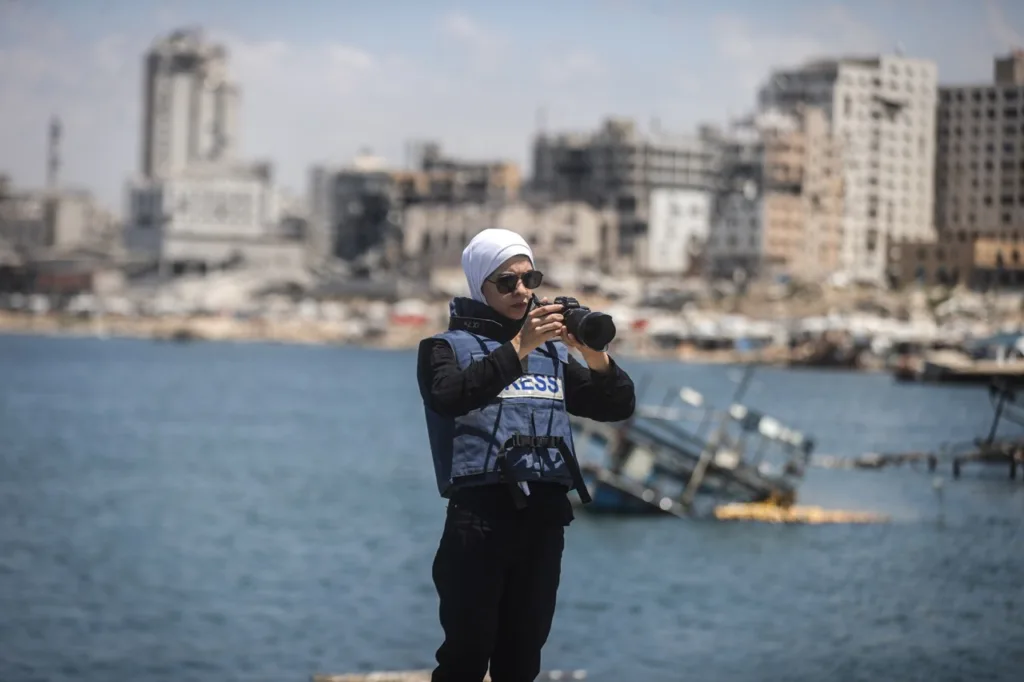
At the time of writing, at least eight journalists have been killed by Israel, adding to the over 270 Palestinian media personnel killed in Gaza during the last 21 months. Among them is photojournalist Mariam Riyad Abu Dagga, who was photographed and interviewed for this feature. She was murdered by Israel in a targeted attack on Nasser Hospital, alongside four other journalists: Ahmed Abu Aziz, Hussam al-Masri, Mohammad Salama, and Moaz Abu Taha. She was 33 years old and is survived by her son, Ghaith.

“International journalists choose calm scenes—they don’t want the scenes of blood, the screaming. But as local journalists, we live the moment in the field. It’s not just the event, it’s us in the event.” – Mariam Riyad Abu Dagga
On 10 August, shortly after my peer Anas Al-Sharif was savagely killed along with an entire Al Jazeera crew that included Mohammed Qraiqea, Mohamed Nofal, and Ibrahim Thaher as well as freelancers Moamen Aliwa and Mohammed al-Khalidi, Hind Khoudary took to X, addressing media outlets worldwide.
“I will not speak to foreign media about the killing of Palestinian journalists,” wrote the award-winning Palestinian journalist. “I will not sit on your global channels to be part of a segment you’ll forget by tomorrow.” Capturing their hypocrisy and hollow coverage in a matter of words, she added: “To you, we are just a headline—a tragedy to consume, not colleagues to defend.”
In Gaza, journalists are not just relaying the tragedies of displacement, loss, and starvation. They are experiencing it firsthand in all of its extremities, too. But when journalists are also targets, who reports on them? More than 270 Palestinian media personnel have been killed in 21 months. Who defended them? This was the duty of international journalists: to stand by their peers, to serve as their armour, to amplify their voices.
Instead, western coverage of Palestinians is marred by a repeated pattern of contradiction, claiming to uphold objective, non-partisan reporting while framing Israel’s atrocity crimes as “self-defence”. Between what is said and what is actually happening are the Palestinian journalists on the ground, who continue to personify the essence of journalism by holding power accountable and preserving memory against systemic erasure.




Displaced, not defeated
In Gaza, displacement is not a single rupture. It’s a never-ending cycle.
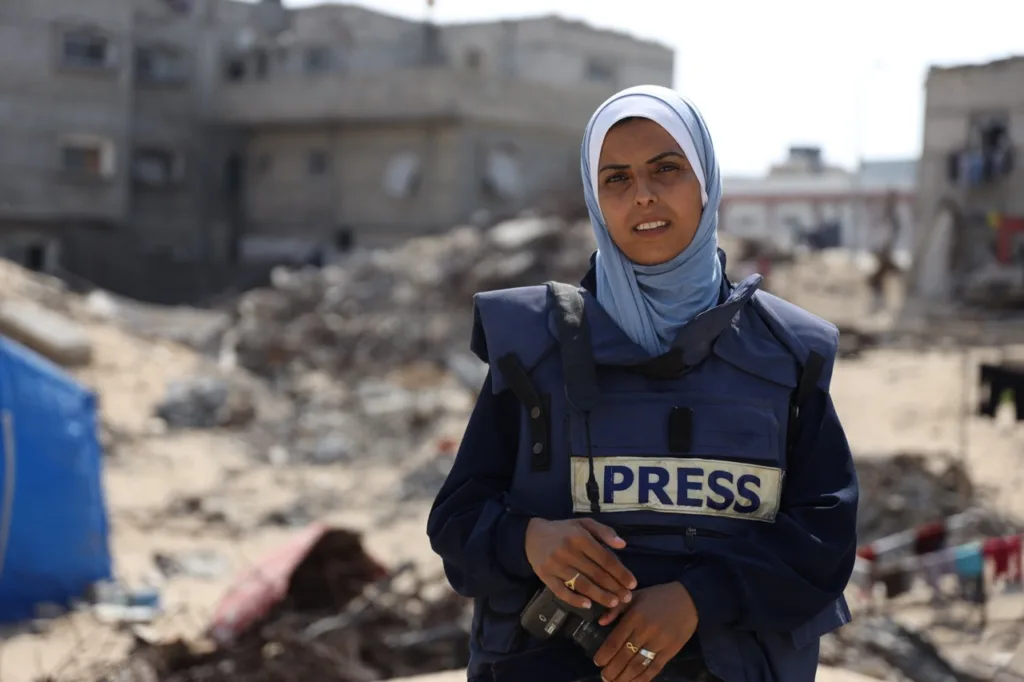
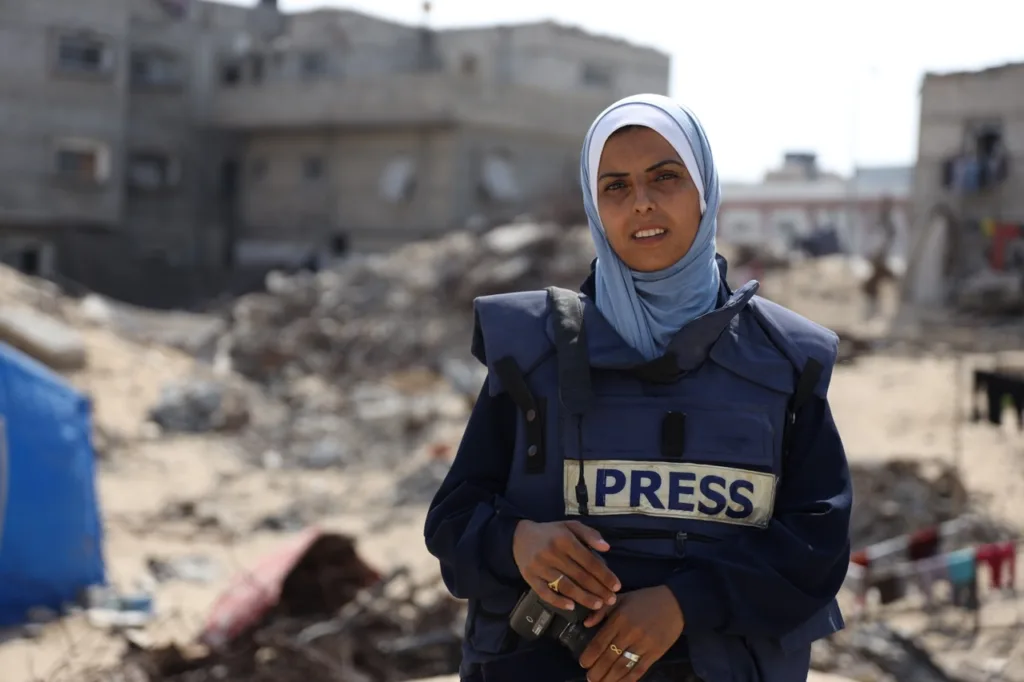
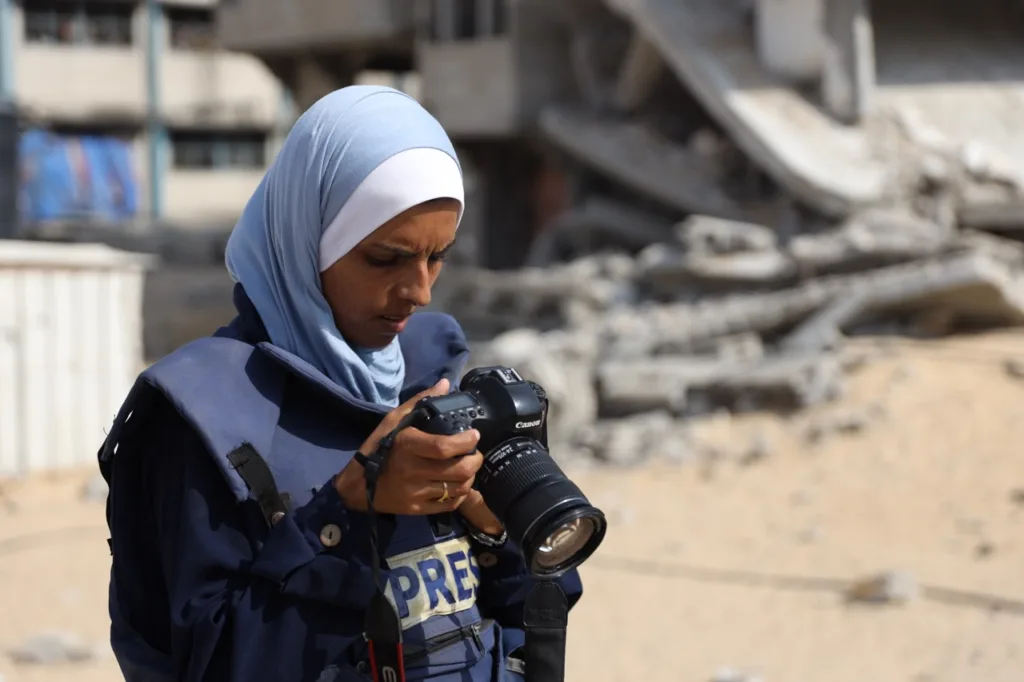
“I feel so alone… alone on a battlefield,” says correspondent Nour Swirki, 37, as a drone buzzes overhead. The journalist has been stranded in the centre of the Gaza Strip since May 2024 after forced displacement pushed her and her husband, Salem, from Gaza City to Khan Younis, then Rafah, and finally Deir al-Balah.
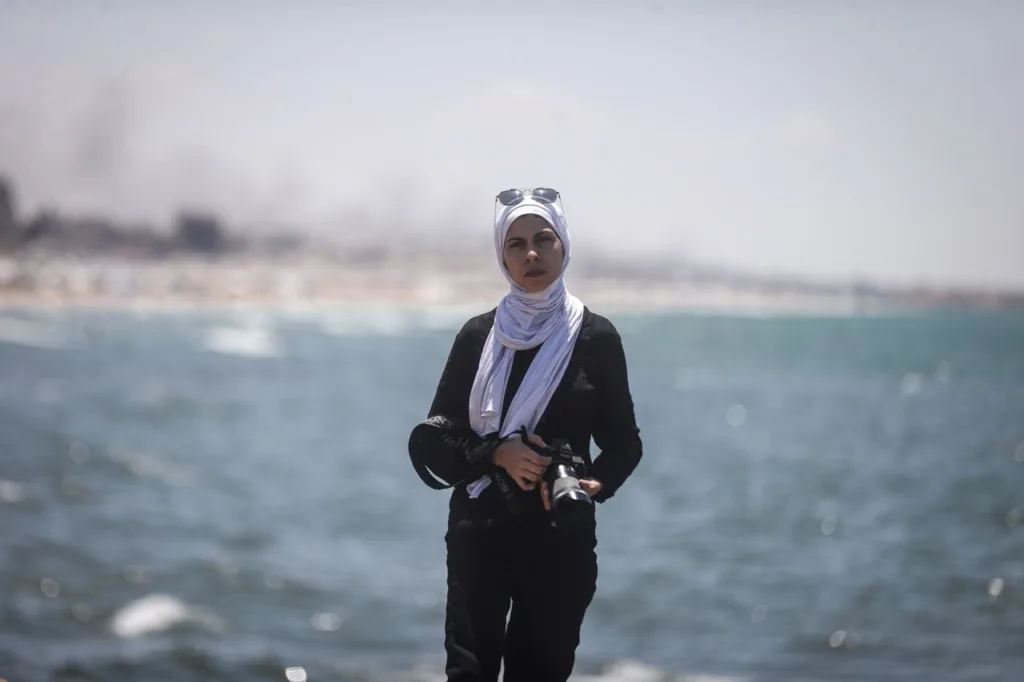
A few kilometres away, in Gaza City, Shrouq Al Aila has been displaced a staggering seven times. Her husband, Roshdi Sarraj, was one of the first journalists killed in Gaza. Moving between the north and south, she eventually settled in a run-down apartment located a street behind where Roshdi fell victim to an airstrike on 22 October 2023. “Don’t ask,” she says, almost expecting my follow-up question. “I know it’s illogical, but I just wanted to be near [him],” she explains. But as we speak, Shrouq and her two-year-old daughter, Dania, are facing their eighth displacement because of the Israeli army advancing in its ground invasion of Gaza City.
At 30, now a widow and single mother, she pursued traditional journalism despite her passion for filmmaking and found herself engulfed in the flames of war coverage. “I have zero energy, I swear,” she declares. “I am just a ribbon right now, a person unable to do anything.” In the distance, the sound of explosions erupts while Dania calls for attention. Moments later, we learn that the explosions killed five journalists, Anas included.
“It was so sad—and not just because we had to bury our peers,” recalls Nour, who covered the burial. “Within moments, my other colleagues were already receiving threats by the Israeli army.” While journalists continue to offer us a window into what Israel would rather conceal, they do so under the most excruciating of circumstances. Perhaps this commitment is what creates the tendency to forget that journalists, too, are only human, trying to survive the ongoing genocide.
“I lost my soul in this war. I lost myself, and we lost all our privacy,” said Mariam Riyad Abu Dagga. “We keep saying we will relay this image to the world, but behind the image is a lot of suffering for the journalists of Gaza,” she added, speaking in a weak voice. “I used to finish my coverage and then immediately think about how to move my family,” Mariam explains. At the time of our conversation, the photojournalist had already been displaced more than 10 times.
But as relentless as Israel’s mass displacement campaign is, it does not come alone. It arrives with bombs and bullets, the smell of death and the piercing sound of screams.
Mariam, despite being forcibly displaced, would rise early to offer the Fajr prayer before making her way to Nasser Hospital in Khan Younis, where she photographed those killed overnight. “You know, I send my material to international media outlets, but they still won’t be able to grasp what we see,” she explained. The hardship of survival aside, Palestinian journalists are perpetually exposed to some of the most horrific war crimes experienced by humanity, as they capture gruesome everyday scenes with unwavering determination.
Still, amidst the systematic and widespread destruction of telecommunication infrastructure by Israeli forces, sending the material is a whole other struggle. “Our phones haven’t been updated, so they lose battery quickly, and to charge them is a whole ordeal. Then comes the internet cuts; we have to go to rooftops or walk long distances for access, just as we do for water or food,” she disclosed.
“There is no rest for us,” Mariam said, reflecting on the nature of her work as a freelance photojournalist. “At times, publications will take my material if I send it quickly. Other times, they won’t because I couldn’t upload it fast enough.” As Mariam risked her life, much of her documentation was never published because, despite having no access to Gaza, international news outlets prioritised speedy news over proper coverage, knowing very well that Palestinian journalists don’t have the luxury of sending information fast or on time—they can barely access one meal a day. Refusal to publish is its own violence.
“Gaza has become a passing note,” she said, echoing the state of international coverage. “You see us only in trends of certain events, which would last for hours and then that’s it. We’re just numbers for the world, or non-existent.”
Journalists are journalists, not superheroes
“I am so tired,” Shrouq confesses.
“I don’t want to be negative, but everything around us is negative. It’s not easy. And I’m not a superhero. It’s nice to be recognised, but at what cost?” Shurouq asks, referring to her recent Emmy Award for the powerful documentary film, A Hidden War. “Today, if you offer me a choice between the award or some chicken, I’ll ask for the chicken.”

Her daughter was not even a year old when the brutal slaughter of Gaza began. Now a toddler, she survives on what Shrouq refers to as “zero-value food”. “I can say Dania is a VIP child in this war,” she chuckles. “I managed to store her some things, and even gave her chocolate—a rare treasure in these times.” Yet despite this mammoth achievement amidst spiralling malnutrition claiming the lives of hundreds, Shrouq, as a mother, feels the weight of the genocide on her daughter’s growth.
“Dania needs so much more than this; she needs to play, to socialise with other kids,” she explains. Despite being exhausted by the pains of starvation and the looming threat of bombs, the journalist tries to play and joke with her daughter in an attempt to preserve the remaining fragments of her childhood. While Shrouq tries to provide for her daughter, she continues to feel the exhaustion that limits her capacity, physically, emotionally, and mentally. “It’s so hard to feel like you’re not enough for your daughter,” she says. “So I just keep telling her and myself, let’s do this task, then this, then let’s sleep. Let’s just finish the day, and the next, and the next.”
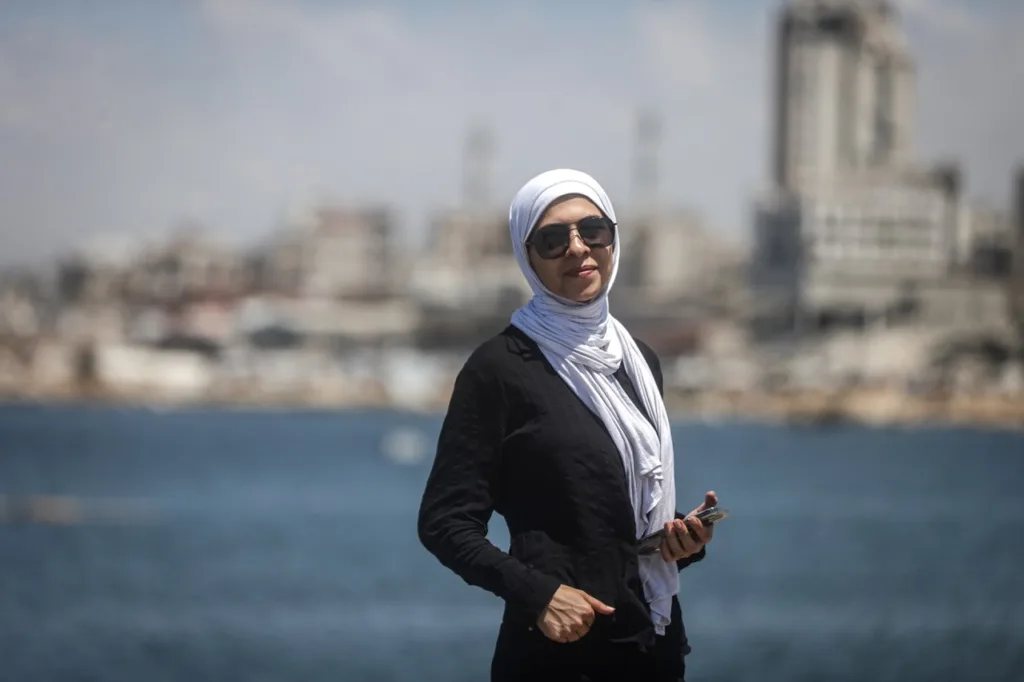
“I swear I don’t know what’s keeping me going,” Hind admits, echoing Shrouq’s fatigue. “Really, I don’t know where all this strength and bravery has come from.” Taking a pause, Hind holds onto something beyond the horror that surrounds her. “I do this for the people of Gaza, the people I meet every day, the people who need their stories to be spoken to the world,” she says defiantly. “I’m doing this for every single Palestinian that can’t speak.”
Yet, it’s not that Palestinians aren’t able to speak, it’s that they’re not allowed. Journalism, Hind says, is not just reporting—it’s also advocacy. “For the women journalists claiming to be feminists, I would like to tell them, ‘You failed us, we don’t trust you. And we don’t want you in Gaza.’” Starved, without a home, and grappling with the daily struggle of securing food and water, her resentment is not figurative.
Like her peers, Nour perseveres against the barriers of silence. “My work may have saved me from breaking apart,” she says. Despite the nightmares that leave her trembling or the exhaustion that causes her voice to shake, she forces herself in front of the camera. “I’m proud that I can keep going. Even when I’m completely broken just before a live shot, I recompose and get it done.”
The sister, the daughter, the mother, the missing
To the world, Hind, Nour, Shrouq, and Mariam are known as journalists, but to their families, they are daughters, sisters, wives, and mothers. “Literally everyone I would hang out with before the war is no longer here. They are either outside of Gaza or have been killed,” says Hind who, behind her fierce journalist persona, is her mother’s little girl. After nearly two years away from her family, Hind navigates not only the daily struggles of coverage and securing essentials, but also the innate desire to be held by her mother. “I miss hugging her. I miss my brothers. I miss them.”


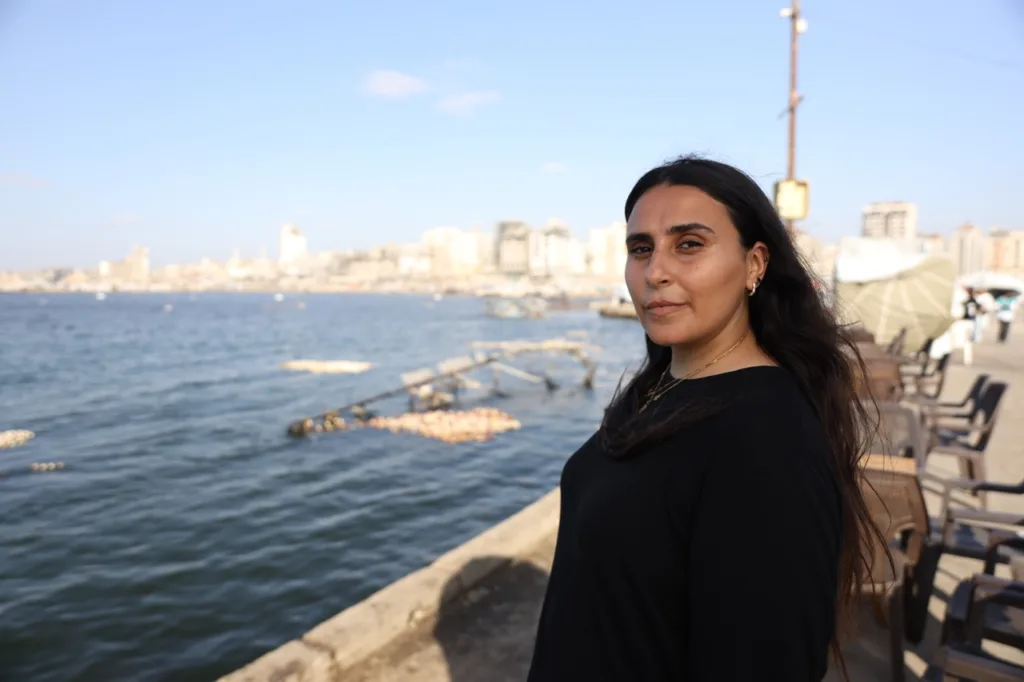
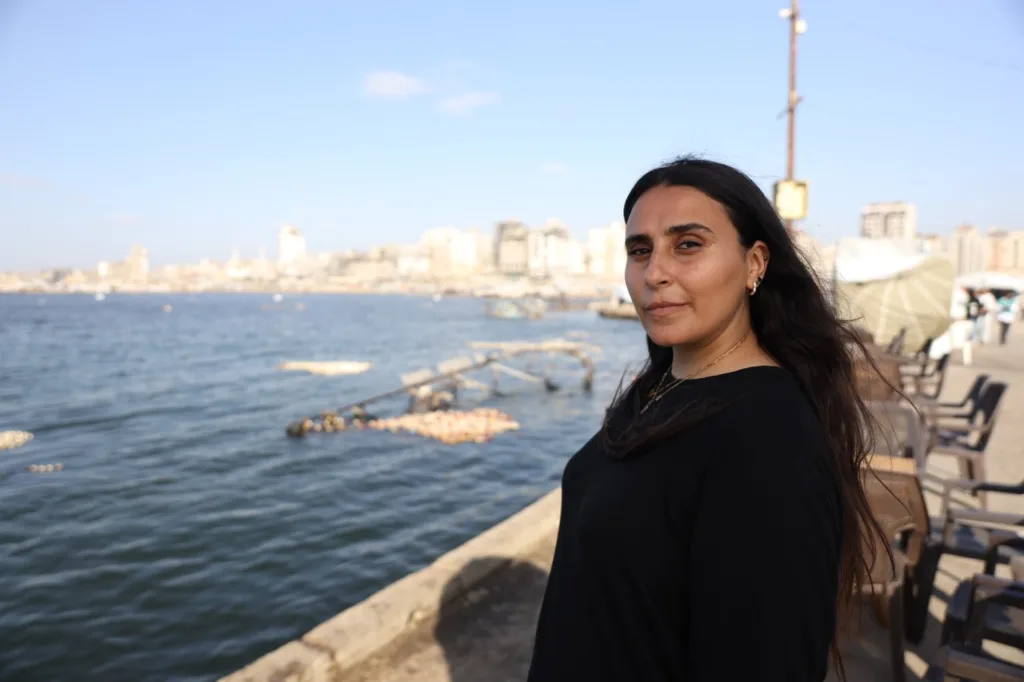
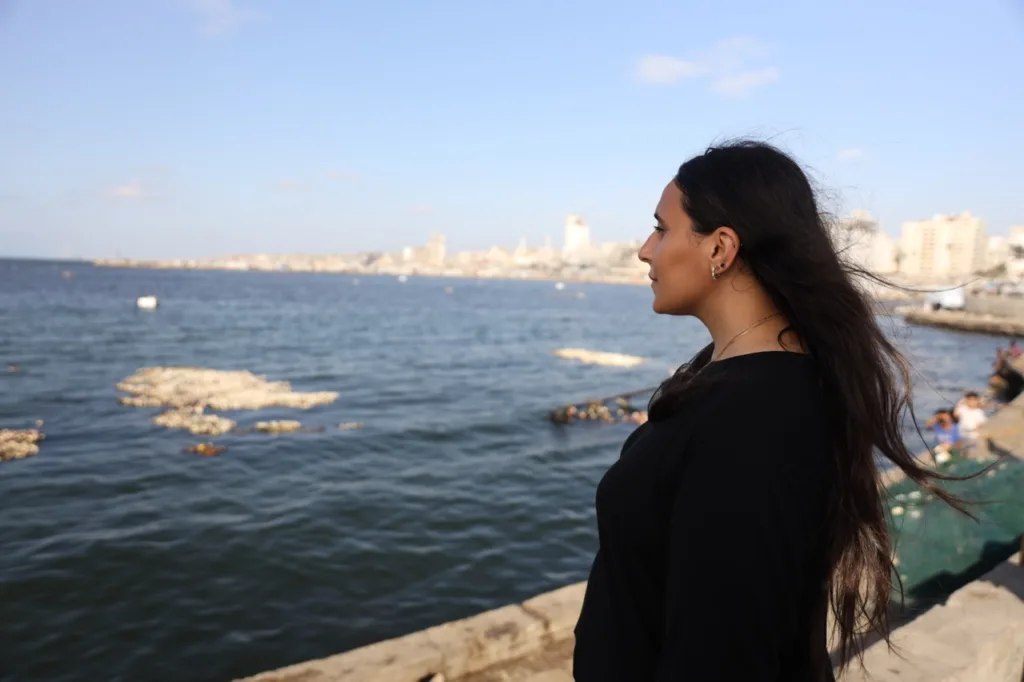

While mothers across Gaza struggle in every way imaginable, motherhood is especially trying when they’re also tasked with documenting the brutality of an unrelenting regime, inevitably leading to the ultimate sacrifice: separation from their little ones. In April 2024, recognising the feral nature of Israel’s assault, Nour evacuated her parents and two children, Aliya, 14, and Jamal, 12. She stayed with Salem to keep reporting.
“I thought it might be a month or two, but it’s been 16 months,” she says, her voice breaking. “It hasn’t been easy. These are my children, and they’re of developmental age. They’re constantly changing—their bodies, their features, how they think.”
While holding a very real fear of never being reunited with her children, Nour finds solace in saving them from the wanton violence that comes with Israel’s escalation. In addition to the bullets, the tank shellings, and the bombs that carve nine-metre craters into the ground, it has been months into Israel’s engineered starvation campaign. No child, adult, journalist, medic, elderly man, nor woman has been spared. “Despite the longing, it was a good decision,” Nour reflects, as she and Salem now portion what little food they can find. “But I miss them. I miss holding them. I miss speaking to them,” she says, confessing that despite her strength, she is crying when she is alone.


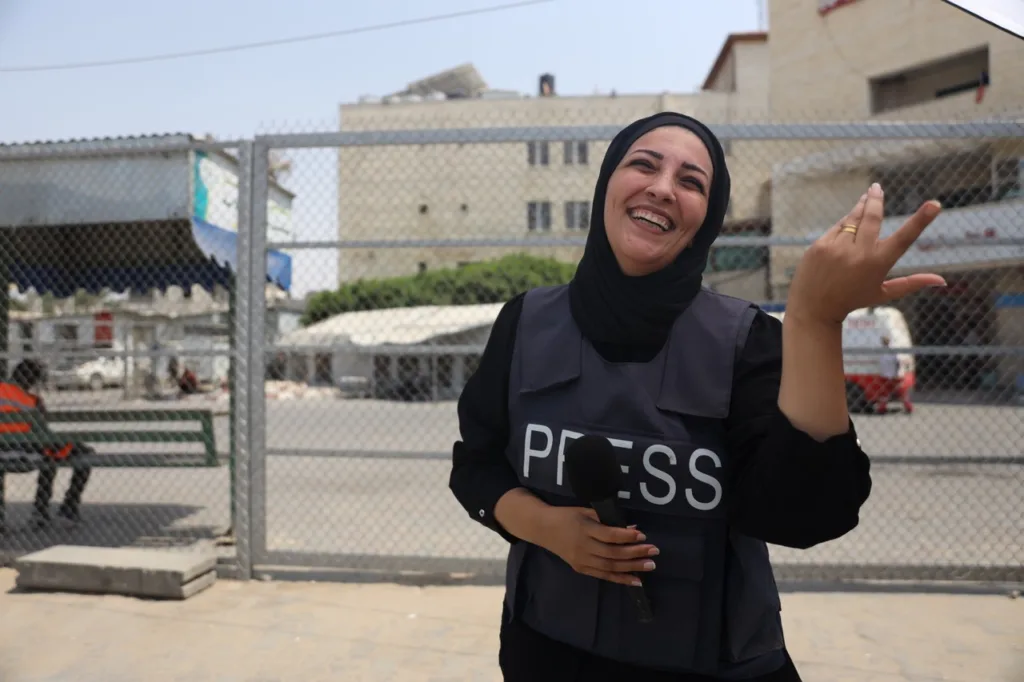
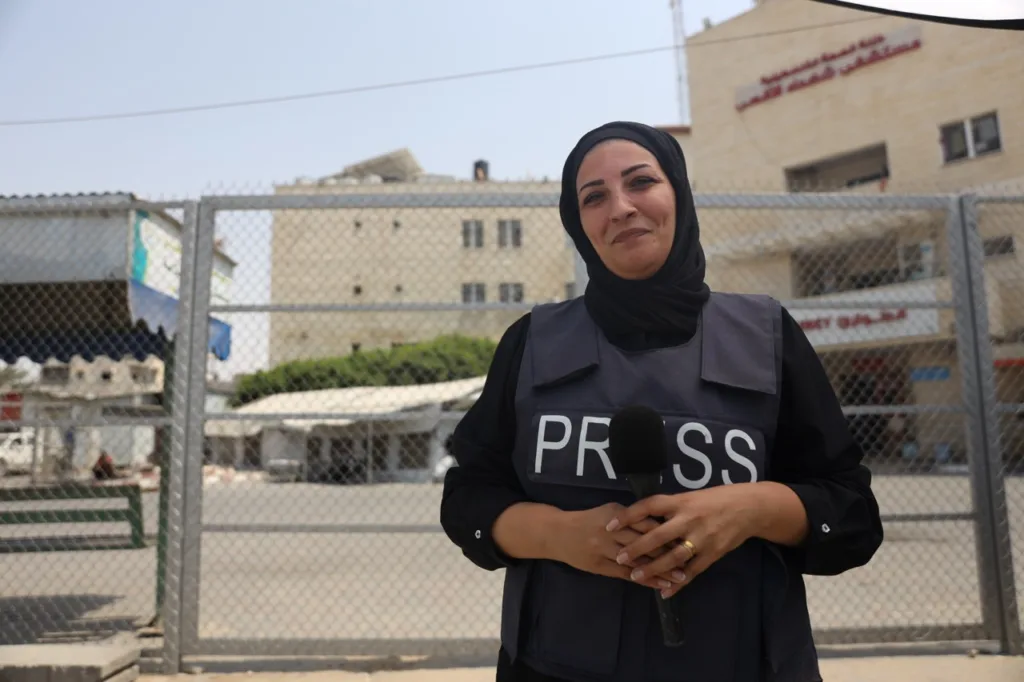
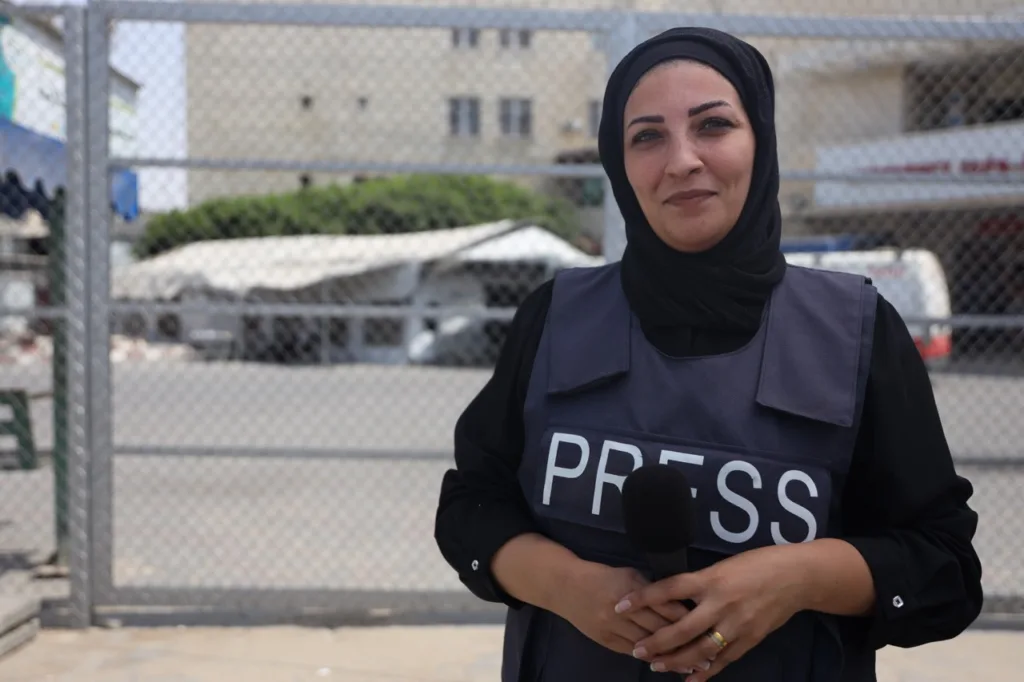
Like Nour, Mariam also carried a longing that no camera can capture. “The war separated me from Ghaith from the beginning,” Mariam said woefully, speaking of her 13-year-old son. “I had to go cover, and would leave Ghaith with my parents. I was gone for a week or two weeks at a time, and I’d only see him once. Of course, that one time is not enough.”
As the early months of the war showed no mercy from Israel, Ghaith begged to leave Gaza and stay with his paternal family in the UAE. “I want to live, mama. I want to experience life,” he’d say. Mariam didn’t want her only child to be killed, either. As a single mother and a journalist on the frontlines, she had to make a choice that no mother should. “I resisted the idea, initially,” Mariam shared. “But then my family’s home was bombed, and I imagined my Ghaith being killed as I found myself photographing more and more slain children.”
She packed her son’s bag and took him to the border crossing at Rafah in December 2023. “It was the most difficult separation of my life. Even as I sat him on the bus, I held him and wanted him to stay,” she recalled. As Ghaith receded from view, a broken Mariam returned to her family’s home, where her mother, Subhiyeh, tried to comfort her. But months later, it was more than longing that the photojournalist had to bury—Subhiyeh passed away from kidney failure. For Mariam, her mother’s death marked the harshest loss after the killing of her brother Mohammad during the non-violent Great March of Return protests in 2018.
“Loss is harder than starvation, harder than displacement, and even harder than death,” she said, her tone laden with grief. Today, her words ring truer than ever.
Murder as a passing note
On 25 August, just days after our conversation, Mariam was following her daily routine of photographing martyrs at the Nasser Hospital when it was hit with two consecutive Israeli airstrikes. But rather than document those killed, she herself was murdered, along with four other journalists: Ahmed Abu Aziz, Hussam al-Masri, Mohammad Salama, and Moaz Abu Taha.
“As a journalist in this war, what I’ve really learnt is that every massacre has details, families, particularities,” reflects Nour. “It’s never just the event, it’s everything else.” Yet, Palestinian journalists aren’t even afforded a detail as fundamental as a name. “Passing note” is how Mariam described coverage of Gaza, and passing note is how The Associated Press – among the news organisations she contributed to – broke the news of her death. “Four journalists, including a freelancer who worked with AP, are among eight killed,” read the post on its X account, emblematic of western media’s indifference.
The killing of every journalist is the killing of an ocean of testimonies with them. “For me, here, I lived these emotions, pictured them, relayed them, in image, with camera, with my eye, and with my heart and feelings,” Mariam told me in one of our conversations, with a laboured breath.
While the international media continues to insist on rendering Palestinians non-existent, there are those of us who dare to treat our colleagues as exactly that: our colleagues, our peers or simply people being killed unjustly. With that, there is no escape from the weight of these losses. A part of me is broken as I mourn Mariam, just as a part of me broke after the targeted attack on Anas, Hossam Shbat, Hassan Isleih, and Fatima [Hassouna] before that. At some point, it felt less like conversations with my peers and more like collecting epitaphs—one after the next.
Absent media, present youth
While journalists in Gaza continue to chronicle, the weight of absence lies beneath every word and image—many absences, the most consequential of which is international coverage. Honest, unbiased coverage.
With western journalists self-assigning themselves as gatekeepers to Palestinian voices (or worse, mouthpieces manufacturing consent for genocide), strategies of disseminating the truth of their lived experience, particularly in Gaza, have been crucial. Taking up the mantle are the social media savvy and endlessly resilient youth of Gaza, who have stepped up not only to share their stories or appeal to the world to stop sustaining Israeli crimes, but also to fill the void created by the so-called veterans.

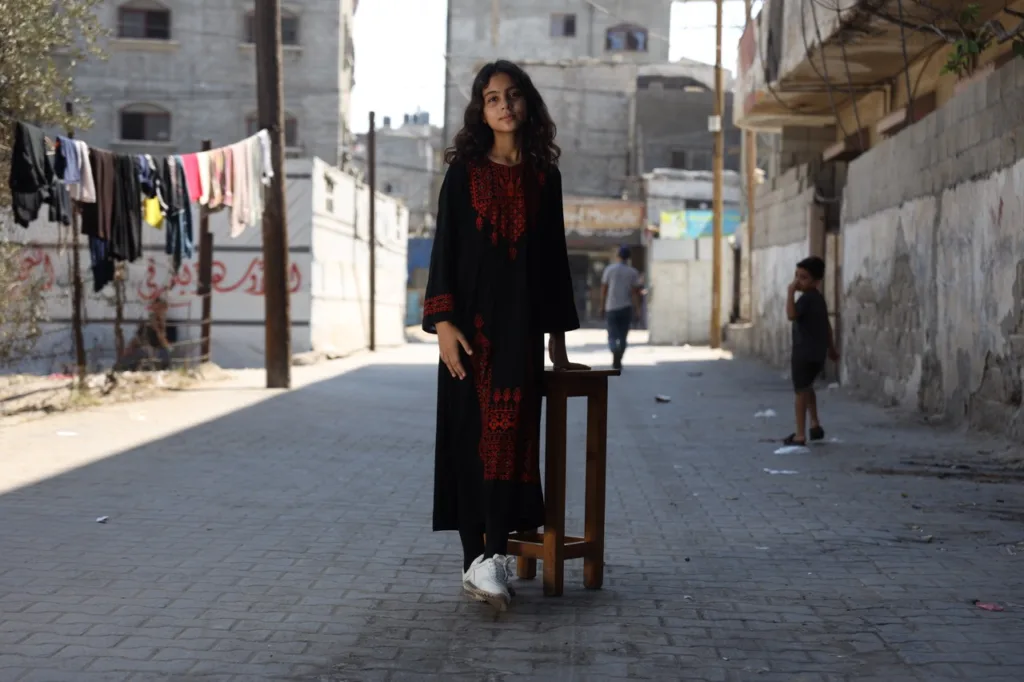
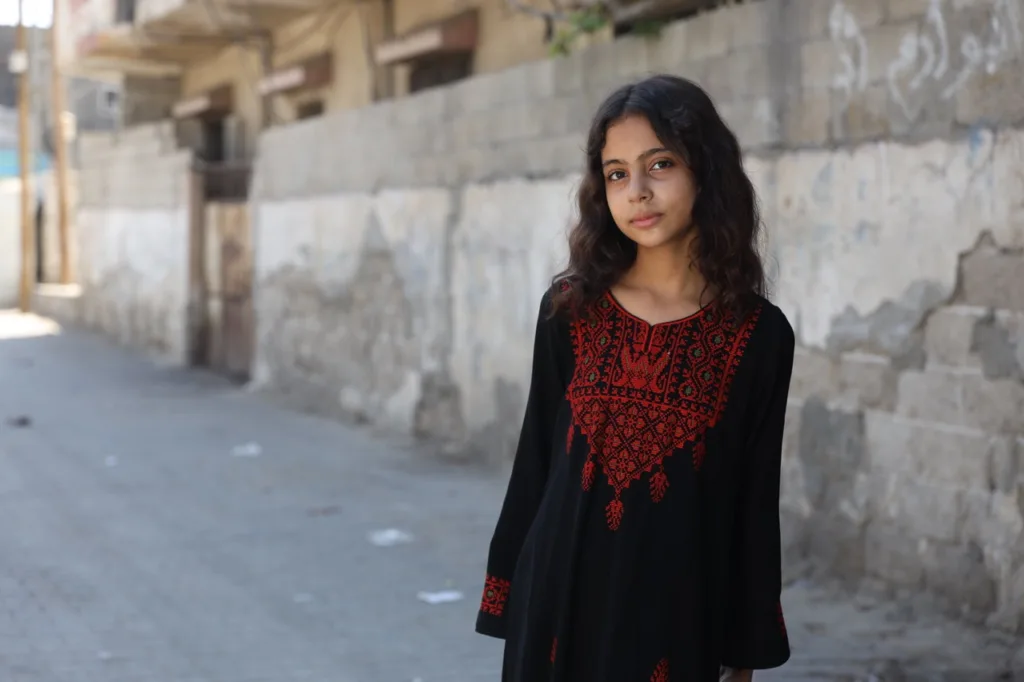


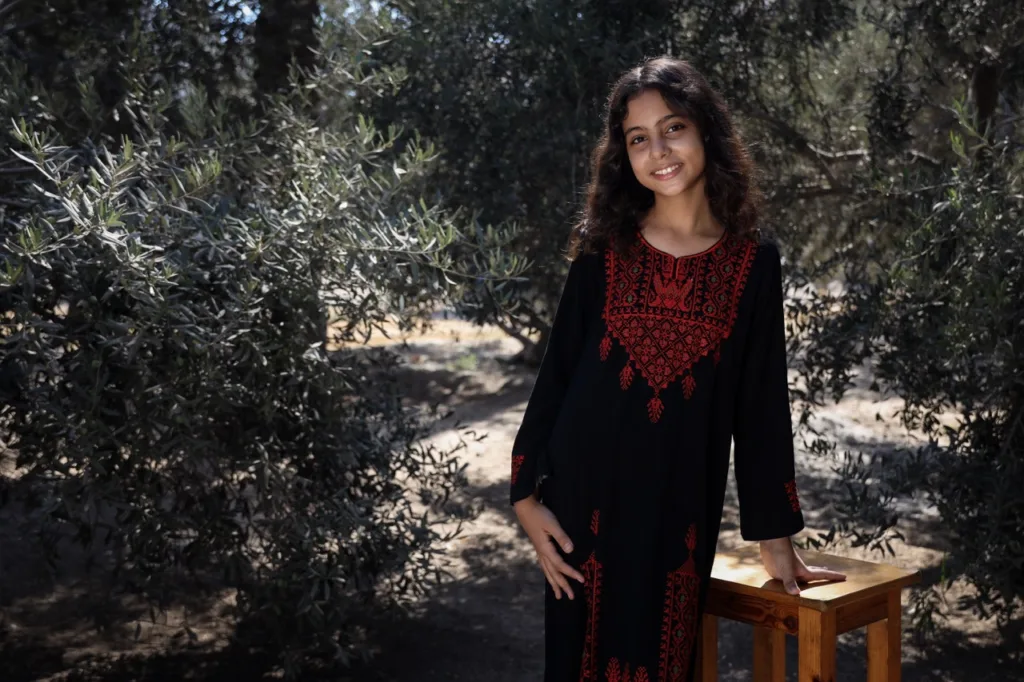
Children who, along with women, journalists, medical and civil defence workers, comprise the overwhelming majority of those killed by Israel, have found ways to transform collective suffering into narrative clarity. Renad Attallah was only 10 years old when she first started sharing cooking tutorials on Instagram, using whatever ingredients she could access through aid boxes—dry and canned goods essentially. In a place starved of fuel, food, and clean water, her recipes like “war chips” and “famine’s bread” became a melody of resilience, and each update becomes a micro act of rebellion against erasure.
But even sweet Renad, known for her laughter, was not spared. Her laughter weakened over time, and her cheeks hollowed as famine consumed her body. Still, she kept posting, appealing for meaningful intervention to protect her people. As I write these words, Renad, now 11, has managed to escape the clutches of Israel’s ruthless war—but alone. Leaving her parents behind, she fled to Europe in a final attempt to survive.
But even in distance creeps the chill of separation and loss. “I had to leave my mom in Gaza with the rest of my family, because we didn’t get the chance to leave all together,” Renad wrote. “And now even though I got out of Gaza and away from the war, I’m sitting on the other side of the world with no mom, no dad, no family, and no country.” As the youngest in Gaza carry the burden of witness, her lonely escape emphasises another truth: every byline belongs not just to a journalist, but a sister, a mother, a daughter who both reports and endures.
It doesn’t end
“Truly, the situation is so hard,” Nour says in a whisper. “Perhaps when it ends we’ll finally be able to describe it. If it ends.”
Nour’s shaky live shots, Shrouq’s exhaustion, Hind’s defiance, and Renad’s insistence to be seen collectively form a ledger that the world pretends not to read. Journalism here is not a segment—it is a body, it is flesh, it is a name, it is a mother’s final words to her son.
“I want you to pray for me,” Mariam wrote, addressing Ghaith. “Don’t weep for me, so I can rest in peace. I want you to make me proud and do well at school, be an accomplished young man, be the best you can be. I want you to never forget me. Everything I did was for you, to be happy, and comfortable and fulfilled.” And while she can no longer be with her son, she offered him one last connection: God. “Please Ghaith, remember your prayers, your prayers, your prayers.”
What Ghaith lost in a single moment is multiplied across Gaza. Journalists fall not as exceptions, but as a rule: 13 each month on average. They are hunted with the same violence and precision as their families, friends, neighbours, and homes.
The awards, the headlines, and the fleeting sympathy arrive late and never to protect. What remains are the archives of documents denied publication, and the echo of words stripped of their intimacy, acting not only as a will between mother and son, but also as one final appeal for the world.
Say their names, cite their work, defend their lives. Widen the record until it can be held. Allow Ghaith to inherit a world that finally learned to listen.
Production Fatima Mourad & Sarra Alayyan