
 Posted in
Life & Culture, decolonisation
Posted in
Life & Culture, decolonisation
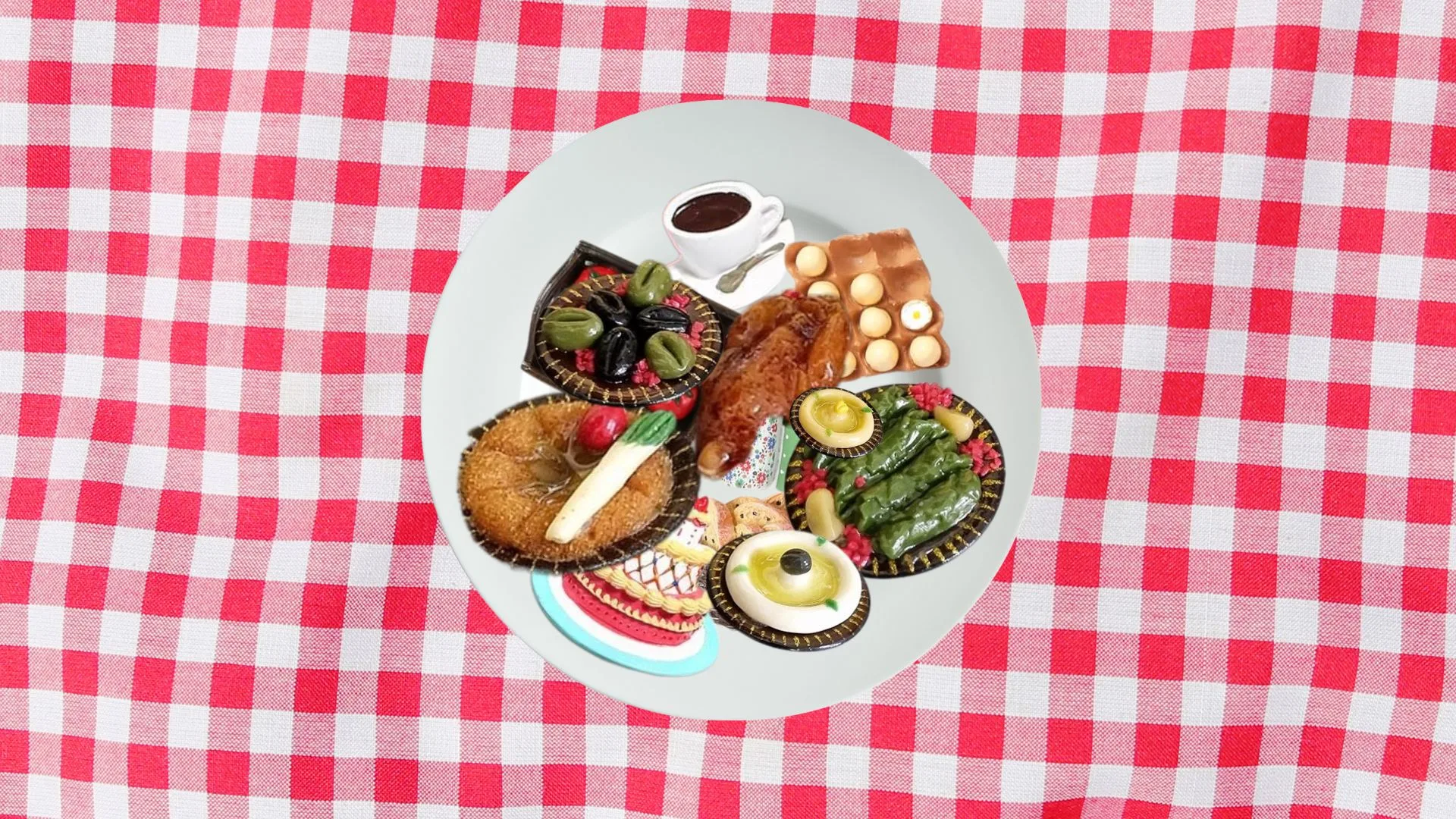
How to decolonise your dinner
Text Dazed MENA
Ayesha Erkin is an interdisciplinary creative working at the intersection of food, architecture, and cultural storytelling. Trained in sustainable and vernacular design, she began as an architect before founding People, Places and Spaces (PPS), a studio translating heritage into experiential spaces for clients like Zegna, Rolls-Royce, Dishoom, and Soho House. She also founded Global Girls Food Club, a platform connecting women of colour through shared meals and programming.
Her cookbook, Date of the Day, reimagines dates in modern recipes and has been featured in workshops across the US, UK, and Gulf region. A Rare with Google leader, Erkin blends conceptual depth with hands-on execution, centring belonging and placemaking. Born in Pakistan to mixed Turkic-Arab parents and raised across Saudi Arabia, Germany, and the US, she now splits her time between London, Texas, and Dubai.
This is Ayesha Erkin’s method on how to decolonise your dinner:
1. Source, don’t steal.
If you love the food, love the people. It’s cool to eat whatever, just don’t pretend a military-occupying state ‘invented’ it. Culinary white out is still white out—hummus doesn’t suddenly switch passports because a PR agency said so. And those “I just discovered dates” TikTokers aren’t explorers, they’re late to a 5,000-year-old party.
2. Sit on the floor.
Tables and chairs were imports from the European court. I’m not even going to say that most of our ancestors ate on the ground, because we still do. It’s a means of communal and equal eating. Sitting on the floor engages abdominal muscles, helps keep the spine neutral, and aids with digestion and posture. You don’t need Alo, pilates, and matcha. You need jalabiya, sofra, and shay.
3. Eat with your hands.
Directly touching food heightens flavour perception and increases mindful satisfaction, especially for people who normally ‘diet-monitor’ their intake. Slowly eating with hands tends to lower eating rate and boost satiety signals, such as ghrelin suppression.
4. Be flexible.
The familiar ‘three square meals’ pattern crystallised during the Industrial Revolution to fit factory whistles and shift work. Before that, many Europeans ate two meals, while most non-European cultures followed seasonal or communal rhythms instead of eight-hour blocks. Adopting flexible meal times re-centres the body. Eat when you’re hungry, don’t when you’re not. Your stomach isn’t a shift worker.
5. Reframe ‘healthy’ (and kill lunchbox shame).
If your mom’s fish biryani got you called “smelly” at school, congrats—you were carrying a probiotic gold mine. Eurocentric ‘clean eating’ once demonised ghee, fermented beans, and anything curry-coloured, only to resell them later as superfoods. Health isn’t beige. It’s biodiverse, so pack the kimchi, daal, and leftover ful. And if someone clutches their nose, remind them that turmeric lattes are US$9 down the street.